
Buyers often compare molding suppliers by the largest press tonnage or the number of machines on a website. That is a weak proxy for fit. The relevant question is whether a specific machine, mold, resin, cycle, quality plan and delivery schedule can work together with enough margin. A supplier’s recommended machine should be checked against the actual part and tool—not selected from a capacity table alone.
Ask for the machine-fit rationale: required clamp force, shot utilization, mold dimensions, tie-bar clearance, ejection and core services, plus the demonstrated or planned cycle and quality controls.
01
Define machine fit around the mold and part
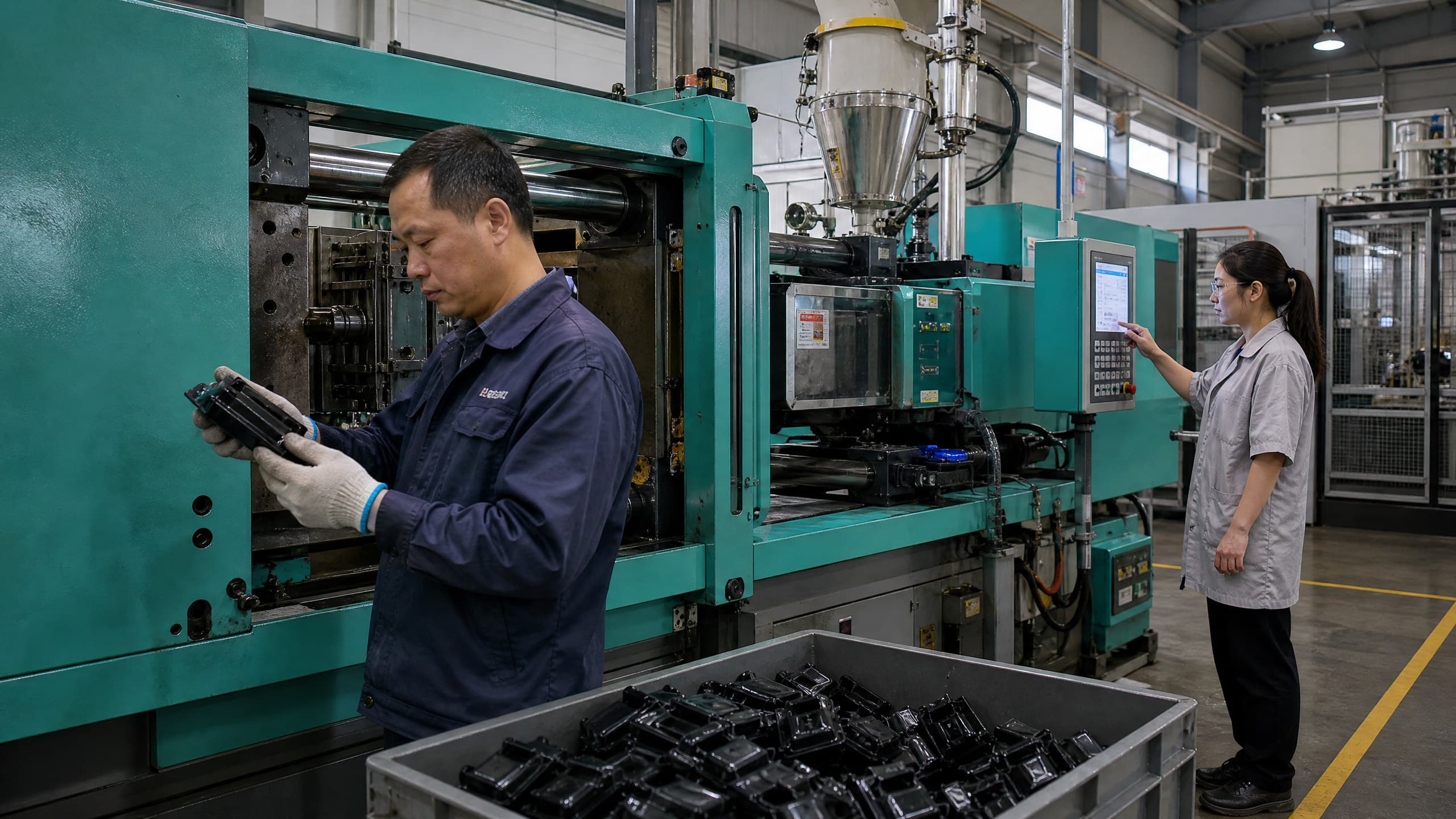
Machine selection begins with the part and mold envelope. Review projected area, cavity count, runner system, mold dimensions, mold weight, tie-bar clearance, daylight, opening stroke, ejector arrangement, core pulls, hot-runner connections and any special hydraulic or electrical services. A press with enough nominal tonnage can still be unsuitable if the mold cannot be mounted or opened safely.
Clamp force is only one calculation. The supplier should assess the material, projected area, cavity pressure assumptions, safety margin and actual tool design. Buyers should ask for the basis and treat it as an engineering recommendation, not a universal formula. Include the relevant CAD, tool concept and [request-a-quote](/request-a-quote) inputs when asking for a machine-fit review.
02
Compare shot size and process control, not just tonnage
The injection unit must be able to plasticize and inject the required shot consistently. Ask how the supplier calculates shot weight, runner weight, cushion, screw utilization, injection pressure, injection rate and recovery time for the chosen resin and cycle. A very large barrel may create residence-time or material-management questions for a small shot; a small unit may leave too little process margin for a demanding fill.
Process control features matter when they support the part’s critical characteristics. Review pressure, speed, temperature, cushion, cooling, mould-protection and alarm capability alongside the inspection plan. The buyer defines functional CTQs and acceptance requirements; the supplier should explain how its selected machine and process can monitor them without promising capability before trials.
| Fit area | What to compare | Evidence to request |
|---|---|---|
| Clamp and projected area | Part projection, cavities, runner layout, pressure basis and margin. | Calculation or engineering note tied to the tool concept. |
| Mold envelope | Width, height, thickness, weight, tie-bar, daylight, stroke and ejector fit. | Machine and mold dimensions checked together. |
| Injection unit | Shot, screw utilization, injection pressure/rate, cushion and recovery. | Material and cycle assumptions with trial confirmation plan. |
| Services | Hot runner, water, hydraulics, core pulls, electrical and temperature control. | Utility list and responsibility for connections and maintenance. |
| Usable capacity | Available shifts, uptime, changeovers, maintenance, quality checks and other orders. | Capacity statement for the required dates, not only nameplate tonnage. |
03
Convert a machine list into usable capacity
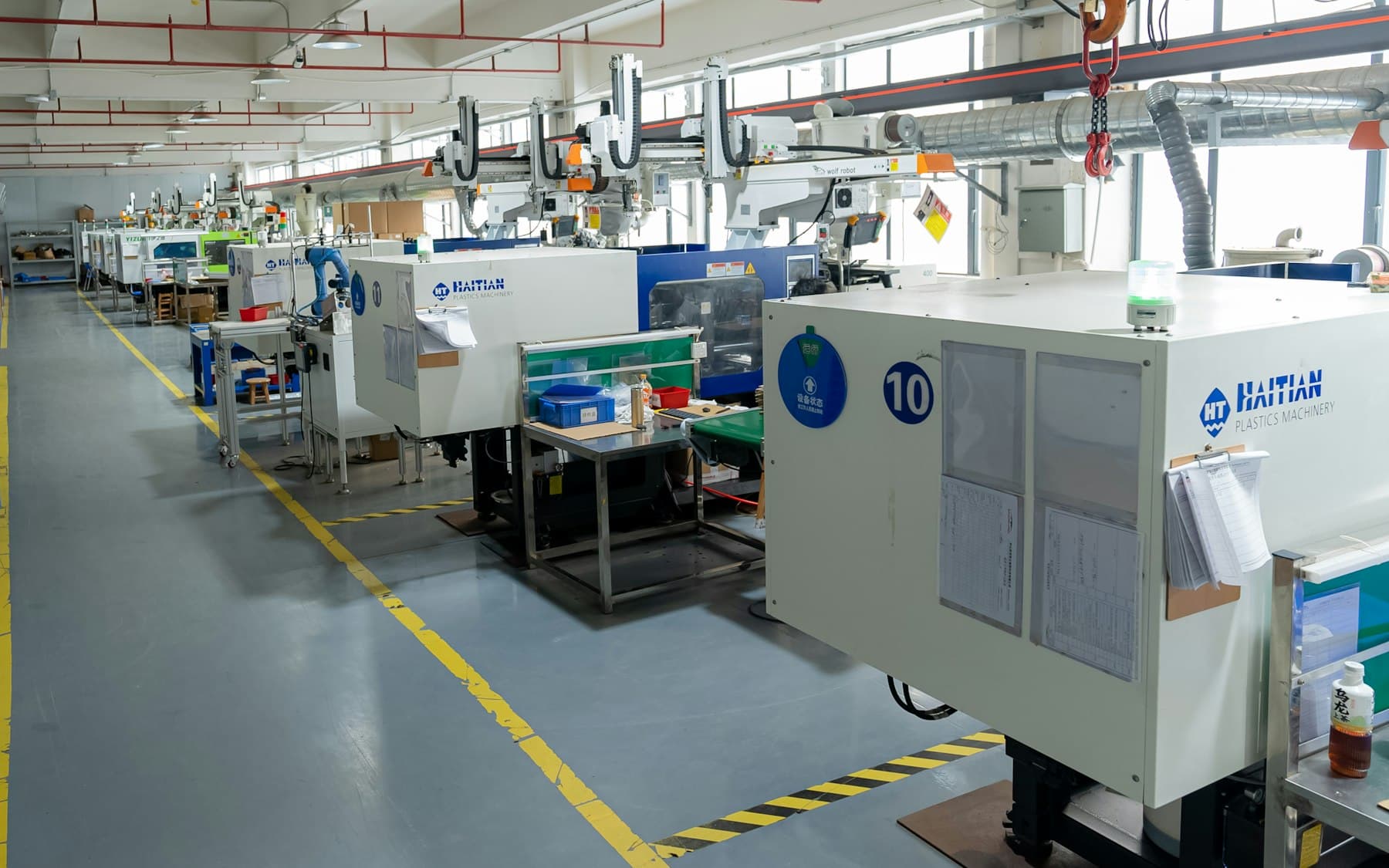
Nameplate capacity does not equal available capacity. Ask how many hours are available after planned maintenance, changeovers, tool trials, sampling, inspection, scrap, holidays and current commitments. For a multi-cavity tool, ask whether all cavities are expected to run and how cavity balance or cavity-specific defects will be monitored.
Compare at least one recommended machine and one credible alternative when the programme is important. A smaller machine may have a better shot and mold fit; a larger machine may provide more flexibility but use more energy or require a different cycle. The right answer depends on the actual tool, material, demand and quality plan.
04
Check machine fit against quality and downstream work
A machine can meet the geometry requirement and still be a poor production choice if it cannot support the intended automation, insert loading, vision inspection, trimming, assembly or pack-out. Discuss operator access, robot interface, conveyor space, drying, material handling, colour change, contamination controls and safe removal of parts and runners.
Connect machine selection to the quality plan. If a CTQ depends on stable temperature, pressure, cooling or insert position, identify the control or inspection method that will provide evidence. Supplier capability information is useful at [/quality](/quality), but buyers should request programme-specific records rather than treating a general capability statement as proof of compliance.
05
Ask how the recommendation will be proven
Before award, ask what will be confirmed during tool trial and process qualification: cycle, shot utilization, fill balance, warpage, dimensions, appearance, cavity performance, scrap, automation and operator sequence. Agree which results are indicative and which are release criteria. If the machine changes later, define when a new trial, capability review or customer approval is required.
The buyer should own the product specification, market requirements and final acceptance decision. The supplier owns the engineering explanation of its selected equipment and the execution of the agreed process. A transparent recommendation is more valuable than a large machine list because it shows how the proposed capacity fits the part and the delivery commitment.

Practical takeaway
Before you move
to the next review.
- Review projected area, cavities, mold envelope, tie-bar clearance, daylight and ejection together.
- Request the shot, pressure, speed, cushion and recovery assumptions for the chosen resin.
- Separate nameplate tonnage from usable capacity after maintenance, changeovers and quality work.
- Check automation, inserts, material handling, inspection and downstream pack-out constraints.
- Define which machine-fit and process results must be proven before production release.
FAQ
Common questions
Is clamp tonnage the best way to compare molding machines?
No. Clamp force matters, but mold envelope, shot size, injection performance, services, automation, quality controls and usable scheduled capacity may be equally important.
What shot-size margin should a buyer require?
There is no single universal percentage. The supplier should explain the resin, runner, part, cushion, screw-utilization and process-stability basis for its recommendation.
Can a larger press always run a smaller part?
Not necessarily. Excessive barrel size, mold fit, energy use, residence time, automation and process-control considerations can make a larger press a poor choice.
How can I verify a supplier’s stated capacity?
Ask for a programme-specific machine recommendation, available schedule, current commitments, maintenance assumptions and evidence from trial or production history where appropriate.
Who decides whether a machine is acceptable?
The buyer approves the product and release criteria; the supplier should demonstrate that the proposed machine and process can meet the agreed technical and delivery scope.
References
Source material
- [1] ISO, “ISO 20457:2026 Plastics moulded parts — Tolerances and acceptance conditions.”
- [2] Fictiv, “Injection Molding Design Guide: Best Practices for Molded Plastic Parts.”
- [3] Protolabs, “Injection Molding Design Guidelines.”
- [4] U.S. Occupational Safety and Health Administration, “Control of Hazardous Energy (Lockout/Tagout).”
This guide is general information for early procurement and engineering discussion. It does not replace product-specific DFM, qualification, validation, regulatory assessment or legal advice.