
An aluminum prototype mold is a good choice when expected volumes are limited or transitional, the product team needs molded parts in the intended process and resin, and speed or changeability matters more than maximum tool life. It is less suitable when the design is already frozen for sustained demand, the resin is highly abrasive or high-temperature, or the programme requires production-tool evidence that the prototype construction cannot represent. The decision should be tied to the next engineering or commercial question—not to a universal shot-count rule.
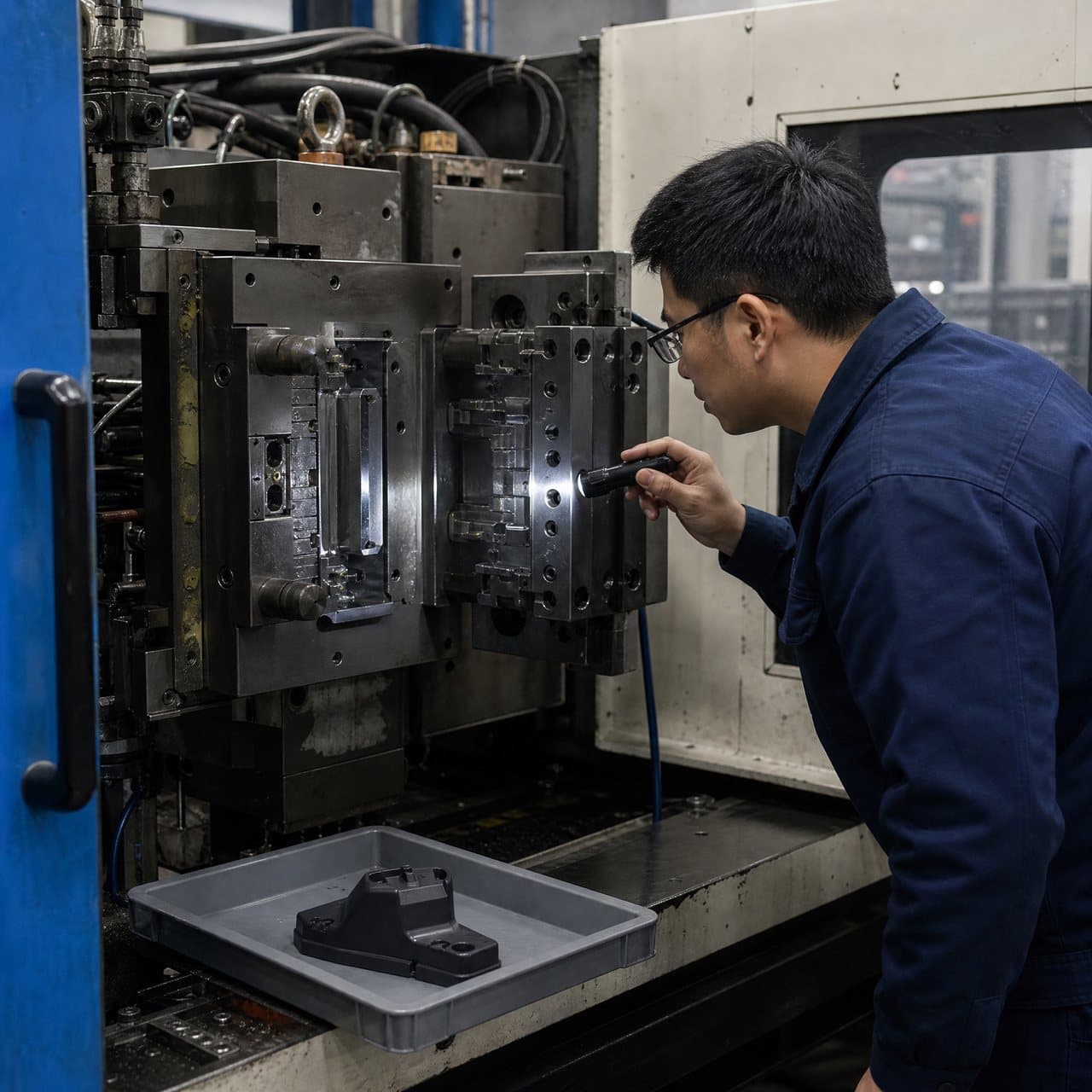
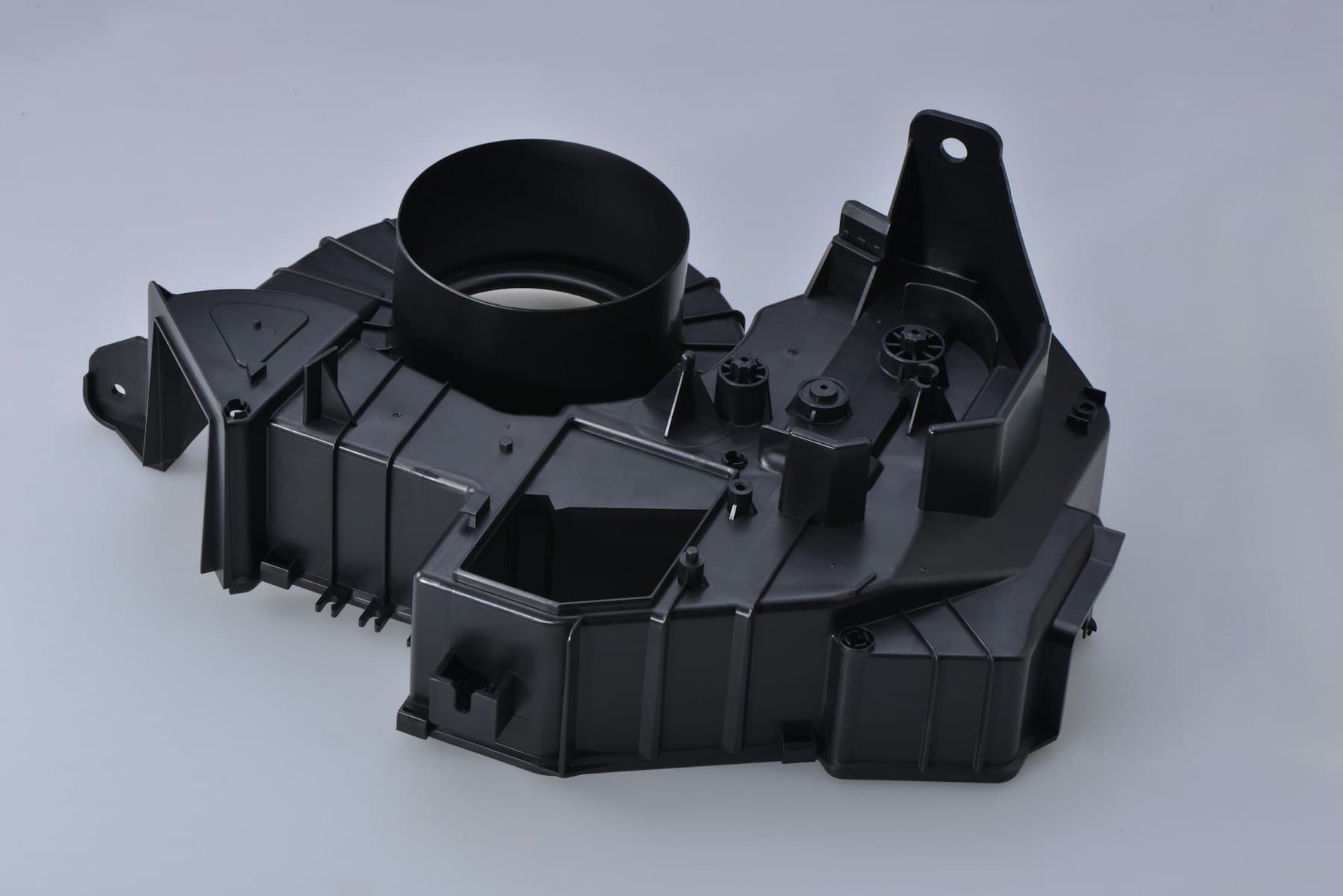
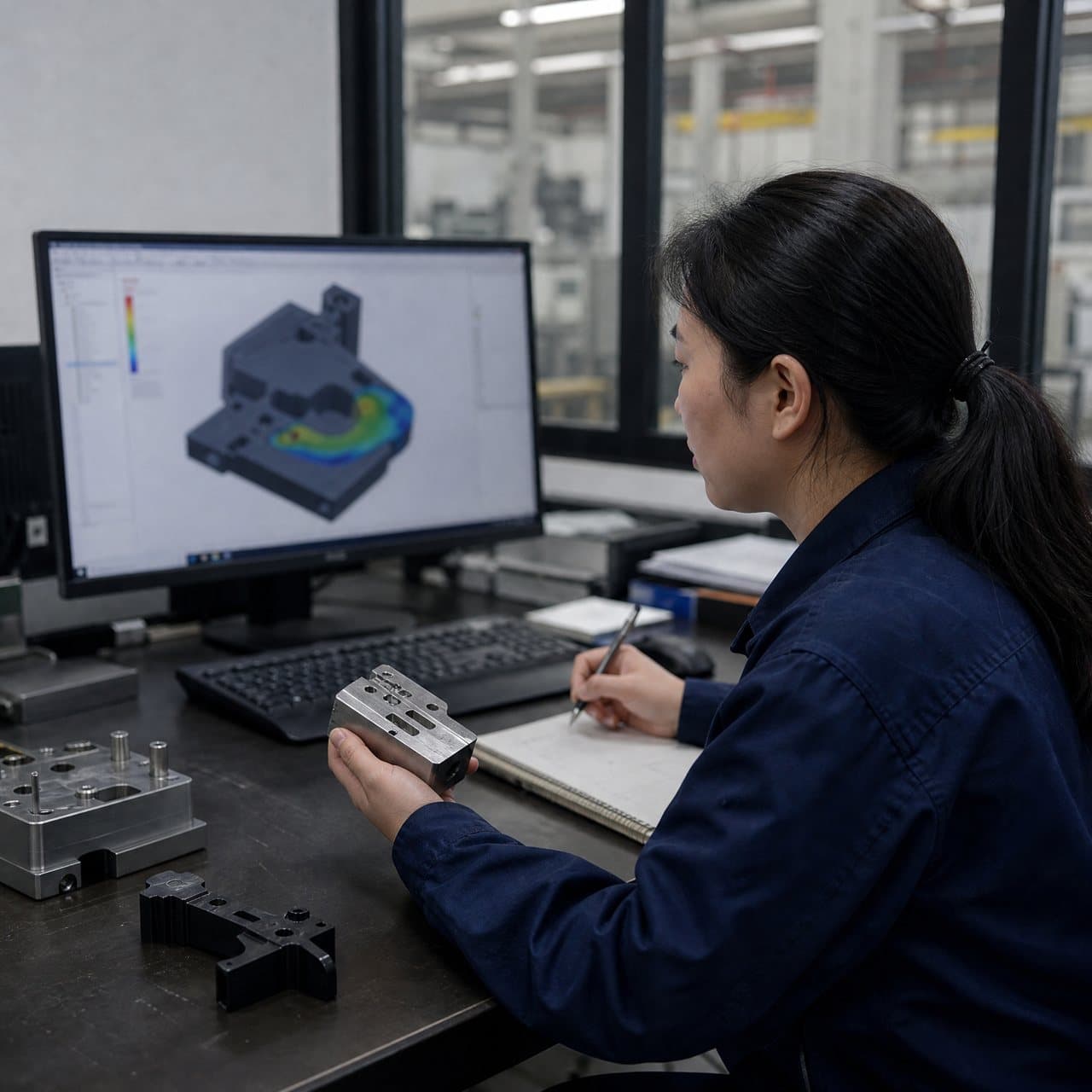
Use aluminum as a staged commitment, not as an automatic substitute for production tooling. Visuals in this guide are illustrative only; they do not depict an InjeForm customer part, facility or production result.
01
Start with the decision the mold must support
The strongest case for an aluminum prototype mold is a defined learning or bridge objective. The team may need to check fit with mating parts, assembly force, a snap feature, a cosmetic face, a chosen resin grade or a limited market release. These questions are different from proving a long-term production process. Write the question, the required evidence and the decision date before comparing aluminum with steel.
Forecast quantity matters, but it should not be used alone. A small programme with glass-filled resin, high-temperature processing, deep texture or demanding moving features may place more stress on a tool than a larger programme with simple geometry. Prototype tooling references commonly position lower-quantity, rapid-development work as a distinct route from production tooling, with limited tool-life expectations stated by the supplier.[1]
| Programme condition | Why aluminum may fit | Question to resolve before approval |
|---|---|---|
| Early design iteration | Lower commitment can leave room for geometry changes while the product is still being learned. | Which features are expected to change, and can they be isolated in replaceable inserts? |
| Limited or bridge volume | It can provide molded parts while demand, launch timing or customer acceptance is still being established. | What quantity is actually needed, and what reserve is sensible for rework, sampling and repeat runs? |
| Released, sustained production | Usually a weaker fit unless the tool concept and exposure are specifically justified. | Would wear, maintenance, cavity count or validation requirements make a production-oriented steel route more appropriate? |
02
Balance lead time against tool-life exposure
Aluminum is generally easier to machine than harder tool steels, which can support a faster, lower-commitment path. That advantage is not a promise of a particular delivery date. Lead time still depends on part complexity, cooling, slides or lifters, surface finish, insert strategy, supplier loading and the completeness of the CAD and drawing package. Ask the supplier when the clock starts and what is included in the quoted lead time.
Tool life is a range, not a product label. A peer-reviewed study notes that aluminum-tool service life can vary with alloy and post-processing, and reports substantially different cycle ranges for high-strength aluminum conditions.[2] The same study also illustrates why planned batch size affects economics: unused tool capacity has no value if the programme ends after a small run. Request an engineering estimate tied to the exact alloy, resin grade, filler, processing temperature, geometry, surface treatment, expected cycles and maintenance plan.
03
Use the tool to validate the part—not every production assumption
A prototype mold can provide useful evidence when the part is molded in the intended resin family and the sample plan reflects the decision being made. Evaluate the interfaces that matter: fit, function, assembly sequence, dimensional locations, appearance, material behavior and any customer test that can reasonably be performed at this stage. Record the CAD revision, resin grade, color, process conditions where relevant, sample quantity and acceptance criteria.
Do not treat a successful prototype run as automatic proof of production readiness. The later production tool may use different steel, cooling, cavity count, gating, ejection, automation or process windows. For regulated or quality-critical programmes, validation should be planned as a lifecycle of documented evidence, not reduced to one favorable sample set. FDA process-validation guidance describes process design, process qualification and continued process verification as distinct stages for establishing and maintaining process capability.[3]
A practical validation record should state what the aluminum tool did prove and what remains open. For example, it may support fit and form, but leave long-run wear, multi-cavity balance, sustained capability or production-rate assumptions for the next phase. This distinction helps engineering and procurement avoid overbuying while preventing premature release.
04
Plan the transition before the first cut
The transition plan should be part of the prototype purchase, not an afterthought. Define the trigger for moving to production tooling: an approved design revision, completion of functional testing, customer or market feedback, a volume decision, or evidence that the prototype tool no longer represents the required supply condition. Identify which findings can be carried forward and which must be repeated in the production tool.
Ask for a side-by-side transition map covering part revision, steel or insert material, cavity count, gate and ejection changes, cooling, inspection method, sample approval and change control. Keep the prototype measurement results linked to the revision that produced them. If a feature changes, decide whether prior evidence remains relevant or must be regenerated.
A quote-oriented request can be concise: ‘Please quote an aluminum prototype mold for [part revision], [resin grade], [quantity range] and [target sample date]. State assumed tool life, lead-time starting point, cavity and insert concept, included trials, inspection evidence, maintenance or storage terms, and the recommended path to production tooling. Please identify the three assumptions most likely to change price or schedule.’ This model gives European, US and Middle East OEM and procurement teams a comparable basis without implying an unqualified guarantee.
05
Make the buying decision evidence-led
Compare the total route, not only the mold price. Include engineering review, design changes, sample runs, inspection, shipping, storage, repairs, repeat trials and the cost of a later production tool. A lower initial price can be poor value if the tool cannot support the required resin or if the transition repeats tests that were never planned for transfer.
Before approval, ask the supplier to separate confirmed capability from assumptions. Confirm the exact aluminum alloy or tool construction, resin and filler, planned cycle exposure, surfaces that may need protection, intended maintenance, ownership, spare or replaceable inserts, and what happens if the design changes. Sources on rapid tooling emphasize that the benefit is iterative design and material or form-and-fit validation, while the route remains distinct from production manufacturing.[1] [4]
The best choice is therefore conditional. Select aluminum when it answers a defined question quickly at a proportionate commitment and when the team accepts the stated exposure. Select a production-oriented route when demand, design, material, quality evidence and change control are sufficiently settled to justify longer-life tooling.
Practical takeaway
Before you move
to the next review.
- The mold’s purpose is stated as design learning, limited supply, bridge demand or production support.
- Prototype quantity, repeat-run allowance, forecast horizon and transition trigger are documented.
- Resin grade, filler content, processing temperature, geometry and cosmetic requirements have been reviewed together.
- The sample plan identifies what the aluminum tool will validate and what must be repeated in production tooling.
- The quote requests tool-life assumptions, lead-time basis, tool construction, maintenance terms and a transition route.
FAQ
Common questions
Is an aluminum prototype mold only for very small quantities?
No. Quantity is one input, not a universal cutoff. The better question is whether the planned exposure, resin, geometry, quality evidence and programme horizon fit the proposed tool. A limited or transitional run may suit aluminum, while an abrasive material or sustained demand may justify another route.
How many parts can an aluminum prototype mold make?
There is no reliable universal number. Tool life depends on alloy, construction, resin, filler, processing conditions, geometry, surface treatment, maintenance and local feature loading. Ask for a part-specific estimate and define whether it is a guaranteed minimum, an engineering expectation or only a planning assumption.[1] [2]
Can prototype-molded parts be used for functional validation?
Often yes, when the intended resin, relevant geometry and test conditions are represented. The test plan should state what the results support. Fit, form and selected functional tests may transfer usefully, but production-tool capability, long-run wear and multi-cavity behavior may still need separate evidence.
Should the production mold be quoted at the same time?
Usually it is useful to request a transition option at the same time. A separate production concept lets the team compare tool life, cavity strategy, lead time, inspection and repeat-validation needs before the prototype is ordered. It does not require authorizing both tools.
What should procurement ask for in an aluminum tooling quote?
Request the assumed alloy and construction, resin and filler scope, cavity and insert concept, lead-time starting point, expected or guaranteed tool life, included trials, inspection records, maintenance and storage terms, ownership, change costs, and the evidence needed to move to production tooling. Ask the supplier to identify its largest technical assumptions.
References
Source material
- [1] Protolabs, ‘Prototype Tooling for Injection Molding.’
- [2] Schneider et al., ‘Design and Validation of Additively Manufactured Injection Molds,’ 3D Printing and Additive Manufacturing, via PubMed Central.
- [3] U.S. Food and Drug Administration, ‘Process Validation: General Principles and Practices.’
- [4] Formlabs, ‘Rapid Tooling: A Guide to Rapid Injection Molding.’
This guide is general information for early procurement and engineering discussion. It does not replace product-specific DFM, qualification, validation, regulatory assessment or legal advice.