
Prototype injection molding and production tooling solve different buyer problems. A prototype tool is usually a lower-commitment way to learn how the released geometry, resin and molding concept behave. A production tool is an investment in repeatable output after the design, demand and acceptance requirements are mature enough to justify durability, maintenance planning and process qualification. Neither route is automatically better.
For a product or procurement team, the decision should be based on what must be proven next. If the team still expects changes to interfaces, wall sections, gate location, inserts, material or appearance, a prototype tool may limit the cost of learning. If the part is stable and the programme needs recurring output, production-intent tooling may provide a better basis for repeatability and cost per part. Use InjeForm's [capabilities](/capabilities) and [process](/process) pages as conversation starters, then send the actual CAD, drawing, resin direction, demand profile and approval criteria through a structured review.
Do not approve a prototype sample as proof that a production tool will meet every requirement. Confirm which geometry, resin, tool concept, machine conditions, inspection method and test evidence are representative—and identify what still needs to be re-established at production release.
01
1. Start with the question the tooling must answer
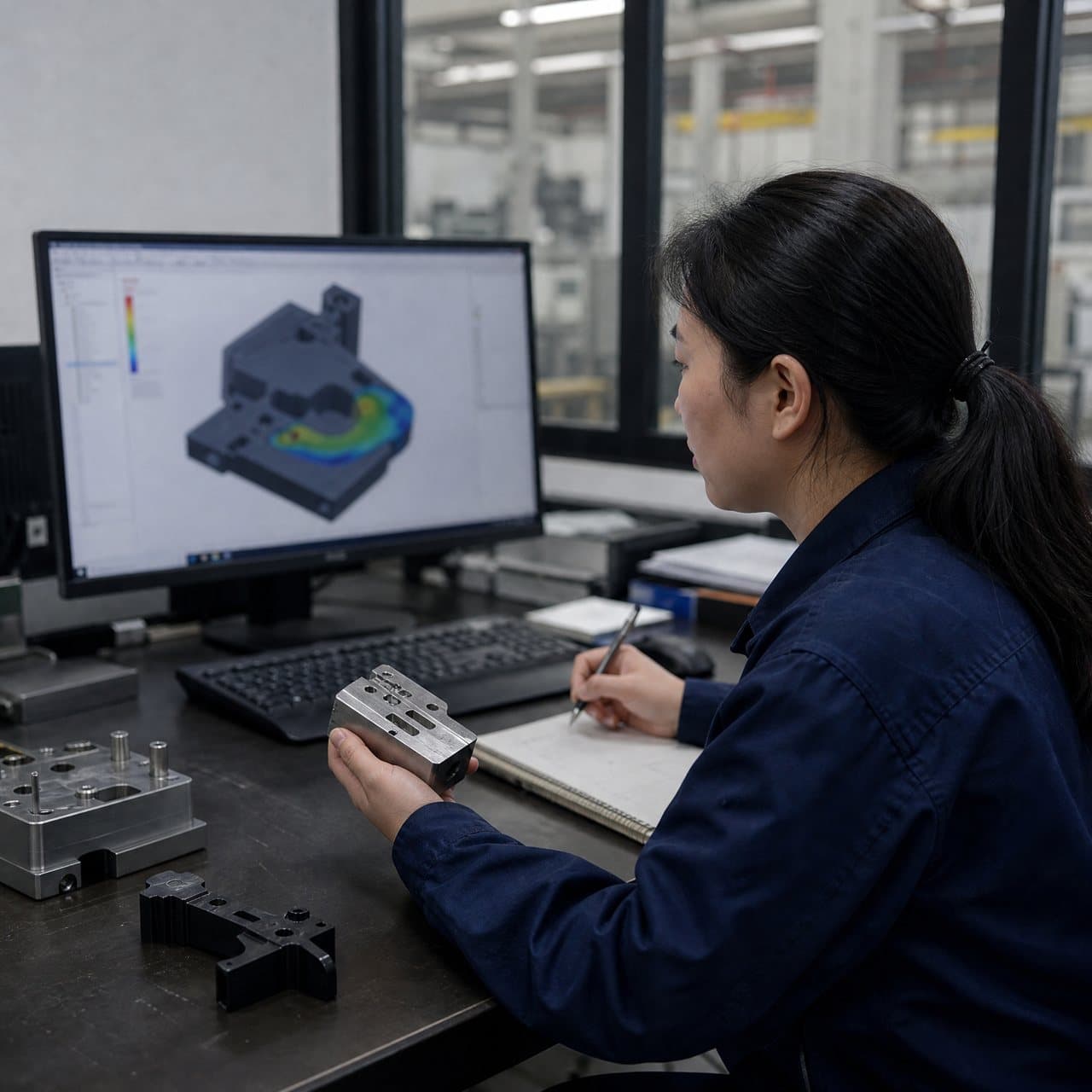
Prototype tooling is most useful when the next decision is technical learning. The team may need to check form and fit, assembly with mating parts, insert retention, surface appearance, draft and ejection, resin behaviour, shrinkage, warpage or a functional test using molded material. Real injection-molded parts can expose risks that a machined or printed model cannot reproduce, including flow marks, weld lines, cooling variation and release behaviour.[1]
Production tooling is most useful when the next decision is controlled repetition. It should support the approved part, intended resin and defined production process over the expected programme life. That may involve cavity strategy, runner and gate design, cooling, venting, ejection, wear components, automation and maintenance access. The supplier should explain which decisions are provisional and which are being designed for the production state, rather than presenting a prototype result as a universal guarantee.
Write the learning objective before requesting price. Examples include: approve a housing fit, compare two resins, verify a snap feature, produce customer samples, confirm a cosmetic surface, or demonstrate dimensional capability. A clear objective makes it easier to choose the least expensive tool that produces credible evidence without pretending that every future production question has already been answered.
02
2. Compare prototype and production tooling against the same decision criteria
The label prototype does not prescribe one metal, one cavity count or one volume. Prototype molds may use aluminum, soft steel, semi-hardened steel or selected inserts; production molds may also use aluminum for some lower-volume programmes. The tool material should follow the required life, wear exposure, precision, geometry, surface finish, thermal behaviour, modification plan and customer acceptance needs. Fictiv notes that material choice and mold class affect expected cycles, while Protolabs describes aluminum as a practical option for some lower-volume or faster-turn programmes.[1] [2]
Treat published volume and cycle figures as screening guidance, not a quote or warranty. Tool life depends on the exact steel or aluminum grade, resin abrasiveness, glass or mineral filler, geometry, process settings, maintenance and the standard used to define an acceptable part. Ask each supplier to state the assumed tool life, what wear parts are replaceable, how maintenance is recorded and what happens if the forecast changes.
Use the table below to normalize supplier proposals. A prototype tool can be a sound choice for a small production release, and a production-intent tool can be justified for a prototype when the cost of learning from a non-representative tool is high. The decision is about evidence and risk, not terminology alone.
| Buyer criterion | Prototype tooling is often a fit when | Production tooling is often a fit when | Question to put in the RFQ |
|---|---|---|---|
| Design maturity | Interfaces, wall sections, gates, inserts or appearance may still change | CAD, CTQs, resin and cosmetic requirements are controlled | Which open design decisions could force a tool change? |
| Primary objective | Learn form, fit, function, flow or assembly with real molded samples | Repeat an approved part and process at the required rate | What requirement will this tool prove, and what will remain unproven? |
| Expected demand | Samples, pilot quantities or uncertain demand justify limited commitment | Recurring demand and programme life justify durability and maintenance planning | Show prototype, ramp, annual and lifetime volume separately. |
| Material and wear | The chosen resin and filler exposure are compatible with the proposed tool life | Abrasive resin, long life or tight repeatability requires a documented material strategy | Name the tool material, wear assumptions, replaceable inserts and resin basis. |
| Change economics | Fast, controlled insert or tool changes have high value | The design is stable enough that steel changes and requalification risk are acceptable | What changes are steel-safe, and what changes require rework or a new tool? |
| Validation | Early fit, assembly and functional learning is the immediate gate | Production-intent samples, capability, inspection and customer approval are required | Which samples, process conditions and records are included in approval? |
| Unit economics | Lower upfront exposure matters more than lowest long-run unit cost | The forecast can amortize durable tooling and stable cycle performance | Compare tooling, maintenance, sampling, scrap, cycle and unit cost assumptions. |
03
3. Choose tool material and architecture for the actual risk
Aluminum can reduce machining time and may offer useful thermal conductivity, which is why it is commonly considered for prototypes, short runs and some on-demand production. Steel can be appropriate when wear resistance, tight features, longer life, repeated maintenance or high demand justify the additional investment. These are tendencies rather than universal rules. A small steel insert in a softer base, a modular insert arrangement or a standard mold frame can sometimes concentrate durability where the part needs it and preserve modification options elsewhere.[2] [3]
Resin choice matters as much as tool metal. Glass-filled, mineral-filled or otherwise abrasive materials can accelerate wear in a softer tool. A high-temperature resin may impose different thermal and process demands from a commodity resin. If the prototype uses a substitute material, mark the result as a limited learning result: it may inform fit or geometry but not fully validate mechanical performance, shrinkage, appearance or production cycle behaviour for the intended grade.[1]
Review architecture before comparing the tool price. Ask about cavity count, interchangeable inserts, parting line, gates, runners, vents, cooling, ejection, slides or lifters, surface finish and measurement access. Also ask whether the prototype tool is intentionally designed for modification or whether a future production tool will be a new design. A low prototype price is not useful if it makes the critical production lesson impossible to observe.
04
4. Plan validation so a prototype result is not over-interpreted
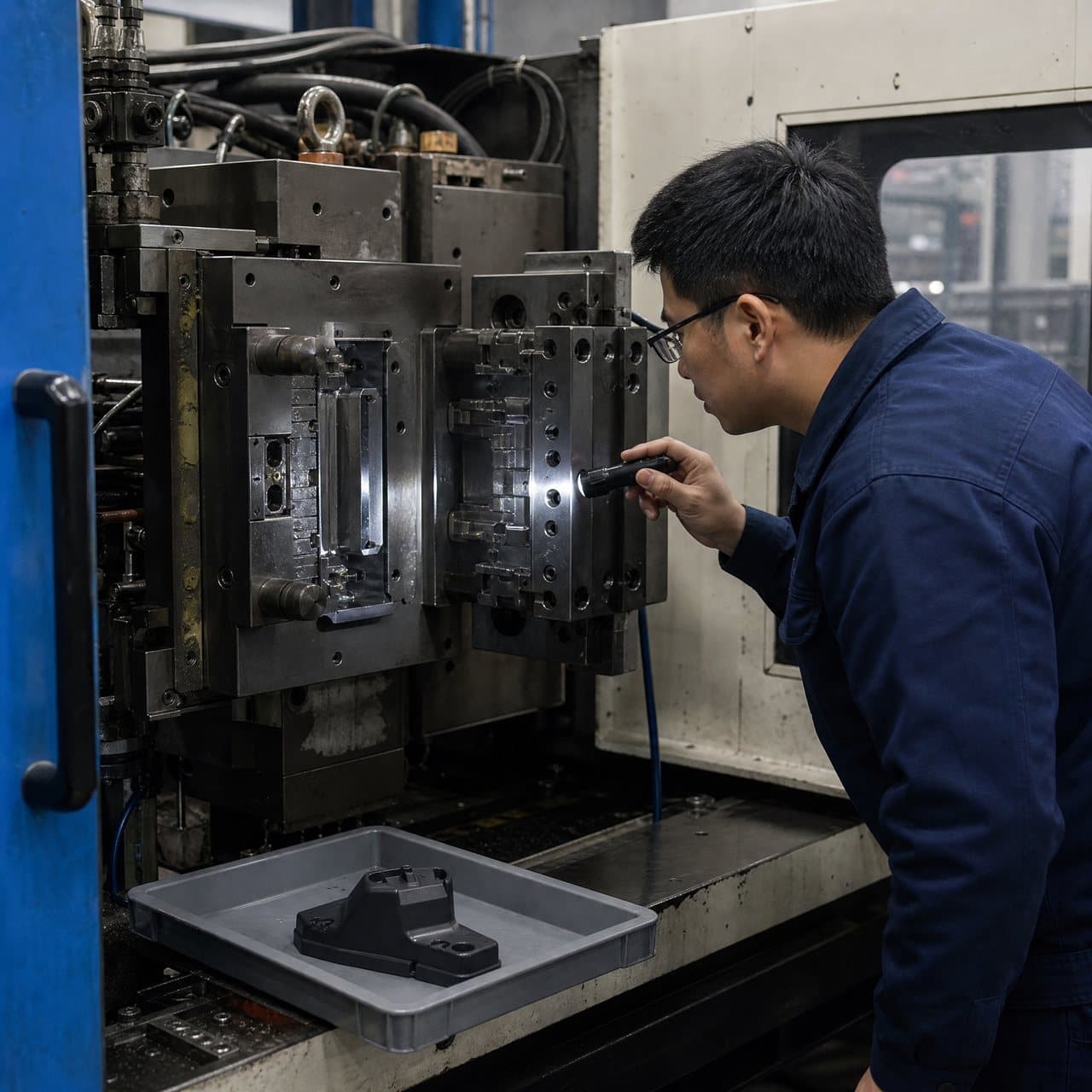
Prototype validation should match the question being asked. For a fit check, use the real mating parts and record the assembly condition. For a cosmetic review, define the viewing distance, lighting, texture, color reference and allowed gate or ejector marks. For material or functional work, use the intended grade where practical and document conditioning, test fixtures, load, temperature, cycle count and failure criteria. A handful of attractive samples is not evidence of production capability.
Production release requires a broader evidence set. Confirm that the final tool, released resin, machine range, process window, inspection method and packaging basis match the intended state. Depending on the product, the package may include dimensional results, appearance approval, material or lot records, cavity identification, process records, capability or repeatability evidence, maintenance instructions and a deviation process. The applicable customer or industry approval plan controls what is required; do not infer a certification or regulatory outcome from a tooling type.
A practical route is to use a written evidence matrix with four columns: requirement, sample or record, acceptance limit and approval owner. Mark each item as proven by the prototype, to be reconfirmed on production tooling or not yet tested. InjeForm's [quality](/quality) route can be part of that discussion, while the [process](/process) page helps frame the review from DFM through trial and delivery.
05
5. Make the commercial decision using total risk and total cost
Compare more than the initial tool quote. Include design-review time, engineering changes, sampling, shipping, maintenance, spare components, scrap, inspection, secondary operations, storage, requalification and the cost of a missed launch. A prototype tool may reduce the cost of an early change but add a second tooling purchase. A production tool may reduce unit cost at volume but create a larger exposure if the design is not ready. A bridge or modular strategy may be reasonable when it is explicitly scoped, but it still needs a clear handoff and revalidation plan.
Ask suppliers to separate included and excluded work: DFM, mold-flow analysis if proposed, tool design, steel or aluminum, standard components, texture, samples, dimensional inspection, material documentation, maintenance, modifications, packaging and freight. Confirm tooling ownership, storage, access to CAD and drawings, spare-part responsibility and engineering-change approval in the commercial terms. Use [request a quote](/request-a-quote) only after those assumptions are visible enough for a like-for-like review.
If demand is uncertain, model at least three cases: prototype or pilot only, moderate recurring demand and the higher forecast. If the recommendation changes between cases, document the trigger. The best decision may be a lower-commitment prototype tool now with a defined production gate later, or a production-intent tool now if the cost of non-representative learning exceeds the added commitment.
06
6. Set approval gates from design freeze to production release
At Gate 1, approve the purpose, part revision, CTQs, intended resin, volume scenarios, mating parts and test plan. At Gate 2, review DFM, draft, wall transitions, parting line, gates, vents, cooling, ejection, tool material, cavity plan and modification limits. At Gate 3, inspect prototype or trial samples against the learning objective and record every open risk. At Gate 4, approve production tooling only when the released design, tool concept, resin and evidence plan are aligned.
For the handoff, require a controlled package rather than a verbal statement that the tool is ready. It should identify the tool revision, cavity count, critical components, spare parts, maintenance points, sample results, deviations, open actions and change authority. If the prototype tool will be retained for service parts or an interim run, state its permitted volume and inspection basis separately from the production tool.
Buyers should be comfortable delaying a production-tool commitment when a high-cost uncertainty is still unresolved. Conversely, they should avoid endless prototype iteration when the design is stable and the remaining evidence can only be generated under production-intent conditions. The decision is strongest when each spend releases a specific piece of evidence.
Practical takeaway
Before you move
to the next review.
- State the next decision the tool must support: fit, function, material, appearance, customer samples, pilot output or repeatable production.
- Separate prototype, ramp, annual and lifetime demand, and ask the supplier to state the assumed tool life, maintenance basis and wear limits.
- Name the intended resin grade, filler or additive basis, and identify whether any prototype material substitution limits the conclusions.
- Request marked-up DFM covering parting line, draft, gates, vents, cooling, ejection, cavity strategy, surface finish and modification options.
- Define the sample and inspection plan, including mating parts, CTQs, appearance criteria, test conditions, acceptance limits and approval owners.
- Compare total cost and risk, including a second tool, engineering changes, maintenance, sampling, inspection, scrap, storage, freight and requalification.
- Document the production-release gate and retain a controlled handoff package with tool revision, spare parts, records, deviations and change authority.
FAQ
Common questions
Is prototype injection molding the same as production tooling?
No. Prototype injection molding generally prioritizes fast learning, lower initial commitment and controlled design change. Production tooling prioritizes repeatable output, durability, maintenance planning and production-intent evidence. The two can share the same molding process and resin, but a prototype sample does not automatically prove production capability.
Is aluminum always used for prototype injection molds?
No. Aluminum is a common prototype and short-run option because it can be faster to machine, but soft steel, semi-hardened steel, hardened inserts or modular architectures may be appropriate when the project needs tighter features, more wear resistance or a particular validation result. Tool material should follow the part, resin, expected life and risk.
When should a buyer skip prototype tooling and commission a production mold?
A production-intent tool may be reasonable when the released geometry, resin, demand and acceptance requirements are stable; the cost of a non-representative prototype would be high; and the programme needs production-rate or capability evidence. Confirm the decision through DFM and a documented risk review rather than using forecast volume alone.
Can prototype molded parts be used for functional testing?
Often, yes, if the tool, resin, process and sample condition represent the question being tested. Define what the parts can prove. A prototype made with a substitute resin, different gate, limited cooling or a different process window may support fit or early usability learning but may not support final mechanical, cosmetic, dimensional or life claims.
What should be transferred from prototype tooling to production tooling?
Transfer the controlled CAD and drawing revision, resin and insert specifications, DFM findings, gate and vent lessons, dimensional and appearance results, test data, known defects, corrective actions, open risks and approval history. Also state which findings must be reconfirmed on the production tool and who owns each action.
References
Source material
- [1] Fictiv — Prototype Injection Molding: The Ultimate Guide
- [2] Protolabs — Aluminum Mold Tooling for Injection Molding
- [3] Formlabs — Guide to Rapid Tooling
- [4] Midwest Molding — Prototype versus Production Tooling for Injection Molding
This guide is general information for early procurement and engineering discussion. It does not replace product-specific DFM, qualification, validation, regulatory assessment or legal advice.