
An injection molding supplier audit should check four connected areas: whether the quality system assigns responsibility and controls changes, whether production controls are actually followed, whether parts and materials can be traced, and whether equipment and records support the acceptance decision. For Europe, the United States and Middle East OEM programmes, the audit should test evidence at the supplier’s site rather than treating a certificate, presentation or sample part as proof of routine control. ISO guidance describes documented information as evidence that planned work was done and notes that the required extent depends on the organization, processes and product context.[1]
Keep the scope proportional to the part and the contract. A cosmetic consumer housing, a safety-relevant industrial component and a regulated medical-device accessory may need different controls and retention rules. Define the audit sample in advance, ask to follow one recent lot from incoming resin through release, and record open actions with an owner and due date.
Quote request model: ask the supplier to quote against the controlled drawing revision, resin and colour direction, annual and launch volumes, critical-to-quality features, inspection scope, traceability expectations, required records, audit access and change-notification terms. This article is general information for early procurement and engineering discussion; it is not a certification, regulatory or legal assessment.
Do not ask only, “Are you certified?” Ask, “Show us how this part was made, checked, released and linked to the material, tool, machine, operator and records that apply to the lot.” [1]
01
Start with the quality system and audit scope
Confirm who owns quality, production, engineering, purchasing, calibration, document control and customer communication. The supplier should be able to show how a customer requirement becomes a controlled drawing, work instruction, inspection plan or acceptance record. ISO 9001 guidance emphasizes that documented information is not a system of documents for its own sake; it should support process operation and provide evidence of results.[1]
Ask how internal audits, nonconformity handling, corrective action and management review identify recurring molding risks. Review one closed corrective action, not only the procedure title. Look for a defined problem statement, containment, root-cause reasoning, effectiveness check and approval. For a regulated programme, clarify which obligations belong to the finished-device manufacturer and which supplier controls are written into the quality agreement. FDA’s QMSR applies to finished device manufacturers and incorporates ISO 13485:2016; it should not be presented as a blanket claim about every component molder.[2]

02
Test process controls where molding decisions happen
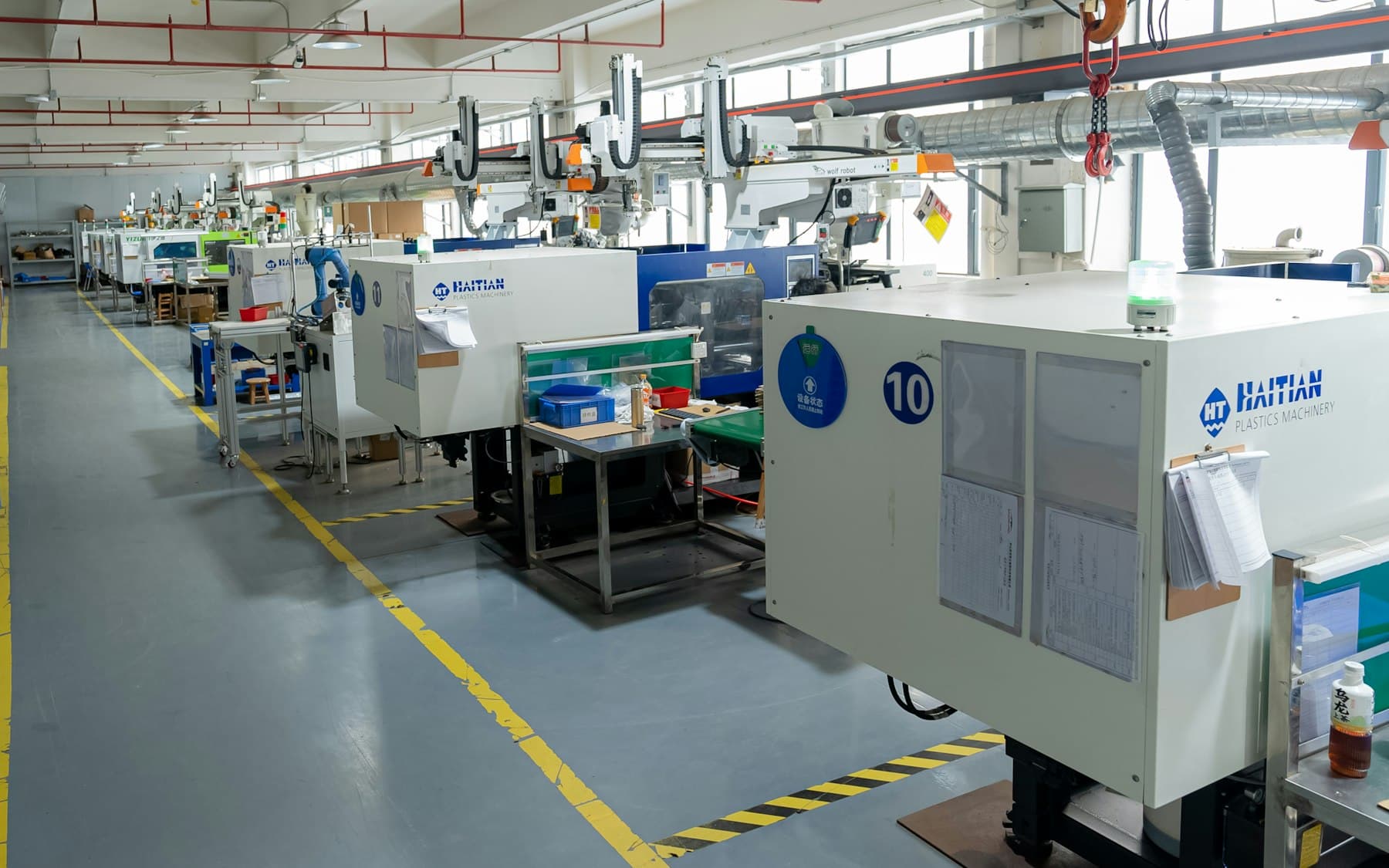
Walk the process from material receipt to molding, inspection, packing and release. Check whether the approved work instruction identifies the machine or cell, mold and cavity where relevant, resin preparation, setup parameters, first-off approval, in-process checks, reaction plan and final release authority. Compare the documented control with what operators actually do on the floor. A gap between the posted instruction and the live process is an audit finding even when the sampled parts look acceptable.
Focus on controls that can change part performance: drying or material handling, temperature and pressure settings, cooling, cycle monitoring, startup approval, cavity balance where relevant, visual criteria and handling or packing. Ask what happens after an alarm, parameter excursion, failed check or unplanned restart. The answer should identify segregation, disposition and escalation rather than relying on an operator’s memory.
Use the following decision table to set audit depth without imposing one universal checklist.
| Audit observation | Buyer interpretation | Follow-up evidence |
|---|---|---|
| Current work instruction matches the run and operators can explain reaction steps. | Control appears defined and practiced; verify the record trail. | Recent setup sheet, in-process checks, lot release and nonconformance sample. |
| Instruction exists, but settings or checks are handwritten without revision or approval. | Control may depend on individual knowledge and be difficult to reproduce. | Approved parameter window, change history, training record and sample run record. |
| Supplier shows a good part but cannot identify the run, resin or inspection basis. | The sample is not reliable evidence of routine control. | Traceability log, material record, inspection method and release decision. |
| A deviation is accepted informally by email or verbally. | Disposition and customer authority may be unclear. | Nonconformance, concession approval, affected lots and corrective-action record. |
03
Follow traceability from resin to released lot
Select a recent production lot and ask the supplier to connect the finished containers or cartons to the part number and revision, production date or run, machine, mold and cavity where applicable, resin grade and lot, colour or additive direction, operator or shift, inspection results and release decision. The exact fields depend on the risk and agreement, but the chain should be usable without reconstructing history from memory. ISO guidance identifies unique identification, authorized release, nonconformity and external-provider records as examples of evidence that may need to be retained when relevant.[1]
Then reverse the exercise. Start with a resin lot or a released shipment and ask which parts, customers or lots could be affected if a material, tool or process issue were discovered. Define the supplier’s response time and containment path in the quality agreement. For U.S. medical-device work, 21 CFR Part 820 includes provisions on quality-system documentation, traceability and records for manufacturers subject to that regulation; the audit should distinguish those legal obligations from the narrower component-supplier scope agreed with the OEM.[3]
Check label control and status identification. Accepted, quarantined, rework and rejected material should not depend on colour-coded memory alone. Electronic records can be suitable, but the supplier should control access, revisions, corrections, backups and retention so that a later reviewer can understand what changed and why.
04
Inspect equipment, calibration and maintenance evidence
Review the equipment register for injection presses, dryers, temperature controllers, moulds, gauges, fixtures and test devices used for the audited part. Confirm that each relevant item has an identity, status and defined maintenance or calibration interval. Ask to see a recent calibration record and the response to an overdue or failed result. ISO guidance specifically includes evidence of monitoring and measurement resource fitness and the basis for calibration when no national or international standard exists.[1]
For inspection equipment, ask whether the method is suitable for the tolerance, datum and surface being judged. NIST describes gauge R&R work as a way to characterize errors affecting gauges and instruments used in production, including repeatability, reproducibility and stability.[4] The audit need not demand the same study for every low-risk check, but it should expose unsupported measurement claims on critical dimensions.
Review preventive maintenance for the press, dryer, hot runner, cooling system and mold. Look for overdue work, recurring breakdowns, uncontrolled temporary repairs and evidence that maintenance can affect released product. If a mold is moved between machines or sites, ask how the transfer is approved and what requalification or first-off evidence is required.
05
Review records, release decisions and change control
Ask for a small, defined record sample rather than every file in the system: one released lot, one nonconformance, one calibration record, one maintenance record, one training record and one recent engineering or process change. Check whether each record has a clear part or process identity, date, responsible person, result, disposition and link to the applicable revision. FDA’s current QMSR page explains that its device framework is intended to help applicable manufacturers consistently meet requirements and specifications; that principle is useful, but the audit conclusion must remain within the supplier’s contracted role.[2]
Change control should cover drawing revisions, resin grade or colourant, mold repair, cavity additions, gate or cooling changes, machine transfer, parameter changes outside an approved range, inspection-method changes, subcontracted operations and packaging changes that could affect the part. Ask what triggers notification, sample approval, revalidation or customer authorization. A supplier may use a risk-based system, but it should be able to explain the decision and preserve the old and new states.
Close the audit with a written disposition: accepted, conditionally accepted or not accepted. Separate a minor documentation action from a control failure that could affect released product. For each action, record evidence, owner, due date, containment if needed and the condition for closure. A quote or supplier award should not erase unresolved quality risk; it should make the risk visible in the commercial and quality terms.

Practical takeaway
Before you move
to the next review.
- Define the audit scope, part revision, process steps, customer requirements and evidence sample before the visit.
- Follow one recent lot from incoming resin through molding, inspection, disposition, packing and release.
- Verify process instructions, reaction plans, training, nonconformance handling and change control against live practice.
- Check equipment identity, maintenance, calibration status and measurement suitability for critical features.
- Issue a written audit disposition with findings, affected risk, containment, owners, due dates and re-audit or evidence requirements.
FAQ
Common questions
Is an ISO 9001 certificate enough to approve an injection molding supplier?
No. A certificate can indicate that a quality-management system has been assessed within a stated scope and period, but it does not replace a part-specific audit. Verify the live process, traceability, equipment status, records and customer-specific controls.
What should I sample during a remote supplier audit?
Request a screen-shared walkthrough of one recent lot, its material receipt, setup record, inspection results, release decision, nonconformance example and calibration or maintenance evidence. Protect confidential information through an agreed protocol rather than accepting unverified screenshots.
How much traceability does a molded plastic part need?
There is no single level for every part. Agree the fields needed to contain a material, tool, process or inspection issue. At minimum, the chain should identify the part and revision, production lot or run, material basis, relevant equipment or tool, inspection evidence and release status.
Should calibration records be checked for every gauge?
Check all gauges and test devices used for the audited part’s critical acceptance decisions, then sample lower-risk devices according to the audit plan. Verify identity, status, due date, standard or method, result and action if a device is found unsuitable.
Can procurement approve a supplier before all audit actions are closed?
Sometimes, if the decision is explicitly conditional and the residual risk, containment, owner, due date and release restriction are documented. Do not treat a conditional award as evidence that the supplier controls have already been demonstrated.
References
Source material
- [1] International Organization for Standardization, “Guidance on the requirements for Documented Information of ISO 9001:2015.”
- [2] U.S. Food and Drug Administration, “Quality Management System Regulation (QMSR).”
- [3] Electronic Code of Federal Regulations, “21 CFR Part 820—Quality Management System Regulation.”
- [4] National Institute of Standards and Technology, “Gauge R & R studies.”
This guide is general information for early procurement and engineering discussion. It does not replace product-specific DFM, qualification, validation, regulatory assessment or legal advice.