
Scope short run injection molding as a controlled, limited-purpose supply route—not simply as a small order. For a pilot, define its purpose, approved revision, quantity window, evidence and the condition that ends or extends the route. For service demand, define the release mechanism, tool status, acceptance basis and how changes will be authorized. That gives engineering, purchasing and the molder one shared boundary before money is committed.
Bridge production injection molding is appropriate when a buyer has a real near-term need for molded parts but a longer-term demand, design or tooling decision is not yet settled. It should not hide an undefined specification. State whether the lot is for an assembly pilot, controlled market release, replacement parts, field service or another named purpose. Record an exit decision: tool disposition, part revision or route change. Every choice remains part-specific.
ISO 20457:2026 addresses geometrical and dimensional tolerances and acceptance conditions for plastic moulded parts; it does not replace product-specific requirements.[3]
01
Define the job the lot must do before selecting a tool route
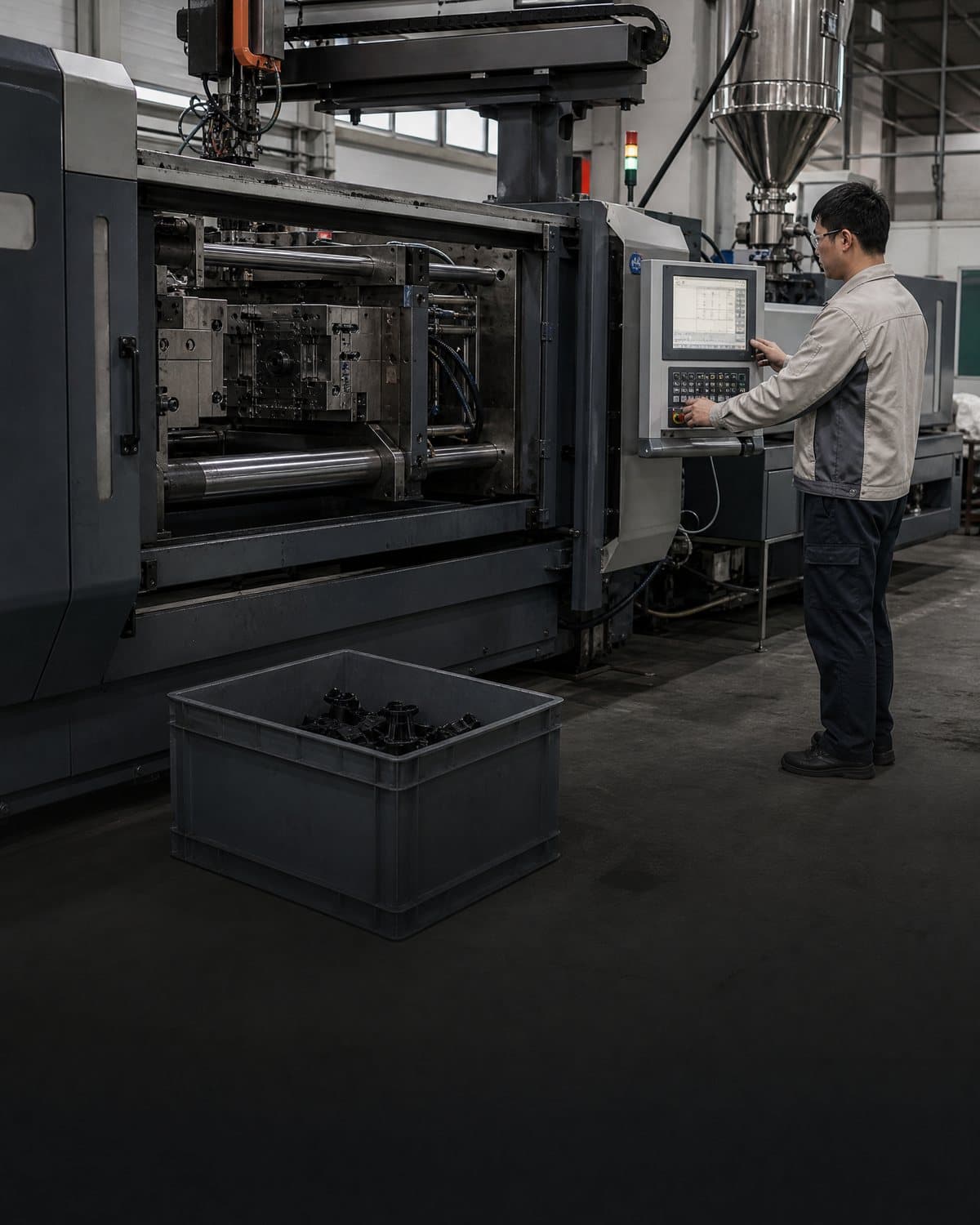
Start with the unanswered business or engineering decision. A pilot lot may need to check interface fit after molding, build a limited number of assemblies, support a field evaluation or establish a service buffer. A service lot may need to cover intermittent demand for an approved legacy part. These are different jobs, even if their quantities happen to be alike. State which plastic molded parts and which controlled revisions are in scope; identify critical interfaces, appearance areas, packaging and any secondary operation that the lot must represent. Exclude what the lot is not intended to demonstrate so samples are not later treated as evidence for an untested condition.
Write the demand window as an operational assumption, not a promise disguised as a forecast. Include the initial release quantity, any intended subsequent releases, expected timing uncertainty and the consequence of running out or carrying inventory. Then identify the decision owner and the evidence needed to proceed. Formlabs describes rapid-tooling approaches as a way to make limited series and evaluate design or material direction before a mass-production transition.[1] That general use case does not establish suitability for a particular geometry, resin or end use; those need review against the actual part.
02
Choose a tool intent that matches change risk and demand uncertainty
Tool labels can obscure the real decision. Ask the supplier to describe the proposed tool architecture, cavity approach, runner and gate concept, material assumption, anticipated modification path and what is deliberately not included. Rapid tooling can shorten the route to molded samples or limited production, but it is not a universal substitute for a later production tool. Tool life, cooling, venting, finish, dimensional behaviour, modification options and suitability for a particular resin are dependent on the part and tool design. A change-prone component may justify a tool strategy that preserves revision flexibility; a stable service component may justify a different emphasis on retained availability.
Treat the tool and the part definition as separate but connected commitments. A pilot can make sense while design learning continues, whereas a service programme normally needs a clearer released revision and a documented way to manage obsolescence. Protolabs notes that bridge tooling can both prove moldability and supply parts while a later tool is being made, but it also notes that production tools may incorporate capabilities not present in rapid tooling, such as more sophisticated cooling or venting.[2] Ask what the proposed route can reasonably show, then document the gaps rather than assuming equivalence.
03
Quote the scope as linked cost, time and release assumptions
A useful request separates non-recurring tool work from recurring parts, materials, setup, inspection, packaging, secondary operations, storage and logistics. That makes an injection molding price per part interpretable: it depends on the specified release size and on which one-time and recurring elements are included, not only on geometry. Ask for explicit assumptions on cavities, resin grade and colour, regrind policy if relevant, buyer-supplied items, expected releases and quotation validity. A lower unit figure is not comparable if it excludes a control, operation or release condition needed by the programme.
Discuss injection molding lead time as a chain of approvals and dependencies: drawing and CAD release, design-for-manufacture review, tool build or change, material availability, trial, inspection, correction, buyer disposition, packing and shipment. Do not convert a supplier estimate into a universal planning rule. Make clear which inputs must be complete for the estimate to hold and which events require a new date or price review. The compact comparison below helps establish the intended commercial boundary before a purchase order is issued.
| Scope element | Pilot emphasis | Service-demand emphasis | Buyer decision to record |
|---|---|---|---|
| Part definition | May identify controlled open items and what the lot will test | Normally relies on a released revision | Revision, deviations and change authority |
| Tool intent | Preserve learning and a defined route after the trial | Support planned releases within an agreed tool-status plan | Retain, modify, replace or retire trigger |
| Demand and releases | Bound the first lot and the decision it supports | Define release cadence, buffer and forecast uncertainty | Quantity window and replenishment owner |
| Evidence and acceptance | Focus on named fit, function, appearance or assembly questions | Focus on agreed receiving and traceability needs | Method, records, exceptions and disposition |
| Commercial basis | Separate tool work from trial parts and possible changes | Separate recurring parts from storage, handling and future changes | Included costs and re-quote triggers |
04
Set an evidence boundary that is useful without overstating validation
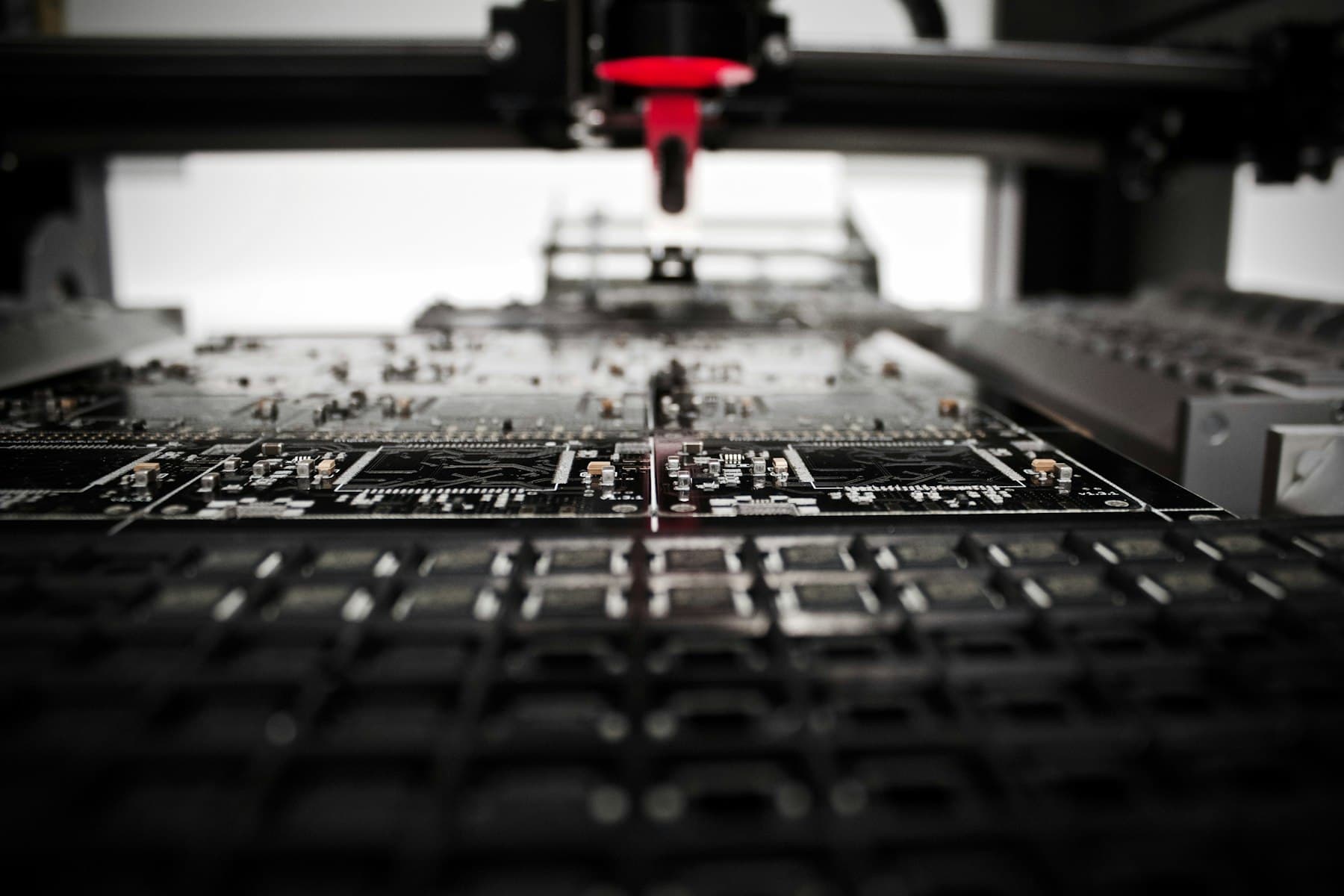
For each lot, agree what will be checked and how the result will be recorded: sample identity, drawing revision, material identification, tool status, dimensional points, visual reference areas, assembly check or functional test, and any observed deviation. ISO 20457:2026 provides a framework for geometrical and dimensional tolerances and acceptance conditions for plastic molded parts, while noting that product standards and product-specific requirements remain relevant.[3] Apply the chosen tolerances, datums, conditioning and inspection method to the particular part; a general standard does not decide its critical features for you.
Regulated, safety-relevant or reliability-critical products need an additional caution. The applicable regulatory, customer and product-validation obligations must be defined by the product owner and competent specialists; a pilot or service lot does not itself demonstrate compliance, approval or fitness for use. FDA’s process-validation guidance is for drug and biological-product manufacture, but its lifecycle framing illustrates why evidence should be tied to a defined process and intended purpose rather than inferred from one acceptable sample.[5] Use that as general planning logic only, not as a claim that an injection-molding programme follows FDA requirements.
05
Create a handoff record and a clear next action
Close the lot with one decision record: what was made; which revision, material and tool status applied; what evidence was reviewed; what was accepted, limited or deferred; and what happens next. A conditional release should name its exception, owner, affected quantity or revision and expiry or review point. Set notice and approval rules for changes that could alter the part or evidence basis, such as resin grade, colourant, tool repair, cavity change, gate change, inspection method, secondary operation or pack-out. The appropriate boundary is part-specific and should be agreed before the lot rather than discovered after a change.
For a quote or engineering review, send the controlled CAD and drawing, material direction, intended use of the lot, quantity and release pattern, critical features, desired evidence, packaging needs and known change risks. State whether the objective is pilot learning, a bridge supply need or recurring service demand, and ask for the assumptions that would change the route, price or timing. This gives the buyer a practical basis to prepare a quote request without implying an unverified factory capability or production outcome.
Practical takeaway
Before you move
to the next review.
- Name the single pilot or service decision the lot must support, its owner and the condition for moving to the next route.
- Provide the controlled CAD and drawing revision, material direction, critical interfaces, appearance reference and any required secondary operations.
- Define the quantity window, release pattern, stock-out or excess-inventory consequence, and re-quote triggers.
- Request the proposed tool intent, cavity and runner assumptions, change path, and features or performance not represented by the route.
- Agree the acceptance record: sample and lot identification, inspection or functional method, deviations, evidence retention and change authorization.
FAQ
Common questions
What is the difference between a pilot lot and a service lot?
A pilot lot is primarily scoped to support a defined learning or release decision, such as an assembly check or controlled early deployment. A service lot is primarily scoped to make approved parts available against intermittent replacement demand. Either may be small, but their part-release, tool-status, evidence and change-control needs can be different. Define the purpose rather than relying on quantity alone.
Can the same tool support pilot and service demand?
It can be considered, but should be an explicit part-specific decision. Review the approved revision, material, tool condition and modification route, expected releases, inspection basis, maintenance or storage responsibilities, and the consequence of a tool change. A pilot tool should not be assumed to be a long-term service tool without documenting those conditions.
What should be included in a short-run molding quote request?
Include controlled CAD and drawing files, material and colour direction, intended lot purpose, quantity and release assumptions, critical dimensions or interfaces, visual requirements, secondary operations, packing needs, requested inspection evidence and known design-change risks. Ask the supplier to identify the tool, timing and cost assumptions that materially affect the proposal.
References
Source material
- [1] Formlabs, “Guide to Rapid Tooling.”
- [2] Protolabs, “How to Use Injection Molding for Bridge Tooling.”
- [3] International Organization for Standardization, “ISO 20457:2026 — Plastics moulded parts — Tolerances and acceptance conditions.”
- [4] Covestro, “Injection Molding of High-Quality Molded Parts – Drying.”
- [5] U.S. Food and Drug Administration, “Process Validation: General Principles and Practices.”
This guide is general information for early procurement and engineering discussion. It does not replace product-specific DFM, qualification, validation, regulatory assessment or legal advice.