
Qualifying a second source is more than asking another molding company for samples. The buyer must establish whether a transferred mold, duplicate tool or newly released production route can make the specified part under a controlled configuration, then preserve that capability for the day it is needed. A supplier can be technically capable and still be unready if the tool records are incomplete, the material route is different, the measurement method cannot be compared or the commercial transfer rights are unclear.
Start with the continuity scenario: emergency capacity, a planned supplier transfer, regional resilience, tool-repair coverage or routine dual sourcing. Then define the part revision, tool route, authorized volume, destination market, response expectation and release authority. Use the [request-a-quote](/request-a-quote) page to send those assumptions with the controlled files rather than requesting an interchangeable price for an undefined configuration.
Approve a production configuration, not a supplier name. The approval record should identify the part and drawing revision, tool or cavity route, resin and colour condition, machine basis, inspection evidence, accepted deviations and the person authorized to release parts.
01
Define the continuity job before assessing the supplier
A second source may be expected to provide a few emergency lots, share routine volume, receive an existing mold, build a duplicate tool or take over the full program. These are different qualification scopes. State the required response time, annual and peak quantities, markets, packaging, traceability, approved subcontractors and whether the alternate may ship only after a buyer release. Do not describe a source as fully qualified when its evidence covers only a low-volume trial or one cavity.
Freeze the product baseline before inviting comparison: drawing and CAD revision, critical-to-quality features, approved resin grade and colour, inserts, surface standard, functional tests, packaging and known deviations. Link the baseline to the intended route—transferred tool, duplicate mold, new tool or existing supplier-owned asset. The buyer should also confirm title, access, modification and data-use rights before relying on a physical mold transfer; legal counsel should adapt those terms to the governing agreement.
Assign owners for product definition, quality evidence, commercial terms, tool custody, logistics and final release. A candidate can answer technical questions, but the buyer or product owner remains responsible for deciding whether the part is acceptable for its market and application. InjeForm’s [injection mold transfer](/injection-mold-transfer) information can support the handover discussion, while the qualification record should control the actual decision.

02
Check the transferred tool and the receiving production route
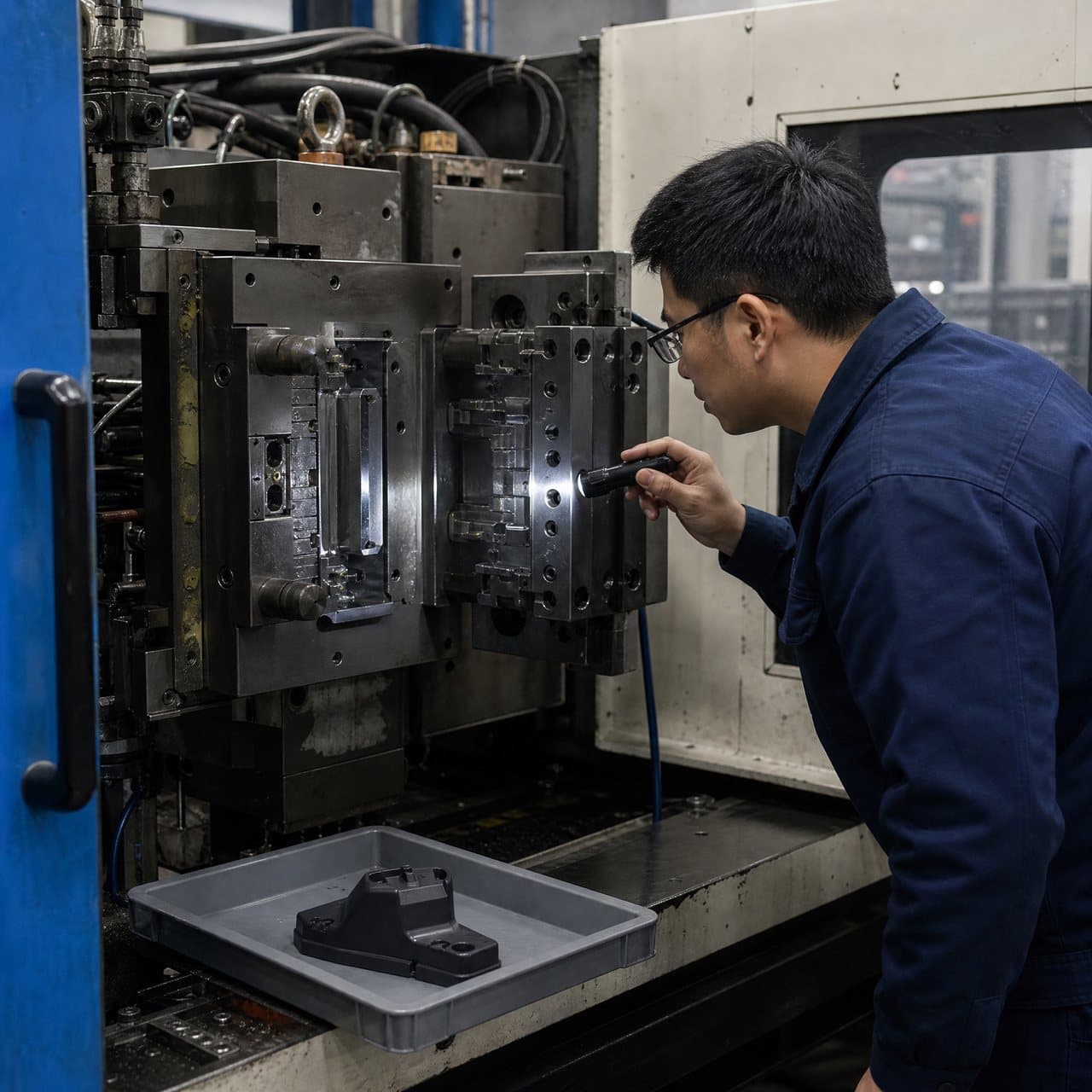
A mold arriving at a new site is not automatically production-ready. Request an inventory and condition record covering tool ID, cavity count, inserts, hot-runner or controller details where applicable, visible damage, wear parts, spare parts, last maintenance, last accepted run, open repairs, lifting and packing requirements, and the interfaces needed for water, power, hydraulics, ejection and automation. At the receiving site, require an incoming inspection before the tool is installed or modified.
Ask the second source to document machine fit and process assumptions for the actual mold. Review clamp and shot requirements, platen and tie-bar clearance, nozzle and locating interfaces, ejector arrangement, utilities, guarding, material drying or conditioning, automation, inspection and downstream operations. Compare the planned resin manufacturer, grade, additive or colourant, regrind policy and lot traceability with the released baseline. A different machine or material source may be acceptable, but it should be visible and assessed for its effect on CTQs, appearance, function and market requirements.
Separate supplier capability statements from program-specific evidence. A certificate, audit or machine list can support a review, but it does not prove that this tool, resin, press and inspection method can produce conforming parts. Buyers can use the [capabilities](/capabilities) page as a starting point and then request a written technical-gap list with owners, closure dates and any conditions that remain open.
| Qualification area | Evidence to request | Buyer decision |
|---|---|---|
| Controlled baseline | Part, drawing, tool, cavity, resin, colour and deviation revisions. | Approve one configuration before the trial. |
| Tool transfer | Inventory, condition, maintenance, repair and chain-of-custody records. | Accept custody and disposition open tool work. |
| Machine and process fit | Press calculation, utilities, material preparation, automation and inspection plan. | Close technical gaps or document approved limits. |
| Product evidence | Identified samples, dimensional, visual, functional and assembly results. | Approve, conditionally approve or reject against stated criteria. |
| Continuity route | Capacity, lead-time assumptions, spares, contacts, packaging and escalation plan. | Authorize only the contingency scope actually supported. |
03
Build a comparable qualification trial
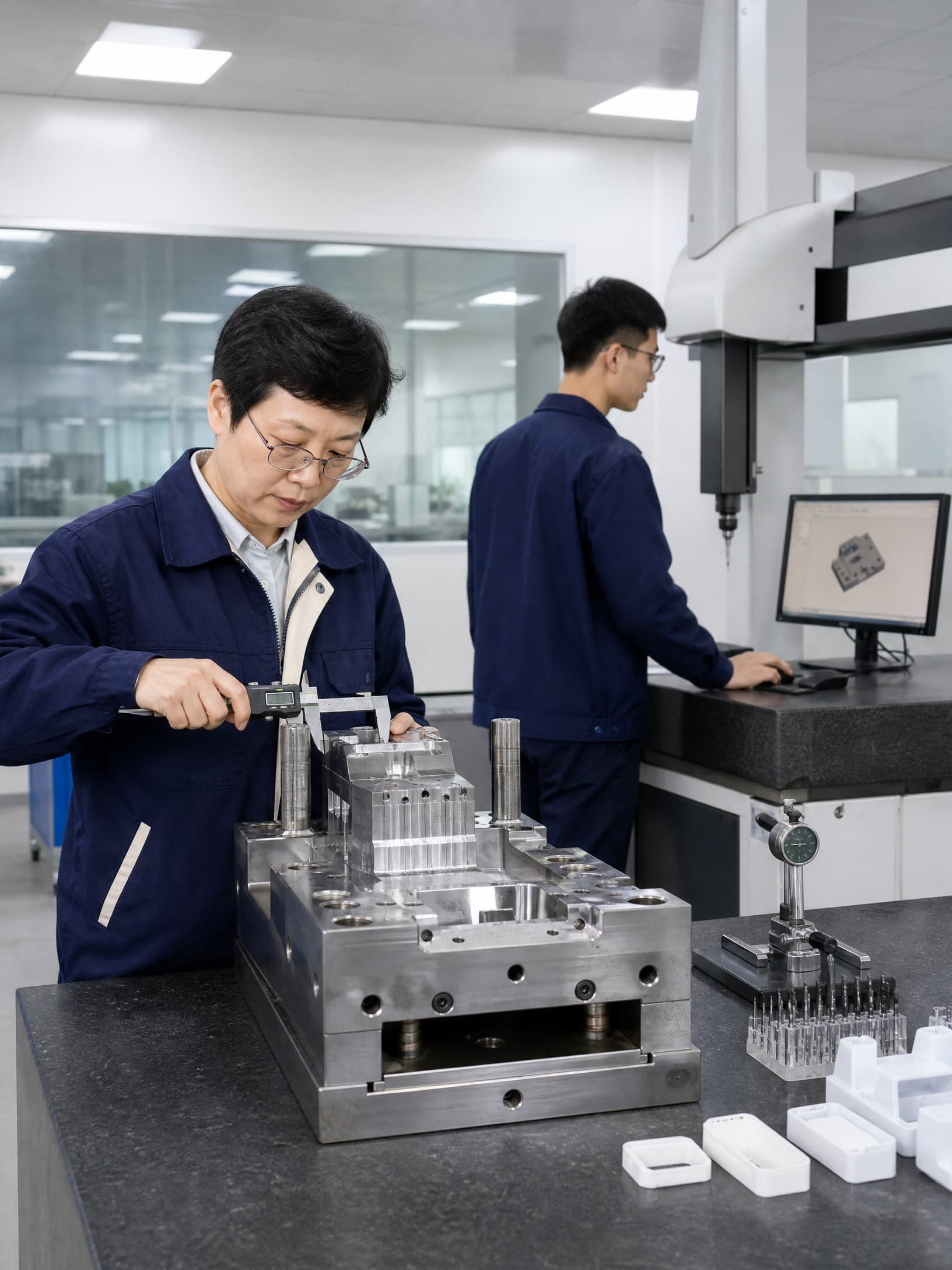
Agree the trial purpose before parts are molded. Define the intended production condition, cavity coverage, sample quantity, material and lot, process records, part identification, conditioning, inspection methods, functional or assembly tests, appearance standard and decision date. Compare the second source against the same drawing, datums, tolerances and acceptance conditions used for the incumbent. ISO 20457 provides a framework for molded-part tolerances and acceptance conditions, but it does not replace product-specific requirements or a buyer’s contract.
Ask for results that can be traced to the exact configuration: part and mold revision, cavity, resin lot, machine, date, run status and any rework or sorting. For tight or functional features, request the measurement method, fixture or gauge, calibration status, resolution and datum strategy. If capability studies, PPAP or customer-specific submissions are required, state the method, sample basis and approval level in advance; neither a capability index nor a PPAP label is a universal substitute for the buyer’s release criteria.
Use staged outcomes rather than a single pass/fail label. The buyer may approve an engineering build, a limited safe-launch lot, routine production, or a hold pending corrective action. Each decision should name the authorized quantity, expiry or review trigger, accepted deviations and next evidence. A visually similar part is not proof of interchangeability across unmeasured dimensions, cavities, materials, throughput or long-term process stability.
04
Connect quality approval to continuity controls
Continuity depends on more than a conforming first run. Review whether the second source can obtain the approved resin, maintain the transferred tool, secure trained operators, support inspection, pack and label parts correctly, and recover after a disruption. Ask for realistic capacity assumptions rather than a headline press count: available shifts, changeovers, maintenance, inspection, current commitments, material lead time, freight and customs may all affect the recovery date.
Define the first alternate-source shipment as a controlled event. Identify the lot, source, tool or cavity, resin and release status; state whether incoming inspection, containment, additional sampling or customer notification is required; and give logistics and quality teams an escalation contact. If the source will use a different site, subcontractor, material supplier, machine, packaging route or measurement system, the change should follow the agreed review path. The [quality](/quality) page can help frame evidence requests, but the product-specific quality agreement should govern.
For regulated products, keep manufacturing support separate from legal-manufacturer or product-owner responsibilities. Applicable quality-system, customer and market obligations may require additional supplier controls, validation, records or notification. A second source should not be marketed as regulatory-approved merely because its samples passed an engineering review.
05
Maintain readiness after the approval gate
A backup route can decay quietly when a mold sits idle, a key operator leaves, a resin grade is discontinued or a repair changes a cavity. Maintain a readiness record with the approved configuration, latest trial and inspection evidence, tool location and condition, material and spare constraints, capacity assumptions, named contacts, open risks, deviations, last review and re-entry criteria after inactivity. Review the record on a risk-based or contract-defined schedule and after significant changes.
Define notification triggers before production is shared. Examples may include tool repair or insert replacement, gate or hot-runner work, cavity change, resin or colour-source change, machine transfer, process-window revision, inspection-method change, subcontractor change, packaging change or major maintenance finding. The supplier should state the reason, affected lots, risk assessment, containment and proposed evidence; the buyer should decide whether document review, new samples, testing or renewed qualification is needed.
Finally, exercise the governance path before a shortage. Confirm who can authorize production, who receives an escape notice, which records travel with the first shipment and how feedback returns to engineering and supplier management. For a project-specific review of the part, tool and continuity assumptions, [request a quote](/request-a-quote) with the current baseline and intended second-source scope.
Practical takeaway
Before you move
to the next review.
- Define the continuity scenario, response expectation, authorized volume, market, route and final release authority.
- Freeze the part, tool, cavity, resin, colour, inspection and deviation baseline before comparing suppliers.
- Require a tool-condition, machine-fit, material, downstream-process and capacity-gap review for the receiving source.
- Run a traceable comparison trial with agreed measurement, functional, visual, sample-identification and decision criteria.
- Maintain readiness records and contract-defined change notifications so the alternate route remains usable after qualification.
FAQ
Common questions
Does transferring an injection mold qualify the second source automatically?
No. Transfer establishes a physical route, not proof of safe installation, suitable machine fit, current tool condition, correct material handling or conforming parts. Require receiving inspection, a documented trial and a buyer release tied to the intended configuration.
Can duplicate-tool samples be used to approve a second source?
They can support qualification, but the duplicate is a distinct production configuration. Confirm its controlled design, cavity layout, material, process, measurement method, functional results, visual standard and change status before deciding whether it can supply the intended scope.
What records should an alternate molder provide?
The package should be tailored to product risk and contract terms. It commonly includes the controlled baseline, tool and interface review, material and traceability plan, process and inspection controls, trial results, deviations, capacity assumptions, change contacts and release status. Regulated or customer-specific programs may require more.
How often should second-source readiness be reviewed?
There is no universal interval. Set a risk-based or contract-defined review and revisit the route after tool work, material or machine changes, long inactivity, recurring quality issues, capacity changes or supplier-performance concerns. Keep the decision and current evidence retrievable.
Is a qualified second source required to make parts identically to the incumbent?
Not necessarily. The buyer should define which characteristics and functions must meet the controlled requirements and which variation is acceptable. Qualification should demonstrate the agreed product and supply criteria; it should not assume identical cosmetic variation, cycle, cost or throughput without a specific requirement.
References
Source material
- [1] International Organization for Standardization (ISO), “ISO 20457:2026 — Plastics moulded parts — Tolerances and acceptance conditions”
- [2] U.S. Food and Drug Administration, “Purchasing Controls”
- [3] Automotive Industry Action Group (AIAG), “Production Part Approval Process (PPAP)”
- [4] National Institute of Standards and Technology (NIST), “What is Process Capability?”
This guide is general information for early procurement and engineering discussion. It does not replace product-specific DFM, qualification, validation, regulatory assessment or legal advice.