
Second-source readiness is not established by adding a supplier to an approved-vendor list or by obtaining one set of samples. It is the buyer's documented ability to place work with an alternate molder or tool route and receive parts that meet the controlled product requirements. The alternate may use a transferred mold, a duplicate or newly built tool, or an approved capacity route. Each route can introduce different sources of variation, so the buyer should define the intended contingency, the product configuration, and the evidence needed before a supply interruption makes those decisions urgent.
Requirements are the controlled obligations in the drawing, specification, purchase order, quality agreement, applicable market rules, and customer-specific requirements. Recommendations are risk-based requests that make a comparison and recovery plan more credible when those documents are silent. The necessary evidence depends on resin and color system, part geometry, tool architecture and condition, machine and automation, inspection method, market, and contract terms. Neither a familiar supplier nor a prior good part proves universal interchangeability, tool life, tolerance capability, cycle time, price, or certification status.
Approve a defined alternate production configuration, not a supplier name: the part revision, tool or cavity set, resin, machine basis, process controls, evidence reviewed, and release authority should be traceable.
01
1. Define what the second source must be ready to do
Begin with the business scenario. Is the alternate expected to provide emergency capacity, geographic resilience, a phased production transfer, a long-term dual source, service parts, or a backup during tool repair? State the required response time, authorized volumes, markets, packaging and traceability needs, and whether production may start only after a buyer release. A source that can make limited contingency parts may not be ready for full-rate launches, all cavities, every finish option, or every regulated destination. Treat those as separate claims that need separate evidence.
Then identify the manufacturing route precisely. A transferred existing mold, a duplicate tool, a new tool built from released data, and a supplier using a family tool are not technically equivalent by default. For a transfer, confirm that the agreement gives the buyer the necessary release, use, data-access, and modification rights before relying on the route. For a duplicate or new tool, control the CAD, drawing, tolerance scheme, bill of materials, approved resin grade, color, inserts, surface standard, tool revision, cavity count, and permitted deviations. The buyer should require one revision-controlled baseline; a recommendation is to include an open-issues register so assumptions do not become unapproved requirements.
Assign decision owners before qualification starts. Engineering should own product-definition and functional decisions, quality should own acceptance evidence and deviations, procurement or supplier management should own commercial and change-notification obligations, and the product owner should name the final release authority. This does not mean every team approves every record. It means the approval route is known before the alternate source spends time on a trial or ships parts under an unclear status.

02
2. Compare the alternate source against the actual production configuration
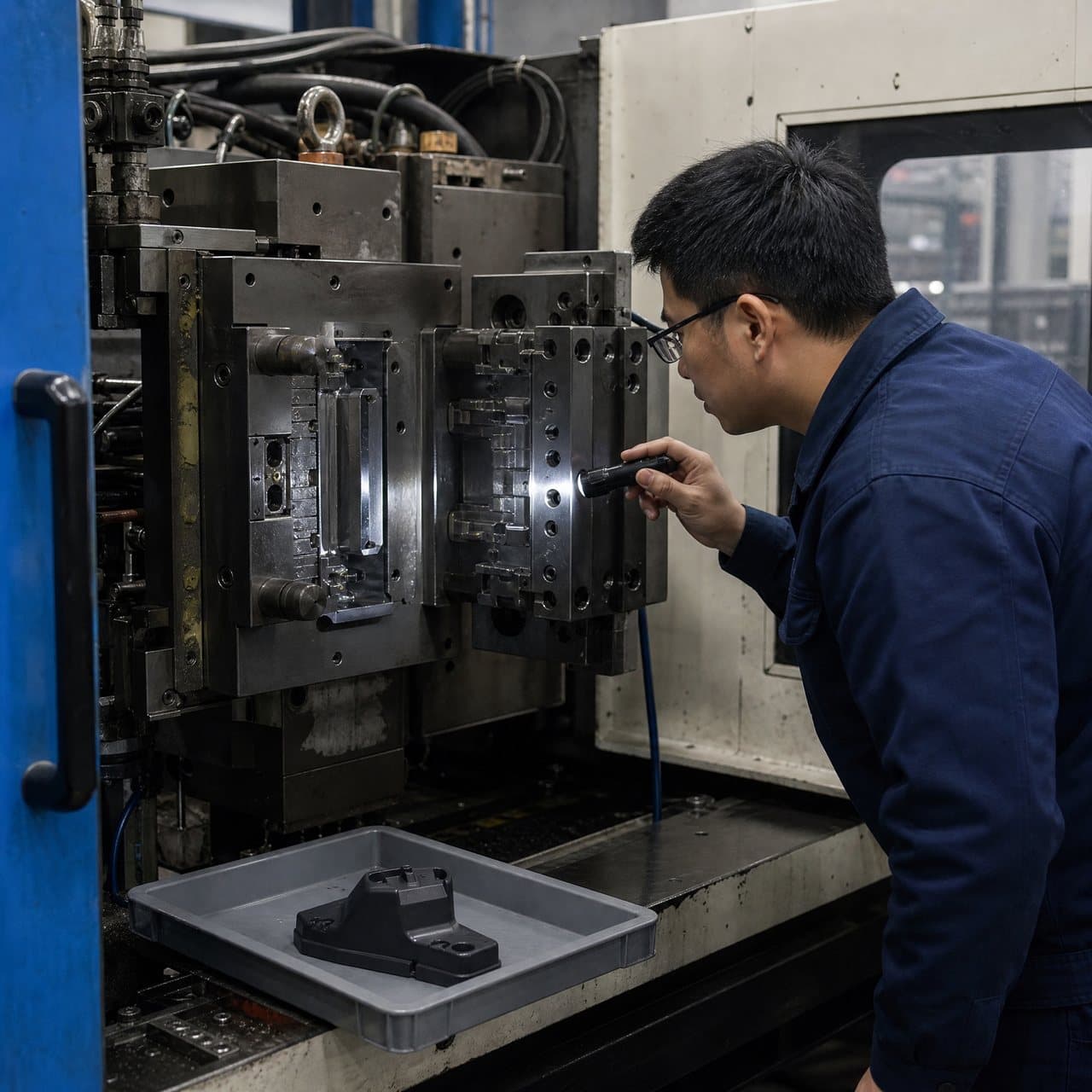
Ask the candidate to perform a documented technical-gap review, not merely return a capability questionnaire. The review should identify the proposed press and its clamp, shot, platen, nozzle, locating, ejector, utility, controller, guarding, lifting, and automation interfaces; any limitations should be listed with an owner and closure evidence. Where an existing mold is involved, request the current tool condition and maintenance record, cavity and insert status, hot-runner and cooling information where available, spare and wear-part availability, and a statement of work for repairs or preventive maintenance before the first production trial. Do not assume an otherwise suitable press can safely or productively run a particular tool without supplier confirmation.
Compare the material and downstream route with the accepted baseline. Request the proposed resin manufacturer, grade, regrind or recycled-content policy if permitted, colorant or additive condition, material identification, drying or conditioning instructions, lot traceability, and any local material qualification evidence required by the contract. Also compare trimming, inserts, assembly, decoration, testing, packing, labeling, warehouse controls, and subcontracted operations. A different raw-material source, molding machine, fixture, or finishing route can merit additional review when it affects a controlled feature, appearance, function, traceability, or market requirement.
Supplier certificates, audit reports, and reference lists may be useful inputs, but they are not substitutes for part-specific readiness. The buyer should require evidence that the candidate can meet the specified requirements for the relevant configuration. As a risk-based example, FDA purchasing-control guidance calls for documented supplier evaluation and purchasing data that clearly describe specified requirements; medical-device teams must also follow their applicable quality-system and regulatory obligations. Other sectors should set equivalent controls through their own contracts and quality systems.
03
3. Build one qualification plan and one comparable evidence package
Use a joint qualification plan to prevent the original and alternate sources from producing incomparable evidence. Before a trial, agree the controlled part and tool definitions, approved input materials, requested cavities, intended production condition, required sample quantity, measurement methods, functional or assembly checks, cosmetic evaluation conditions, records, sampling logic, and decision dates. ISO 20457:2026 provides a plastics-specific framework for geometrical and dimensional tolerances and acceptance conditions; it does not replace the buyer's product-specific drawing, functional criteria, or contractual acceptance plan.
The buyer should require the alternate supplier to disclose non-baseline conditions, including reduced cavity operation, temporary manual work, substitute instruments or fixtures, settings adjusted during the run, reworked parts, excluded results, or unclosed tool repairs. These conditions do not automatically reject the source, but they must be visible to the decision-maker. If the program uses PPAP or another customer submission system, define its required level and timing in the agreement. AIAG describes PPAP as a process for demonstrating that production parts consistently meet engineering design-record and specification requirements; it is not a universal label that makes every industry or trial automatically approved.
The table is a practical comparison aid. It should be tailored to product risk and the agreed route rather than copied as a universal template.
| Readiness item | Buyer evidence request or comparison point | Acceptance or approval point |
|---|---|---|
| Controlled baseline | Part, drawing, tool and cavity revision; approved material and color condition; current deviation list; source of each controlled file. | Approve the configuration and resolve document conflicts before the qualification run. |
| Tool and press fit | Tool-condition record; interface review; proposed press and auxiliary equipment; utility, controller, safety, lifting, automation, and maintenance gaps. | Accept technical readiness only when gaps have an agreed disposition; do not treat receipt of a mold as production release. |
| Process and traceability basis | Material preparation, proposed process controls, cavity identification where applicable, lot traceability, records, reaction plan, and change-notification route. | Approve the planned control and containment method before parts are used for qualification. |
| Product evidence | Dimensional and functional results, visual assessment against an agreed standard, measurement-method information, sample identity, and any cavity-specific findings. | Release only against the agreed product criteria and documented disposition of deviations. |
| Supply recovery capability | Available capacity, realistic lead-time assumptions, approved subcontractors, packaging route, inventory or spare strategy, and escalation contacts. | Record the authorized contingency scope; do not infer full-rate capacity from a successful trial. |
04
4. Evaluate equivalence with traceable trials, not visual similarity
Plan the trial as evidence for specific decisions. Identify each critical-to-quality dimension, interface, appearance zone, material or assembly attribute, test method, acceptance criterion, and required sample condition. Confirm part identity through part number, drawing revision, mold or cavity identifier where relevant, resin and lot, date, machine, and run status. Compare results with the last accepted baseline only after confirming that the drawings, material basis, methods, conditioning, and sample conditions are comparable. A nominally matching sample does not demonstrate all unmeasured characteristics or future process stability.
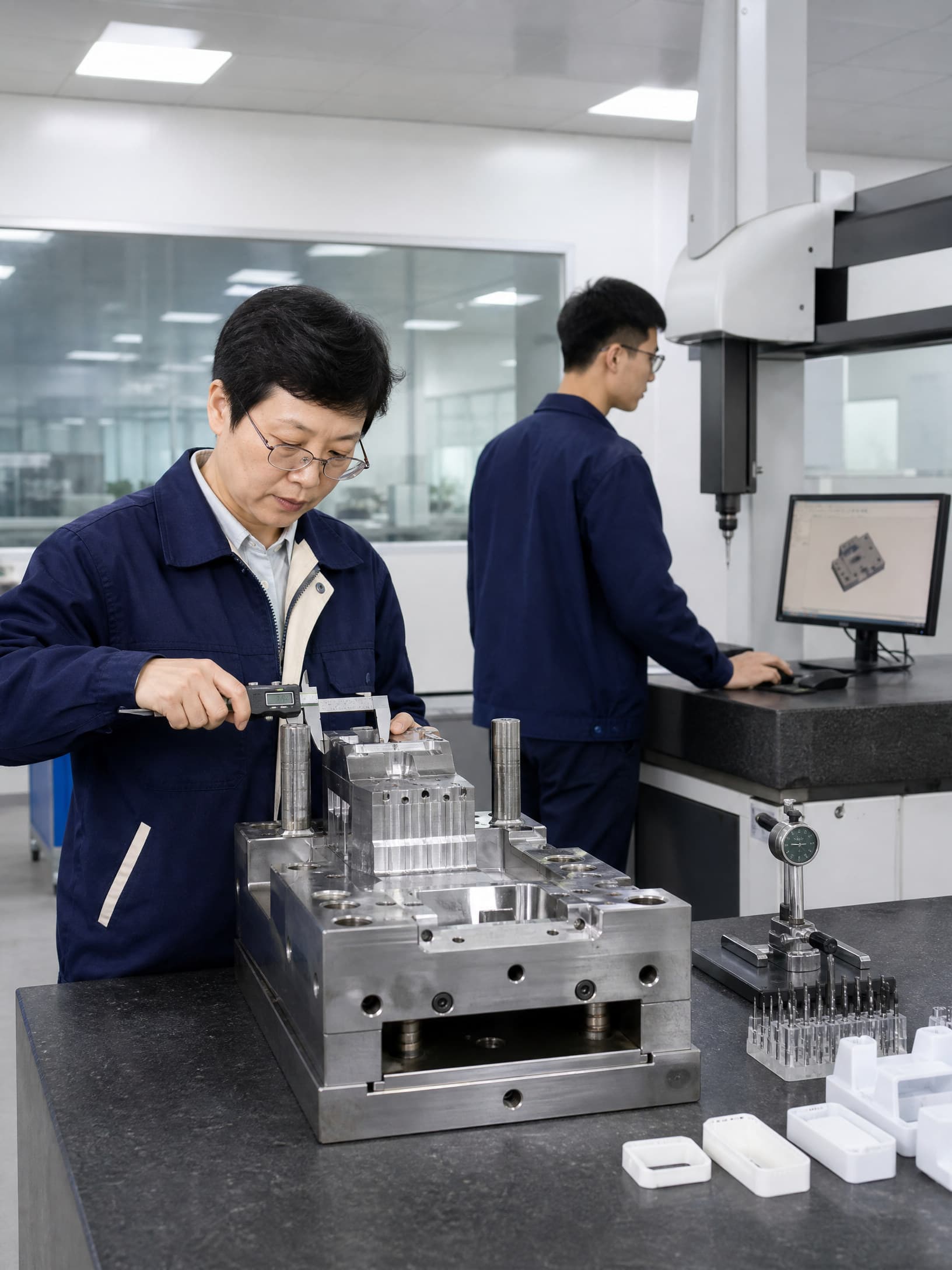
Ask how the supplier established confidence in the measurement result. For meaningful tight-tolerance comparisons, request the gauge or fixture, program revision, calibration status, datum or part-location method, resolution, and any appropriate measurement-system study. NIST notes that process capability compares output from an in-control process with specification limits. Therefore, a capability index, if required, should be tied to an agreed characteristic, stable data basis, measurement system, cavity coverage, and defined production condition. Do not impose one universal index, sample count, or cycle-time target across dissimilar parts.
Separate a trial decision from a production decision. The buyer may approve a limited engineering build, a conditional safe-launch quantity, a full routine-production release, or rejection; each outcome should state its scope and expiry or review trigger. Before approving routine supply, review nonconformances, concessions, tool changes, process adjustments, data exclusions, and any difference in material or downstream operations. Written acceptance should identify the evidence reviewed, the exact alternate configuration, accepted deviations, the approver, and the next required action.
05
5. Keep the second source ready after initial qualification
A qualified backup can become unusable if the tool, data, material route, or supplier capacity changes without review. The buyer should require change notification for events defined in the agreement, which may include a tool repair or insert replacement, cavity or hot-runner change, resin source or grade change, machine or automation transfer, measurement-method change, subcontractor change, process-window change, major maintenance finding, packaging change, or prolonged inactivity. The notification should state the reason, affected parts and lots, risk assessment, proposed containment, evidence plan, and requested buyer decision. The required requalification scope should be proportionate to the potential effect and applicable market rules.
Maintain a controlled readiness record for each source. It should include the approved configuration, latest qualification or submission evidence, tool location and condition status where relevant, capacity assumptions, named contacts, current risk register, material and spare constraints, approved deviations, last review date, and re-entry criteria after a dormant period. Periodic confirmation runs, document reviews, or supplier assessments can be recommendations when the contract is silent, but any mandated review frequency should be stated as a requirement. The buyer should not represent the route as active redundancy if material, tooling, qualified personnel, or production access are no longer available.
Finally, test the governance path before a disruption. Confirm who can authorize release, who receives a change or escape notification, which records accompany the first alternate-source shipment, how lots are identified, and how feedback returns to engineering and supplier management. A ready second source is a controlled capability supported by current evidence; it is not a permanent promise that the two sources will have identical dimensional variation, cosmetic outcome, throughput, cost, or delivery performance.
Practical takeaway
Before you move
to the next review.
- Define the contingency scope, authorized part configurations, volumes, markets, response time, and final release authority before evaluating an alternate molder or tool route.
- Request a revision-controlled baseline and a supplier technical-gap review covering tool condition, press and interface fit, resin route, downstream operations, traceability, maintenance, and capacity assumptions.
- Compare both sources against the same drawing, material basis, inspection methods, functional and cosmetic criteria, sample conditions, and documented decision rule.
- Approve separate gates for technical readiness, qualification trial, limited or safe-launch production, routine release, deviations, and subsequent changes that may require renewed evidence.
- Maintain a current second-source readiness record and require contract-defined notification and risk assessment before material, tool, machine, process, measurement, subcontractor, or packaging changes.
FAQ
Common questions
Is a transferred injection mold automatically qualified at the new supplier?
No. Transfer can establish a physical route, but it does not by itself confirm safe installation, correct interfaces, current tool condition, approved material handling, a suitable process, measurement comparability, or conforming molded parts. Require a receiving technical review and a qualification plan with evidence and approval criteria tied to the intended production configuration. Legal rights to release or use the tool and technical data should also be confirmed under the applicable agreement.
Can a buyer approve a second source from samples made with a duplicate mold?
Possibly, but the duplicate tool should be treated as a distinct production configuration. Confirm its controlled design basis, cavity layout, resin, process route, dimensional and functional evidence, visual standard, measurement method, and change status. A similar part shape or a favorable sample set may support an engineering decision, yet it does not prove complete equivalence, routine capacity, or conformance for every requirement without the agreed evidence.
What documents should an alternate injection molding supplier provide?
Set the required documents by risk and contract, but a practical package often includes the controlled technical baseline; tool-condition and interface review; material and traceability plan; process flow, risk analysis or equivalent, and control plan; measurement-method information; trial, dimensional, visual, and functional results; cavity or lot identification where applicable; deviations; capacity assumptions; and change-control contacts. Regulated or customer-specific programs may require additional submission records.
How often should second-source readiness be reviewed?
There is no universal interval. Set a frequency or event-based trigger that reflects the part's risk, demand pattern, tool condition, material availability, market obligations, and contract terms. Review should also follow defined changes, a long inactive period, recurring quality issues, major maintenance, capacity changes, or supplier performance concerns. The key is a current, revision-specific readiness record and a written decision on whether fresh evidence is required before release.
References
Source material
- [1] International Organization for Standardization (ISO), “ISO 20457:2026 — Plastics moulded parts — Tolerances and acceptance conditions”
- [2] U.S. Food and Drug Administration (FDA), “Purchasing Controls”
- [3] Automotive Industry Action Group (AIAG), “Production Part Approval Process”
- [4] National Institute of Standards and Technology (NIST), “What is Process Capability?”
This guide is general information for early procurement and engineering discussion. It does not replace product-specific DFM, qualification, validation, regulatory assessment or legal advice.