
Buyers should use cost of poor quality (COPQ) to compare how an injection molding supplier prevents, detects, contains and permanently corrects defects—not simply how many rejects it reports. Track the cost and operational effect of internal failures before shipment and external failures after receipt, then review the evidence behind each event. This makes supplier reviews more useful than a price or percentage-reject comparison, especially when a dimensional, cosmetic or functional defect can disrupt assembly, freight or customer service.
COPQ is a review lens, not a penalty formula. Separate the cost of finding quality from the cost created by a failure, and ask suppliers to show the data, containment and effectiveness check behind material issues.
01
H2: Define COPQ before comparing suppliers
For a buyer, COPQ is the cost created by nonconforming molded parts. ASQ separates internal failure costs, found before the customer receives the product, from external failure costs, found after transfer. Scrap, sorting, rework and failure analysis can be internal; returns, complaint handling, replacement work and transport following an escape can be external. Prevention and appraisal—such as DFM review, setup verification and routine inspection—are quality investments, not COPQ.[1]
Set the review boundary before comparing suppliers: part or mold number, revision, resin and colour condition, lot, destination and known buyer-side costs. A low reject rate is not enough when a defect is found after shipping or assembly. Conversely, early containment can increase a supplier’s internal cost while avoiding a more disruptive external failure.
Do not apply one cash value to every defect. Use severity, quantity, detection point and disposition. Keep currencies, Incoterms, tax treatment and import-related costs visible for European, US and Middle Eastern programs rather than merging them into an unsupported total.

02
H2: Compare failure cost and quality-control evidence together
A practical scorecard combines failure history with injection molding quality control. For material issues, ask whether a nonconformance links to the drawing revision, CTQ, lot, cavity where relevant, material lot, process record or inspection record. The objective is enough traceability to investigate a pattern and protect the next shipment.
Ask suppliers to classify equivalent events in the same way. For significant lots, an injection molding quality report should state output, quantity inspected, sampling basis, defects, disposition, containment and release decision. Normalize results to output and separate verified defects from parts temporarily isolated during containment.
| Review dimension | Lower-risk evidence | Warning sign | Buyer follow-up |
|---|---|---|---|
| Internal failure | Defect quantity, disposition, cavity or lot traceability and dated containment | Only a total scrap percentage with no defect code or lot link | Ask for the affected lot, disposition records and recurrence trend |
| External failure | Complaint, return or assembly-stop record tied to the part and corrective action | Shipment is replaced but the escape route is not explained | Review detection point, downstream impact and revised release control |
| Injection molding inspection | CTQ method, instrument status, sample result and acceptance decision | Generic inspection statement without feature-level evidence | Confirm measurement method, frequency and revision control |
| Defect analysis | Problem statement, evidence, cause test, corrective action and effectiveness check | Cause is stated as operator error with no system change | Ask what changed, who approved it and how recurrence was checked |
| Commercial comparison | Comparable scope, period and documented buyer-side effects | One supplier reports only factory losses while another includes returns | Align scope before using COPQ in a sourcing decision |
03
H2: Read the defect pattern, not just the total
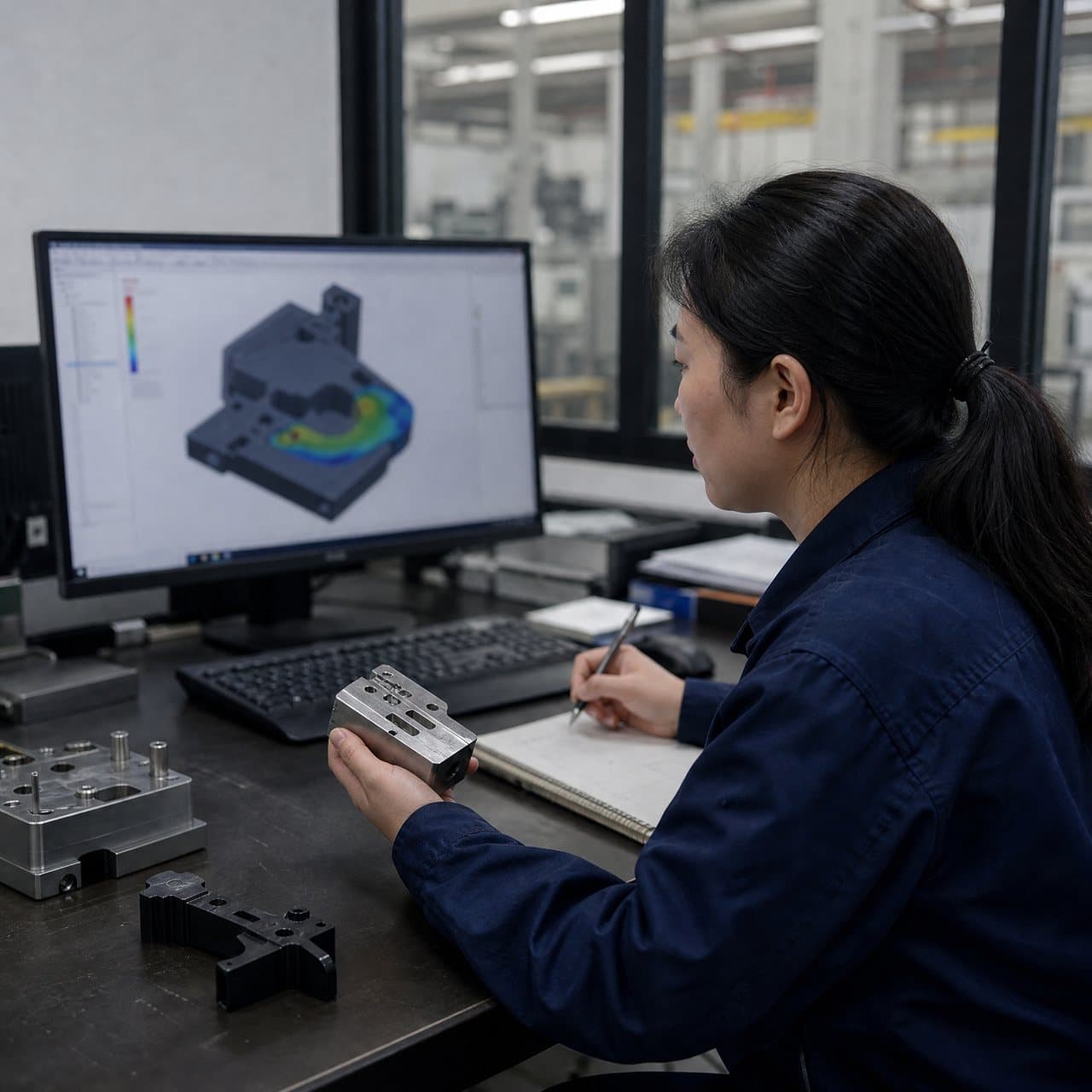
Injection molding defect analysis starts with a precise statement: failed feature, approved requirement, affected parts and detection conditions. Group events by mechanism only where evidence supports it. Flash can lead to a tooling, shutoff, process-pressure or contamination investigation; warpage can require review of geometry, cooling, packing, resin condition or measurement conditioning.
Look for concentration: one cavity, a mold change or a resin lot may narrow the investigation more usefully than a plant-wide percentage. Trend charts prioritise action, while photos, measurements, retained samples and process records make the pattern testable. NIST describes root cause analysis as a systems approach for identifying underlying causes associated with risk.[3]
Separate containment from corrective action. Sorting, holding stock or final inspection can protect a shipment, but a corrective action should address why the process allowed the failure and be checked for effectiveness. The CAPA framework in 21 CFR 820.100 calls for quality-data analysis, investigation, corrective action and verification or validation of effectiveness; it is a useful evidence model even when the regulation does not apply.[2]
04
H3: Use inspection spending as a signal, not an automatic negative
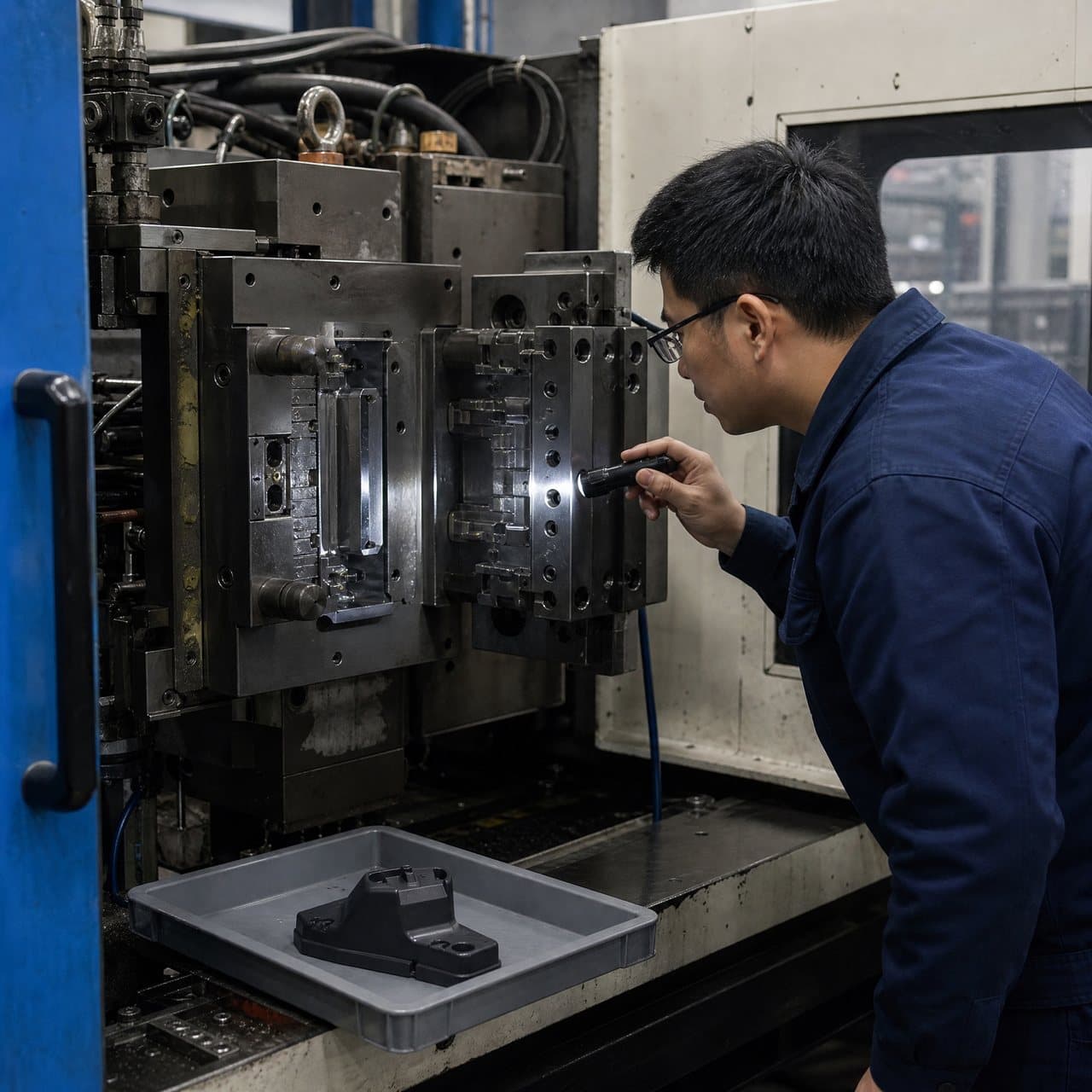
More injection molding inspection is not automatically better, and less is not automatically leaner. A supplier may add 100% sorting after an escape, then redesign that control only after a verified process change. Review whether the inspection targets a real risk, the gauge and method fit the feature, and the control plan is updated under change control.
For each critical feature, request the acceptance limit or visual standard, method, equipment, frequency, recorder, reaction plan and retained record. A CMM report should identify the drawing revision and tolerance logic. For functional or cosmetic risk, agree on fixtures, boundary samples or approved visual standards where measurement alone does not establish usability.
05
H2: Build a fair supplier-review cadence
At launch, use COPQ to expose preventable risk, not to create a retrospective chargeback argument. Review DFM assumptions, CTQs, approved samples, the inspection plan and the first production injection molding quality report. In serial supply, focus on repeated material defects, severity, containment speed, corrective-action closure and recurrence after a change.
Use one template across candidate injection molding suppliers. Record units, currencies, defect definitions and disposition rules. If buyer-side costs include incoming inspection, line stoppage, sorting, expedited freight, return logistics or replacement assembly, make the assumptions auditable and apply them consistently.
An openly documented failure can be more manageable than very little data. Look for clear detection, proportionate containment, credible cause analysis, controlled changes and evidence that the action worked. Use COPQ with technical fit, communication, capacity, tooling ownership and the wider sourcing decision.
06
H2: RFQ CTA: request the evidence that makes COPQ review possible
When requesting an injection molding quote, provide current 3D CAD, a controlled drawing, demand assumption, resin specification, cosmetic requirements, CTQs, destination and packaging expectations. Ask for the proposed injection molding inspection plan, lot traceability, sample approval route, nonconformance reporting and change-notification process. This makes price and quality risk comparable.
For an RFQ with InjeForm, identify the features with the greatest downstream consequence if they fail: assembly interfaces, sealing faces, regulatory markings, appearance zones and safety-related functions. We can scope DFM discussion, tooling considerations and inspection evidence without assuming a fixed price, delivery date, tool life or outcome.
Practical takeaway
Before you move
to the next review.
- Set the period, part revision, lot boundaries, currencies and cost assumptions before comparison.
- Separate prevention and appraisal activity from internal and external failure cost.
- Require defect code, affected quantity, disposition and traceability for material issues.
- Review CTQ-level injection molding inspection evidence, not only a lot pass statement.
- Request containment, cause analysis, corrective action and effectiveness evidence for repeated or severe defects.
- Apply buyer-side costs consistently and use COPQ alongside technical and commercial factors.
FAQ
Common questions
What is cost of poor quality in injection molding?
It is the cost created by nonconforming molded parts. In a buyer review, it can include internal failures before shipment and external failures after transfer, when documented and within the agreed scope.
Should a supplier with more inspection always score better?
No. Inspection should fit the part risk and critical features. Review the method, frequency, reaction plan and records, and whether temporary sorting is followed by a verified process correction.
What should an injection molding quality report show after a defect?
Identify the part and revision, lot or production window, defect, affected quantity, inspection and disposition, containment, traceability and release decision. Add cause, corrective action and effectiveness evidence for a significant issue.
Can COPQ decide which injection molding supplier to award?
It can inform the decision but should not decide it alone. Compare common evidence with technical fit, change control, communication, commercial terms and the part’s operational risk.
References
Source material
- [1] American Society for Quality, Cost of Quality
- [2] Cornell Legal Information Institute, 21 CFR 820.100 Corrective and Preventive Action
- [3] National Institute of Standards and Technology, Root Cause Analysis Glossary
This guide is general information for early procurement and engineering discussion. It does not replace product-specific DFM, qualification, validation, regulatory assessment or legal advice.