
Buyers should manage an injection molding defect as a controlled supplier-corrective-action case: contain suspect parts, define the risk, require evidence-based root-cause analysis, approve the change, and verify that normal production remains capable. Do not close a case because one sample looks better. Close it when the supplier’s injection molding quality report shows scope, disposition, controls and effectiveness evidence [1] [3].
A correction handles the detected nonconformity. Corrective action removes its cause to prevent recurrence. Sorting, rework or retraining alone is not automatically a durable fix [1].
01
Start with containment, not a theory
Issue a written supplier corrective action request for a safety, function, regulatory, fit, cosmetic or delivery-relevant defect, or for a trend beyond an agreed alert level. Identify the part number, drawing revision, resin and color, tool and cavity if known, lot IDs, production dates, defect requirement, quantities, and supporting photos or measurement files. ‘Flash’ or ‘warpage’ without this context is not a controllable problem statement.
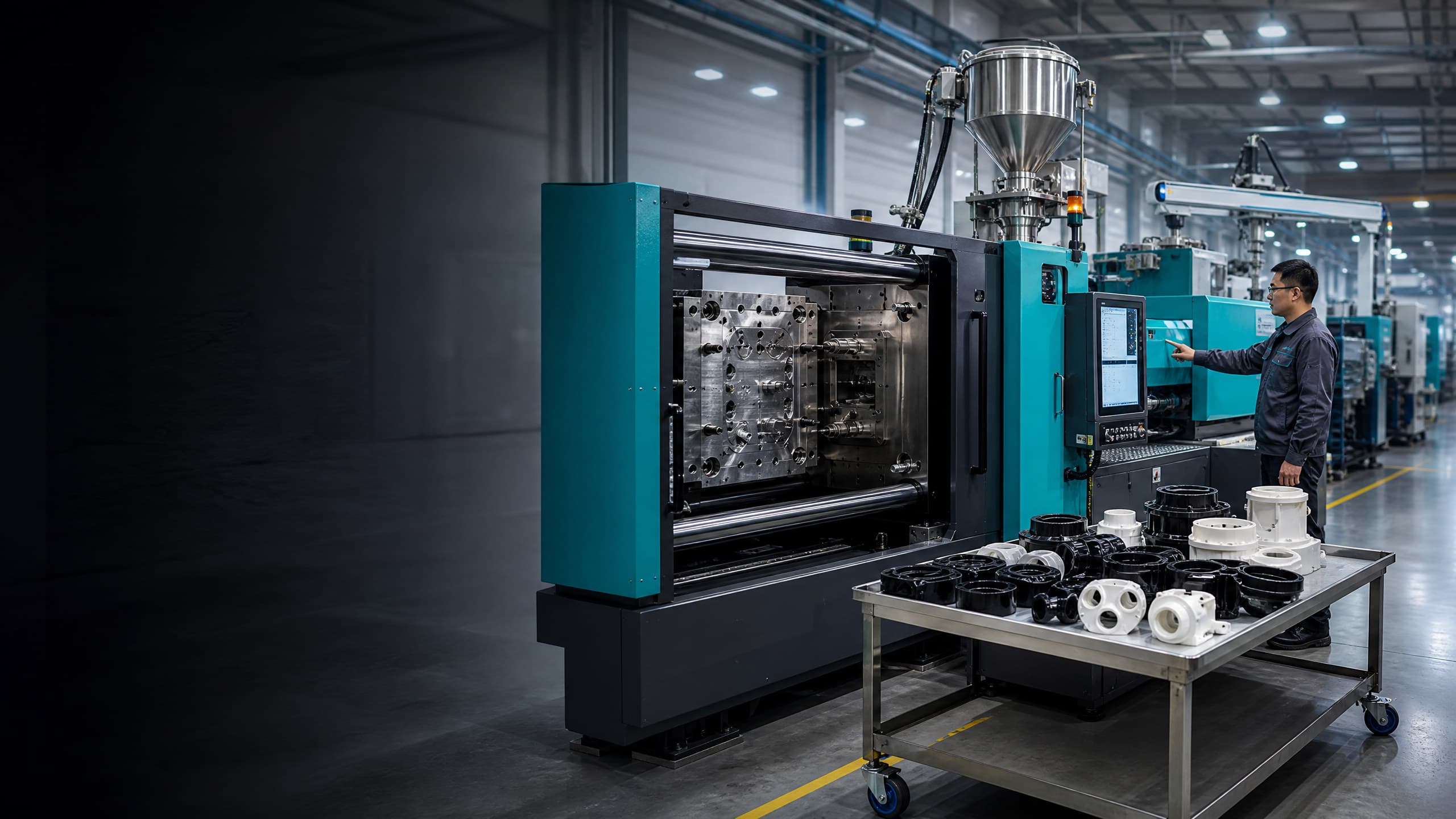
Require the injection molding supplier to hold suspect finished goods and work in process, define the exposure window, preserve samples, and state what has shipped. The response should identify what was inspected, what was not, and how each population was dispositioned. If product may have escaped, agree notification and sorting responsibilities first. Containment limits impact; it does not establish root cause [3].
02
Make injection molding defect analysis evidence-led
Separate a symptom from its mechanism. A short shot may relate to flow restriction, material condition, venting, fill settings, gate restriction or their interaction. A dimensional shift may relate to resin, drying, packing, cooling, measurement setup, tool condition or post-mold conditioning. A setting change that improves one trial does not prove the cause.
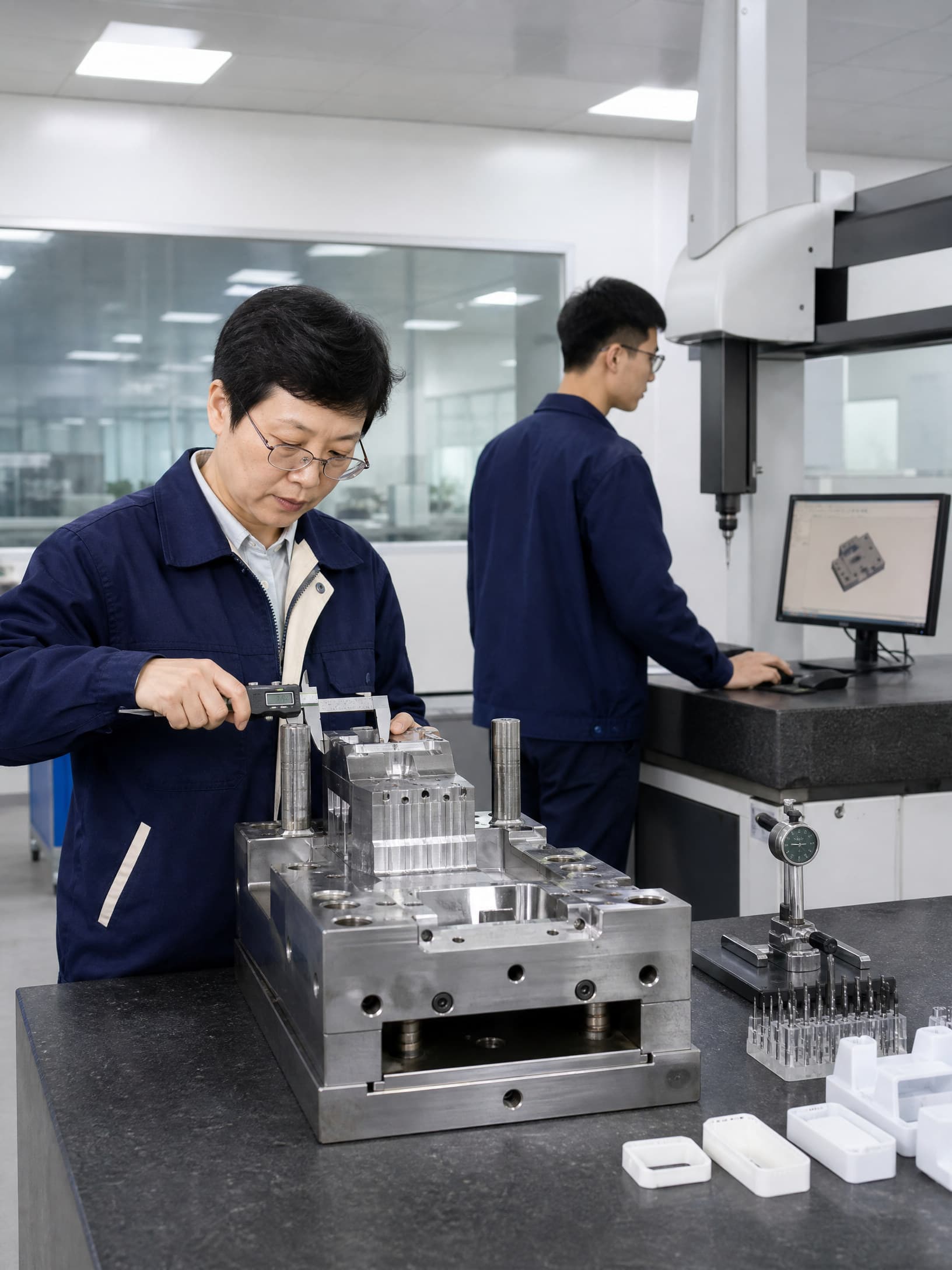
Request the approved and actual process records, material and drying traceability, tool-maintenance and change history, cavity-specific inspection, part weights where relevant, measurement-method information, and comparison with conforming production. Label data with units, limits and sample identity. Part weight, dimensions, warpage, shrinkage and surface quality can be affected by machine settings, material and mold design [2]. Test important cause-chain links with evidence; do not accept ‘operator error’ as the whole systemic answer.
03
Choose corrective-action depth by risk and evidence
Scale the response to the defect’s severity, repeat history, traceability and change risk. The buyer should seek enough evidence to support a release decision, not demand the same package for every issue.
| Situation | Supplier response and evidence | Early-closure risk |
|---|---|---|
| Traceable cosmetic issue | Quarantine, lot scope, disposition, visual-standard results and recurrence control | Handling or packing cause repeats |
| Repeat defect or cavity pattern | Cavity analysis, root-cause test plan, controlled trial and before/after data | A setting masks tool, cooling or material-control risk |
| Functional or regulatory-relevant defect | Immediate containment, impact assessment, CTQ evidence and formal validation plan | Nonconforming parts escape or the fix causes a new risk |
| Tool, resin or process change | Approved change record, defined re-approval path and first-off evidence | Improvement in one attribute shifts another requirement |
04
Turn the supplier response into an executable plan
A usable plan assigns an owner, due date, acceptance criterion and objective-evidence item to each action. Separate immediate correction, containment, root cause, corrective action, systemic prevention and verification. Actions might address vent repair, drying limits, process-window controls, cavity identification, measurement fixtures, inspection instructions or maintenance triggers. Review changes against the drawing, CTQs, appearance requirements and downstream assembly needs.
Ask for impact beyond the complaint lot: comparable cavities, family tools, shared resin, equipment, prior shipments and work instructions. Root-cause corrective-action guidance calls for scope, review of similar product, disposition and objective evidence [3]. In cross-border programs, name quality contacts, document language, revision control, sample labeling, hold authority and escalation route.
05
Require focused injection molding process validation after a change
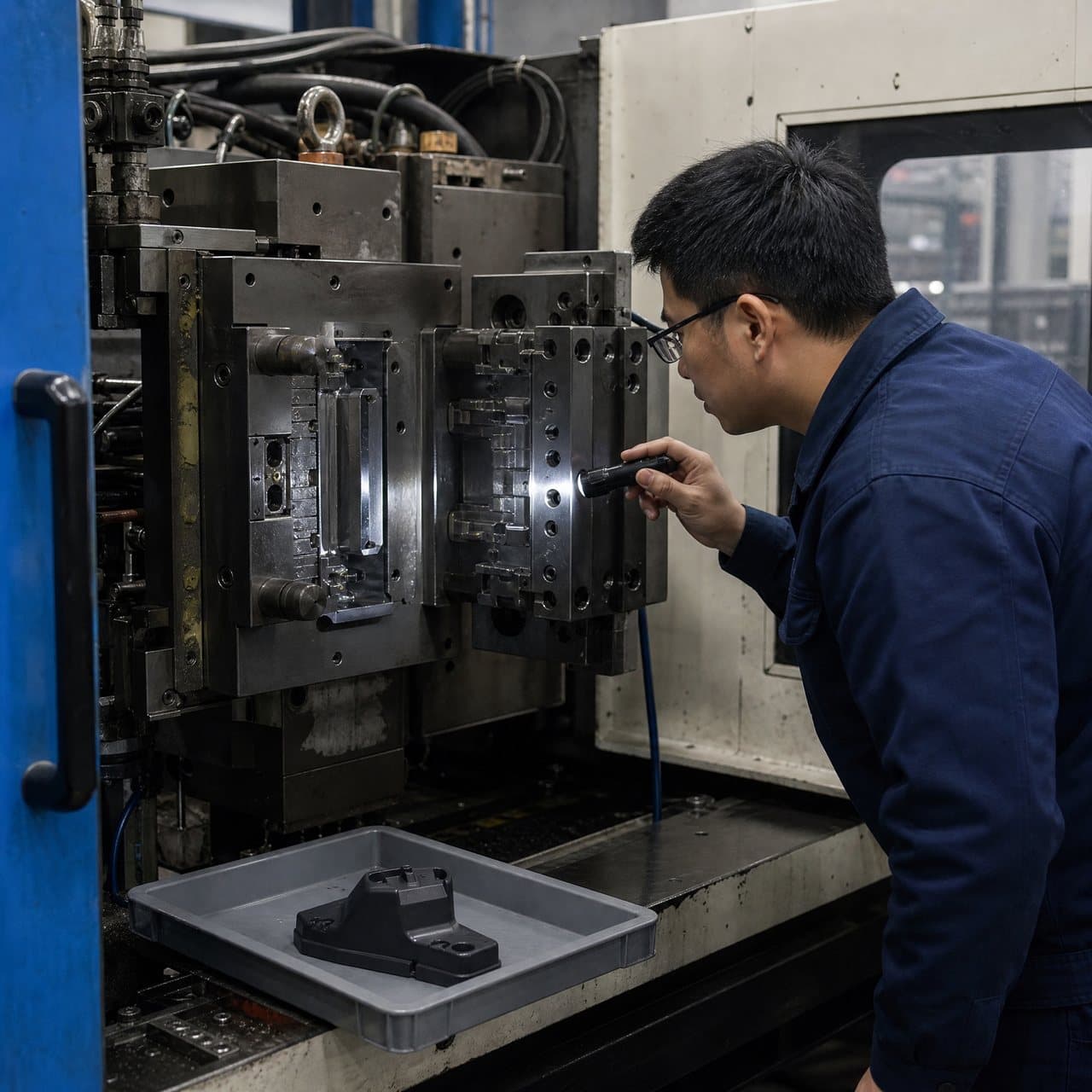
Do not require full requalification automatically. Instead, agree a focused injection molding process validation proportionate to the change and risk. The protocol should state controlled inputs, process limits, sampling, test methods, acceptance criteria, deviation handling and the release decision. For critical defects or changes to tooling, resin, process limits or measurement, involve the buyer’s qualified technical and quality functions early.
Run the protocol under representative routine conditions. For a cavity-specific dimensional issue, review relevant dimensions by cavity over agreed cycles. For suspected moisture-related splay, verify resin identity, drying control and appearance. For a vent modification, confirm the target defect and guard against flash, dimensional or ejection problems. Agree sample size and duration from risk and specification, not a universal rule.
06
Close with a complete injection molding quality report
The final injection molding quality report should link the nonconformance to containment, root-cause evidence, change authorization, verification or validation results, disposition and revised controls. Include revision numbers and dates for the drawing, process sheet, inspection instruction and visual standard. State whether the buyer accepted, conditionally accepted or rejected closure.
Define effectiveness before closure: no repeat over agreed production, stable CTQ results, completed maintenance, adherence to the revised process window, or a successful audit. Review results independently where practical. FDA guidance distinguishes correction from corrective action and calls for effectiveness verification or validation in proportion to risk [1]. Reopen the cause chain if the result does not hold.
07
Use the finding to improve the next RFQ
If the case exposes an unclear requirement, update the RFQ or quality agreement with the current drawing and 3D model, resin and color, CTQs, cosmetic zones, traceability, packaging, change-notification rule, escalation route and requested reporting. Ask prospective suppliers what evidence they can provide; do not assume a specific certification, equipment or inspection capability. For an evidence-first injection molding RFQ, send InjeForm the part files, forecast, intended market, defect history and required acceptance evidence. Final supplier and regulatory approvals remain the buyer’s responsibility.
Practical takeaway
Before you move
to the next review.
- Record the part, revision, lot, defect requirement, quantities and evidence.
- Hold suspect product and document exposure, disposition and any shipment notification.
- Request process, material, tool, cavity, inspection and change-history evidence.
- Separate containment, root cause, corrective action and effectiveness verification.
- Approve technical changes through documented change control before release.
- Agree risk-based validation and close only with objective effectiveness evidence.
FAQ
Common questions
What belongs in a supplier corrective action request?
Part and revision, defect requirement and evidence, affected lots, quantities, impact, containment, owners, dates, traceability and closure evidence.
Is sorting a corrective action?
Normally no. Sorting contains the current risk; corrective action should remove the cause of occurrence or escape and be checked for effectiveness.
When is process validation needed after a defect?
When a risk-relevant input or control changes, such as tooling, resin, process limits, cooling, cavity condition or measurement. Scope it to risk and agreed requirements.
How can a buyer judge a root cause?
Look for a testable cause chain, traceable data, comparison with conforming production, consideration of alternatives and a control that prevents recurrence.
What is the difference between the corrective-action report and quality report?
The corrective-action report explains containment, causes, actions and effectiveness. The quality report records product and process evidence. They may be one linked package.
References
Source material
- [1] U.S. Food and Drug Administration, Corrective and Preventive Action Basics
- [2] Plastics Industry Association, New Process Monitoring Software Helps Identify Injection Molding Defects
- [3] Transport Canada, Root Cause Corrective Action – Nadcap Style
This guide is general information for early procurement and engineering discussion. It does not replace product-specific DFM, qualification, validation, regulatory assessment or legal advice.