
A heat-resistant injection molded component is not selected by choosing the resin with the highest headline temperature. The buyer must match the exact grade, geometry, molding process and finished-part evidence to the real temperature profile, mechanical load, chemical exposure, electrical or sealing duty, service life and customer specification. A short peak, continuous heat, thermal cycling and heat generated inside an assembly can create different failure risks.
For overseas OEM, procurement, quality, engineering and product teams, the practical question is whether a proposed component will retain its required function after the defined exposure and remain manufacturable at the planned volume. This guide frames that decision around requirements, recommendations, supplier evidence and approval gates. It does not assume universal tolerances, cycle times, prices, service life, compliance or certification results.
Requirement: define the part-specific temperature profile, loads, media, life and acceptance criteria. Recommendation: compare exact resin grades and finished-part evidence—not broad material-family labels or a single maximum-temperature number.
01
1. Define what ‘heat-resistant’ means for the application
Start with a time-temperature map rather than a single maximum value. Record normal operating temperature, intermittent peaks, ramp rate, dwell time, number of cycles, cooling conditions and any abnormal-but-credible exposure. Identify whether the part is loaded while hot, assembled hot and cooled later, or exposed to internal self-heating. A connector carrier, pump-adjacent bracket, sensor housing and cosmetic cover may all see heat but have different retention, sealing, dimensional and safety requirements.
Translate the environment into failure modes. The part may need to retain stiffness, clamp force, electrical insulation, seal compression, impact margin, dimensional location, surface appearance or chemical resistance after conditioning. Include humidity, fluids, cleaning agents, vibration, UV, pressure and mating materials where relevant. A requirement should name the applicable customer, product or regulatory test method when known; a supplier recommendation may propose a screening condition, but it does not replace the product owner’s release requirement.
Separate short-term process exposure from service exposure. The melt temperature and mold temperature needed to process a resin are not the same as the allowable temperature of the finished component. Likewise, a published heat-deflection or continuous-use value is measured under defined conditions and should not be treated as a guarantee for a particular wall, load, colour, orientation or lifetime. Ask the material producer for the test basis and decide what part-level verification is needed.

02
2. Select the exact resin grade and reinforcement with trade-offs visible
A material family name is not a complete purchase specification. The RFQ should identify the proposed producer, commercial grade, reinforcement or filler level, colour or additive system, flame or electrical requirement where applicable, approved alternatives, regrind position and current documentation revision. Candidate families may include high-temperature polyamides, PBT, PPS, PEI, PEEK or other engineering thermoplastics, but suitability depends on the exact formulation and part duty rather than the family label alone.
Reinforcement can improve selected stiffness, creep resistance or dimensional behaviour, while also changing flow, anisotropic shrinkage, weld-line performance, impact response, surface appearance and tool wear. Unfilled grades may offer different toughness or cosmetic advantages. Moisture conditioning can be important for some polymers; drying, residence time, melt handling and maximum regrind may affect the finished result. These are review topics, not universal rules. The supplier should state the proposed processing controls and what evidence supports them.
Use a comparison matrix to keep procurement, engineering and quality aligned:
Do not rank materials by one datasheet column. A grade that looks strong at elevated temperature may be less suitable where the part needs snap-fit toughness, low friction, electrical tracking resistance, chemical compatibility, colour stability or a specific approval route. Require the supplier to identify data-sheet conditions, not just copy a nominal temperature into the quotation.
| Decision factor | Requirement to define | Recommendation for supplier review | Evidence or approval gate |
|---|---|---|---|
| Temperature profile | Continuous, peak, dwell and cycle conditions | Compare conditioned and unconditioned behaviour | Agreed thermal exposure and part-level test plan |
| Mechanical duty | Load direction, force, torque, creep and retention need | Review filled and unfilled options against the actual feature | Load, torque, deflection or retention results |
| Dimensional function | Datums, mating fit, seal compression and allowable movement | Use grade-specific shrinkage and warpage analysis | Measurement report after conditioning or cycling |
| Chemical and electrical environment | Media, voltage, insulation, tracking or customer rule | Request compatibility evidence for the exact grade and colour | Applicable test report, declaration or product approval |
| Supply and processing | Volume, machine route, traceability and substitution boundary | Ask for drying, residence, cavity and change-control assumptions | Approved process window and material-lot records |
03
3. Check geometry, tooling and molding conditions together
Heat-resistant resins can have demanding processing windows, higher melt viscosity, narrow drying requirements or greater sensitivity to residence time than commodity materials. The supplier should review shot size, machine capability, nozzle and runner concept, venting, gate location, cooling or mold-temperature control, ejection and expected cycle logic against the exact grade and part geometry. A tool concept that works for one polymer is not automatically suitable for another.
Mark the features that control function after heat exposure: sealing lands, snap arms, clips, bosses, thin walls, ribs, bearing surfaces, connector openings, insert interfaces and datums. Local thick sections can cool differently and create sink or warpage; long flow paths and thin sections can increase fill pressure or weld-line risk. Gate location and fiber orientation may influence strength and dimensional movement. Ask for a DFM review and, where risk warrants it, simulation or trial evidence tied to the released geometry.
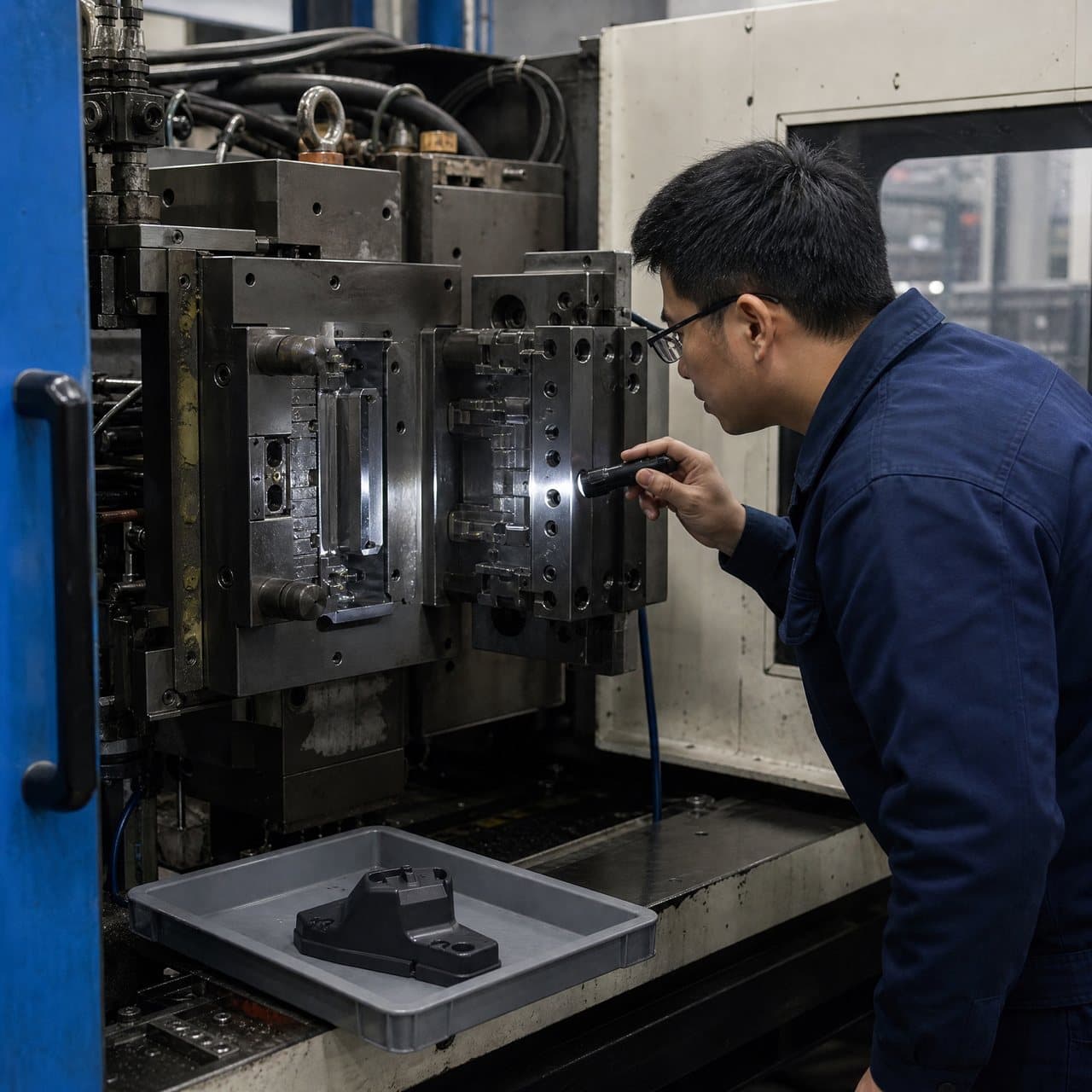
Tool steel, surface treatment, hot-runner details, cooling access and maintenance requirements should be proposed against the resin’s processing and wear characteristics. These are supplier recommendations until the buyer approves the tool design. Do not accept a promised cycle time, cavity count or tool life without the assumptions behind it, including machine, cooling, part weight, quality limits, volume and process window. A production-intent sample should be made on the intended or technically equivalent route before final approval where thermal performance is critical.

04
4. Validate the finished component, not only the resin data sheet
Build the validation plan around the component’s failure modes. Depending on the application, this may include dimensional inspection before and after conditioning, thermal cycling, heat aging, load retention, creep, torque, insertion and extraction force, seal leakage, impact, vibration, electrical insulation or tracking, chemical exposure and appearance. Define sample quantity, orientation, fixtures, conditioning, measurement method, acceptance limits and deviation authority before testing. The product owner and applicable authority determine which tests are mandatory.
Ask for traceability from sample to part number, drawing revision, tool and cavity, machine, resin producer and grade, lot, colour, process settings and inspection record. If a supplier reports capability, clarify the measurement system, sampling basis and actual results. A material certificate or supplier declaration can support material identity, but it does not by itself prove that the finished part meets the customer’s thermal, mechanical, electrical or regulatory requirement.
Use staged approval gates. At design review, approve the service case, material direction and critical features. At tool review, approve gate, venting, cooling, ejection and measurement datums. At first sampling, verify moldability, dimensions, fit and material traceability. At validation, complete the agreed environmental and functional tests. At production release, approve the control plan, inspection records, packaging, change-notification route and any boundary samples. Any resin, colour, filler, cavity, tool repair, machine or major process change should be assessed for revalidation rather than assumed equivalent.
05
5. Make the RFQ and supplier comparison decision-ready
Send suppliers a controlled 3D model and drawing, service-temperature profile, load cases, media list, assembly interfaces, annual and launch volumes, appearance requirements, target markets, customer standards, requested sample stage and evidence expectations. Identify what is mandatory and what is open for proposal. For example, the exact grade or approval may be a requirement, while gate location, cavity arrangement, cooling architecture and automation may be recommendations subject to technical review.
Request a written assumption list with every quotation. It should cover proposed grade and alternatives, drying and processing assumptions, mold temperature, expected shrinkage basis, cavity count, machine, cycle estimate, inspection scope, scrap or regrind policy, tooling maintenance, validation cost and change-control responsibilities. Compare quotes on an equivalent technical scope. A lower unit price may reflect a different grade, less testing, different cavity strategy, excluded tooling work or a narrower acceptance basis.
Before nomination, hold a cross-functional approval meeting. Procurement should confirm commercial scope and supply continuity; engineering should confirm design and thermal evidence; quality should confirm inspection, traceability and nonconformance handling; product should confirm application and customer obligations. Record open risks, owners and closure evidence. A supplier is ready for production nomination only when the proposed component, process and evidence package satisfy the approved requirements for the intended application—not because a resin is marketed as high temperature.
Practical takeaway
Before you move
to the next review.
- Define the normal, peak and cyclic temperature profile, mechanical loads, media, humidity, electrical or sealing duty and required service life before comparing materials.
- Name the exact resin producer and grade, reinforcement or filler, colour or additive system, documentation revision and substitution rule; do not buy against a family name alone.
- Mark thermal-critical dimensions and features on the drawing, then review wall sections, ribs, bosses, gates, vents, cooling, ejection and measurement datums together.
- Agree sample conditioning, test fixtures, measurement methods, acceptance criteria, traceability fields and approval authority for finished-part validation.
- Require written supplier assumptions, staged approval gates and change notification for resin, colour, filler, cavity, tool repair, machine or major process changes.
FAQ
Common questions
Which plastic is best for a heat-resistant injection molded component?
There is no universal best plastic. The choice depends on the exact temperature-time profile, load, creep, impact, chemical and electrical environment, geometry, processing route, volume and customer requirements. Compare named commercial grades and validate the finished component under the application conditions.
Is a resin’s maximum continuous-use temperature enough to approve a molded part?
No. A published temperature value is tied to a material, test method and defined conditions. It does not prove retention of fit, strength, sealing, electrical function or appearance for a particular geometry and lifetime. Use it for screening, then define part-level conditioning and functional tests.
Do heat-resistant plastics always require special injection molding tooling?
Not always, but the resin and part may require a different review of mold temperature, steel, wear, gate and runner design, venting, cooling, drying and ejection. The supplier should justify the tool concept against the exact grade, geometry, machine and production volume rather than applying a generic rule.
What evidence should an OEM request from a heat-resistant plastic parts supplier?
Request the exact grade documentation, material and lot traceability, processing assumptions, DFM and tooling review, dimensional and functional reports, agreed thermal or environmental test results, nonconformance records and change-control commitments. The required evidence depends on the part risk and customer or regulatory obligations.
References
Source material
- [1] ISO 75-1, Plastics — Determination of temperature of deflection under load — General test method
- [2] ISO 2577, Plastics — Thermosetting moulding materials — Determination of shrinkage
- [3] ASTM D648, Standard Test Method for Deflection Temperature of Plastics Under Flexural Load
- [4] UL Prospector, Plastics and polymer material data and technical resources
This guide is general information for early procurement and engineering discussion. It does not replace product-specific DFM, qualification, validation, regulatory assessment or legal advice.