
An injection mold steel grade should be compared as part of a working system, not as a catalog ranking. For buyers in Europe, North America, and the Middle East, the decisive questions are what the melt can attack, what can abrade the steel, where contact is concentrated, how the tool will be cooled and stored, and what surface the molded part must reproduce. Resin name, filler percentage, recycled content, colorants, expected production pattern, storage climate, gate concept, and maintenance access all change the risk picture.
Start by separating corrosion from wear. Corrosion can affect cavity surfaces and cooling circuits when corrosive polymers, degraded material, moisture, or unsuitable storage products are involved. Wear is usually mechanical: glass fiber, mineral fillers, moving shutoffs, sliders, gates, and high-shear flow regions can remove material or round edges. A grade that is practical for a clean, unfilled commodity resin may be the wrong baseline for a filled engineering resin or a corrosive formulation. The request should therefore define the service conditions before it names an injection mold steel grade. [1] [3]
Buyer principle: do not approve a steel grade from a supplier’s shorthand name alone. Link the nominated material, supply condition, target hardness, heat-treatment route, component location, surface requirement, and inspection evidence to the actual resin and operating plan. Equivalent grade claims need technical comparison and supplier agreement, not just a familiar designation.
01
1. Translate resin and tool conditions into two distinct risks
Corrosion risk is chemical and environmental. Chloride-bearing or otherwise corrosive processing environments, resin degradation, water vapour, humid storage, and staining sensitivity should be recorded in the RFQ. A corrosion-resistant stainless mould steel may help retain a finished surface and protect cooling passages, but it is not a substitute for correct processing, cleaning, drying, and storage. Uddeholm identifies its Stavax ESR family for corrosive materials such as PVC and acetates, and notes that cleaning and drying are important before storage. [1]
Abrasive wear is a different problem. Fiber reinforcement, glass beads, metal oxides, calcium carbonate, silica, and other hard constituents can create microcutting or microplowing in the melt/steel contact system. The risk is not evenly distributed across the mold. Gates, runners, restrictions, sharp shutoffs, cores, and moving interfaces can see more severe local conditions than a broad low-shear cavity. For glass filled nylon injection molding, provide the resin supplier’s grade, nominal reinforcement and additive package rather than saying only “nylon.” The fiber form, temperature, geometry, and processing window may all affect the comparison. [3]
Ask the molder to mark both risks on the layout. This supports targeted inserts where justified and prevents a wear-focused proposal from overlooking humidity, cooling water, or resin chemistry.

02
2. Compare grade families by the property balance, not a single number
A practical comparison begins with families. A prehardened, non-corrosion-resistant plastic mould steel can be a workable general-purpose baseline when the resin and environment are benign and machinability is important. For example, Böhler describes M200 as prehardened, non-corrosion-resistant, with very high machinability and a supplied hardness range of 290–330 HB; that is a supplier-specific data point, not a universal recommendation. [4]
For corrosion-sensitive service or demanding cosmetic and hygiene-related surfaces, compare hardenable stainless mould steels and their documented polishability, corrosion performance, toughness, dimensional stability, and hardness range after the proposed treatment. Stavax ESR is described as an AISI 420 modified stainless mould steel with typical 13.6% chromium and recommended 45–52 HRC for listed injection-mold applications. [1] Böhler M340 ISOPLAST is another example of a martensitic chromium steel positioned for high corrosion resistance and improved wear resistance, including glass-fiber-reinforced plastics. [2] These examples show why brand names and nominal chromium alone do not settle the selection.
When filler abrasion is dominant, compare hardness, carbide structure, toughness, corrosion behavior, polishability, and repairability. Fibers and mineral fillers raise wear demand, and corrosion and abrasion may act together. [3] Do not compare hardness alone: design, size, surface requirements, edge stability, machinability, and coating suitability also matter.
| Service observation | What to compare in the steel proposal | Evidence to request |
|---|---|---|
| Unfilled, non-corrosive resin; moderate surface demand | Prehardened baseline, machinability, polishability, repair method | Material certificate, supplied hardness, component list |
| Humidity, corrosive resin, or staining-sensitive surface | Corrosion-resistant grade, polishing route, cooling-circuit and storage plan | Grade certificate, heat-treatment specification, finish and preservation instructions |
| Fiber or mineral-filled resin; high-shear zones | Wear resistance, toughness, edge stability, local insert strategy, coating compatibility | Resin data sheet, hardness target, high-risk-zone drawing, maintenance plan |
| Corrosion plus abrasive filler | Combined corrosion-and-wear performance rather than a single-property claim | Documented grade rationale, treatment record, trials and inspection criteria |
03
3. Make heat treatment, finish, and local construction part of the grade decision
The delivered steel condition is not the final tool property. Injection mold heat treatment should state the nominated grade, initial condition, stress-relief requirement after rough machining where applicable, hardening and tempering route, target hardness by component, distortion controls, and the acceptance method. Supplier data sheets use different cycles and targets. For example, the Stavax ESR guide specifies hardening and tempering information and ties its stated injection-mold range to 45–52 HRC, while M340 gives different heat-treatment options depending on the desired corrosion or toughness-and-hardness balance. [1] [2] Do not copy either cycle into a purchase order without the toolmaker and heat treater confirming suitability for the component size and geometry.
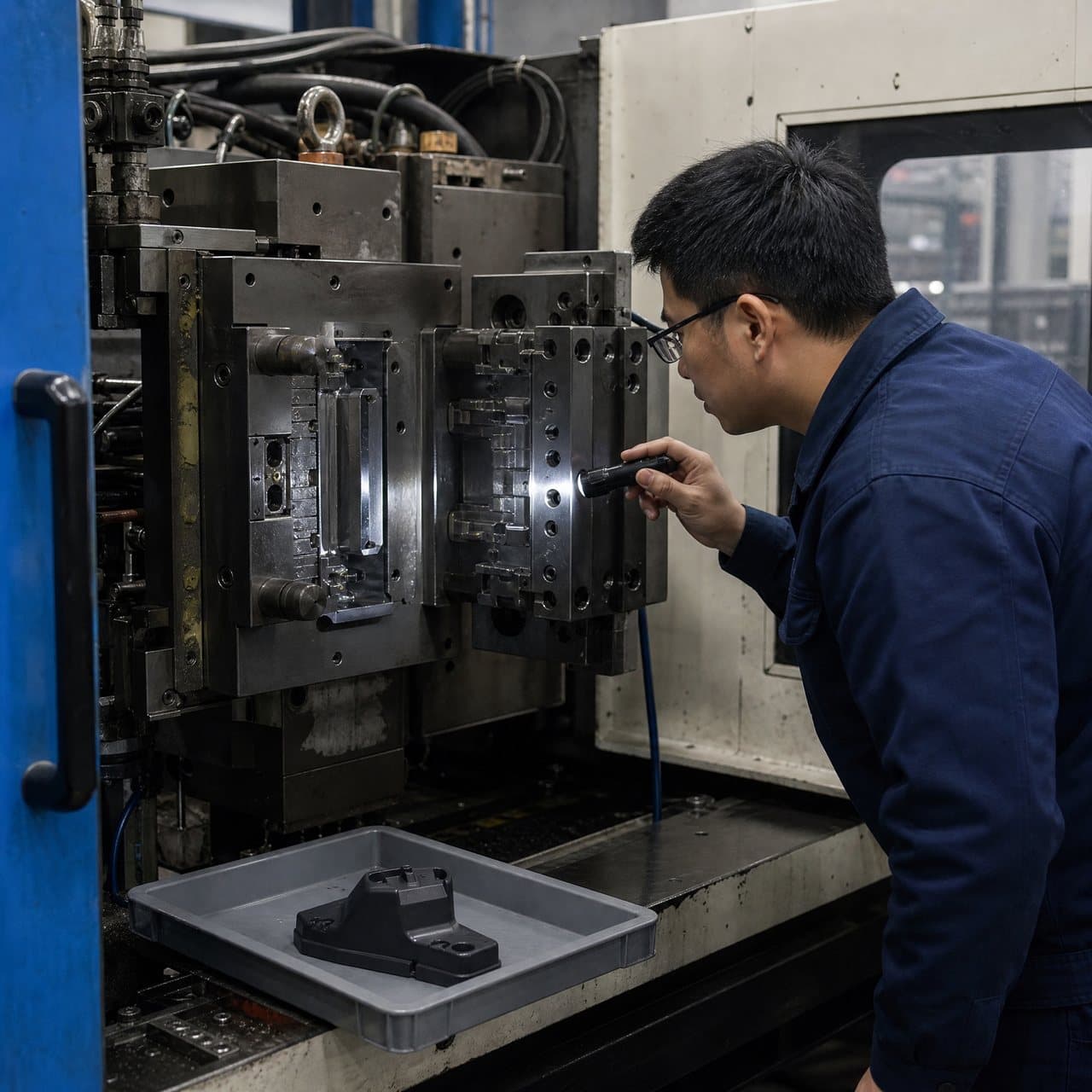
Surface preparation also changes performance. Specify polishing by functional area and acceptance sample, not as an undefined “mirror” request. Textured zones, shutoffs, cores, gates, and slide faces need their own finish and inspection logic, including repair and storage protection.
An injection mold coating can be a targeted surface-engineering option, but it does not correct unsuitable steel, treatment, lubrication, alignment, or corrosive residue. Define its purpose, components, substrate compatibility, dimensional control, and future repair route.
04
4. Turn the comparison into an auditable buying specification
Use a component-by-component steel schedule, not one generic statement. Cover cavity and core inserts, moving faces, shutoffs, wear plates, gate inserts, runner components, and cooling-related parts. For each, record the grade or approved alternative, supply condition, treatment, target hardness or range, finish, coating if any, and traceability.
The supplier should state the engineering reason for each choice: corrosion resistance for a named exposure, wear resistance for a named filler or contact zone, toughness for a moving feature, polishability for a cosmetic surface, or machinability for a low-risk plate. This is more useful than claims that a grade is “best” or “long-life.”
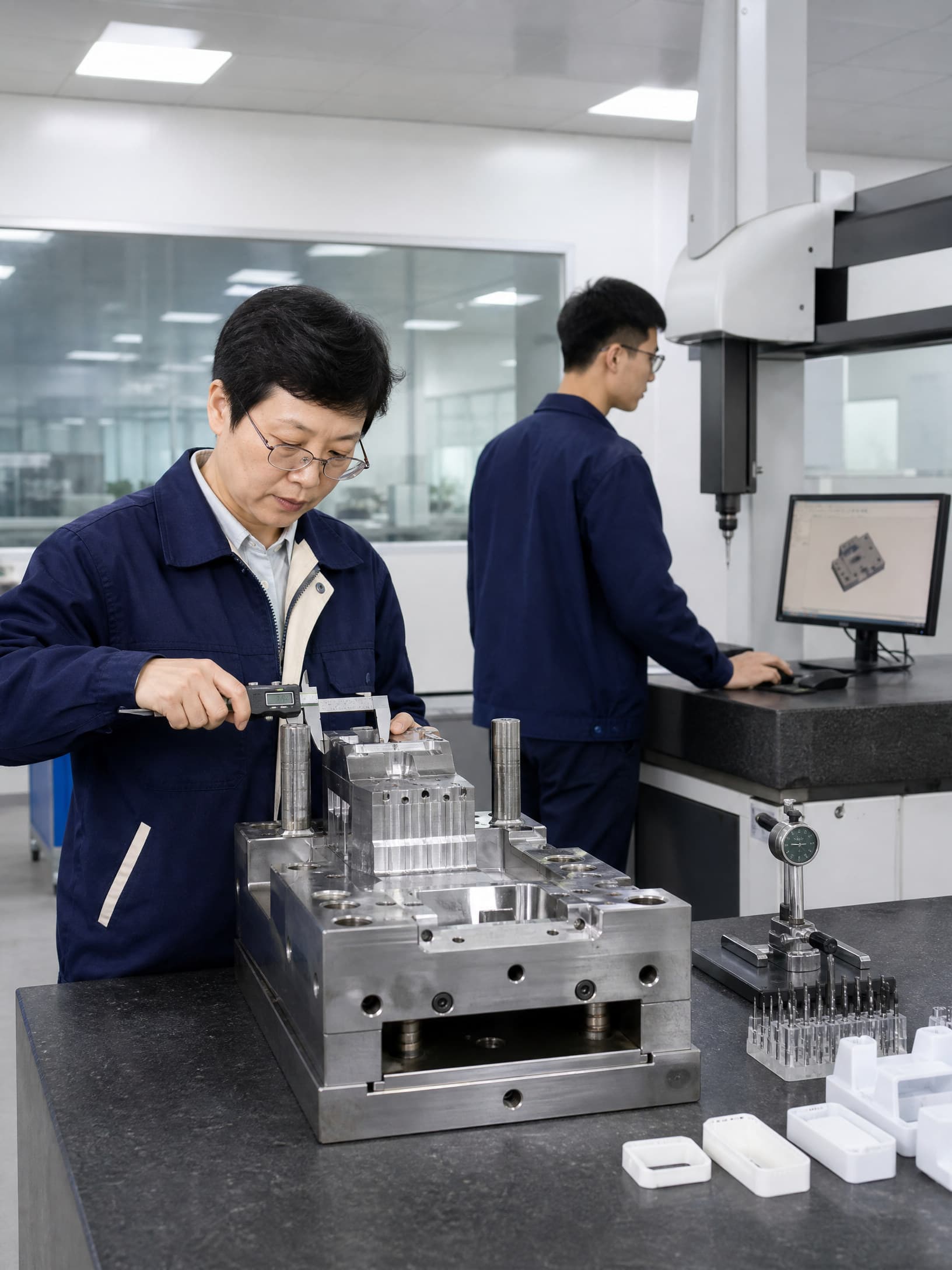
Finally, align evidence with the purchase stage. Before steel is cut, approve the steel schedule, resin data, heat-treatment plan, and critical surface requirements. At build completion, request material certificates and treatment records that identify the relevant inserts or components. At trials, inspect the agreed cosmetic and functional features and record any process observations that could alter the risk assessment. None of these documents guarantees a particular tool life, cycle time, tolerance, cost, or delivery date; they give the buyer a traceable basis for technical review and later maintenance decisions.
Practical takeaway
Before you move
to the next review.
- Provide the exact resin trade name or technical data sheet, including filler type and nominal content, additives, colorants, recycled-content policy, and any known corrosive processing concern.
- Identify high-risk areas on the mold concept: gates, runners, sharp shutoffs, moving interfaces, deep cores, cosmetic cavities, and cooling-sensitive zones.
- Request a component-level steel schedule with grade, supplied condition, target hardness or approved range, finish, treatment, and any coating clearly stated.
- Require material traceability and heat-treatment records for the specified inserts and confirm how hardness and surface condition will be checked.
- Agree cleaning, corrosion prevention, storage, inspection, and repair responsibilities so the chosen material is supported through production interruptions and transfer if needed.
FAQ
Common questions
Is stainless mold steel always the best choice for corrosion and wear?
No. Stainless mould steel can suit credible corrosion, humidity, staining, or finish risks, but grades differ in wear resistance, toughness, polishability, machinability, and heat-treatment response. Compare the actual exposure and component rather than applying one rule to every project. [1] [2] [3]
What information should a buyer send before asking for a steel recommendation?
Send the resin data sheet and exact grade, fillers and additives, part drawing or CAD, cosmetic zones, production pattern, tool-storage environment, cooling-water context, and previous wear or corrosion observations. Ask for a component-level rationale, not just a grade name.
Can a coating replace a corrosion-resistant or wear-resistant base grade?
Usually it should not be treated as a replacement by default. Coatings are surface solutions with their own substrate, finish, adhesion, dimensional, and repair considerations. They may be useful for a documented local wear or release issue, but base steel selection, heat treatment, mold alignment, processing control, cleaning, and maintenance still need to suit the application.
How should buyers compare steel grades from different regions or suppliers?
Compare the actual mill or supplier data sheets, chemical analysis, manufacturing route where relevant, delivered condition, heat-treatment recommendation, hardness target, and the stated application basis. Do not assume labels described as equivalent will perform identically. Make any permitted alternative subject to written approval against the component’s corrosion, wear, surface, and repair requirements.
References
Source material
- [1] Uddeholm Stavax ESR technical data sheet
- [2] Böhler M340 ISOPLAST technical data sheet
- [3] Böhler high-performance mold steels for injection of reinforced plastics
- [4] Böhler M200 prehardened plastic mould steel technical data sheet
This guide is general information for early procurement and engineering discussion. It does not replace product-specific DFM, qualification, validation, regulatory assessment or legal advice.