
Injection mold steel is a life-cycle decision, not a catalogue line. The buyer’s question is whether the proposed material and treatment route can manage the real duty on cores, cavities, slides, gates, shut-offs and cooling over the planned production period. Wear, corrosion, loss of polish, distortion and cracking have different causes. A higher nominal hardness may help a local wear problem, but it can also change machining, polishing, toughness and repair considerations.
Connect the part’s resin and additives, expected demand, geometry, cosmetic requirement, molding temperature, water conditions, storage environment, moving features and maintenance plan. Also separate a steel supplier’s data-sheet capability from the result in a finished mold: the latter depends on section size, treatment, machining sequence, finishing and design. This guide helps buyers request a documented decision rather than a universal grade or shot-life promise.
Treat steel grade, final hardness and surface treatment as a controlled package for each functional tool area—not as a single claim for the whole mold. Confirm any grade substitution, treatment route or hardness range with the tool supplier before release.
01
Define the duty that the steel must survive
Start with molding duty, not whether one familiar injection mold steel is ‘better.’ Abrasive fillers can raise wear at gates, flow turns, shut-offs and moving interfaces. Corrosive resin by-products, humid storage or poorly controlled cooling water can make corrosion resistance and channel condition material. High-gloss or transparent parts can make polish retention decisive. Thin shut-offs, slides and long cores introduce concentrated stress that an annual-volume figure does not show.
Express demand as prototype, ramp, annual output, programme duration, cavity count and shift pattern. Ask whether the route is for samples, bridge production or production tooling. A precision injection mold maker should identify components needing a different material condition or treatment rather than assume the whole mold needs one route. A cycle-life estimate is useful only when its resin, filler, process, maintenance and end-of-life assumptions are stated.
| Operating input | Why it can affect the steel route | Buyer confirmation to request |
|---|---|---|
| Resin and additives | They can alter wear, corrosion and surface-finish demand. | Obtain the written material assumption and affected surfaces. |
| Geometry and actions | Cores, slides and shut-offs may have different local duty. | Request a component-level tool concept. |
| Volume and service | Duty changes the case for replaceable wear components and planned service. | Agree the life basis and repair route. |
02
Choose the steel condition before treating hardness as the answer
Prehardened mold steel can suit a practical machining route where duty and finish allow it. A hardened steel injection mold commonly uses hardened and tempered inserts after substantial machining. Neither route is automatically better. The choice should balance wear, corrosion, polish, geometry, distortion sensitivity, lead time and repair strategy.
Hardness alone does not establish toughness, dimensional stability, polishability or corrosion performance, and cannot cure poor support, cooling or alignment. Tool-steel data show that hardening and tempering create a property balance; values from small test samples may not repeat exactly in a finished tool with different size and treatment conditions.[1] Ask for a proposed range and its functional reason. Consider cavities, cores, slides, wear plates, pins and gate areas individually. For corrosion concerns, also ask whether cooling channels and storage controls are addressed.[2]
| Route to discuss | Potential value | Risk or limit to resolve before award |
|---|---|---|
| Prehardened steel | May simplify a suitable build route. | Confirm supplied hardness, wear basis and change or repair plan. |
| Hardened and tempered inserts | Can target local wear, strength or stability needs. | Confirm distortion allowance, target range and records. |
| Surface treatment | May address a defined surface-duty issue. | Confirm base condition, layer, finish and repair implications. |
03
Control heat treatment as a manufacturing process, not a certificate line
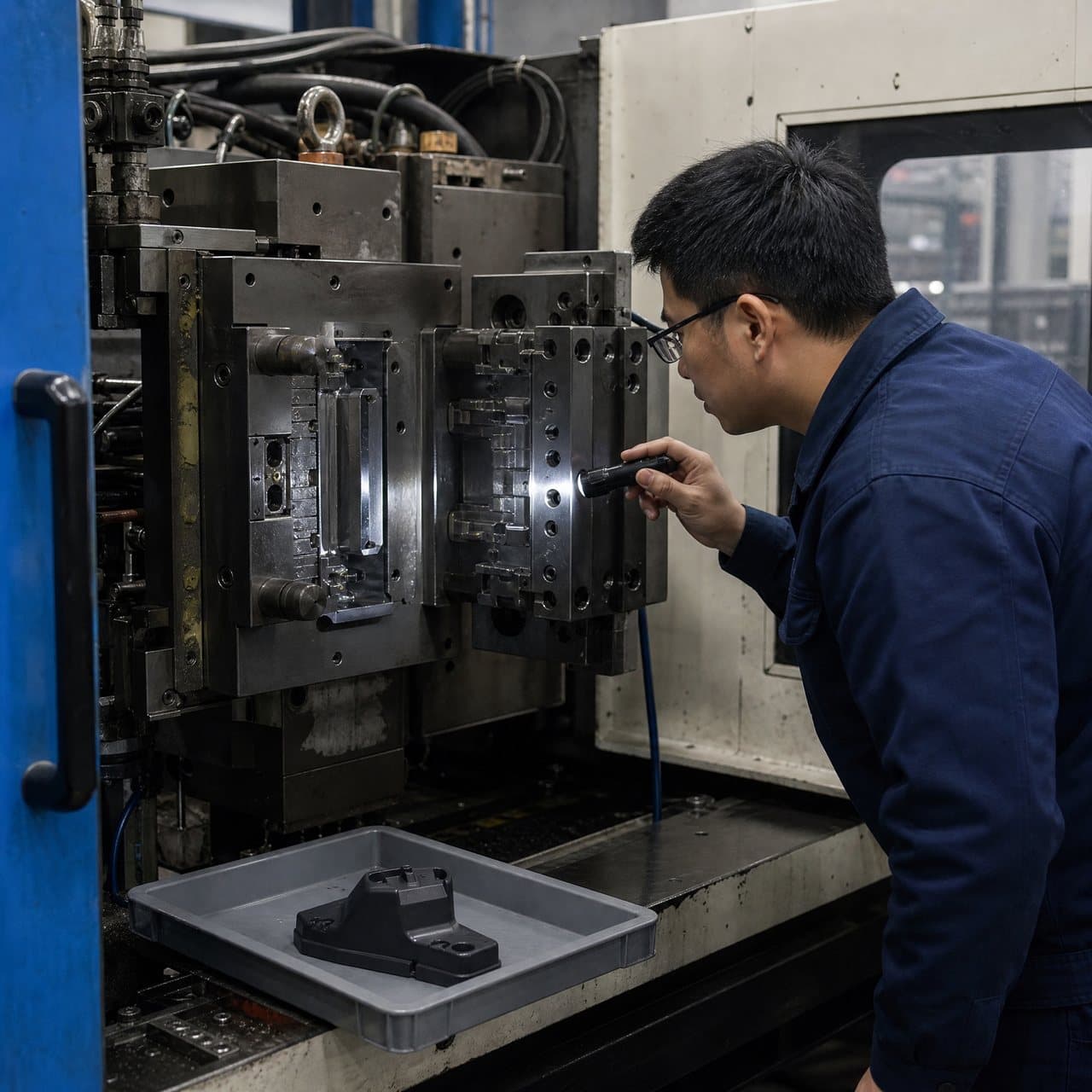
Plan injection mold heat treatment with the build sequence. Rough machining can introduce residual stress, and steel suppliers may recommend stress relieving after it for particular grades.[1] Hardening, quenching and tempering must then suit the selected steel, section size and property target. The applicable cycle belongs to the selected grade and qualified provider, not to a generic recipe.
Distortion can consume tolerance margin or compromise shut-offs. The supplier should identify movement risk, machining allowance and datum strategy, and state which critical geometry will be finished or requalified after treatment. Product data show dimensional change can vary by quench method and sample geometry, so it is directional evidence rather than a prediction.[1] Nitriding or other treatments need a defined purpose. A hard nitrided layer may resist wear, but it can be brittle and crack or spall under shock; confirm the surface, base condition, layer target and acceptance method.[1]
04
Turn tool-life intent into acceptance evidence and service controls
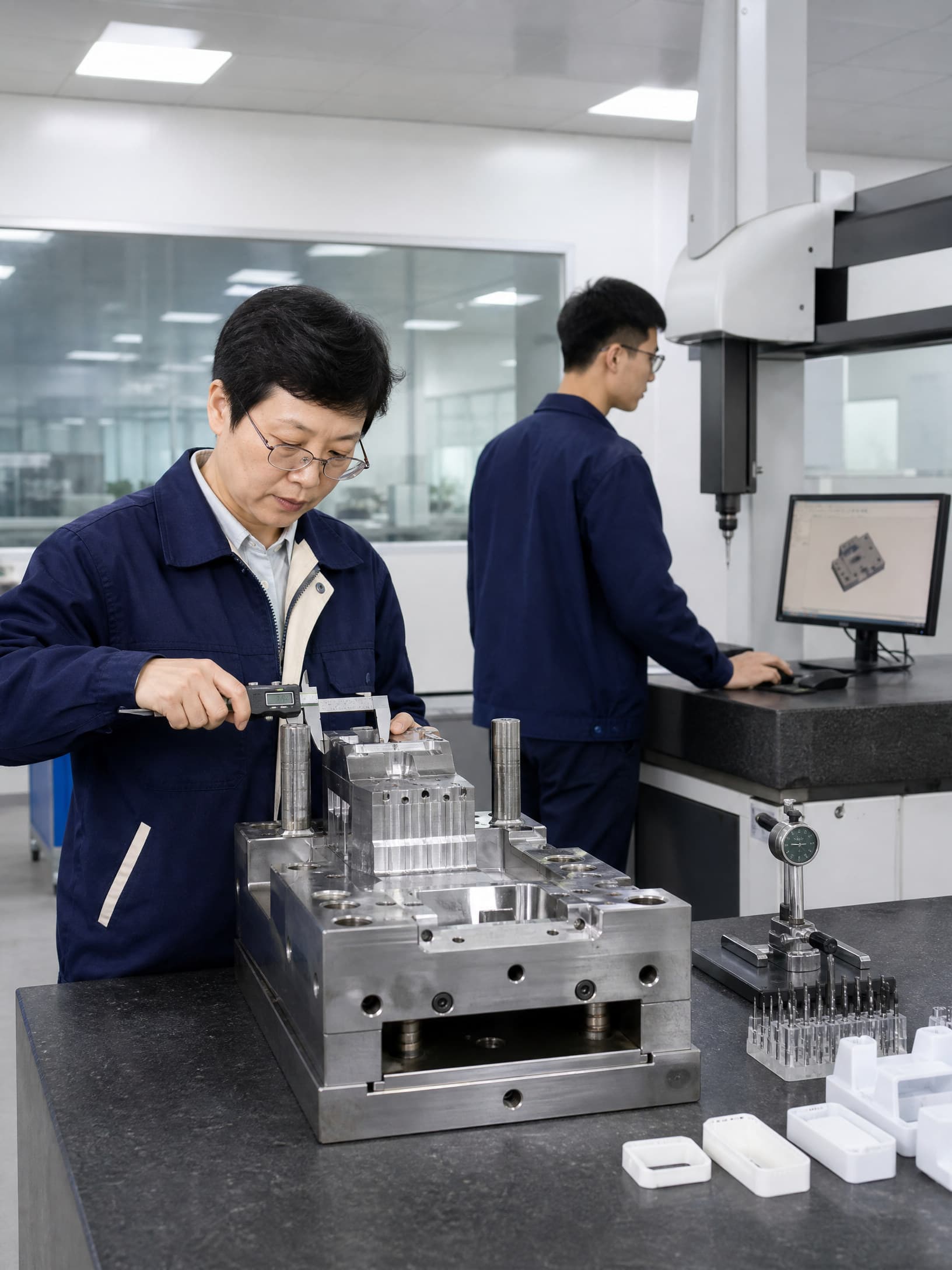
A material certificate supports traceability but does not prove the finished production tool has the intended hardness, geometry, surface condition or trial performance. Agree the evidence package at purchase-order stage: steel identification linked to relevant components, heat-treatment certificate, agreed hardness results, any layer record, defined tool inspection and trial documentation tied to the controlled part revision and resin condition.
Agree where and how hardness will be verified. An accessible nonfunctional area may be appropriate; an unagreed mark on a polished cavity may not. Require the precision injection mold maker to propose method, locations, report format, acceptance range and disposition for an outlying result. Define part dimensions, appearance and functional checks for trial acceptance. ISO 20457 covers molded-part tolerances and acceptance conditions, but its use and the inspection plan must be agreed for the programme.[3] Record the as-built configuration and treatment evidence, and seek reconfirmation if resin, duty, water chemistry or critical geometry changes.
| Acceptance evidence | What it establishes | Question to close |
|---|---|---|
| Steel traceability | Links the component to specified grade and supplied condition. | Which parts need individual identification? |
| Treatment and hardness report | Documents the route and result at agreed locations. | What happens if a result is outside range? |
| Tool inspection and trial report | Assesses tool geometry and molded part against the baseline. | Which measurements, resin details and approvals apply? |
Practical takeaway
Before you move
to the next review.
- Provide resin, additive, volume, cosmetic-zone and water or storage inputs before seeking a recommendation.
- Request a component-level steel-and-treatment schedule with its duty-based rationale.
- Agree hardness range, distortion strategy, records and post-treatment inspection before release.
- Define traceability, test locations, trial condition and part acceptance criteria.
- Request reconfirmation when resin, duty, process or critical geometry changes.
FAQ
Common questions
Does higher mold hardness always mean longer tool life?
No. Hardness can help with particular wear mechanisms, but tool life also depends on toughness, corrosion resistance, geometry, support, process conditions, finish and maintenance. The appropriate range must be confirmed for the specific steel and tool component.
When should a buyer ask for a hardened steel injection mold?
Ask for a component-level recommendation when the expected resin, volume, wear, surface requirement or geometry warrants it. Do not select a hardened route from volume alone; request the supplier’s assumptions, property target and distortion-control plan.
What evidence should accompany injection mold heat treatment?
Typically, agree traceable steel identification, the relevant treatment record, hardness results at defined locations and any required post-treatment inspection. The exact package should match the part, tool risk and agreed acceptance plan.
References
Source material
- [1] Uddeholm, Uddeholm Orvar Supreme technical brochure: heat treatment, dimensional change and nitriding guidance.
- [2] Uddeholm, Stavax ESR: corrosion-resistant plastic mold steel properties and application context.
- [3] International Organization for Standardization, ISO 20457:2026, Plastics moulded parts.
- [4] ASM International, Heat Treating: authoritative technical resources for heat-treatment practice.
This guide is general information for early procurement and engineering discussion. It does not replace product-specific DFM, qualification, validation, regulatory assessment or legal advice.