
Bridge tooling is usually the better fit when an OEM needs a bounded quantity of molded parts before demand, design or production tooling is fully settled; a production injection mold is the stronger fit when the revision, volume and process expectations justify a longer-lived asset. The right choice depends on what the parts must prove, how much uncertainty the buyer is willing to carry, and whether the tool can be transferred or replaced without disrupting launch.
For Europe, the United States and Middle East, procurement teams should compare the complete route rather than a unit price alone. Define the approved revision, resin, quantity window, evidence, ownership, maintenance, shipping and exit decision before treating bridge parts as launch supply. Rapid or bridge tooling can use production resins and support limited production while a later tool is made, but production tooling may provide capabilities that the rapid route does not, including more advanced cooling or venting.[1]
A bridge tool is a decision instrument with a supply role. Quote it with an explicit end point: transfer, modification, replacement, retention for service, or retirement.
01
Start with the job: supply, learning or both
Bridge tooling is most useful when the buyer has a near-term need for molded parts and a meaningful uncertainty remains. The uncertainty may concern market demand, a design revision, a material decision, a customer approval or the timing of a final production mold. A bridge lot can support assembly builds, controlled early release, field evaluation or service demand, provided the buyer states what the lot is and is not intended to demonstrate.
A production mold assumes a different level of commitment. Its cavity strategy, cooling, venting, steel or aluminum selection, surface treatment, automation and maintenance plan are normally evaluated against an approved design and an expected programme life. Neither label guarantees a particular life or quality outcome. Ask the supplier to describe the proposed architecture and its limitations for the actual part, resin and release pattern.
02
Compare risk reduction, not just tool price
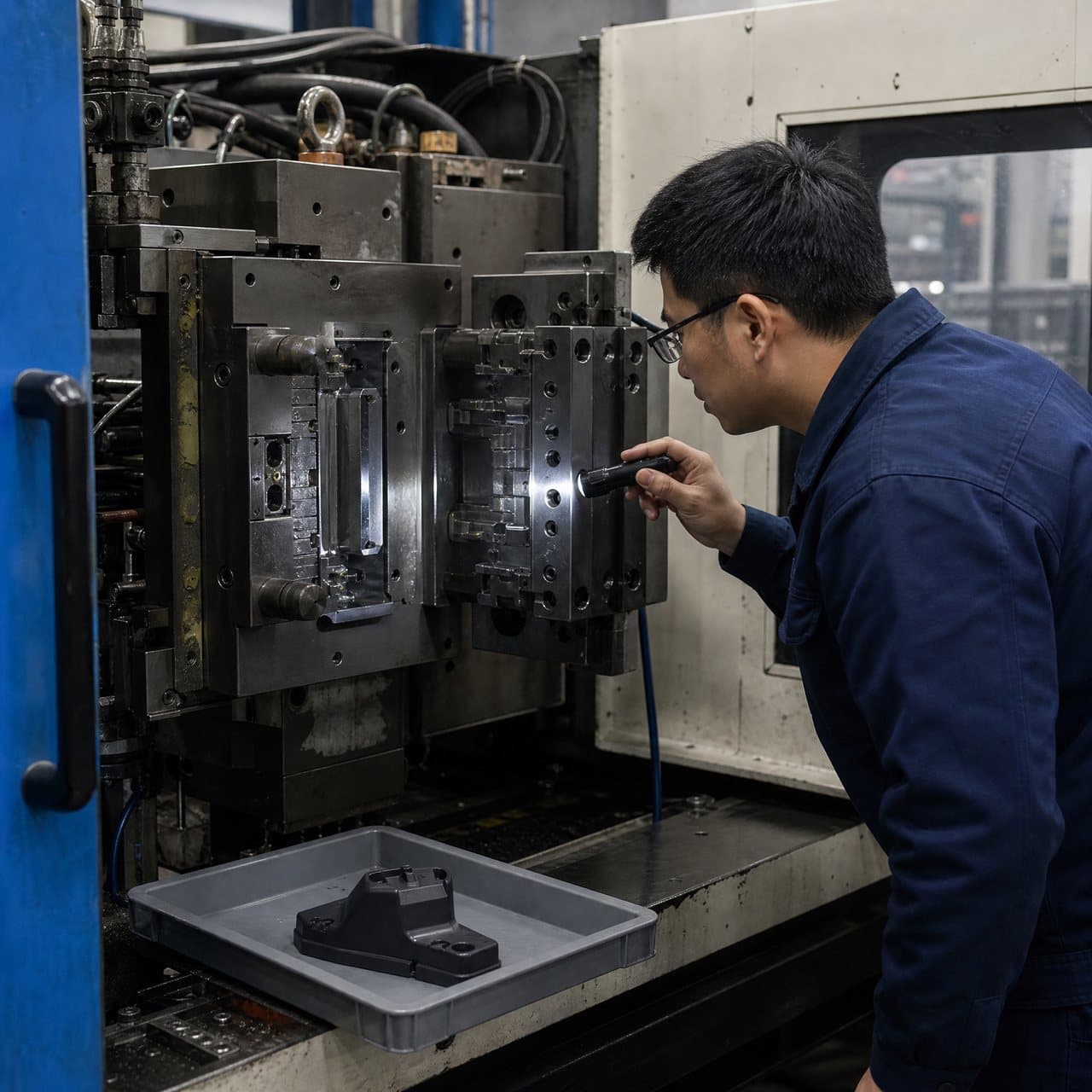
Bridge tooling can reduce the risk of spending heavily on a production asset before the product has been proven. It can also expose moldability, fit, assembly and appearance issues earlier, and may let the team release a limited quantity while a production tool is in progress.[1] That benefit is conditional: the bridge process must represent the intended material, critical features and acceptance method closely enough for the decision being made.
The risk moves rather than disappears. A bridge tool may have different cooling balance, venting, surface capability, cycle assumptions, tool-life expectations or modification limits. If the bridge part will support a customer-facing or regulated application, define the evidence boundary and do not present a pilot lot as product validation. ISO 20457:2026 provides a framework for molded-part tolerances and acceptance conditions, but product-specific requirements and inspection methods still need to be agreed.[2]
03
Model economics across the release window
Injection molding economics combine non-recurring tooling with recurring part cost. A production mold can spread a larger fixed investment across more parts, while a bridge route may limit upfront exposure and avoid committing inventory before demand is clearer. Formlabs describes tooling cost, part complexity, production volume and mold material as material cost drivers; its illustrative figures are examples, not a quote basis for a particular programme.[3]
Ask for two comparable views: the bridge route through the planned quantity window, and the production route including tool, samples, corrections, parts, inspection, packaging and logistics. Show whether the bridge tool is retained, transferred, modified or written off. A lower bridge price may be misleading if it excludes a second tool, duplicate validation, expedited freight or a later design change.
| Decision factor | Bridge tooling | Production injection mold | Buyer question |
|---|---|---|---|
| Short-run supply | Useful for a bounded release or interim demand, subject to stated tool limits. | Designed for the approved programme and planned recurring supply. | What quantity and release pattern is the tool expected to support? |
| Risk exposure | Can defer a larger commitment while revealing design and process issues. | Commits more before demand and design uncertainty are resolved. | Which uncertainty is being reduced, and what evidence will close it? |
| Economics | Lower initial exposure may come with higher recurring or later transition cost. | Higher fixed commitment may distribute better across sustained volume. | Are tool, parts, corrections, inspection and logistics separated? |
| Tool capability | Cooling, venting, finish, life and modification path may be narrower. | Can be engineered around longer-run process and maintenance needs. | Which capabilities are intentionally not equivalent? |
| Exit or transfer | May be transferred, modified, retained for service or retired by agreement. | Normally remains the long-term production asset, subject to contract and maintenance. | Who owns it, who holds it, and what records and hardware transfer? |
| Launch timing | Can overlap limited supply with production-tool development. | May require more approval and build time before stable launch supply. | What is the critical path and which dates depend on buyer inputs? |
04
Make tool transfer a written handoff, not an assumption
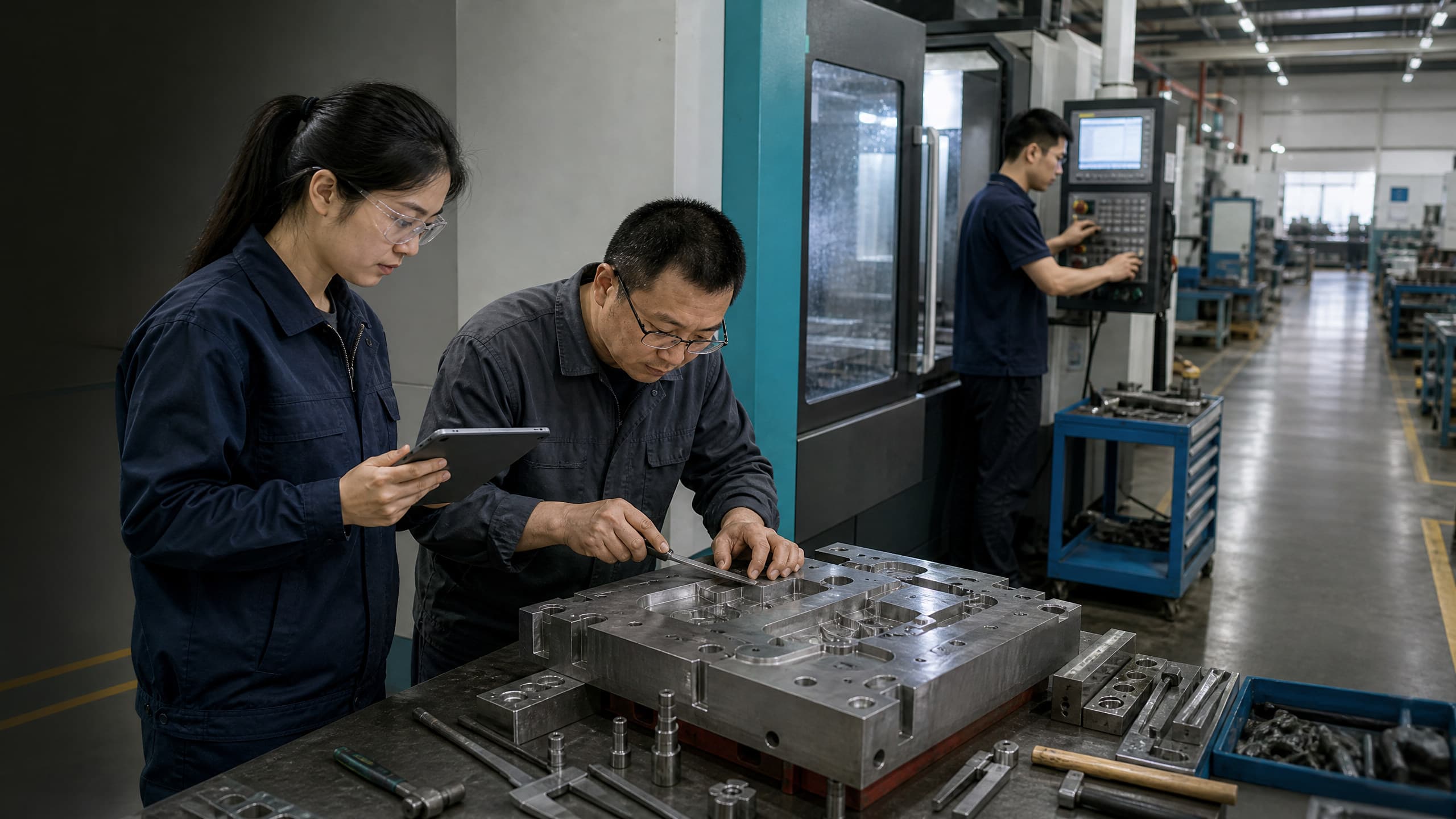
A tool-transfer plan should identify legal ownership, physical custody, permitted use, maintenance responsibility, storage conditions, insurance, access for inspection, export or import documentation, and the records that travel with the tool. Include CAD and drawing revisions, tool drawings, cavity identification, runner and gate details, steel or insert information where available, trial records, repairs, modifications, inspection evidence and known limitations. Contract terms vary by jurisdiction and programme; obtain appropriate legal and commercial review rather than relying on a supplier label such as customer-owned tool.
Also define what transfer means operationally. Does the buyer receive the complete tool, spare inserts, electrodes, gauges and maintenance parts? Can the current supplier continue to make parts during relocation? Who pays for disassembly, preservation, freight, customs, requalification and recommissioning? A transfer can protect sourcing flexibility, but it can also create downtime if these questions are left until the production order is due.
05
Build launch timing around gates and contingencies
Do not compare bridge and production timing as a single number. Map the chain: controlled CAD and drawing release, DFM, tool design, machining, trial, sample inspection, corrections, buyer disposition, production-tool build if applicable, transfer or installation, process setup, packing and shipment. Rapid tooling may shorten the route to molded parts, while a production mold may be the longer-term route; the actual schedule depends on geometry, material, tool concept, supplier capacity, approvals and logistics.[1]
Use a quote-oriented CTA model that asks for a decision-ready response: “Please quote bridge tooling and production tooling as separate options for revision [X], resin [Y], quantity window [Z] and target shipment [date]. Show included samples, inspection, corrections, ownership, transfer scope, maintenance, assumptions and the trigger for moving to the production route.” This gives engineering and procurement a common comparison without promising an unverified launch date.
All visuals in this guide are illustrative. They do not depict an InjeForm customer part, facility, tool, delivery result or production qualification. Confirm the route with a part-specific DFM, quotation and written quality or commercial agreement.
Practical takeaway
Before you move
to the next review.
- State whether the bridge lot is for learning, controlled launch supply, service demand or a defined combination.
- Provide the controlled CAD and drawing revision, resin direction, critical interfaces, cosmetic zones and acceptance evidence.
- Request separate bridge and production options with tooling, parts, inspection, corrections, packaging and logistics itemized.
- Document ownership, custody, maintenance, records, spares, transfer costs and the exit or transition trigger.
- Map approvals and dependencies to a target date, and identify the contingency if the production tool or transfer slips.
FAQ
Common questions
Is bridge tooling the same as a production injection mold?
No. Both can produce molded parts, but their cooling, venting, finish, durability, modification path and intended release window may differ. Compare the proposed tool against the actual part, resin, quantity and evidence required.
When is bridge tooling a sensible choice?
It can make sense when near-term parts are needed while demand, design or production-tool decisions remain open. Define a bounded purpose and quantity, then agree what decision or transition follows the bridge run.
Can bridge tooling reduce launch risk?
It can reduce some risks by exposing moldability and assembly issues earlier and by limiting the initial fixed commitment. It does not remove process, validation, supply, logistics or design-change risk, and it should not be treated as automatic production qualification.
Can a bridge tool be transferred to another supplier?
Potentially, if ownership, custody, records, hardware, maintenance, transport, customs, recommissioning and acceptance responsibilities are agreed. Confirm whether the tool is physically complete and whether the receiving supplier can run the specified part and material.
How should we ask for a bridge-tooling quote?
Ask for bridge and production routes separately. Include revision, resin, quantity and release pattern, target date, critical features, samples, inspection, packaging, ownership, transfer scope, assumptions and the event that would trigger a production-tool decision.
References
Source material
- [1] Protolabs, “How to Use Injection Molding for Bridge Tooling.”
- [2] International Organization for Standardization, “ISO 20457:2026 — Plastics moulded parts — Tolerances and acceptance conditions.”
- [3] Formlabs, “How to Estimate Injection Molding Cost?”
- [4] International Trade Administration, “Incoterms® 2020.”
This guide is general information for early procurement and engineering discussion. It does not replace product-specific DFM, qualification, validation, regulatory assessment or legal advice.