
Buyers should not stock every item that appears on a mold bill of materials. The useful question is which failure would stop a qualified tool, how long a correct replacement would take to obtain and prove, and whether the replacement can be installed without changing the approved part. That approach turns injection mold spare parts from an undifferentiated inventory cost into a continuity control. It is especially relevant when a tool, molder, service provider and buyer are in different countries: transport, customs, specialist availability and document access can all extend the real recovery time.
Start with the tool’s actual configuration, resin, operating history and production consequence—not a generic list. A global mold supplier or molding partner should confirm component identity, interchangeability and the post-repair acceptance route for the specific mold. The illustrative visuals in this guide are for engineering discussion only; they do not depict an InjeForm customer part, facility or production result.
Keep a spare when its verified absence would create unacceptable downtime. Do not treat an apparently similar replacement as interchangeable until the responsible tool or system supplier confirms the relevant specification and acceptance checks.
01
Rank spares by stoppage exposure before buying inventory
A practical continuity plan begins with a short failure-mode review. For each component, ask whether failure stops all cavities or only reduces output, whether the local team can replace it safely, and the total time to identify, obtain and verify a correct replacement. NIST frames supply-chain resilience around risk mapping, alternative sources and appropriate safety stock; the same logic is useful for tool-service items.[1]
The strongest candidates are usually tool-specific, hard to source quickly, or capable of stopping multiple cavities. A low-cost standard item can still be critical if the correct size, material or fit is unavailable. Set quantity against failure exposure, replenishment time, planned maintenance and the consequence of a production stop; there is no universal stock level.
Separate a production-continuity kit from a normal injection mold maintenance kit. The first protects against an unplanned stop; the second supports scheduled work at a known interval. They can overlap, but a buyer should know why each item is held and who authorizes its use. This prevents capital being tied up in unverified components while a genuinely long-lead item remains uncovered.
02
Prioritize the component families that can stop a tool
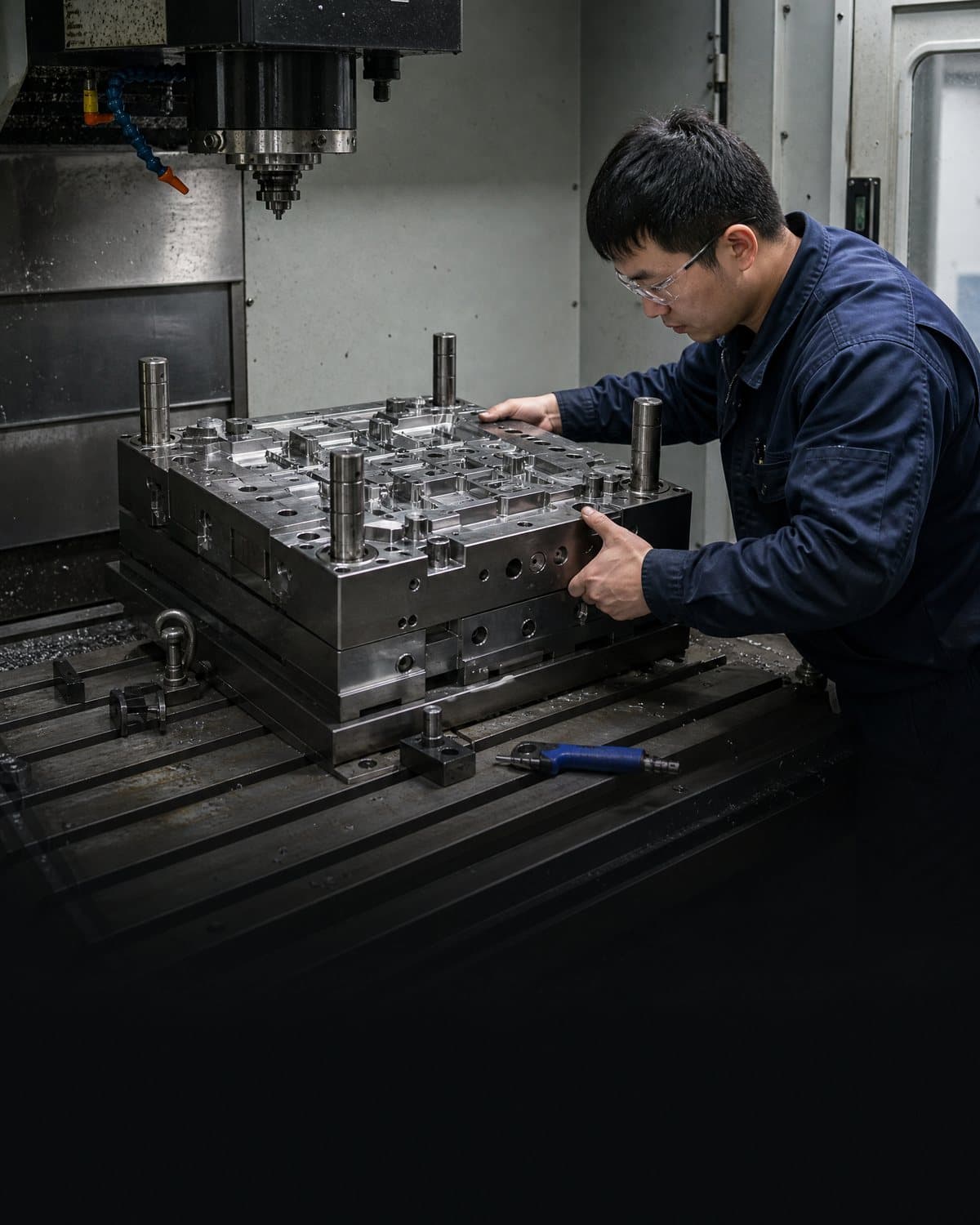
The correct contents depend on the mold design. Ejection and guidance components—such as ejector pins, sleeves, guide pins, bushings, return pins and springs—may be reasonable spares where they are high-cycle, wear-prone, feature-critical or nonstandard. Sliding-action components, including wear plates, gibs, angle pins, lifters and slide inserts, deserve particular attention when a damaged moving feature blocks release or produces an out-of-spec part. A replacement must match the approved build; a nominally similar catalog item may change clearance, hardness, coating or motion.
Core, cavity and local insert spares need a selective case: a removable, critical insert with long remake time or credible wear exposure may justify stock, while a whole cavity block may be costly and require requalification. For hot-runner systems, service parts are often the real exposure. Husky distinguishes hot-tip and valve-gate kits including heaters, thermocouples, tips, stems and seals, and warns that generic substitutes can introduce fit, heat-balance and sealing risk.[2]
| Component family | When stock is usually worth assessing | Acceptance evidence to request |
|---|---|---|
| Ejection and guidance | A nonstandard or high-wear item can halt ejection. | Item number, material/finish, location and fit confirmation. |
| Cores, cavities and localized inserts | A removable feature insert has a long remake lead time. | Geometry, revision, steel/coating details and inspection route. |
| Slides, lifters and wear elements | A moving action prevents opening or ejection. | Assembly drawing, clearances and approved replacement procedure. |
| Hot-runner components | A failed heater, thermocouple, tip, valve component or seal can disable a drop. | OEM system ID, part number, electrical specification and restart checks. |
| Cooling and sealing service items | A leak or degraded seal creates an unsafe or unstable production condition and the exact item has a lead-time risk. | Compatible media, connection detail and pressure/leak-test method. |
03
Specify a spare-part data pack, not just a purchase order line
A spare cannot protect continuity if the receiving site cannot prove what it is or fit it correctly. Require a controlled spare-parts register linked to the tool ID, cavity or position, drawing revision and approved supplier. Each critical item should have the manufacturer or OEM part number where applicable, the material and treatment or coating requirement where relevant, key interfaces, quantity held, storage location, preservation date and replenishment source. Photographs can help identification, but they do not replace a controlled drawing or supplier confirmation.
For production mold making, ask the builder to distinguish off-the-shelf from purpose-made parts and flag mirrored, paired or cavity-specific items that cannot be interchanged. Include the register, last approved configuration and repair history in any tool-transfer package. A global mold supplier should state the technical contact, support route and restrictions on third-party repair; verify these commitments in the proposal or service agreement.
04
Agree the repair and release evidence before an emergency occurs
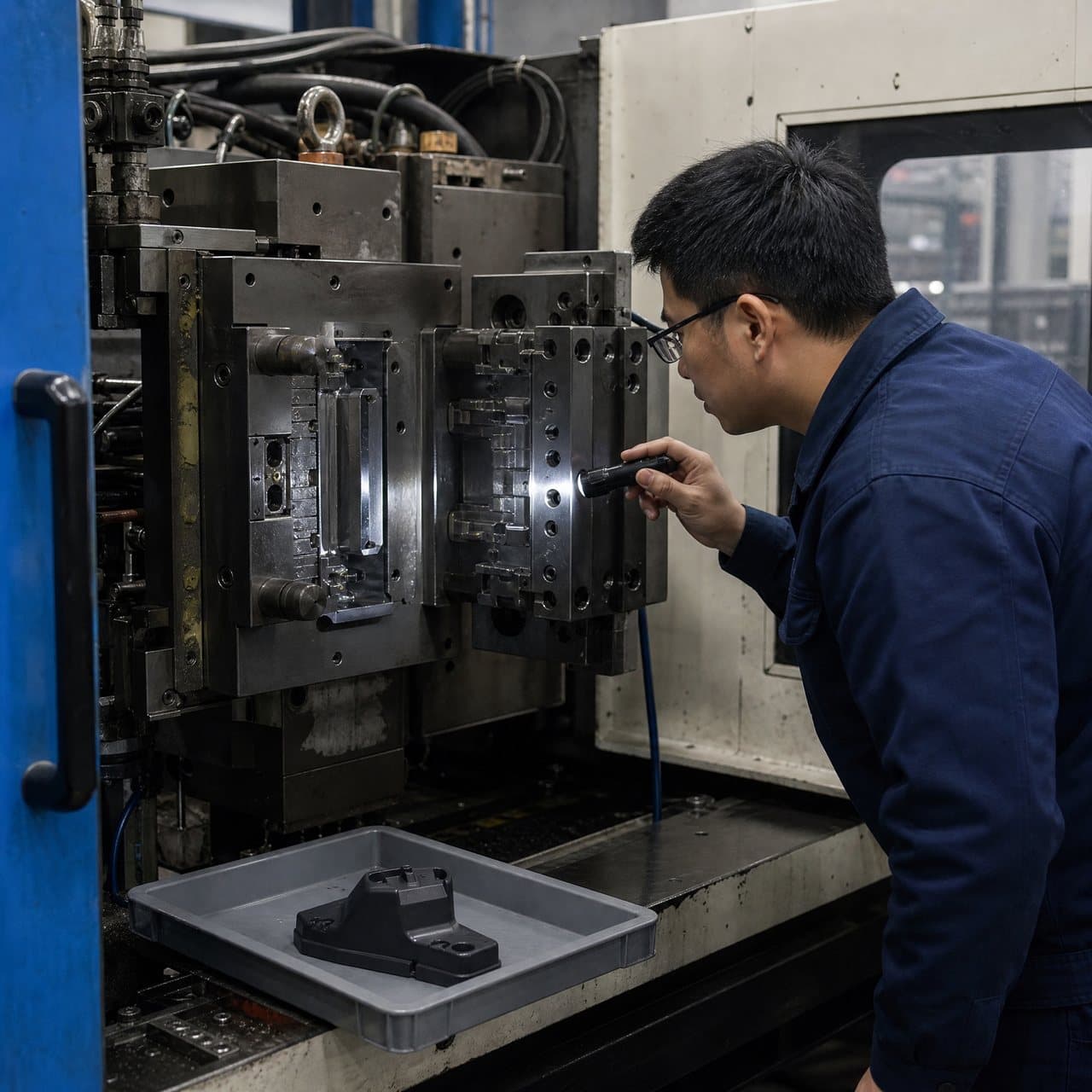
A stored component is only one part of recovery. Before production, agree who may authorize installation, which process conditions must be checked, and what evidence is needed before normal shipment resumes. The right scope is risk-based: it might include an installation record, movement or leak check, hot-runner electrical checks, first-off visual review, targeted dimensional checks on affected features and a documented disposition. For an insert or cavity change that can affect a critical interface, the supplier should confirm whether a broader sample, functional assessment or customer approval is needed. Do not promise that every repair can return a tool to production with the same evidence.
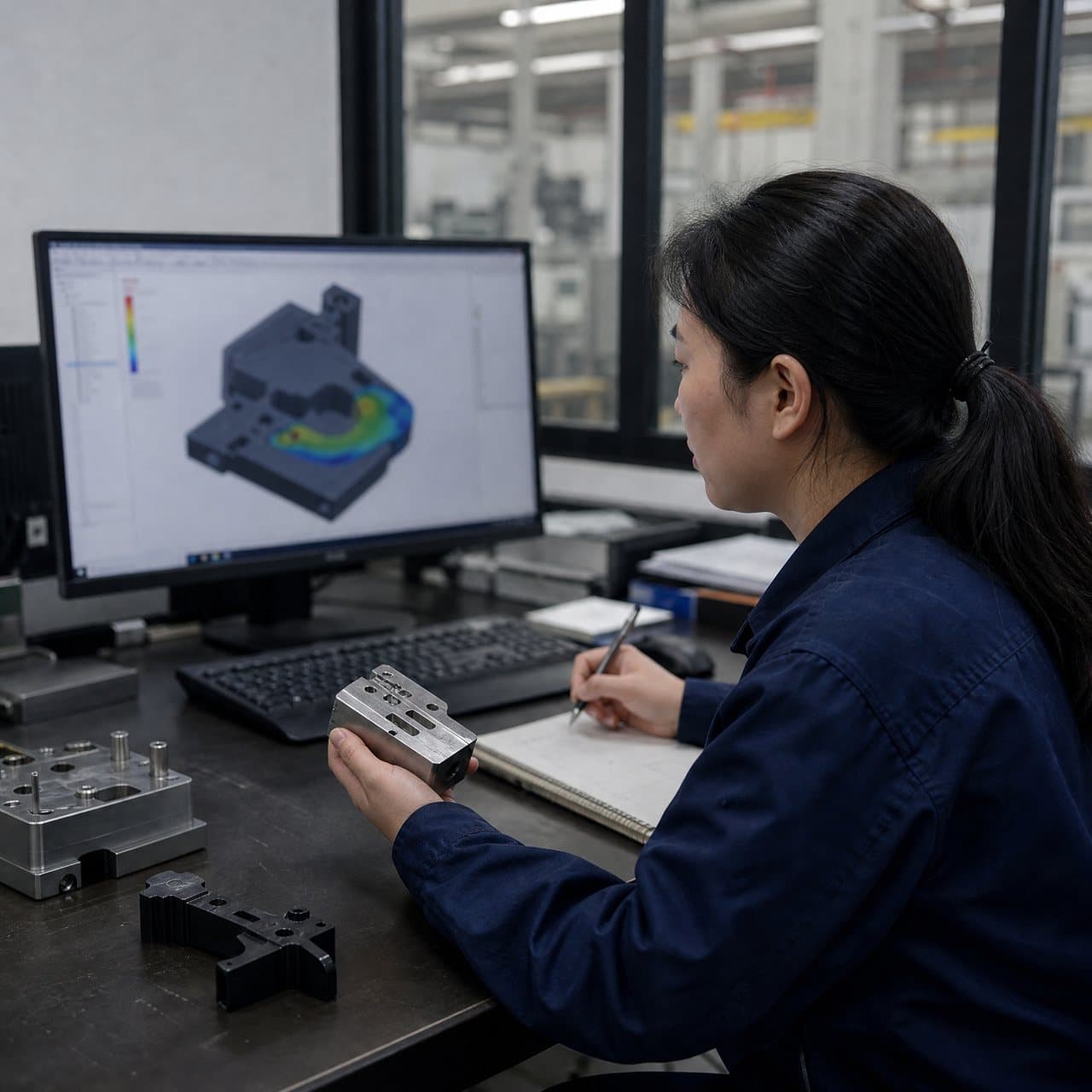
Use planned maintenance to refine the list. Mold-Masters notes that material, processing, shot count and tool history influence hot-runner needs; difficult start-up, cavity imbalance or changing set-points can justify evaluation of worn gate components.[3] Record observations, replenish consumed parts and reassess risks after resin, volume, process or design changes.
Practical takeaway
Before you move
to the next review.
- Create a tool-specific risk ranking based on failure impact, diagnostic and replacement capability, and total recovery lead time.
- Ask the tool builder or OEM to confirm every critical spare by part number, revision, material or system compatibility and installation requirement.
- Stock selectively across ejection, moving actions, localized inserts, hot-runner components and cooling or sealing items where the evidence supports it.
- Store a controlled spare register with tool location, preservation, quantity, replenishment source and named technical contact.
- Agree the post-repair checks and shipment-release authority before the first unplanned injection mold repair occurs.
FAQ
Common questions
Can we use a generic ejector pin or spring to get production running?
Only after the responsible tool supplier confirms the approved substitute or the item is demonstrated to meet the required size, fit, material, finish and function. A similar nominal size does not prove interchangeability, especially for feature-critical, coated or custom parts. Record the decision and complete the agreed first-off checks.
Should we keep a spare core or cavity insert for every cavity?
Usually not. Prioritize removable inserts whose failure would stop production and whose remake or qualification time exceeds the permitted outage. A full cavity or core spare can be justified for some high-risk tools, but its geometry, material, treatment, storage and requalification route should be agreed with the supplier first.
Where should injection mold spare parts be stored?
Store them in a controlled, clean and corrosion-protected location with the tool ID, component ID, revision and preservation status visible. The best location depends on service responsibility and response time; confirm whether stock stays with the molder, the tool builder, a regional service point or the buyer, and who replenishes it.
References
Source material
- [1] National Institute of Standards and Technology Manufacturing Extension Partnership, Supply Chain Management.
- [2] Husky Technologies, Eliminate Hot Runner Downtime with Preventive Maintenance Kits.
- [3] Mold-Masters, Prevent Hot Runner Downtime with Scheduled Maintenance.
- [4] International Organization for Standardization, ISO 9001 Quality Management Systems.
This guide is general information for early procurement and engineering discussion. It does not replace product-specific DFM, qualification, validation, regulatory assessment or legal advice.