
For an overseas buyer, a mold-maintenance requirement should not be a vague promise to ‘maintain the tool.’ It should be a controlled record system that shows what tool was serviced, why work was due, what was found, what was changed, and whether the mold was released back to production. This matters when a program is running in another country, when production is intermittent, or when different teams must interpret the same tool history. A good requirement also separates routine care from corrective work and from a buyer-approved design change.
Start the requirement before first production, while the supplier can still capture the as-built condition, component list, photographs, and baseline sample or inspection evidence. Then use both shot count and operating evidence to plan service. There is no defensible universal interval: resin, fillers, cavity count, molding conditions, mechanism complexity, water quality, storage climate, and part-risk all change the appropriate response. Industry guidance similarly notes that shot count is a scheduling reference rather than a stand-alone answer [1], and that cycles, environment, buildup, materials, and part complexity should shape the schedule [4].
Specify a maintenance log as a contractual deliverable, but specify service intervals as reviewable triggers. A fixed number without a baseline, condition checks, and an escalation rule can create false confidence.
01
1. Define the record package before the first production run
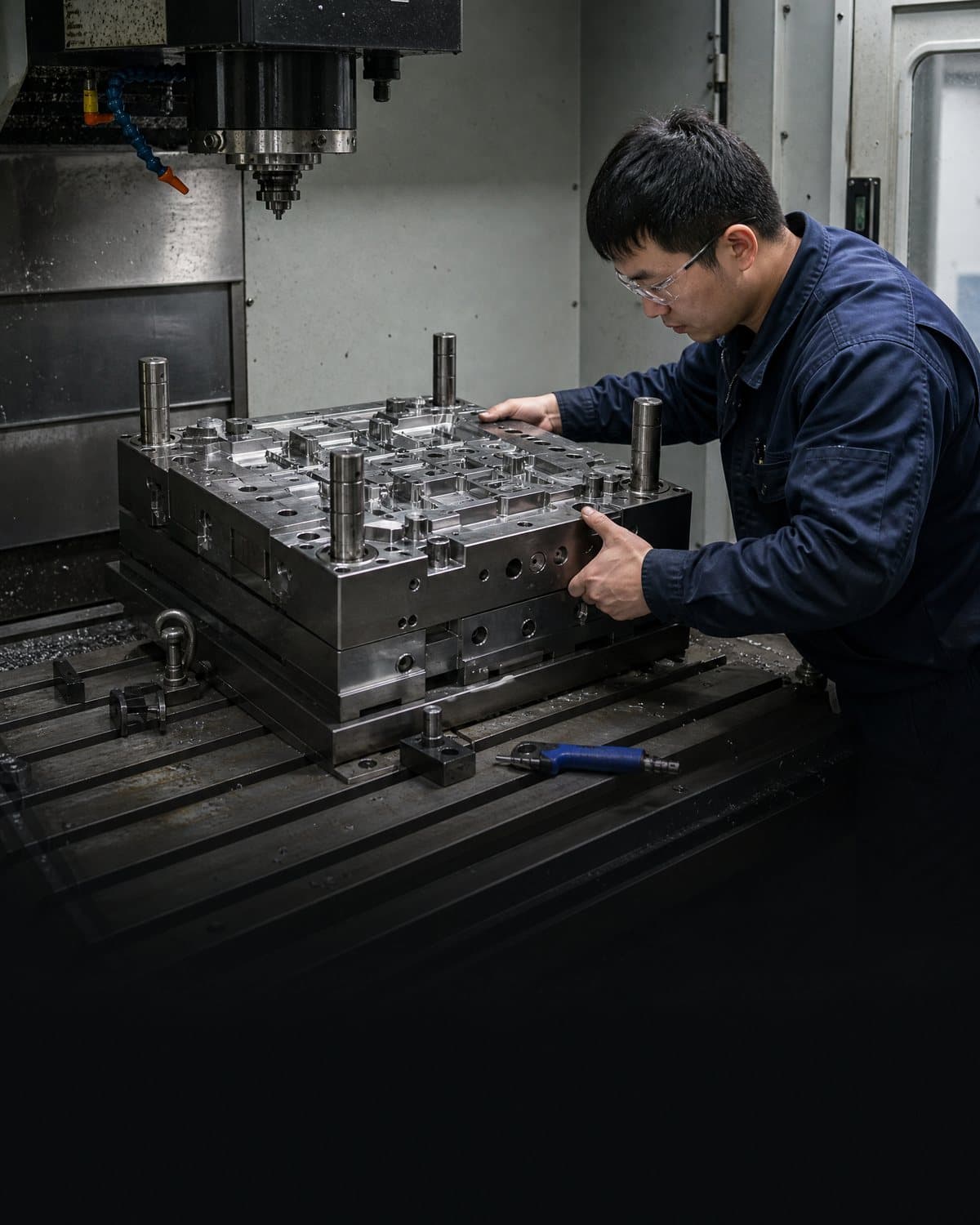
Ask for one controlled maintenance record per buyer tool ID, with a separate history for every duplicate tool. Its cover details should identify the part number and revision, mold configuration, cavity identification where relevant, ownership, physical location, and the linked as-built package: approved drawing, mold layout, bill of materials, and initial sample or validation evidence. That baseline makes later wear, repair, and modification traceable.
For each event, record date, cumulative and interval shot counts, work-order number, service reason, scope, technician or approver, and before-and-after condition. Capture resin and meaningful production context, such as abrasive or corrosive grades, difficult release, abnormal stops, or a defect trend. Include findings for cavities, cores, vents, gates, runners, cooling, ejection, mechanisms, and heated components where fitted. State cleaning, drying, rust protection, and open actions.
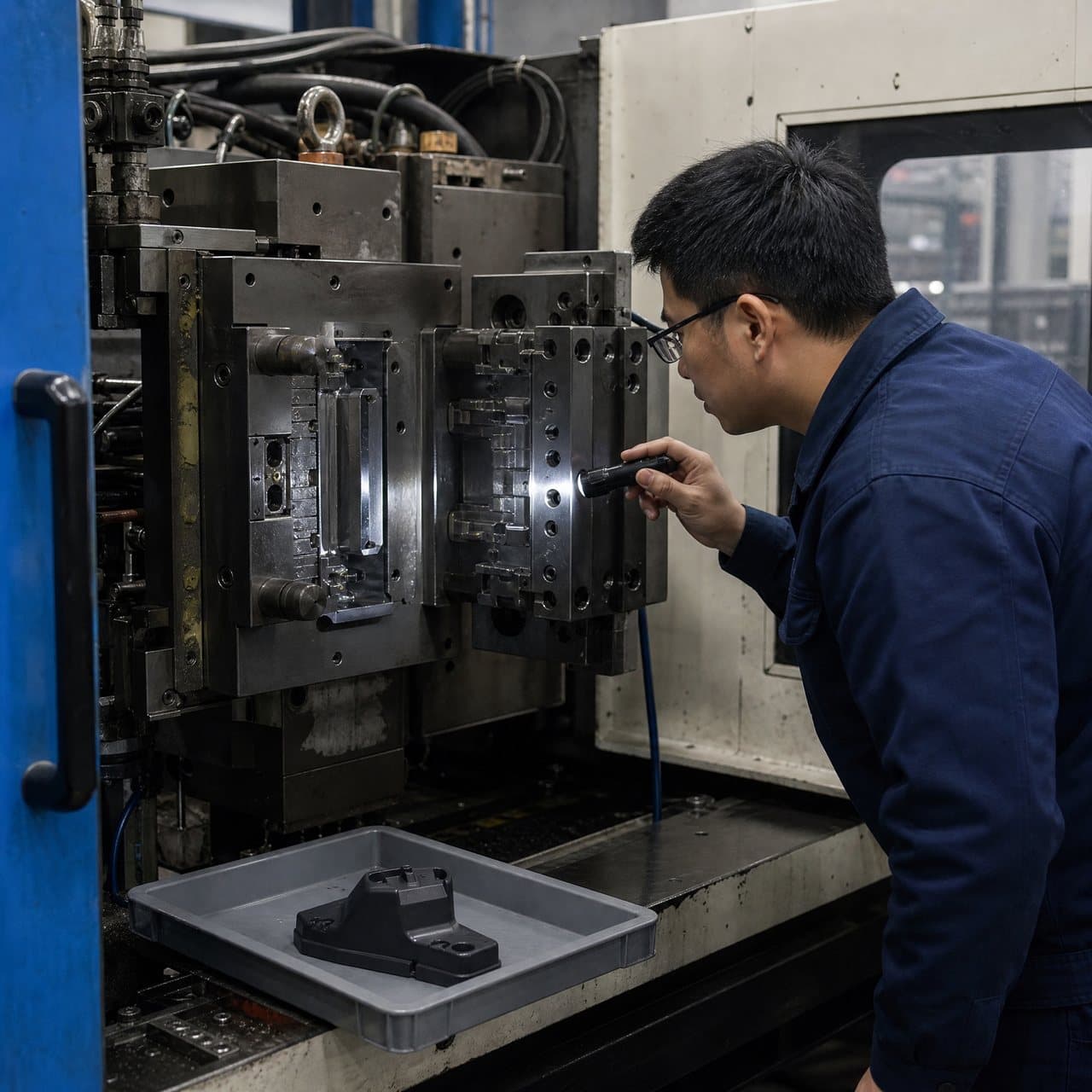
A useful log contains evidence, not only completed boxes. Attach dated photos of deposits or wear, relevant dimensional or functional checks, cooling or leak checks when performed, and replacement-component identifiers. Xometry recommends recording cleanup dates and scope, faults, and anomalies to aid future root-cause analysis [1]. Require controlled electronic access, revision history, and a readable export so a buyer can retain the record across sites and suppliers.
02
2. Set service intervals with layered, risk-based triggers
Use service layers rather than one blanket interval. Run-start and run-end checks can cover cleanliness, visible damage, water connections, parting surfaces, vents, gates, ejection, and shot count. Planned preventive service can add deeper cleaning, appropriate lubrication, and checks of wear items, cooling, and moving mechanisms. Major bench service may involve disassembly, comparison with retained baseline data, repair assessment, and controlled reassembly. The supplier should propose the initial plan and its assumptions for buyer approval.
Combine accumulated cycles, calendar time, and condition signals. Calendar triggers matter for a mold storage service because preservation and trapped moisture require attention even without new shots. Bring service forward for recurring flash, sticking, difficult ejection, parting-line damage, cooling restriction or leakage, visible buildup, abnormal wear, or unexplained process drift. Slide Products recommends logging inspections, cleaning, repairs, process irregularities, and storage protection [2].
Request a proposed cycle band and calendar cadence with rationale, scope, owner, and a revision rule, rather than treating any single number as a tool-life promise. Review the plan after real production results. Abrasive filled resin, complex mechanisms, long idle periods, frequent resin changes, and hot-runner components may justify more frequent or component-specific attention. Kaysun likewise identifies cycles, environment, buildup, materials, and part complexity as schedule factors [4].
| Service layer | Buyer-specified trigger | Minimum record evidence |
|---|---|---|
| Run check | Before/after each run and any abnormal stop | Shot count, visual findings, cleaning/drying status, open issues |
| Preventive service | Approved cycle and/or calendar trigger | Checklist, findings, action taken, parts used, release decision |
| Condition response | Defect, leak, sticking, wear, alarm, or process drift | Containment, diagnosis, affected cavities, corrective action, verification |
| Major service | Approved risk-based threshold or significant event | Disassembly scope, measured condition where relevant, photos, replaced components, approval |
03
3. Require a clear route from maintenance finding to production release
Classify findings as routine, monitor, repair-required, or change-controlled. Routine work follows the agreed release procedure. A monitor item needs an owner, due date, and observable trend. Repair-required work should identify affected cavities or mechanisms, potential product risk, containment for parts since the last known-good check, and verification before restart. A geometry, gate, texture, cavity-count, or control-system change belongs in buyer engineering change control, not inside a routine repair entry.
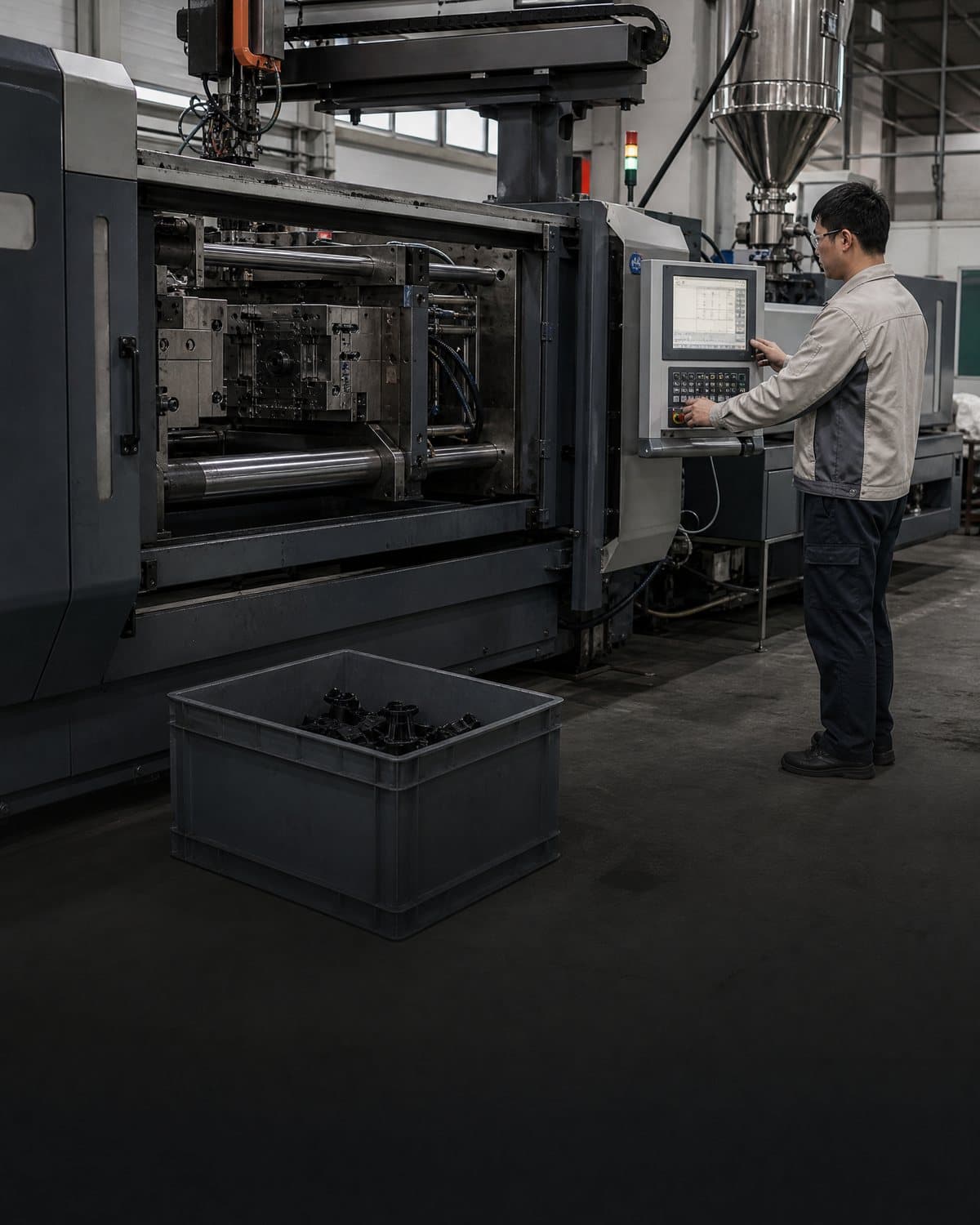
Define who may release the tool after each class of work and what evidence is proportionate. Depending on part risk and maintenance scope, that may be a visual check, targeted dimensional check, functional check, or controlled trial. Record part revision and key process conditions used in any restart trial, so teams can distinguish maintenance recovery from a product or process revision. Avoid prescribing the same verification package after every minor task.
The servicing organization must follow applicable energy-control and machine-safety procedures at its location. OSHA states that electrical, mechanical, hydraulic, pneumatic, chemical, thermal, and other energy sources can harm workers during maintenance, and identifies lockout/tagout as a safeguard against unexpected release [3]. Buyers can request a completed service and release status without remotely directing unsafe work.
04
4. Plan spares, storage, reporting, and transfer before they become urgent
Include a mold-specific injection mold spare parts list. Separate standard wear items from dedicated components that need machining, matching, lead time, or buyer approval. For each item, state its identifier, drawing or supplier reference, interchangeability, agreed on-hand quantity if any, location, and replenishment owner. This supports continuity without assuming one stock level fits every production program.
For inactive molds, define the storage state: cleaned, dried, protected, labelled, and secured as appropriate. Require periodic inspections, an event log, and photos for a material condition concern. Record the preservation product and pre-run actions. Xometry and Slide Products both identify drying and corrosion protection before storage [1] [2]. Set the interval around local humidity, cooling-water residual risk, packaging, and idle duration rather than a generic rule.
Keep reporting usable: send periodic status only while the tool is active or stored under supplier care, and notify promptly of a production-stopping condition, suspected part-quality risk, major repair, loss, damage, or proposed approved-tool change. At transfer, require native and exportable history, current shot count, spare inventory, storage status, open actions, and a jointly witnessed condition review. This supports continuity without claiming that maintenance eliminates wear or interruption risk.
Practical takeaway
Before you move
to the next review.
- Assign each mold a buyer tool ID, revision-controlled baseline package, location, and record owner.
- Record shot counts, scope, findings, actions, evidence, personnel, and release status for every service event.
- Approve run, preventive, condition, storage, and major-service triggers with documented rationale.
- Define notification, containment, verification, and buyer approval for quality-affecting repair or change.
- Require a mold-specific spare list and exportable maintenance and transfer history.
FAQ
Common questions
What should an injection mold maintenance record include?
Include the mold and part revisions, location, date, cumulative and interval shot counts, reason and scope, component or cavity findings, actions, relevant photos or measurements, replacement-part identifiers, open actions, and release decision. Link it to the work order and any restart-trial or inspection evidence.
How often should an injection mold be serviced?
There is no universal cycle count. Start with supplier-proposed run, preventive, and major-service triggers based on mold design, resin, fillers, operating environment, cooling, storage, and observed wear. Add calendar checks for inactive tools and bring service forward when condition or quality signals appear.
Should a buyer approve every mold repair?
No. Agree approval levels in advance. Routine cleaning and like-for-like maintenance may follow the procedure, while work that could affect geometry, cosmetic surfaces, gating, texture, cavity balance, or validated performance should enter buyer change control. Apply agreed containment and verification where nonconforming parts may be involved.
What evidence should be requested after maintenance?
Request the completed log, relevant photos, replacement-part traceability, and release-check confirmation. Where the work could affect the part, agree in advance whether targeted dimensional, cosmetic, functional, or controlled-trial evidence is appropriate. Do not require the same inspection package after every routine task.
References
Source material
- [1] Xometry — Injection Mold Maintenance Checklist
- [2] Slide Products — Preventive Maintenance Guide for Injection Molding
- [3] U.S. Occupational Safety and Health Administration — Control of Hazardous Energy (Lockout/Tagout)
- [4] Kaysun — Maximize Injection Molding Tool Life with Preventative Maintenance
This guide is general information for early procurement and engineering discussion. It does not replace product-specific DFM, qualification, validation, regulatory assessment or legal advice.