
Injection mold repair needs new evidence before production restarts when the work could reasonably change a part’s critical dimensions, appearance, material flow, release from the tool, assembly fit or another agreed acceptance criterion. A documented clean, lubrication or like-for-like replacement may support a narrower release; repair to a cavity, core, gate, vent, cooling circuit, ejection feature or shut-off usually deserves a deliberate review before routine output is accepted. The right evidence is determined by the repair’s likely effect on this part—not by the repair label alone.
This is a buyer decision about confidence and traceability, not a universal rule that every intervention requires a full requalification. Injection mold maintenance is valuable precisely because it can prevent uncontrolled deterioration, but a maintenance record is not automatically proof that the product remains unchanged. Where process output cannot be fully confirmed by subsequent inspection, the FDA describes injection molding process validation, in its medical-device inspection guidance, as objective evidence that a process consistently produces output meeting predetermined specifications [1]. That regulated definition is useful planning context; the applicable validation and regulatory decision remains product-, market- and contract-specific.
A repair record explains what changed; release evidence explains whether the part still meets the acceptance criteria that matter.
01
Classify the repair before choosing the evidence
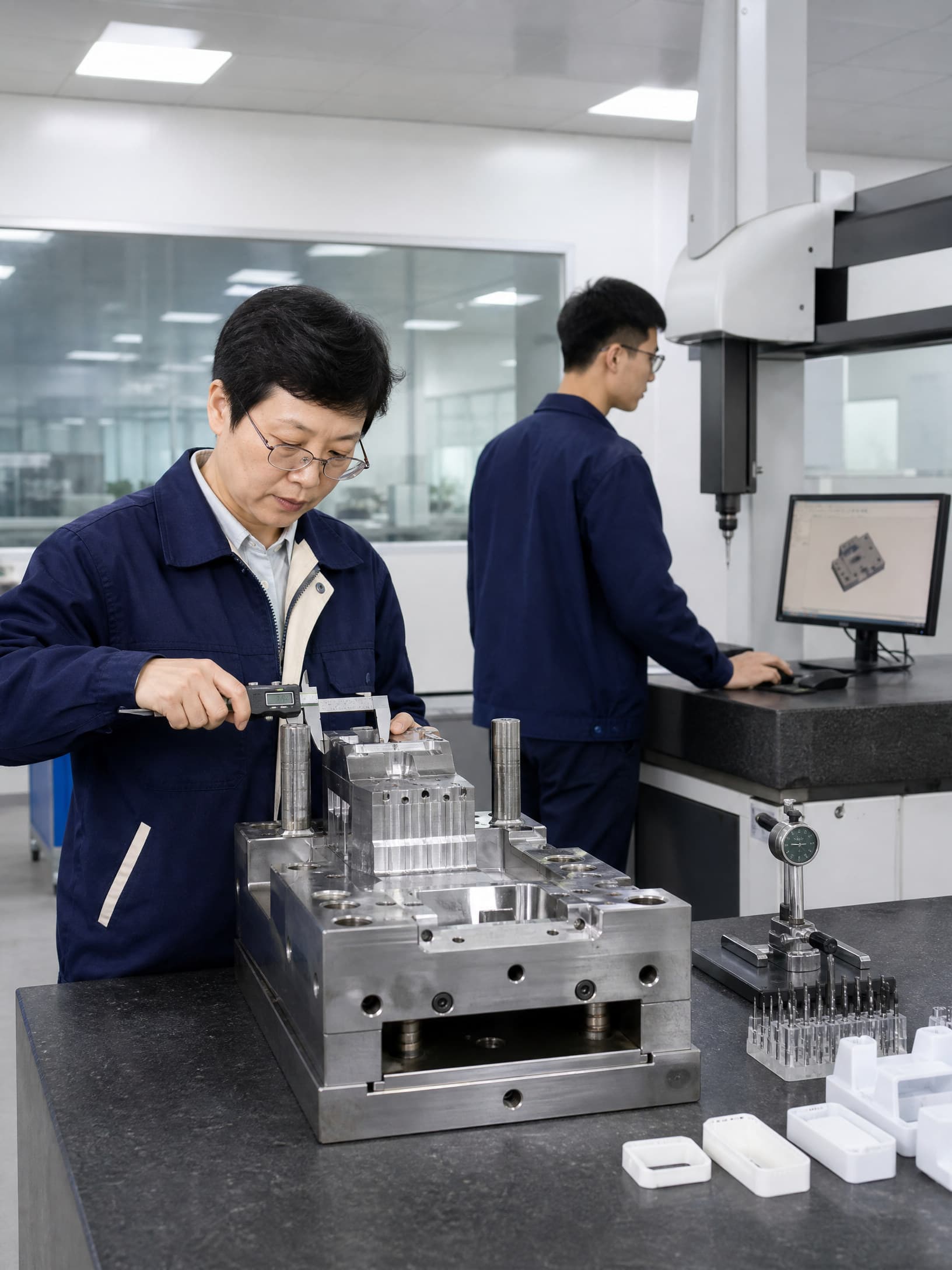
Start with a repair disposition that says what was observed, what was changed and which molded features could be affected. ‘Polished cavity’ is not enough for a buyer to judge risk. Ask whether material was removed or added, a surface was welded or re-machined, an insert was replaced, a gate or vent was altered, cooling was serviced, or an ejection component was adjusted. Preserve the tool identifier, cavity or position where relevant, drawing or program revision, date, technician review and images or measurements that make the intervention understandable later.
Then connect the intervention to the part’s function. A cosmetic housing may need a surface and color review after a cavity repair; a sealing part may need a review of the relevant interface; a multi-cavity component may need cavity-specific comparison if only one position was touched. The buyer should identify the critical-to-function, fit and appearance features rather than request every available test by default. This creates a proportionate scope and avoids treating a simple service event and a geometry-changing repair as the same event. It also makes the production hold decision visible to purchasing, engineering and quality.
02
Match the release route to the repair risk
A practical release route can range from record review to a limited sample comparison, a controlled trial or a broader study. The level should rise when the repair touches a feature that drives fit, sealing, safety, regulated use, cosmetic acceptance, automated assembly or a downstream process. It should also rise when the normal inspection plan cannot fully reveal the effect of the change. Conversely, a low-risk service task can often be released after the documented scope, tooling condition and normal start-up checks are reviewed against the agreed control plan.
The comparison below is a planning aid, not a substitute for a customer specification or regulated quality system. ISO’s guidance explains that documented information can provide evidence that planned work was done, and specifically identifies records of production-change review, authorisation and necessary actions as retained information [2]. Use that principle to agree who decides the release, what they review and what result closes the hold.
| Repair situation | Buyer evidence to consider | Restart decision |
|---|---|---|
| Cleaning, lubrication or verified like-for-like service away from part-forming surfaces | Service record, tool ID, scope confirmation and routine start-up record | Release through the agreed normal controls if no part-affecting condition was introduced. |
| Cavity, core, shut-off, gate, vent or ejection work that may affect a defined feature | Repair record, targeted samples, agreed dimensional or visual comparison and reviewer sign-off | Hold routine production until the affected acceptance criteria are reviewed. |
| Repair or change that may alter an unobservable or regulated product characteristic | Part-specific risk assessment and the verification or validation evidence required by the product quality plan | Escalate to the product owner’s defined approval route before release. |
03
Define a sample plan that can answer the actual question
A post-repair sample should be built around the suspected effect, not around an arbitrary number of shots. State the material and color condition, tool and cavity identification, relevant process settings, sampling point and the features to examine. Compare against the currently approved drawing, master sample or mutually agreed visual standard where one exists. If the repair changed a mold surface, a marked visual comparison may be more informative than a long generic measurement list; if it changed a mating condition, the assembly interface should be included.
Injection molding sample approval should also make the acceptance authority unambiguous. For one programme, the supplier’s internal review may be sufficient for a low-risk service event; for another, the buyer may require a first-off part, dimensional results or a functional check before shipping resumes. Do not describe a trial as ‘approved’ merely because parts were molded. Record the decision, its basis, any deviation or concession, and whether the approval is temporary, conditional or a return to standard production.

04
Request a release record that preserves the decision
An injection molding quality report after repair does not need to be a generic document pack. It should let a later reviewer trace the chain from issue to repair, evidence and release. Useful content commonly includes the tool and cavity identification, repair description, before-and-after condition where available, sample or production-lot identification, inspection results against named criteria, exceptions, approver and date. Attach only evidence that answers a defined risk; extensive paperwork cannot compensate for an unclear acceptance standard.
For medical-device manufacturing, U.S. regulation requires changes to a specification, method, process or procedure to be verified—or, where appropriate, validated—before implementation, with the activities documented [3]. That statement applies to its regulatory scope, not automatically to every molded consumer or industrial component. It does, however, illustrate a sound buyer question: has the change been evaluated before it becomes normal output, and is the reason for the selected level of evidence recorded? For other sectors, contract terms, product requirements and destination-market obligations determine the appropriate route.
05
Put restart authority into the quote and engineering review
The procurement package should define who owns the production hold, who can authorise restart, which features trigger buyer notification and what records are deliverable after a repair. Include this alongside tool ownership, tool location, revision control and maintenance responsibilities. That turns injection mold tooling from a black-box asset into a managed part of the supply plan. It also prevents a commercial instruction to resume output from being mistaken for technical acceptance.
For a quote or engineering review, send the latest drawing, acceptance criteria, known critical features, cosmetic standard, assembly context, material direction and the proposed repair-and-release path to info@injeform.com. Ask for open assumptions to be listed, agree the evidence before an event occurs, and make the final restart decision part-specific. This short preparation helps the buyer compare scope rather than rely on an undefined promise to ‘run samples.’

Practical takeaway
Before you move
to the next review.
- Identify the exact tool, cavity or mold position, repair scope and the features that could be affected.
- Classify the event as routine service, part-affecting repair or a change requiring product-owner escalation.
- Agree the targeted sample, inspection or functional evidence against named acceptance criteria before restarting routine output.
- Record the reviewer, release authority, result, any concession and whether the release is conditional or final.
- Place the repair-and-release route in the RFQ, quality plan or engineering review so responsibilities are clear before a disruption occurs.
FAQ
Common questions
Does every mold repair require new samples?
No. The evidence should reflect what was repaired and the part-specific risk. A documented low-risk service event may return through normal controls, while work that can affect geometry, appearance, fit or an incompletely inspectable characteristic may justify targeted samples or a higher approval route.
What is the difference between a repair record and a release record?
A repair record identifies the issue and the work performed on the tool. A release record states what evidence was reviewed, against which acceptance criteria, by whom, and whether production may resume. Keeping both avoids assuming that repair completion equals product acceptance.
Who should approve production restart after a repair?
The answer should be stated in the programme’s quality and commercial agreement. The molder may control the toolroom and process checks, while the buyer or product owner may retain authority for customer approval, critical features or regulated applications. Define the authority and escalation route before production is interrupted.
References
Source material
- [1] U.S. Food and Drug Administration, "Guide to Inspections of Medical Device Manufacturers: Process Validation."
- [2] ISO/TC 176/SC2, "Guidance on the requirements for Documented Information of ISO 9001:2015."
- [3] Electronic Code of Federal Regulations, "21 CFR 820.70—Production and process controls."
This guide is general information for early procurement and engineering discussion. It does not replace product-specific DFM, qualification, validation, regulatory assessment or legal advice.