
A hot runner mold can justify its higher injection mold cost when recurring, evidenced value from avoided runner material, reduced runner handling, and any validated throughput or quality benefit exceeds its added tooling, controls, commissioning, maintenance, and changeover burden over the expected production program. It is not automatically the lower-cost choice: compare the whole program, not the mold quote alone.
Do not approve a hot runner system because a supplier calls it faster or waste-free. Ask for the cold-runner and hot-runner shot layouts, resin assumptions, process window, maintenance plan, and a scenario model using your own annual volumes and product mix.
01
H2: Start with the physical difference
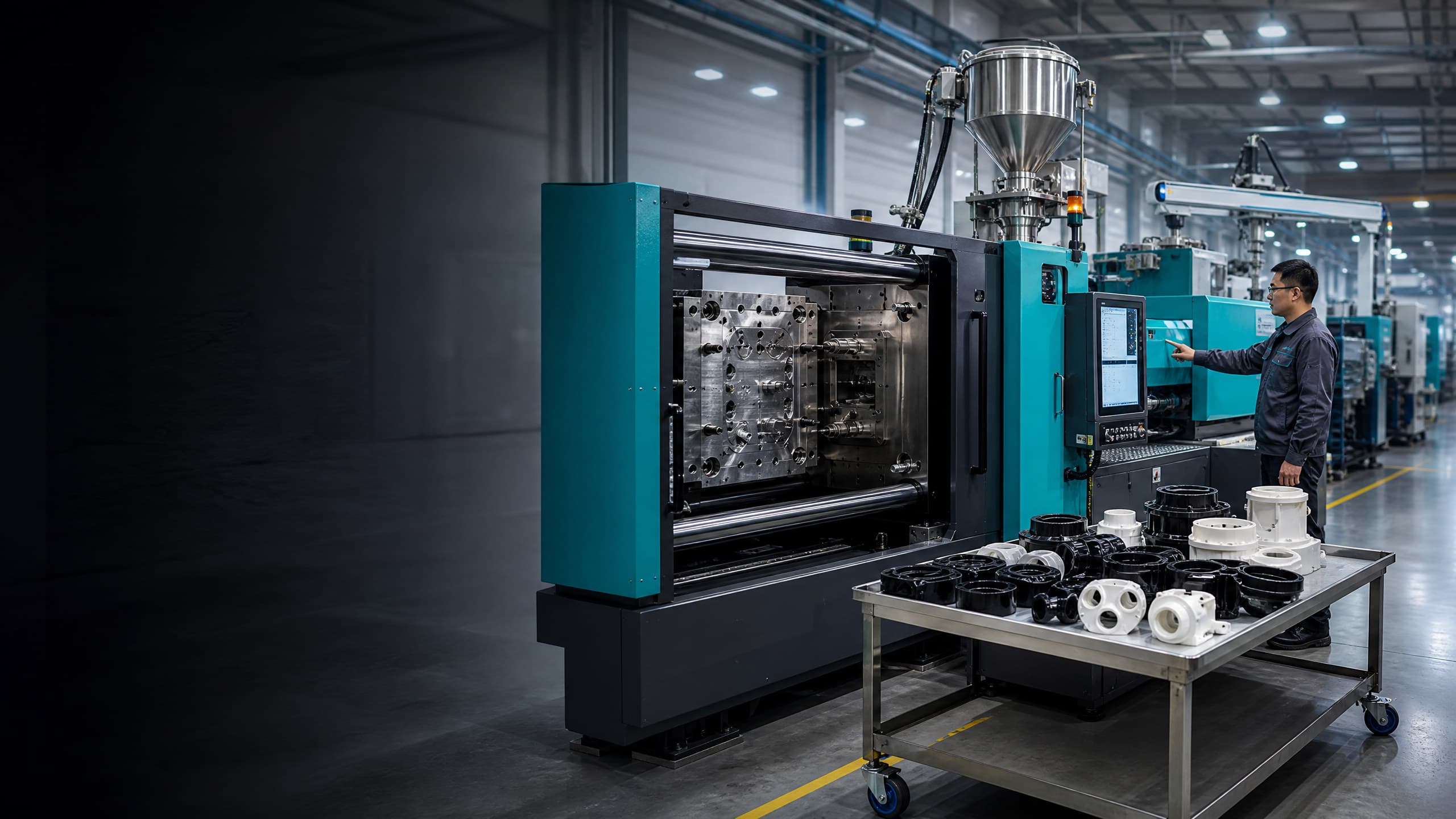
A cold runner mold sends melt through unheated channels that cool, solidify, and eject with each shot. The runner may be separated, reground when the resin specification permits it, or discarded. A hot runner system uses heated manifolds and nozzles to keep the melt path molten until the gate, so there is normally no ejected runner. Beaumont describes the runner as a flow channel whose geometry and thermal history can affect filling pressure, packing, shrinkage, warp, and residual stress [1].
That distinction changes more than material consumption. A cold runner adds a piece that must freeze before ejection and then be handled. A hot runner adds heaters, thermocouples, wiring, controllers, nozzles, and a heat-managed interface with the mold. The relevant decision is therefore not simply ‘scrap versus no scrap’; it is a trade between recurring operating effects and a more complex tooling asset.
For thin-wall parts, runner cooling can be a meaningful limiter, so removing it may support injection mold cycle time optimization. For a thick part dominated by cavity cooling, the same hot runner may make little difference to the total cycle. Treat a proposed cycle-time improvement as a trial hypothesis, not a quote-line fact.
02
H2: Build a payback model that exposes assumptions
Calculate the incremental investment first: manifold and nozzles, controller and cables, gate style, installation, tuning, validation, spares, and any service needed at the production location. Subtract the comparable cold runner mold cost. Keep changes in cavities, steel, automation, and cosmetic scope outside the comparison unless the runner choice causes them.
Then model conservative net recurring value per good part. Credits may include resin not consumed in runners, runner handling avoided, and validated capacity or labor effects. Debits include power, start-up purge, color-change loss, maintenance, replacement components, and downtime exposure. Divide the incremental investment by this net value to obtain break-even good-part volume. Compare it with forecast volume by year and the lowest credible demand case.
Buyers in Europe, the United States, and the Middle East can enter local resin, energy, labor, logistics, and service variables. This avoids importing a saving claim from another part, resin, or factory.
| Cost or operating factor | Cold runner mold evidence to request | Hot runner mold evidence to request | How it affects the decision |
|---|---|---|---|
| Tooling and controls | Tool design, runner layout, gate separation method, trial scope | Manifold/nozzle configuration, controller zones, electrical scope, spare-parts list, trial scope | Establishes the true incremental injection mold cost, not just the quoted mold base |
| Resin and runner disposition | Shot weight split into part and runner; regrind policy and qualification limits | Part shot weight, start-up purge plan, color-change procedure | Measures recoverable versus unrecoverable material cost by resin and product requirement |
| Cycle and handling | Recorded stable cycle, runner cooling constraint, degating or automation sequence | Recorded stable cycle, thermal set-points, ejection and automation sequence | Credits throughput only after comparable trials show a stable quality result |
| Quality and process window | Cavity balance, gate vestige, cosmetic and dimensional results | Zone map, gate type, cavity balance, cosmetic and dimensional results | Prevents a paper saving from being offset by scrap, variation, or validation work |
| Service and continuity | Preventive-maintenance record, wear items, repair route | Maintenance intervals, heat/nozzle diagnostics, local or export repair route, lead-time risks for spares | Prices the ownership burden and the response plan rather than assuming either tool is maintenance-free |
03
H2: Identify the programs where a hot runner is more likely to earn its place
The case is often stronger when a multi-cavity program has meaningful runner mass, repeatable demand, runner removal that complicates automation, or a part and gate layout that benefits from controlled flow. High material cost matters only when the cold runner cannot be safely and economically recovered under the part specification. Calculate actual shot weights rather than relying on part size.
A hot runner can also be justified by a quality or design requirement. Multiple direct gates, difficult fill paths, or a gate location that protects a visible surface may be valuable even when the pure material payback is modest. Fictiv notes that hot runners can provide more control of temperature and pressure and can reduce runner scrap, while the choice still depends on volume and the initial investment [2]. Document the specific quality mechanism and acceptance evidence rather than labeling the system ‘better quality.’
The case is weaker for uncertain launches, short or intermittent runs, frequent color or resin changes, thermally sensitive materials, and parts with little recoverable runner loss. Cold runner tools are simpler to alter and clean. Their flexibility can be worth more than a theoretical material credit.
04
H3: Separate open-gate and valve-gate questions
A hot runner system is not one uniform solution. Open thermal gates and valve gates have different gate-mark, sequencing, control, and maintenance implications. Valve gating may support a particular fill sequence or cosmetic requirement, but it also adds actuators and timing to validate. Do not allow a ‘hot runner’ allowance to conceal an unspecified gate technology. Ask the supplier to explain why the gate type suits the resin, wall section, cosmetic zone, cavity count, and planned process monitoring.
05
H2: Qualify the supplier’s evidence before approving the premium
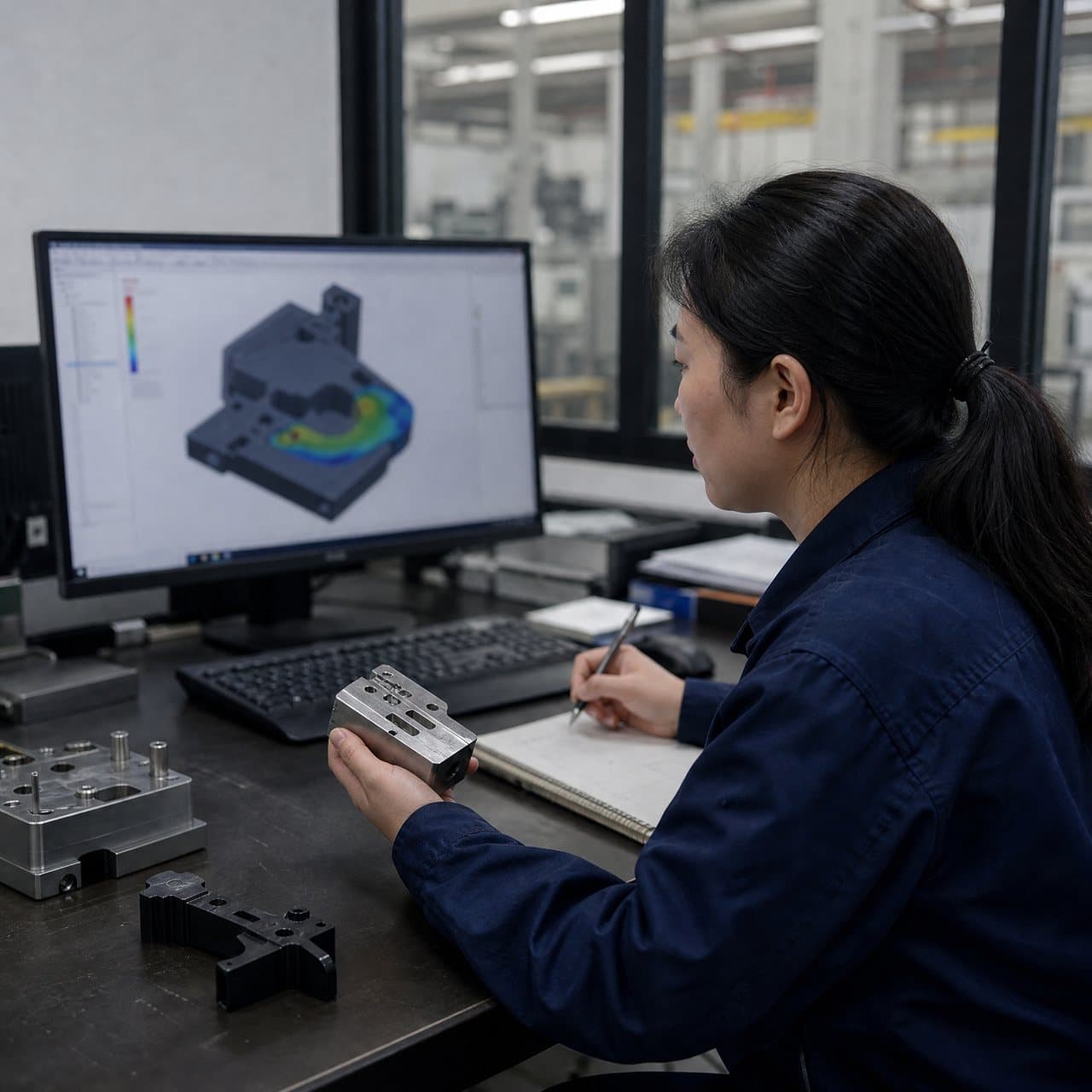
Request two like-for-like scenarios from the same supplier: cold runner and hot runner molds with equal cavity count, steel strategy, target machine range, automation, and acceptance criteria. Ask for an annotated shot layout separating part, runner, sprue, purge, and expected reject material. Require controller make, zone count, heater access, wiring diagram, and a named support route for the destination market.
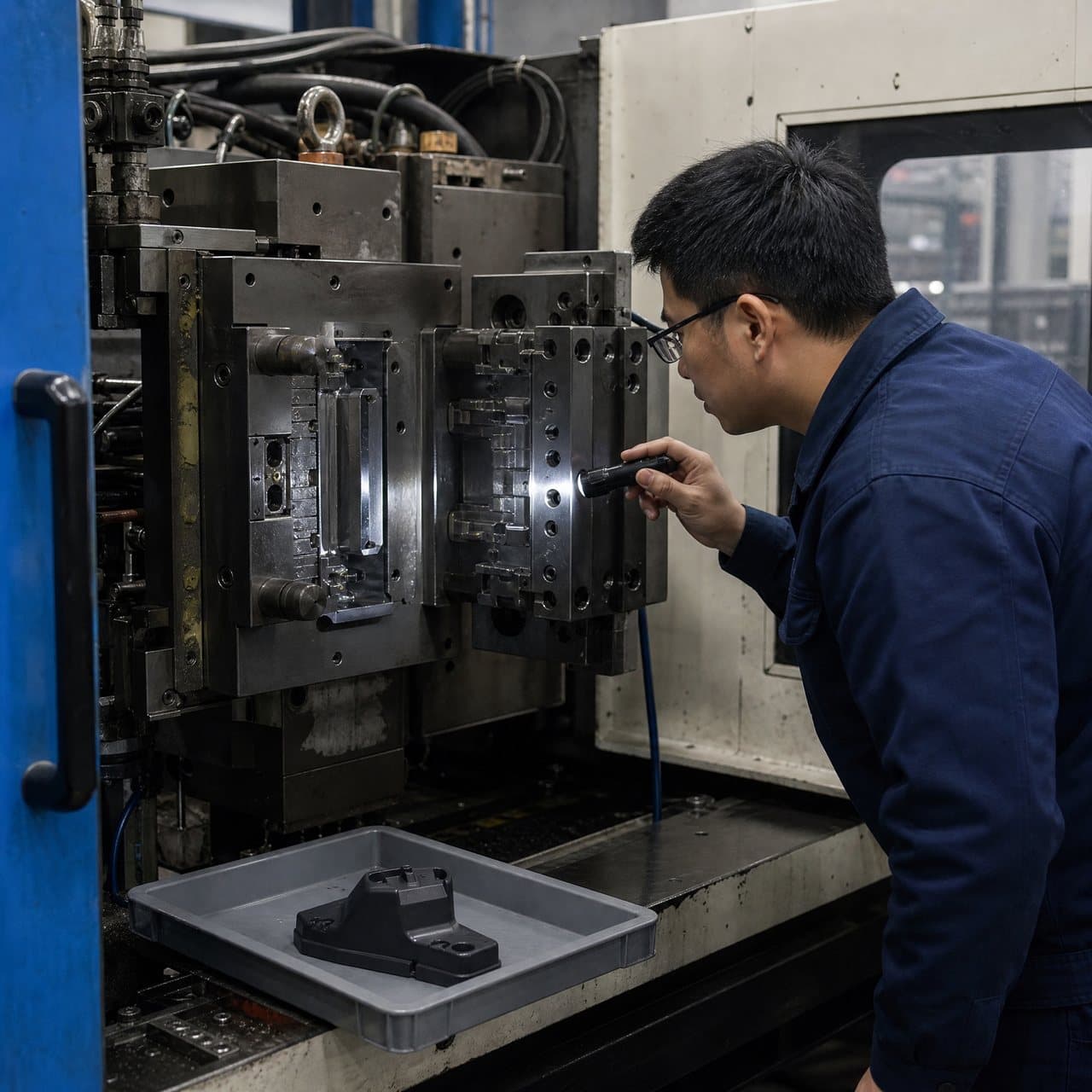
At trial, record the resin grade and lot, dryer condition, barrel profile, hot-runner zone set-points, actual cycle, cavity-to-cavity outcomes, part mass, visual appearance, dimensions, and rejects. Compare stable windows, not a single best cycle. Confirm start-up, shutdown, color-change, and fault-response instructions. Mold-Masters advises that maintenance frequency is mold-specific; fillers, corrosive resins, residue, gate wear, operating practice, and spare-parts readiness all matter [3]. That is why a generic maintenance promise should not enter the payback calculation as a fixed number.
For cross-border sourcing, settle controller and spare ownership, electrical compatibility, documentation language, remote-diagnostics responsibility, and escalation if a zone fails. These details determine whether a spreadsheet case is practical in production.
06
H2: Procurement checklist for a defensible runner-system decision
Use this checklist in the RFQ, technical review, and tool acceptance record. It turns a generic runner preference into a controlled sourcing decision.
07
H2: Request a comparable RFQ, not a generic hot-runner quote
Send InjeForm the 3D model, drawing, resin grade and approved regrind position, annual and batch-volume scenarios, target markets, cosmetic and dimensional CTQs, expected color-change frequency, planned press range, automation concept, and maintenance expectations. Ask for a cold runner mold and hot runner mold comparison built from the same assumptions, along with shot layouts, gate rationale, controller scope, validation plan, and identified exclusions. A transparent RFQ makes the decision reviewable by procurement, engineering, quality, and operations without promising a result before the design and trials support it.
08
H2: FAQ
The answers below help procurement teams keep the runner-system decision tied to measurable program conditions.
Practical takeaway
Before you move
to the next review.
- Obtain matched hot runner mold and cold runner mold proposals with the same cavity count, tool steel scope, target press range, automation assumption, and acceptance criteria.
- Request an annotated shot-weight calculation separating good parts, runner or sprue, start-up purge, and expected rejects for each option.
- Confirm whether runner regrind is allowed for the exact resin grade, regulatory requirement, cosmetic class, and customer specification.
- Model break-even good-part volume using local resin, energy, labor, disposal, logistics, and service assumptions, including a low-demand scenario.
- Specify gate technology, controller brand and zone count, electrical compatibility, diagnostics access, listed spares, and support route before purchase order release.
- Require comparable trial evidence for cycle, cavity-to-cavity consistency, dimensions, cosmetics, part mass, rejects, start-up, and changeover behavior.
- Agree preventive-maintenance records, fault escalation, ownership of controller and spares, and responsibilities if the mold transfers between production sites.
FAQ
Common questions
How do I calculate hot runner payback?
Calculate the fully scoped incremental tool investment, then divide it by the conservative net recurring value per accepted part. Include runner resin and handling credits only where evidenced, and subtract added energy, purge, maintenance, spares, and changeover costs. Test the result against realistic annual volume and product-mix scenarios.
Does a hot runner always reduce injection mold cycle time?
No. It can remove runner cooling and runner handling, which may help when those constrain the cycle. If cavity cooling, ejection, machine recovery, or automation is the limiting step, total cycle time may not change materially. Require comparable stable-trial data.
Can cold-runner scrap simply be reground?
Sometimes, but only when the resin supplier guidance, part specification, regulatory obligations, appearance requirement, and process validation allow it. Regrind also requires collection, grinding, blending, traceability, and process control. Treat its value as a qualified assumption rather than a zero-cost credit.
What is the main risk of choosing a hot runner system on price alone?
The proposal may omit the controller, wiring, commissioning, spares, thermal diagnostics, gate technology, local support, or maintenance burden. A lower initial allowance can become a poor ownership decision if these interfaces are unclear or the system is not validated for the resin and production conditions.
When should a buyer prefer a cold runner mold?
A cold runner mold is often worth considering where volumes are uncertain, programs are short or intermittent, color and material changes are frequent, the resin is heat-sensitive, design changes are likely, or a stable trial shows limited runner-loss and throughput benefit from a hot runner.
References
Source material
- [1] Beaumont Technologies — Runner: Injection Molding Glossary
- [2] Fictiv — Hot Runner vs. Cold Runner Molds
- [3] Mold-Masters — Prevent Hot Runner Downtime with Scheduled Maintenance
This guide is general information for early procurement and engineering discussion. It does not replace product-specific DFM, qualification, validation, regulatory assessment or legal advice.