
Changing an injection molding supplier can protect continuity, capacity or commercial resilience, but the move carries more risk than transferring a physical mold. The incoming team must understand the tool, the approved part, the process assumptions and the evidence behind acceptance. If those items are unclear, a successful first trial may still leave open questions about repeatability, cavity balance, cosmetic standards or responsibility for future changes.
This mold transfer checklist is intended for product, quality and procurement teams planning a controlled supplier changeover. It does not assume that every tool has a complete history. Instead, it shows how to expose gaps early, preserve the current baseline and define what must be re-established with the new supplier.
Treat the changeover as a requalification decision, not a freight event: preserve the old baseline, inspect the tool on arrival, and agree in advance what evidence is needed before production release.
01
Define the changeover boundary before the mold moves
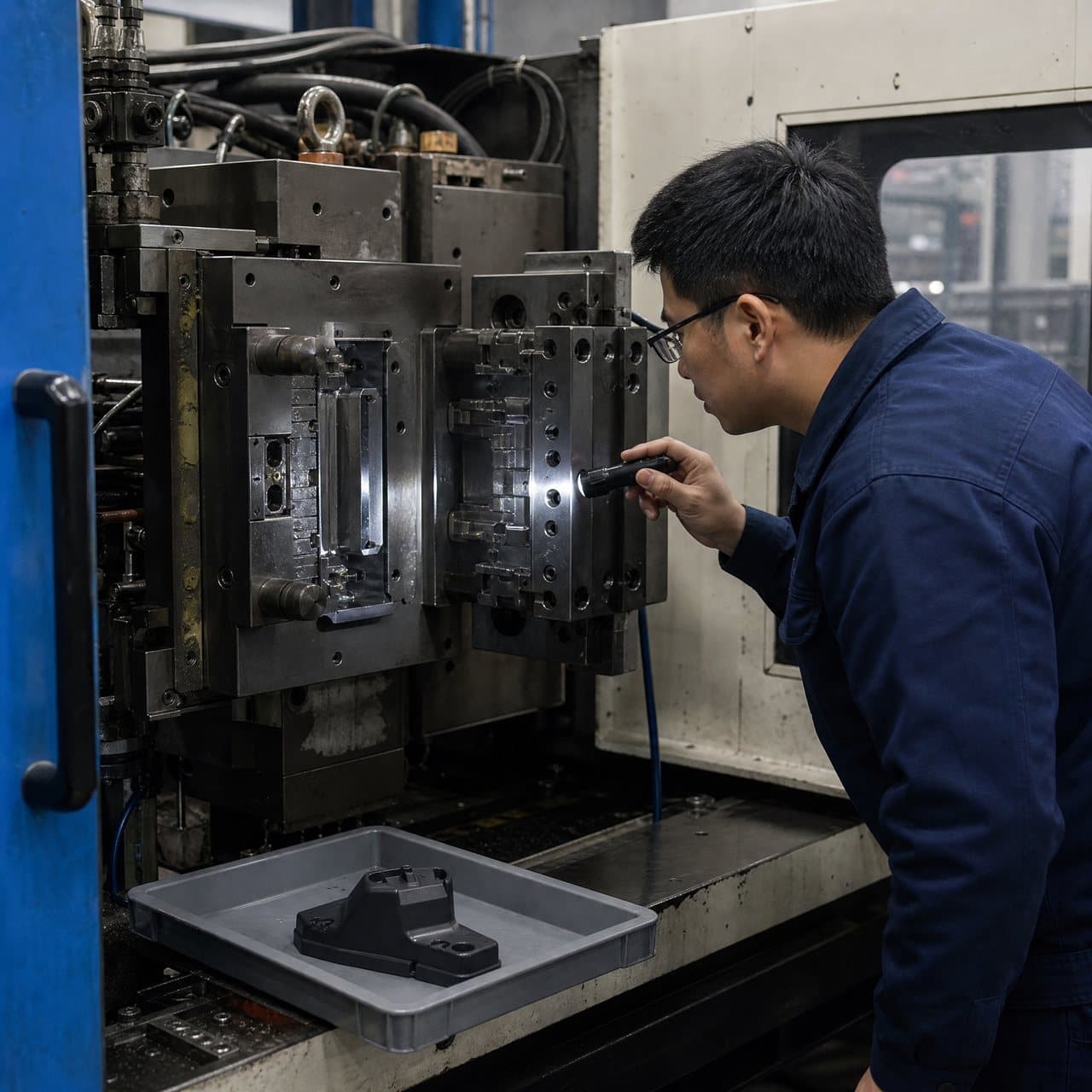
Start by writing down what is changing and what is intended to remain unchanged. The boundary may include the molding supplier, machine, site, operator team, resin lot source, auxiliary equipment, secondary operations, packaging or logistics route. A move between two suppliers can therefore be a different technical event from a move of the same mold within one network.
Create a controlled baseline for the part and tool. Identify the approved CAD and drawing revisions, resin grade and colour, critical-to-quality features, cosmetic zones, cavity identification, approved sample date, part weight range and any known process limitations. If a value is not known, label it as an open item rather than allowing the receiving supplier to infer it. A documented baseline makes deviations visible during the first trial.[1]
Check the commercial boundary as well. Confirm who owns the mold, who pays for transport and refurbishment, who authorizes modifications, who retains inspection data and who is responsible for production inventory during the overlap period. These responsibilities should be agreed before dispatch, not negotiated after an issue appears.
02
Build a transfer package that another team can actually use
The transfer package should combine records with practical knowledge. Include the latest tool assembly drawing, cavity and insert identification, component or spare-parts list, cooling-circuit map, hot-runner or temperature-controller information where applicable, maintenance history, repair log, lubrication guidance and storage condition. Add photographs of the tool before packing, including parting surfaces, connections, plates, identification marks and any existing damage.
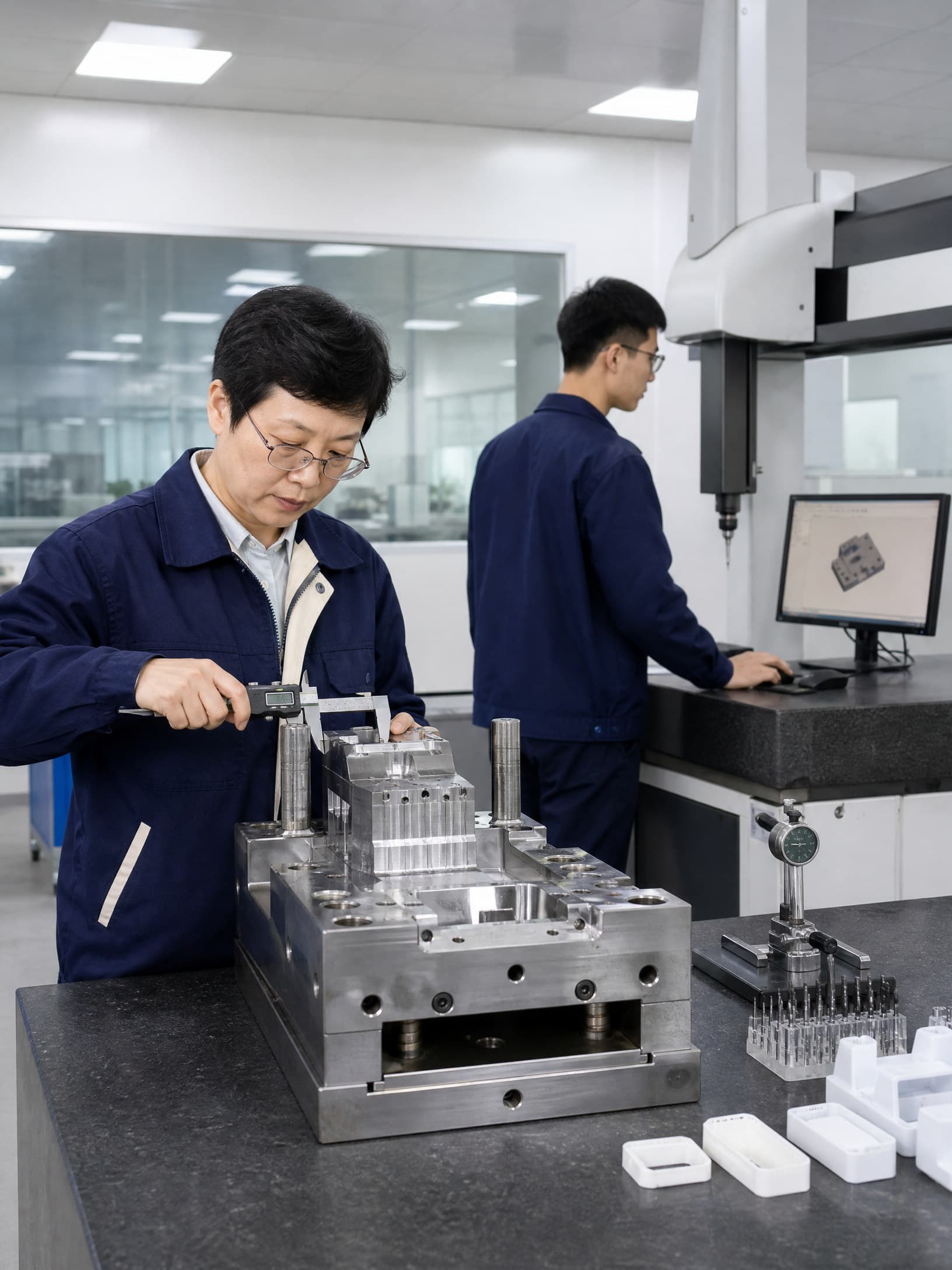
For the molded part, include approved samples or retained references, dimensional reports, material documentation supplied by the product owner, colour or texture standards, packaging instructions, inspection methods and known defect history. A report is more useful when it identifies the measurement method, datum logic, cavity and sample condition rather than presenting isolated pass/fail numbers.[2]
Separate verified records from assumptions. For example, a cycle time copied from an old quote is not the same as a cycle time demonstrated on the current machine. Mark the source and date of each important value. The incoming supplier can then plan confirmation trials without treating historical estimates as guaranteed process limits.
| Transfer area | Minimum handover evidence | Receiving-team confirmation |
|---|---|---|
| Tool identity | Tool number, revision, cavity count, dimensions, weight and photographs | Physical identity matches records and no unexplained damage is noted |
| Part definition | Approved CAD/drawing, material direction, CTQs, cosmetic zones and samples | Current revision is loaded into the receiving document system |
| Process | Historical settings, machine assumptions, cycle observations and defect notes | Values are treated as starting points pending a controlled trial |
| Quality | Inspection plan, reports, gauges, sample condition and deviation history | Measurement method and acceptance criteria are understood |
| Maintenance | Service intervals, repairs, spare parts and preservation instructions | Open maintenance actions are assigned and dated |
| Commercial control | Ownership, modification approval, release gates and inventory plan | Named owners accept the changeover responsibilities |
03
Inspect the mold before accepting the transfer
Do not make transport receipt equivalent to technical acceptance. On arrival, inspect the mold against the dispatch record and photograph its condition before cleaning or disassembly. Check lifting points, clamping faces, locating features, connectors, water fittings, electrical interfaces, vents, parting surfaces, inserts, ejector movement and visible wear. If the tool has been preserved, record the preservation method and any corrosion, residue or damage found.
A useful receiving inspection distinguishes transit damage from pre-existing condition. Compare photographs, maintenance records and the last production status where available. Verify that cooling circuits are identified and can be checked for blockage or leakage using an agreed method; do not infer circuit performance from a label alone. Likewise, a smooth manual movement does not prove that ejection or slide timing will be stable at production temperature.
If refurbishment is needed, scope it before the first trial where possible. Examples include replacing damaged fittings, cleaning vents, correcting a leak, restoring a worn shutoff or replacing a missing spare. Record whether the work is preventive, corrective or a design change. That distinction protects the baseline and avoids hiding a change inside a general maintenance invoice.[3]
04
Plan the first trial around evidence, not only output
The first trial should answer the questions that matter for release: Does the tool run safely on the receiving machine? Does each cavity fill and eject as expected? Are the approved material and colour assumptions still appropriate? Are dimensions, weight, appearance and assembly features comparable with the baseline? If the receiving machine, nozzle, controller, dryer or automation differs, identify those variables in the trial plan.
Ask for a trial record that includes tool and machine identification, resin lot and drying information when relevant, cavity status, key settings, cycle observations, sample quantity, start-up scrap, abnormalities and photographs. The purpose is not to demand a universal data sheet; it is to make the comparison repeatable enough for the product team to judge the result.
Use staged gates rather than treating the first good-looking shot as approval. A practical sequence is: safe dry run and connection check; short process trial; dimensional and visual comparison; assembly or functional check where relevant; repeat run after a defined interval; then production release or a documented corrective-action loop. Validation expectations should be proportionate to product risk and customer requirements.[4]
05
Decide whether the change is a transfer, a process change or a new qualification
Not every changeover has the same risk. A like-for-like move with the same tool, material, machine capability and inspection method may need a focused confirmation plan. A move that changes resin grade, machine type, cavity configuration, hot-runner control, automation or a critical secondary operation may require broader requalification. The product owner should make that decision with engineering and quality input rather than leaving it to the supplier’s quotation.
Use the table below as a discussion aid, not as a substitute for customer-specific procedures. If multiple rows apply, use the most demanding applicable gate. Keep the original approved baseline available so the new evidence can be compared against a known reference rather than only against the supplier’s internal target.
| Changeover condition | Typical risk signal | Buyer action before production release |
|---|---|---|
| Same mold, same resin and comparable machine | Main change is supplier personnel or site | Confirm tool condition, run samples, compare CTQs and approve documented release |
| Same mold, different press or auxiliary equipment | Nozzle, clamp, dryer, controller or automation changes | Demonstrate safe setup and stable trial; review process window and part comparison |
| Material, colour or grade changes | Shrinkage, flow, appearance or compliance basis may differ | Obtain product-owner approval and repeat material-specific evaluation |
| Tool refurbishment or modification | Wear, leakage, shutoff, gate or ejection geometry changes | Record the change, update drawings if needed and recheck affected CTQs |
| New secondary operation or assembly route | Downstream fit, appearance or performance may change | Run representative assembly or functional checks before full release |
| Incomplete historical evidence | Baseline settings, reports or samples cannot be verified | Use a risk-based qualification plan and explicitly accept or close gaps |
06
Control the overlap period and close the handover
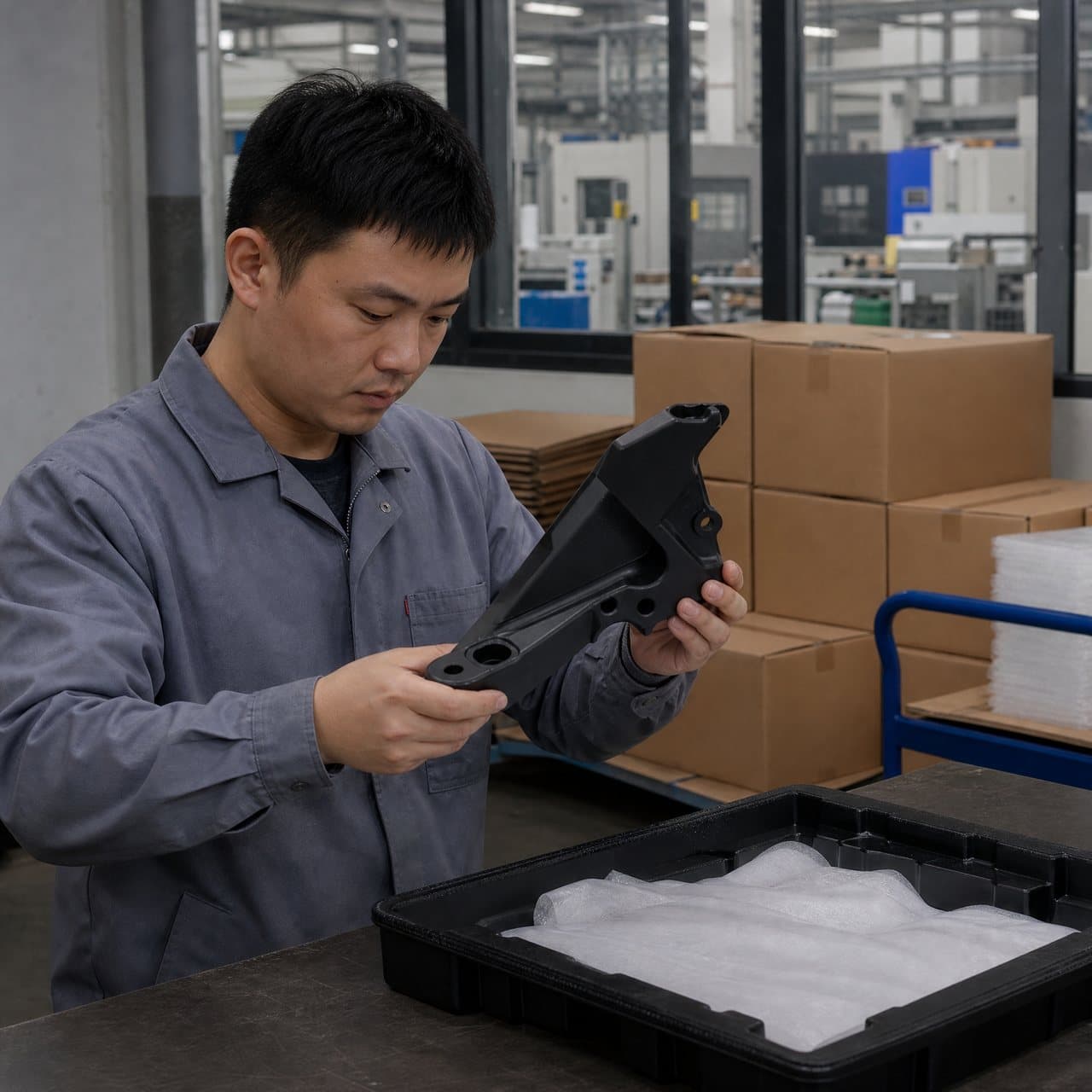
A controlled overlap reduces the pressure to release the new supplier prematurely. If inventory allows, keep the incumbent supply path available until the new source passes the agreed gate. Define how parts from each source will be identified, segregated, inspected and traced. Do not mix lots simply because the appearance is similar; confirm that the product owner accepts the proposed traceability and blending rules.
Close the handover with a signed action list. It should show open deviations, owners, due dates, temporary controls, spare-parts needs, updated documents and the exact release decision. If the tool remains customer-owned, record its location, condition, custody and modification authorization route. The handover is complete when the receiving team can maintain and run the mold without relying on undocumented memory from the outgoing supplier.
For a new program or a higher-risk change, invite the supplier to review the open points through the same structured process used for DFM and quality planning. InjeForm’s [capabilities](/capabilities), [quality](/quality) and [request-a-quote](/request-a-quote) pages provide useful starting points for framing the technical inputs and next discussion; the final acceptance criteria should still come from the product owner and applicable customer requirements.
Practical takeaway
Before you move
to the next review.
- Changeover scope identifies the mold, part revision, material, machine, site, secondary operations and logistics changes.
- Dispatch and receiving records include tool identity, photographs, condition, ownership and named handover responsibilities.
- The receiving team has the current CAD, drawing, CTQs, cosmetic criteria, approved samples, inspection method and deviation history.
- Cooling, ejection, hot-runner or auxiliary interfaces are checked rather than assumed to match the old setup.
- The first-trial plan defines sample quantity, cavity identification, process evidence, measurements, functional checks and release gates.
- Inventory overlap, lot segregation, traceability and incumbent-supplier fallback rules are agreed before production is moved.
- Open deviations, refurbishment actions and future modification approvals have owners, due dates and documented closure criteria.
FAQ
Common questions
Is a mold transfer complete when the tool arrives at the new supplier?
No. Arrival confirms custody and transport receipt, not tool condition, process readiness or product acceptance. The receiving team should inspect the mold, run a controlled trial and close the agreed release evidence before production is transferred.
What records are most important if the outgoing supplier has incomplete history?
Prioritize the current part definition, approved samples, critical dimensions, material direction, tool identity, photographs, known defects, maintenance condition and any customer acceptance criteria. Mark missing process history as a risk and plan confirmation work instead of recreating undocumented settings as fact.
Do I need a full requalification after every supplier changeover?
Not necessarily. The scope should be risk-based and agreed by the product owner, engineering and quality teams. A like-for-like move may use focused confirmation, while changes to material, machine, tool geometry, automation or critical assembly can justify broader evaluation.
How should parts from the old and new suppliers be controlled during overlap?
Use clear lot identification and physical or system segregation, and define the inspection and release rules for each source. Do not blend lots solely because they look alike; confirm that fit, function, appearance and traceability remain acceptable.
Who should approve mold modifications during a supplier changeover?
The approval route should be stated in the commercial and technical handover documents. In most programs, the tool owner or product owner authorizes changes after the supplier explains the reason, affected features, cost, timing and verification plan.
References
Source material
- [1] ISO, “ISO 9001:2015 — Quality management systems — Requirements.”
- [2] ASQ, “First Article Inspection.”
- [3] SPI, “Mold Maintenance — A Guide to Maintaining Injection Molds.”
- [4] FDA, “Process Validation: General Principles and Practices.”
This guide is general information for early procurement and engineering discussion. It does not replace product-specific DFM, qualification, validation, regulatory assessment or legal advice.