
Scaling a lightweight injection-molded part is not a simple handoff from a successful prototype to a production quote. The prototype may use a different resin, process, tool, insert, wall condition or inspection method than the production part. Overseas OEM, procurement, quality, engineering and product teams should define the weight-reduction requirement, confirm application fit, compare production-intent options and release each risk through evidence-based gates. The correct outcome depends on resin, fiber or additive loading, geometry, processing, environment, volume and customer specifications.
Treat lightweighting as a controlled scale-up, not a universal promise of lower cost, higher strength or shorter cycle time. Require the supplier to identify what is demonstrated, what is predicted and what remains open before tooling or production approval.
01
What must be frozen before a lightweight prototype is scaled?
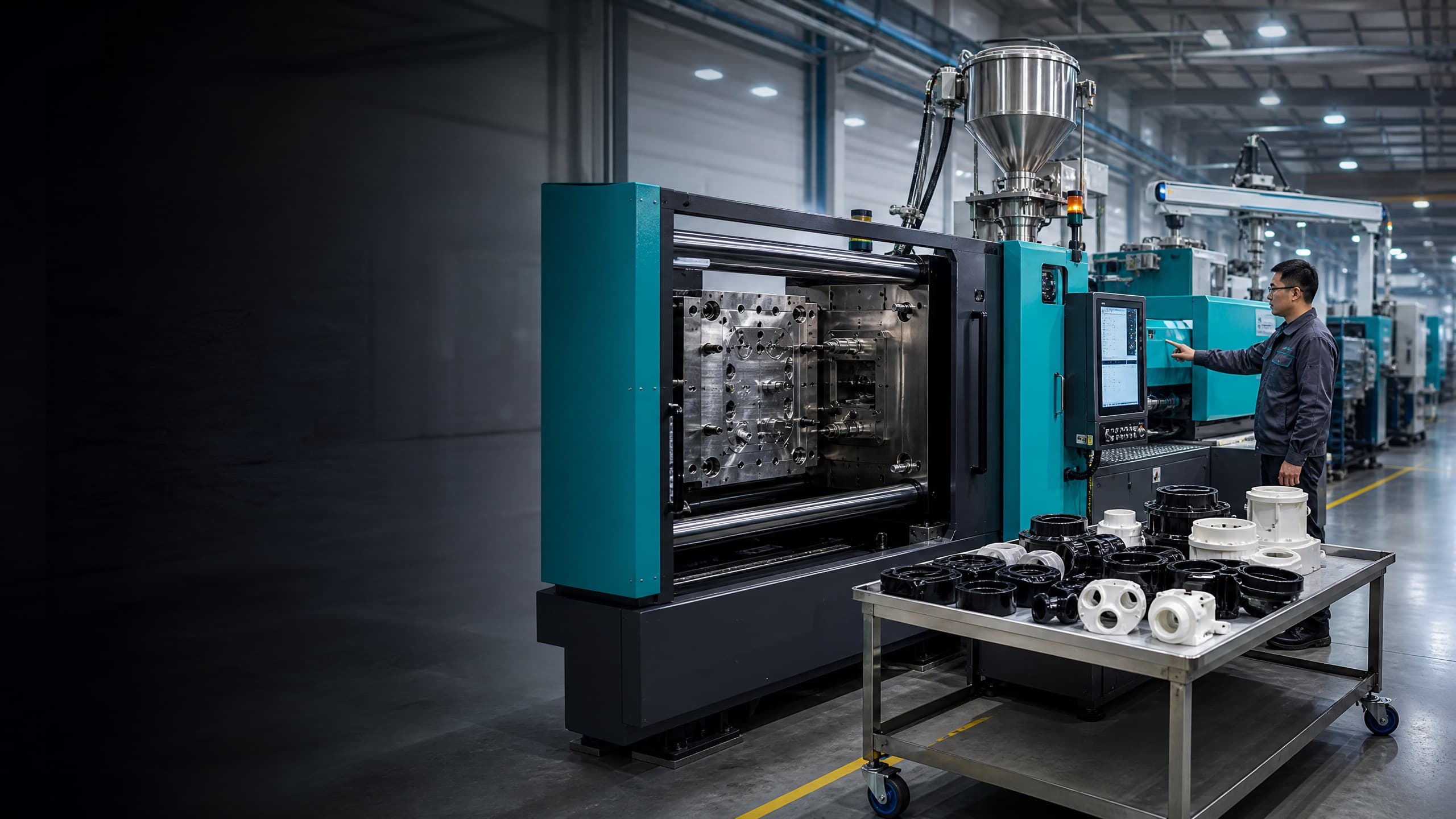
Requirements come before recommendations. Freeze the maximum finished-part mass, stiffness or deflection limit, load cases, impact or drop conditions, temperature range, chemical exposure, appearance zones, dimensional datums, interfaces, service life, annual volume and customer-specific requirements. Also define whether mass is measured on a dry part, conditioned part, assembled part or another agreed basis. A supplier recommendation for a thinner wall, reinforced grade or foamed process is not a requirement until the team accepts the resulting trade-offs.
Record the prototype boundary: exact resin and grade, additive or fiber content, moisture condition, tool or insert type, cavity count, gate concept, process settings, post-processing and measurement method. A prototype made by machining, additive manufacturing, soft tooling or a non-production resin can answer form or assembly questions without proving production strength, shrinkage, cycle time or compliance. Engineering should identify which questions remain unanswered rather than allowing a prototype result to become an implied production guarantee.
For overseas procurement, place the approved assumptions in the RFQ and change-control documents. Require the molder to separate requirements from recommendations and to list dependencies such as resin availability, minimum order quantities, drying controls, tool steel, expected volume, inspection capability and customer approval. This creates a common baseline for comparing suppliers rather than comparing incompatible prototype promises.
02
How should buyers compare prototype and production-intent options?
Compare the complete part-and-process system, not only prototype weight. A lower-density resin can reduce mass, while a reinforced grade may enable a more efficient geometry; neither route is automatically lighter, stiffer, cheaper or easier to mold. Consider whether the production option preserves impact behavior, creep resistance, thermal performance, chemical resistance, appearance and the required interfaces. ASTM D638 and ISO 294-4 provide useful test and shrinkage frameworks, but grade-specific and part-level evidence is still required.[1] [2]
Use a screening table to expose what changes between the prototype and the intended production route. The table is a decision aid, not a prediction of performance; the exact grade, geometry, tool and process must be stated before approval.
The buyer should request a side-by-side evidence pack for every finalist: material datasheet and revision, supplier and grade traceability, flow or mold-filling assumptions where warranted, expected shrinkage, process window, sample identification, mass results, dimensional results, functional test results and unresolved deviations. If a prototype uses a substitute resin or process, label its results as directional only.
| Scale-up option | What it may answer | Main risk to investigate | Evidence before the next gate |
|---|---|---|---|
| Same resin, production-intent tool or insert | Whether geometry, tooling and process can reproduce the prototype concept with fewer material and process variables. | Prototype settings may not represent production cooling, packing, cavity balance, ejection or inspection. | Tool trial record, approved process window, dimensional report, mass measurement method and functional samples. |
| Production resin or grade substitution | Whether supply, cost, temperature, impact or compliance requirements can be met with an available grade. | Flow, shrinkage, warpage, weld-line strength, moisture response, surface finish and validation scope may change. | Exact grade data, change assessment, mold-flow or DFM review where warranted, conditioned testing and customer approval. |
| Geometry-led lightweighting | Whether ribs, coring, section changes or local reinforcement can preserve function with less material. | Thin areas, transitions, sink, weld lines, ejection, assembly fit and directional stiffness may become more sensitive. | Updated CAD and drawings, DFM review, production-intent samples, critical-dimension study and load or impact tests. |
| Special process or additive route | Whether foaming, gas assist or another process can achieve a suitable mass and appearance target. | Density distribution, surface quality, dimensional stability, sealing, equipment limits and process repeatability. | Process capability evidence, sample mapping, appearance review, dimensional capability and application-specific validation. |
03
What changes in stiffness, impact, shrinkage and warpage during scale-up?
Lightweighting changes load paths as well as mass. Removing material from a section generally reduces bending stiffness unless geometry is reconfigured with efficient ribs, beads, closed sections or other features. Fiber reinforcement may raise modulus in a flow direction while increasing anisotropy; gate location, weld lines and fiber orientation can therefore affect both stiffness and warpage. Autodesk’s guidance describes the relationship between fiber orientation, structural performance and warpage prediction, but the actual result remains grade-, geometry- and process-specific.[3]
Impact performance must be checked separately from static stiffness. A prototype that survives a bench load may fail in a drop, snap-fit, vibration, cold-temperature or notch-sensitive event. Thin sections, sharp transitions, weld lines, inserts and changes in conditioning can alter the failure mode. Define the test method, temperature, conditioning, fixture, acceptance criteria and sample status before calling a prototype result representative.
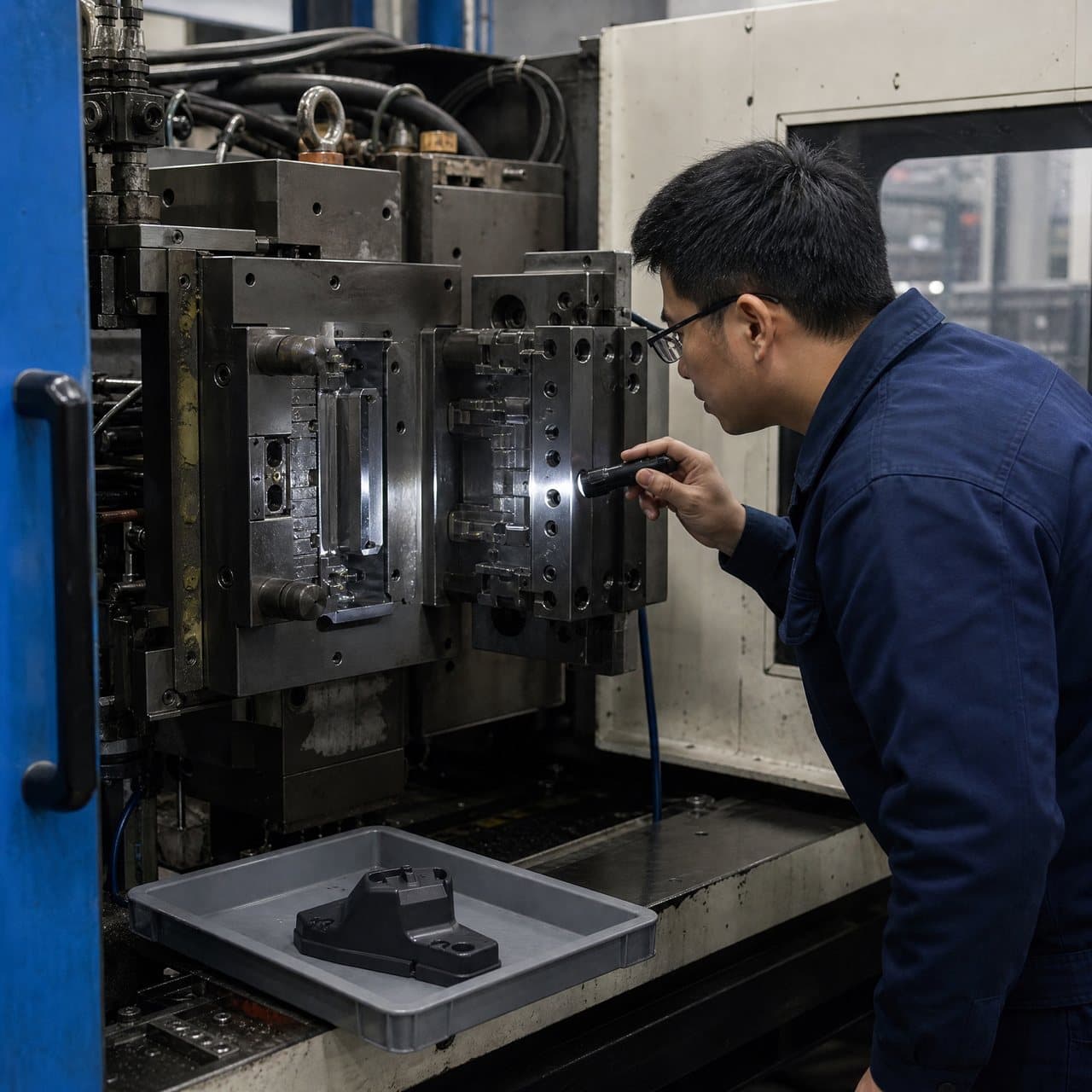
Shrinkage and warpage can change when the production tool alters flow length, cooling balance, packing, ejection or cavity count. Resin family, fiber loading, wall transitions, mold temperature and process window all matter. Ask the supplier to identify critical datums, expected directional variation, cosmetic zones and measurement uncertainty. ISO 294-4 addresses molding shrinkage of thermoplastics, but a standard test method does not replace a part-specific dimensional study.[2]
04
Which tooling and process gates protect the production launch?
A lightweight prototype should pass through staged gates rather than moving directly to mass production. A practical sequence is: requirements and application-fit review; material and geometry shortlist; supplier DFM and mold-flow review where warranted; tool concept and quote comparison; first-tool or production-intent trial; dimensional, mass and functional testing; process capability and control-plan review; customer or internal part approval; and production release. The required gates depend on risk and customer specifications, but the decision owner and evidence should be explicit.
Tooling assumptions can change with resin flow, shrinkage, fiber or mineral abrasiveness, drying needs, venting, gate design, cooling, ejection and expected volume. Ask the supplier which changes are mandatory requirements and which are recommendations. Review cavity strategy, tool maintenance, wear allowances, insert strategy, repair approach and spare-part expectations before purchase order release. Do not assume a prototype tool can be reused unchanged for production.
Quality should define the measurement plan, sample quantity, conditioning, critical-to-quality features, functional tests, capability method and deviation process. Procurement should tie the purchase order to the approved grade, source, revision, traceability, change-notification terms, packaging and inspection records. Production release should require closure or formal acceptance of open risks; a supplier presentation or simulation image alone is not approval evidence.
05
How can overseas teams make a defensible scale-up decision?
Ask each supplier to provide a transparent comparison of mass, performance, tool investment, process assumptions, inspection burden, expected volume and known risks. Normalize the quotation basis: same annual demand, cavity count, scrap assumption, secondary operations, packaging, testing, logistics and currency or commercial terms. A lightweight concept that appears inexpensive at piece price may create additional tool modifications, inspection or qualification work; a more conservative design may reduce launch risk without being the lowest initial quote.
Use approval gates to distinguish facts from forecasts. Evidence should include production-intent samples, exact material identification, mass and dimensional results, functional and environmental tests relevant to the application, process records, capability data where required, and documented deviations. Request supplier change-notification commitments for resin, grade, source, additive content, tool, process or sub-supplier changes. Customer specifications remain controlling where they are stricter than a general industry practice.
The final recommendation should state why the selected option fits the application, what dependencies remain and who owns them. Do not promise universal weight savings, strength, cost, cycle-time or compliance outcomes. Approve the option only when the agreed evidence demonstrates the requirements for the intended volume and production route; otherwise keep the part at the appropriate prototype or pilot gate and record the next validation action.

Practical takeaway
Before you move
to the next review.
- The team has documented mass, stiffness, impact, temperature, exposure, appearance, dimensional, volume and customer-specific requirements before selecting a lightweighting route.
- Prototype results are labeled by exact resin, grade, tool, process, conditioning and measurement method, with non-production evidence clearly separated from production proof.
- The supplier has compared resin, geometry and process options and identified effects on stiffness, impact, shrinkage, warpage, tooling, ejection, drying and inspection.
- Approval gates cover DFM, tool trial, production-intent samples, critical dimensions, mass, functional or environmental tests, capability and open deviations.
- Purchase and quality documents name the approved grade and source, traceability, change-notification terms, inspection records and release authority.
FAQ
Common questions
Can a lightweight injection-molded prototype be used as proof of production performance?
Not by itself. A prototype may use a different resin, tool, process, insert or conditioning state, so it can answer form and early function questions without proving production stiffness, impact, shrinkage, warpage, cost, cycle time or compliance. Use production-intent samples and an agreed validation plan before release.
What is the most important scale-up risk when reducing molded-part weight?
The main risk is changing the complete load-and-process system without recognizing it. Lower mass can coincide with lower section stiffness, altered impact behavior, directional fiber effects, shrinkage, warpage, sink, weld-line sensitivity or harder filling. The actual risk depends on resin, loading, geometry, processing, environment, volume and specifications.
When should an injection molding supplier provide production-intent samples?
They should be required before final production approval when geometry, resin, tool, process or application risk can affect acceptance. The samples should be identified by material and process, measured against critical requirements and tested under the agreed conditioning and functional plan. The exact gate and sample quantity should be set by the customer risk assessment.
Does scaling a lightweight design always reduce piece price or cycle time?
No. Less material may reduce shot weight, but a lightweight design can require more complex tooling, slower filling, additional inspection, process controls, special drying or qualification. Any cost or cycle-time benefit must be demonstrated for the selected resin, geometry, tool, volume, process window and quality plan.
References
Source material
- [1] ISO 294-4:2018, Plastics — Injection moulding of test specimens of thermoplastic materials — Part 4: Determination of moulding shrinkage
- [2] ASTM D638-22, Standard Test Method for Tensile Properties of Plastics
- [3] ASTM D3641-21, Standard Practice for Injection Molding Test Specimens of Thermoplastic Molding and Extrusion Materials
- [4] Autodesk University, Fiber Orientation for Warpage Prediction and Structural Performance
This guide is general information for early procurement and engineering discussion. It does not replace product-specific DFM, qualification, validation, regulatory assessment or legal advice.