
For a new brand, the question is rarely just “What is your minimum order quantity?” A quoted minimum may reflect a supplier’s preferred press setup, a minimum charge for a production run, a packaging batch, or a commercial policy. It may not be the quantity that makes your product economical or the quantity your team should buy.
A better approach is to define the first commercial objective, separate tooling from recurring production cost, and ask the supplier to show what changes at several quantities. This guide explains how to compare those options without assuming that a prototype run, a launch batch and a mature forecast need the same tool or order size.
Treat MOQ as a decision variable, not a factory fact. Ask what the minimum covers, which costs are fixed, what inventory remains after launch, and what changes if demand is lower or higher than forecast.[1] [2]
01
MOQ is a commercial threshold, not a universal manufacturing rule
Injection molding has upfront tooling work and a repeatable press cycle. That combination often makes larger runs attractive, but it does not create one industry-wide minimum order quantity. A supplier may accept a small quantity when the tool and setup are already justified, while another may require a larger run to cover scheduling, material preparation, inspection, labor, packing or freight. Published low-volume services also show that some providers offer on-demand quantities without a fixed MOQ, usually with their own tooling and commercial conditions.[1]
For a startup, ask the supplier to define MOQ in writing. Is it the minimum number of saleable parts per order, the minimum press charge, the minimum material lot, or the minimum quantity for a particular price tier? Confirm whether samples, setup scrap, runners, rejects, secondary operations and packaging are included. A low headline MOQ can still produce an unattractive landed cost if the fixed charges are spread over too few good parts.
02
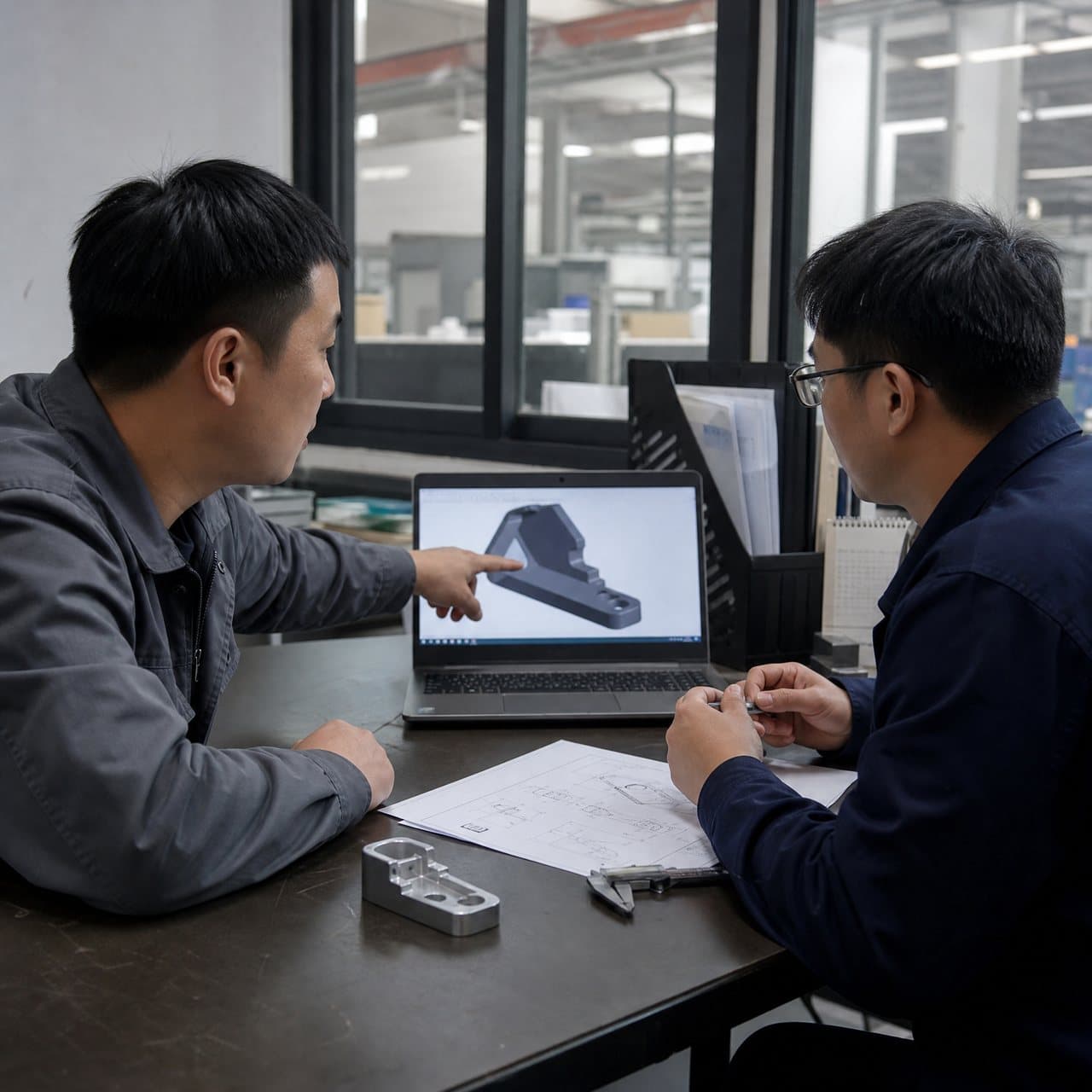
Start with the launch decision, not the supplier’s round number
Before requesting quotes, describe what the first run must accomplish. A design-validation run may need enough parts for functional testing, photography, customer feedback and a limited pilot. A retail launch may need a larger quantity because the brand must cover initial sales, replacements, samples and channel commitments. A wholesale launch may require packaging and delivery quantities that do not match the molding quantity. These are different buying problems even when the molded part is identical.
Use three planning quantities: validation, launch and replenishment. Validation should answer product and process questions. Launch should cover a realistic sales window plus a deliberately stated buffer. Replenishment should reflect the forecast and the time needed to place another order. Do not hide uncertainty inside an oversized first purchase. On-demand or low-volume molding can reduce inventory exposure, while a conventional production tool may become sensible after demand and geometry are more stable.[1] [4]
| First-run objective | Typical buyer question | What to ask the supplier to quote |
|---|---|---|
| Design validation | How many parts are needed to test fit, function and appearance? | A small run, sample inspection scope, resin and colour assumptions, and whether the same tool can support the next stage. |
| Controlled launch | How much stock can the brand sell without tying up too much cash? | A launch quantity plus a separate replenishment price and lead-time assumption. |
| Retail or wholesale commitment | What quantity is required by the channel, packaging unit or customer PO? | Run size, packaging configuration, delivery split, inspection plan and overage policy. |
| Uncertain demand | Can we avoid buying all forecasted stock at once? | On-demand or staged production options, tool storage terms, setup charges and reorder economics. |
| Proven demand | When does a production-oriented tool or more cavities reduce total cost? | Single- versus multi-cavity scenarios, tool life assumption, cycle estimate and volume breakpoints. |
03
Tooling strategy changes the minimum that makes sense
Tooling is usually a non-recurring cost, but its design affects both the first order and later unit economics. A single-cavity tool may be easier to justify while demand is uncertain because it produces fewer parts per cycle and can reduce the risk of overbuilding. A multi-cavity or family tool can raise the initial investment and introduce balance, qualification and part-mix questions, yet may improve throughput when demand is established. A shared frame or insert-based approach can also change the upfront scope, part-size limits and future flexibility.[2] [3]
Do not choose cavities by multiplying a sales forecast by a desired cycle rate alone. Review part geometry, press capacity, runner strategy, balanced filling, quality evidence and the cost of unused capacity. Ask for at least two scenarios: a conservative first tool and a scale-up option. The quote should state whether future cavity additions, replacement inserts, tool transfer or design changes are possible, and who owns the tooling and related data.
04
The part and resin can raise or lower the practical MOQ
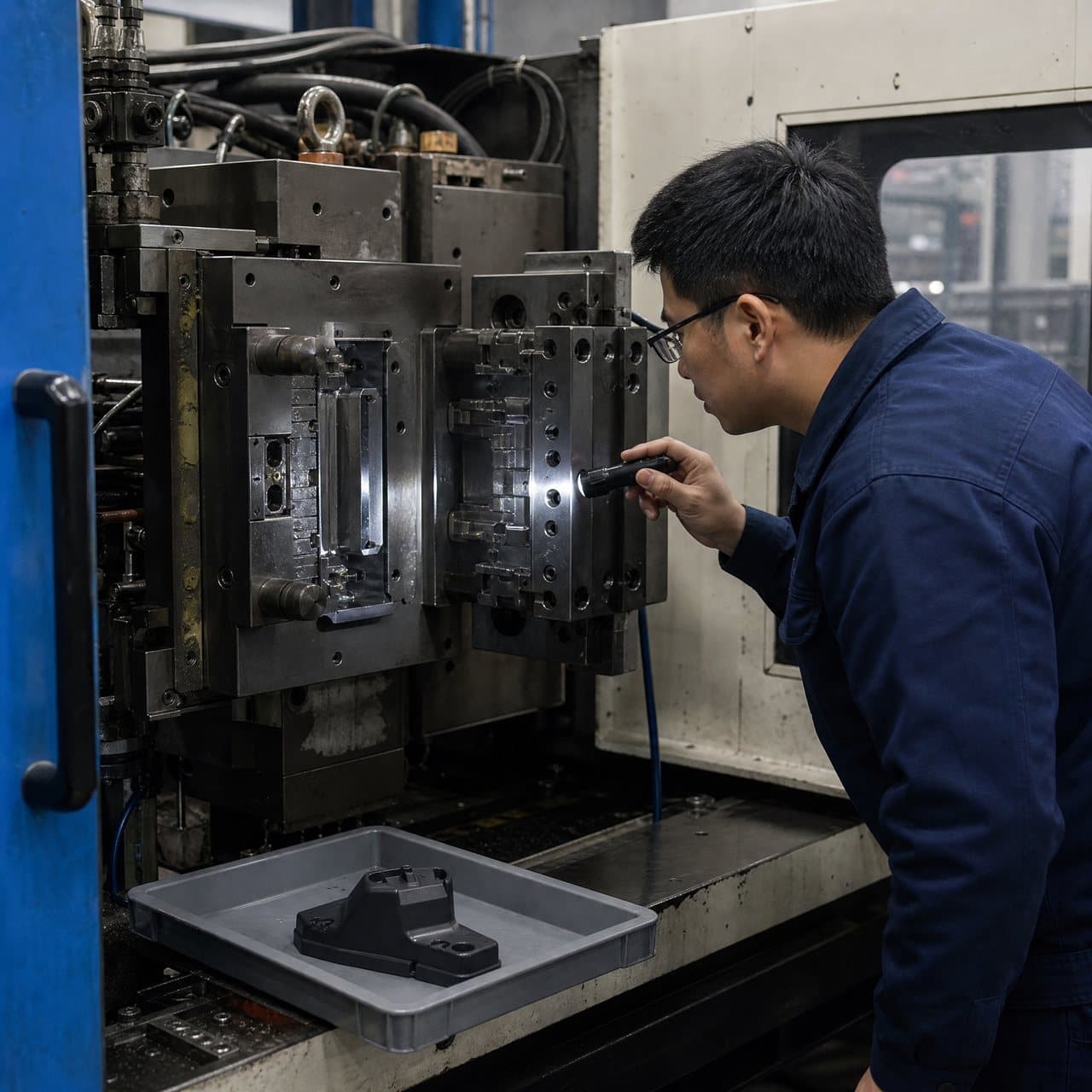
A small, stable part made from a commonly available resin may be easier to run in a modest quantity than a large, cosmetic or highly engineered part. Material choice affects processing conditions, shrinkage, surface appearance, wear, drying and the amount of material that must be prepared. Reinforced or corrosive materials can also influence tool-material and maintenance decisions.[2] [4]
Geometry matters as well. Thin walls, deep cores, undercuts, tight tolerances, visible gates, textured surfaces and multiple components can make setup and inspection more involved. A supplier may reasonably recommend a larger run to amortize this effort, but the buyer should ask for the cause rather than accepting “MOQ” as an unexplained number. Use the DFM and process discussions available through InjeForm’s /process and /capabilities routes to identify which features are driving the recommendation.
05
Compare total first-order exposure, not only unit price
A startup should compare the cash and operational exposure of each scenario. Include tooling, engineering or DFM charges, sample iterations, machine setup, resin, colourant, inspection, secondary operations, packaging, freight, duties and storage where applicable. Then estimate the number of good saleable parts, not just the number of shots or theoretical cycles. A supplier’s price per piece may exclude fixed charges or assume a quantity that the brand cannot sell promptly.
Inventory is a technical and commercial risk. Excess stock can become obsolete after a design revision, colour change, packaging change or weak launch. Too little stock can create a stock-out while a new run is being scheduled. Ask whether staged deliveries are possible, what storage and preservation terms apply to the mold, and how a reorder will be priced if resin, colour or inspection requirements change. The quality and acceptance expectations should be documented before the first run; InjeForm’s /quality and /faq routes are useful starting points for that conversation.
06
Build an MOQ question set into your RFQ
A useful RFQ does not ask only for the lowest minimum. It asks suppliers to price comparable quantities and identify their assumptions. Provide the current CAD revision, drawing or critical-feature list, resin direction, colour, annual forecast, launch quantity, target market, inspection needs, packaging concept and requested delivery split. If the product is still changing, mark the open decisions instead of presenting them as fixed.
Request a quantity ladder such as validation, launch, and a higher-volume case. For each case, ask for tooling cost, part price, setup or minimum charges, included inspection, lead time starting point, expected yield assumptions, packaging, freight basis and reorder conditions. Then document which parts of the quote are indicative. When the design is ready, use InjeForm’s /request-a-quote route with the model and commercial context rather than sending a number without scope.
| RFQ line item | Question that prevents a misleading MOQ comparison |
|---|---|
| Quantity basis | Is the minimum saleable quantity, shots, pieces per cavity or total run quantity? |
| Fixed charges | Which tooling, setup, drying, colour change, inspection and packing charges apply at each quantity? |
| Yield and overage | Is the quoted quantity shipped quantity, and how are setup parts or nonconforming parts handled? |
| Tooling scope | What tool material, cavity count, expected life, maintenance and future modification assumptions are included? |
| Reorder | What is the expected reorder lead time and does the price change at a lower or higher quantity? |
| Commercial risk | Who owns the tool, CAD and inspection records, and what happens if the product changes? |

Practical takeaway
Before you move
to the next review.
- Define whether the first run is for validation, launch, channel fulfillment or replenishment.
- Ask each supplier to define MOQ in pieces, shots, cavities and commercial charges.
- Request at least three quantity scenarios with tooling, part price, inspection and logistics assumptions separated.
- Confirm resin grade, colour, geometry revision, cosmetic zones and critical-to-quality features before comparing prices.
- Calculate saleable inventory and cash exposure after tooling, setup, freight, packaging and expected scrap.
- Document tool ownership, storage, maintenance, modification rights and reorder conditions.
- Use a DFM review to decide whether single-cavity, multi-cavity, family or staged tooling fits the demand risk.
FAQ
Common questions
What is a normal injection molding MOQ for a startup?
There is no reliable universal number. Some suppliers accept low-volume or on-demand orders, while others set a minimum run to cover setup, material, inspection and scheduling costs. Ask what the supplier’s MOQ includes and request a quantity ladder rather than comparing a single number.[1]
Can a startup order only a few hundred injection molded parts?
Possibly, depending on the part, tool, resin, supplier and commercial model. A low-volume tool or on-demand service may support a small run, but fixed tooling and setup charges can make the unit economics different from a mature production order. Validate the part and the launch assumptions before committing to stock.
Should a new brand use a single-cavity mold?
Not automatically. A single-cavity tool can be a sensible scenario when demand and design are uncertain, but part size, press availability, quality requirements and reorder timing also matter. Ask for a single-cavity comparison against a higher-cavity option and evaluate total exposure, not only the piece price.
Does a lower MOQ always reduce startup cost?
No. A smaller quantity may reduce inventory and obsolescence risk, but fixed tooling, setup, inspection and freight charges are spread over fewer saleable parts. Compare total first-order cash, landed cost, expected yield and the cost of a second order.
What should I send with an MOQ request for quote?
Send the current CAD revision, drawing or CTQ list, resin and colour direction, target quantities, launch timing, cosmetic expectations, packaging needs, destination and any assembly or compliance requirements controlled by your customer. Incomplete inputs make it harder to distinguish a true MOQ from a quote assumption.
References
Source material
- [1] Protolabs, “How to Leverage Low-Volume Injection Molding.”
- [2] Protolabs, “Injection Molding Guide: Process, Design Tips, & Materials.”
- [3] 3D Systems QuickParts, “Basics of Injection Molding Design.”
- [4] Fictiv, “The Ultimate Guide to Low-Volume Injection Molding.”
This guide is general information for early procurement and engineering discussion. It does not replace product-specific DFM, qualification, validation, regulatory assessment or legal advice.