
Metal insert molding can turn a separate fastener, bushing, contact, shield or reinforcement into one plastic component. That may reduce downstream assembly, but it also moves important risk into the interface between the insert, mold, resin, loading method and finished part. For an overseas OEM buyer, the right question is not simply whether a supplier can mold around metal. It is whether the proposed design has a transparent cost model, a controlled way to prevent insert errors, and evidence gates that match the part's actual duty. This guide helps procurement, engineering, quality and product teams compare a quote without treating a sample, a material data sheet or a generic tolerance as proof of production performance.
Metal insert molding has no universal part price, tolerance, cycle time or retention result. Require the supplier to state assumptions for insert cost, resin, geometry, tooling, loading, machine, volume, environment and customer specifications before comparing offers.
01
1. Decide when metal insert molding is worth the added complexity
The business case is strongest when the insert performs a function that plastic alone cannot reliably provide, such as a defined thread, conductive path, bearing surface, wear surface, heat path or local load-transfer feature. Encapsulating the insert during molding may remove a later installation step. Protolabs describes insert molding as placing metal components such as threaded inserts into a mold so plastic surrounds them, and notes that the method can avoid secondary insert installation [1]. That is a process advantage, not a guaranteed saving for every program.
Compare the integrated part with the credible alternatives: a plain molded part assembled with a press-fit or fastener, heat staking, ultrasonic insertion, or a separately machined and assembled component. Include tooling amortization, insert purchase, handling, inspection, scrap, packaging protection and engineering-change exposure. A low piece price can be misleading if the insert is expensive, hand loading is slow, or a late design change requires new locator steel. Conversely, a more complex tool can be justified when it removes a repeatable assembly operation at the forecast volume. Require a volume band and sensitivity view rather than one headline unit price.
| Cost or decision area | What the buyer should ask for | Why the answer can change |
|---|---|---|
| Insert | Part number, material, finish, source, packaging and quoted scrap assumption | Metal grade, coating, tolerances, minimum order and corrosion controls affect landed cost |
| Tooling | Separate mold, insert-locating hardware, wear strategy, cavities and change allowance | Geometry, cavity count, insert access, steel choice and expected volume change the tool concept |
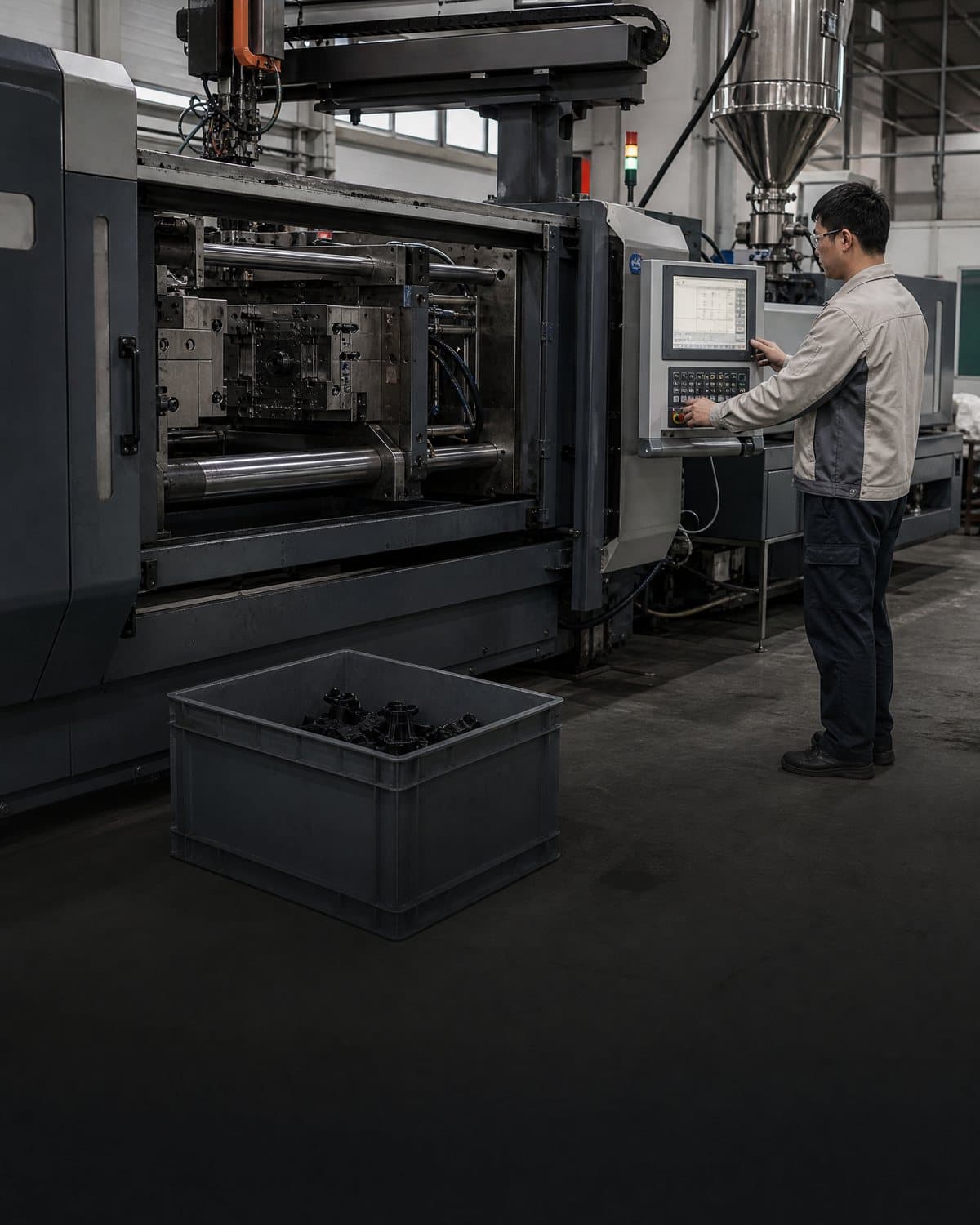
| Conversion | Machine basis, loading method, cycle assumptions, labor or automation and inspection content | Insert count, orientation, operator access, machine size and required checks affect throughput |
| Quality risk | Scrap/rework assumption, containment plan and cost responsibility | A missing, shifted, damaged or contaminated insert can create a functional defect |
| Validation | Included samples, tests, reports and approval gates | Retention, torque, conductivity, sealing or environmental duty may require different evidence |
02
2. Identify the risks at the metal-plastic interface
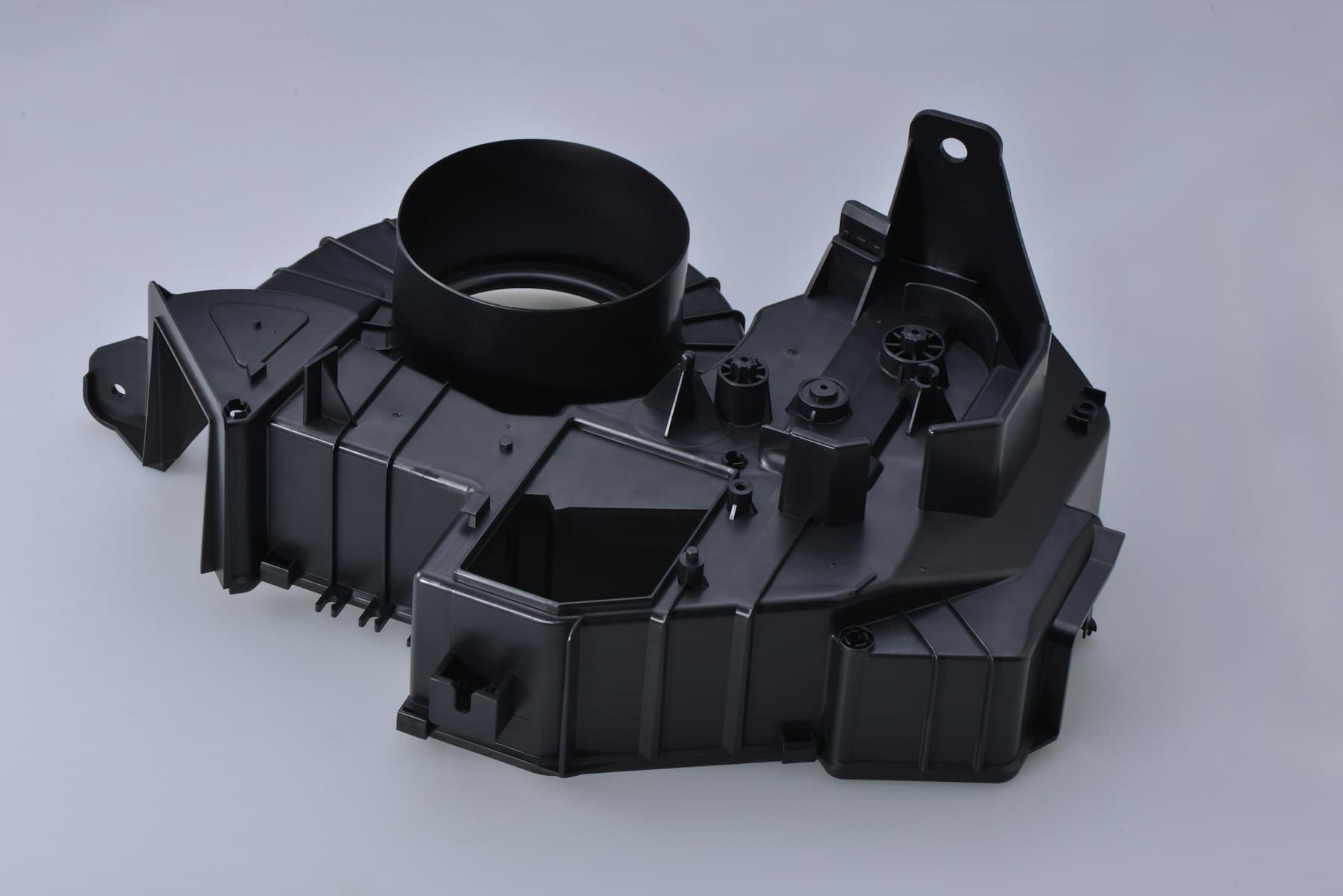
Metal and thermoplastic do not share the same thermal response, stiffness, surface condition or dimensional behavior. The plastic may shrink around the insert as it cools, while the insert constrains local movement. Geometry, resin grade, wall thickness, gate location, packing, cooling, insert temperature and service environment all influence the result. Do not convert a catalog shrinkage value or a general resin family name into a promised interference, pull-out force or dimensional tolerance.
The principal process risks should be named in the design review: insert shift during fill, incorrect orientation, missing or doubled inserts, flash at an exposed edge, short shot or void near the insert, cracking from local stress, insufficient mechanical interlock, corrosion or contamination, and distortion that prevents assembly. Protolabs notes that metal and plastic are not chemically bonded in ordinary insert molding, so retention needs a mechanical design basis [1]. A knurl, groove, shoulder, flat or through-feature should therefore be tied to the expected load direction and verified on the actual design rather than copied as a universal rule.
Ask the supplier to show how the mold supports the insert against injection and ejection forces, how presence and orientation are checked, and what happens when an insert is damaged or absent. For a high-risk interface, request a flow or warpage study with the actual geometry revision and stated resin assumptions. Treat simulation as a design input; it does not replace molded-part measurement or application testing.
03
3. Build an RFQ that makes competing quotes comparable
A useful RFQ includes the controlled plastic part drawing or CAD revision, insert drawing or approved commercial part number, resin grade and color direction, insert finish, annual and order quantities, packaging constraints, intended environment, assembly loads, cosmetic zones, critical datums and required evidence. State whether the insert is customer-supplied or supplier-sourced, who owns approved substitutions, and whether the supplier may propose a different loading route. If the insert specification is incomplete, label the price as budgetary and list the open assumption.
Request a line-item quotation that separates mold, insert, plastic, molding conversion, loading or automation, inspection, packaging, freight assumptions and one-time validation work. Ask for cavity count, assumed cycle basis, labor content, expected scrap treatment, tool maintenance assumptions and engineering-change rates. No quoted cycle time or price should be accepted as universal: it depends on resin, geometry, tooling, machine, environment, volume and the customer's specifications.
Have the supplier return a risk register with owner and decision date for each open item. Useful evidence requests include a tool concept showing locators and shut-offs, insert inspection records, resin traceability, a process-flow or control plan, sample identification, dimensional results, and a proposal for functional tests. Procurement can then compare risk disclosure and evidence maturity, not just the unit-price column.
04
4. Use staged validation instead of treating first samples as approval
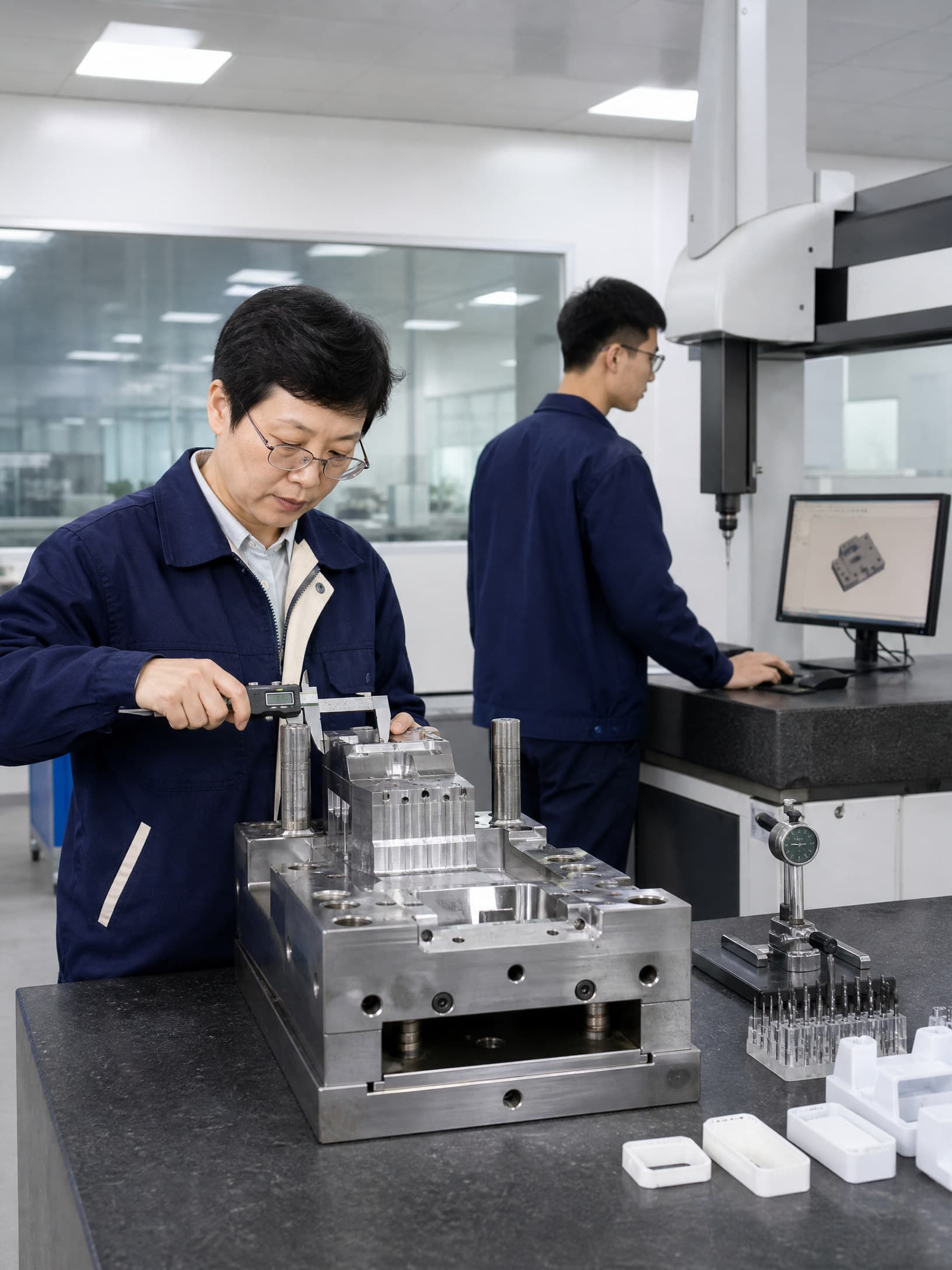
Set approval gates before tool steel is released. Gate 1 is design and quote alignment: freeze the insert revision, resin basis, retention concept, datums, loading method, intended environment and acceptance questions. Gate 2 is tool and process readiness: review locator support, mistake-proofing, venting, gate strategy, ejection, insert handling, inspection fixtures and the reaction plan for a missing or misoriented insert. Gate 3 is sample evaluation: identify the tool, cavity, insert lot, resin lot and process condition, then measure the agreed critical-to-function features.
A first trial can show that a tool produces parts, but it does not automatically establish a stable production process or lifetime performance. For the part-specific duty, decide whether evidence needs dimensional inspection, cross-section or visual review, insert presence and orientation checks, pull-out or torque testing, electrical continuity, leak testing, thermal cycling, vibration, chemical exposure or an assembly fit check. Define load direction, fixtures, conditioning, sample quantity, failure criteria and who owns disposition. The appropriate protocol depends on the product and customer requirements.
Use a production-like confirmation run only when the process conditions, material and loading route are identified as representative of the intended supply state. Record deviations and assign corrective actions. Approval should be a written decision with the controlled revisions, results, exceptions and remaining validation work attached—not an informal acceptance of attractive samples.
05
5. Control changes after release and protect the supply decision
The insert, resin, tool, machine, loading method and measurement method are part of the approved manufacturing system. Put change notification into the purchase terms for changes that could affect fit or function: insert source or finish, resin grade or additive package, tool repair or cavity change, gate or locator revision, automation or operator method, subcontracted operation, packaging, and inspection equipment or datum setup. The change record should state what is being changed, why, affected part revisions, risk assessment, samples and the approval authority.
Use the current controlled tolerance and acceptance basis. ISO identifies ISO 20457 as covering possible manufacturing tolerances for plastic moulded parts and says that functional requirements may need additional specifications; its page now points from the withdrawn 2018 edition to ISO 20457:2026 [2]. The standard is not a substitute for a product drawing, insert specification or customer acceptance plan. Keep plastic dimensions, insert position, exposed metal, appearance and functional tests linked to their actual datum and method.
For ongoing supply, ask for lot or cavity traceability at a level proportionate to risk, periodic verification of interface CTQs, documented nonconformance handling and evidence that insert presence controls remain effective. The objective is not to demand every possible record. It is to preserve the assumptions that made the part acceptable and to reopen validation when a meaningful assumption changes.
Practical takeaway
Before you move
to the next review.
- Freeze the insert drawing or approved part number, material, finish, orientation, exposed features and allowed contamination or burr condition.
- Request a separated cost model covering insert, resin, tool, loading, conversion, inspection, scrap, packaging, freight assumptions and validation work.
- Approve the mechanical-retention concept and require the supplier to explain locator support, insert-presence controls and responses to missing or misoriented inserts.
- Define validation gates with agreed datums, sample identification, conditioning, functional tests, acceptance criteria, deviations and approval owners.
- Add change notification for insert source or finish, resin, tool, gate, loading route, subcontractor, packaging and measurement method.
FAQ
Common questions
Is metal insert molding cheaper than assembling a metal insert after molding?
Not automatically. Insert molding may remove a secondary installation step, but the comparison must include insert handling, tooling, loading, inspection, scrap, packaging, tooling amortization and forecast volume. Ask for a like-for-like total cost model against the realistic alternative, with assumptions and sensitivity ranges stated.
What is the biggest risk in metal insert molding?
There is no single universal risk. For many designs, the critical risks are wrong insert presence or position, inadequate mechanical retention, local cracking or distortion, flash at a functional edge, and changes in resin, tool or loading that alter the interface. Rank risks against the actual load, environment, geometry and customer specification, then assign evidence and an owner to each one.
Does a first article prove an insert-molded part is validated?
No. A first article can confirm agreed dimensions, appearance and selected checks under stated conditions, but it does not by itself prove production stability, service life or compliance. Validation should match the part's duty and may require representative process runs, retention or torque testing, electrical or leak checks, environmental conditioning, assembly trials or other customer-defined evidence.
What should an overseas buyer request before placing a production order?
Request controlled part and insert revisions, named resin grade, cost and process assumptions, tool and loading concept, risk register, inspection and functional-test plan, sample and traceability rules, acceptance criteria, change-notification terms and a written release decision. The supplier should identify what is included, what remains open and which results are still conditional.
References
Source material
- [1] Protolabs, Overmolding and Insert Molding Design Guide
- [2] ISO, ISO 20457 Plastics moulded parts — Tolerances and acceptance conditions
- [3] Fictiv, Insert Molding: A Guide to Integrated Part Injection Molding
- [4] Autodesk Fusion, What is Injection Molding Simulation?
This guide is general information for early procurement and engineering discussion. It does not replace product-specific DFM, qualification, validation, regulatory assessment or legal advice.