
A molded housing for a diagnostic instrument, laboratory analyzer or patient-adjacent device is part of a larger system. It may protect electronics, provide a cleanable user surface, locate a display, carry labels, manage airflow or support an assembly that must be validated. Those requirements are easy to lose when an RFQ is reduced to a CAD file, resin family and annual quantity.
A better sourcing process makes the product boundary and evidence plan explicit before tooling. The product owner or legal manufacturer must define intended use, applicable regulatory obligations and validation responsibility; the molding supplier can then quote the agreed geometry, material, handling, inspection and records. Use InjeForm’s [medical & laboratory application page](/products/medical-laboratory) and [request-a-quote](/request-a-quote) route to submit the controlled inputs rather than relying on a generic “medical grade” request.
Treat clean handling, validation and traceability as quote inputs with defined boundaries—not as automatic outcomes of a medical application label or a supplier certificate.
01
1. Define what the housing must do before asking for a quote
Start with the equipment architecture, not only the outside envelope. Identify whether the housing protects a PCB, carries a display or keypad, supports a door or cartridge, routes cables, forms a seal, carries a label, or is exposed to cleaning agents. Mark patient, sample, reagent and operator interfaces separately. A housing that never contacts a patient or fluid can still influence safety, contamination control, electrical protection, service access and usability.
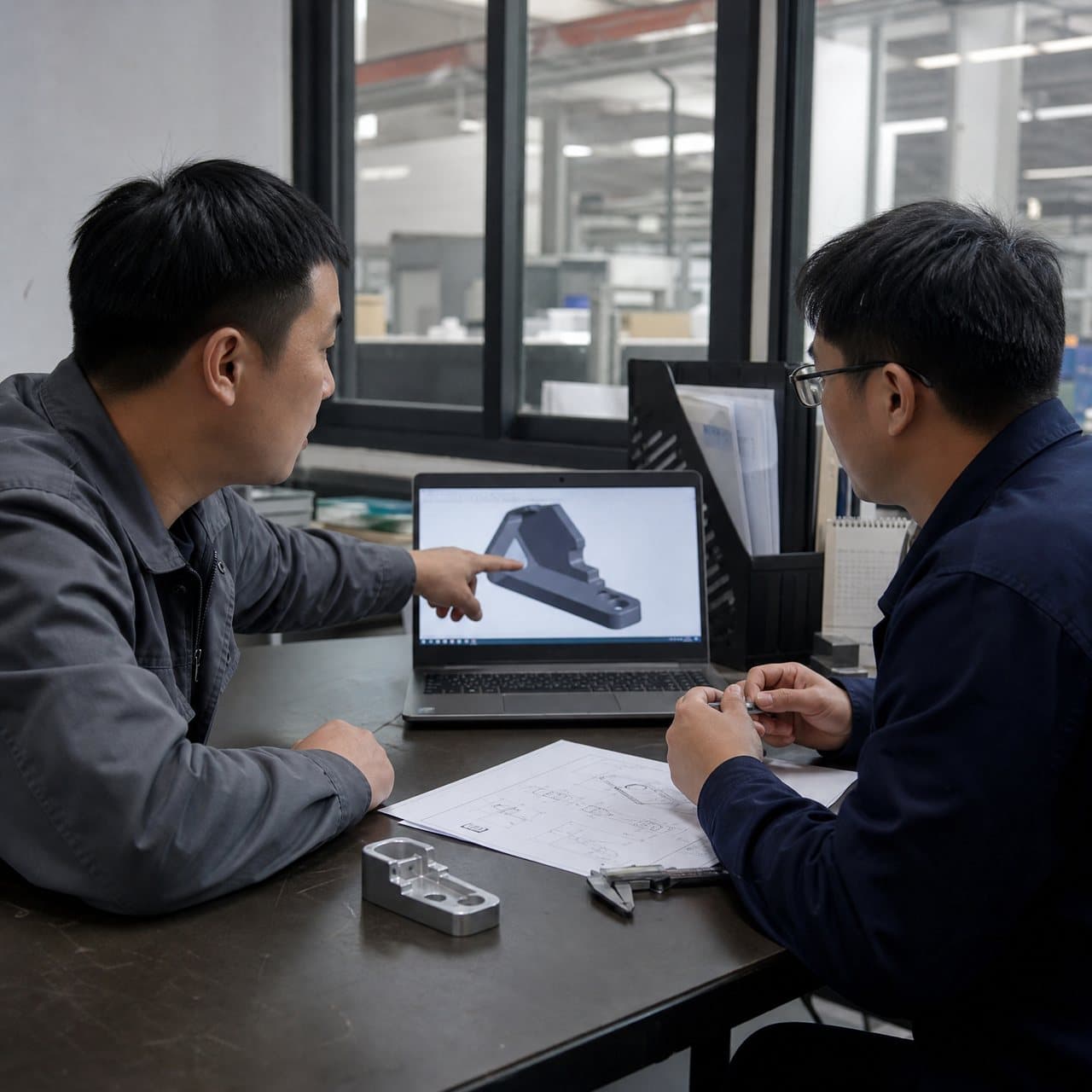
Send a controlled 3D model and drawing revision, datum scheme, critical interfaces, mating parts, inserts, fasteners, gasket or seal intent, display openings, vents, texture, colour and permitted gate or ejector locations. Include assembly sequence and service requirements. If the design is still changing, identify provisional features and ask the supplier to price the review separately from a firm tooling scope. InjeForm’s [DFM and tool-design process](/dfm) is a useful place to frame those trade-offs.
State the programme phase and expected demand: prototype, design verification, validation build, launch ramp or routine production. Separate one-time samples from annual volume and identify whether a family tool, interchangeable insert or multiple cavities is being considered. These inputs affect tool concept, inspection sampling and the evidence needed at each release gate.
| RFQ input | What to specify | Sourcing decision it supports |
|---|---|---|
| Product boundary | Housing function, interfaces, exposure and supplied assembly context | Separates molding scope from finished-device responsibility. |
| Controlled design | CAD/drawing revision, datums, CTQs, cosmetic zones and mating parts | Makes DFM, tooling and inspection proposals comparable. |
| Programme phase | Prototype, validation build, ramp, annual volume and forecast | Supports a proportionate tool, sample and capacity plan. |
| Open decisions | Provisional features, alternatives and approval owner | Prevents silent assumptions from entering the quote. |
02
2. Translate clean handling into a specific supplier scope
“Clean” is not a complete specification. Tell the supplier what contamination risk matters, where the part is handled, when cleanliness must be achieved and how it will be judged. The requirement may concern visible particulate, residues, odour, fibres, packaging, operator handling, assembly-room transfer or a validated cleaning step. A housing for an analyzer may need controlled handling after molding, while an external cover may only need a defined visual and packaging standard. The product owner should set the acceptance basis.
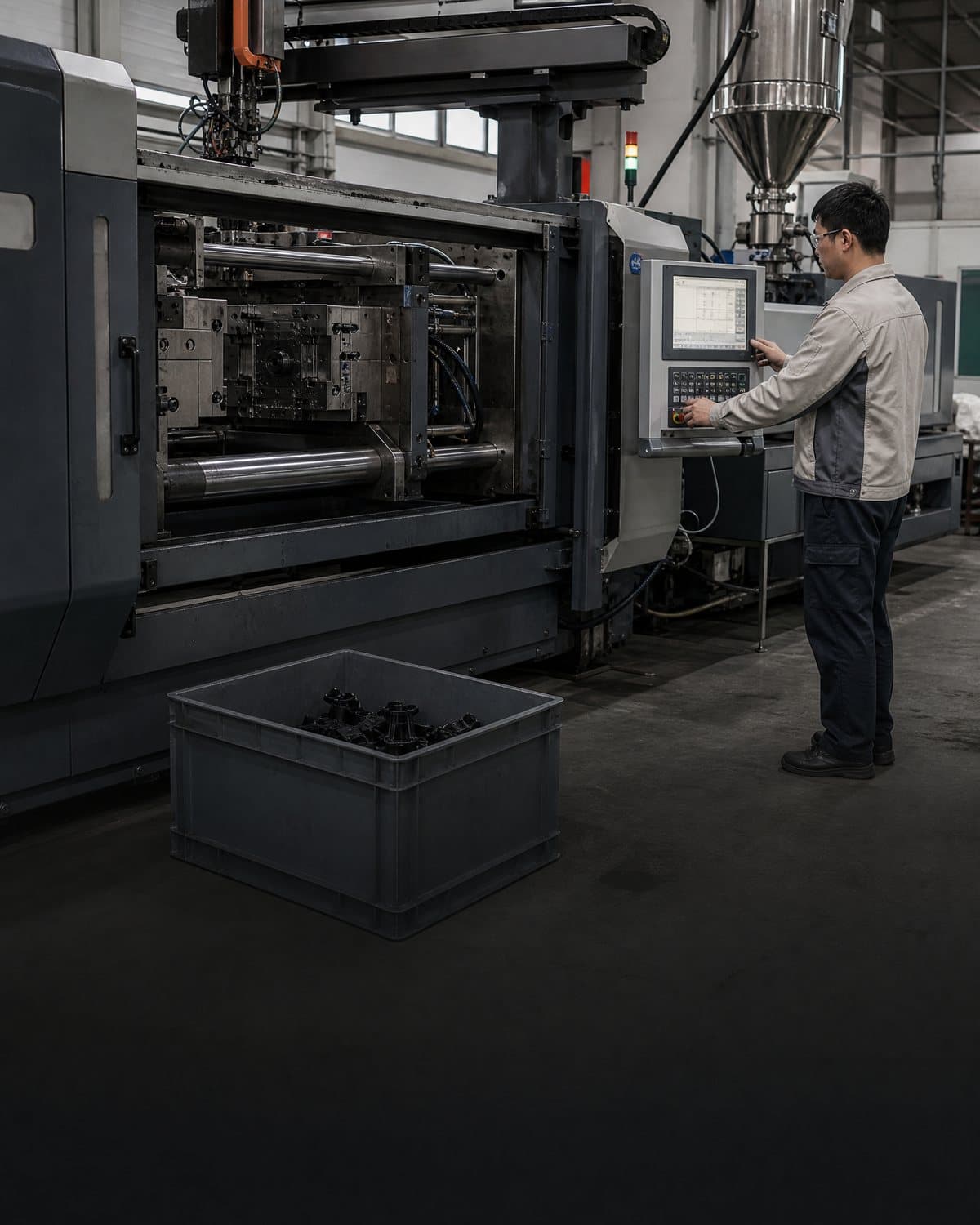
Ask the supplier to describe the actual controls included in the quote: machine and mold cleaning, material and colour changeover, work-area practices, gloves or protective packaging, inspection environment, storage time, bagging and shipment protection. Request the boundary between ordinary factory handling and any controlled-area or cleanroom operation. Do not infer a cleanroom classification, bioburden result or sterility claim from a general statement that parts are produced for medical use.
Connect handling controls to the part and process. Gate vestige, ejector marks, flash, trapped residue, lubricant, release agent, regrind, dust and packaging fibres can each matter differently. If the housing is cleaned, disinfected or assembled downstream, provide the agent, concentration, temperature, contact time and cycle information available to the product team. The supplier can review material and geometry implications, but the product owner must confirm compatibility and validation.
03
3. Choose material, finish and geometry as a validation input
Ask for an exact resin direction rather than “medical plastic.” Record manufacturer, grade, colourant or masterbatch, reinforcement, additives, approved alternatives and intended surface finish. For a rigid equipment housing, ABS, PC, PC/ABS or PP may each be plausible in different applications, but impact, stiffness, chemical exposure, appearance, dimensional stability, flame performance and cleaning compatibility are application-specific decisions. The product owner should approve the grade and qualification path.
Review the housing as a moldable assembly surface. Large wall transitions, deep ribs, bosses, snap fits, windows, vents and textured faces can create sink, weld lines, warpage, stress or difficult ejection. A design change that improves filling may move a gate mark onto a visible face; a glossy finish may make small blemishes more apparent; a tighter fit may need a measurement method that accounts for datum strategy and temperature. Ask for marked-up DFM decisions rather than generic tolerance promises.
Define what evidence is needed for each material or geometry change. Depending on the product plan, that may include molded samples, dimensional results, visual approval, fit checks, cleaning or chemical exposure testing, assembly trials, electrical or environmental tests and process records. FDA process-validation guidance describes validation as establishing documented evidence that a process can consistently produce a result meeting predetermined specifications; it does not make every supplier sample a finished-device validation.
| Decision area | Buyer input | Evidence to align before release |
|---|---|---|
| Resin identity | Exact grade, colour, additives, approved alternatives and change route | Supplier data, lot identity and agreed material approval record. |
| Surface and handling | Texture, gloss, cosmetic zones, cleaning and packaging exposure | Visual standard, sample disposition and compatibility basis. |
| Geometry | CTQs, datums, seals, snaps, windows, vents and assembly loads | DFM record, dimensional method and functional sample plan. |
| Process change | What may change after approval and who authorizes it | Change notice, impact review and revalidation decision where required. |
04
4. Request validation-ready inspection and traceability evidence
Before award, ask how the supplier will identify the part revision, material lot, cavity or machine, production date and inspection status. A practical traceability plan may link incoming resin and colourant records to a work order, molded lot, cavity or tool, inspection results, nonconformance disposition and shipment. The exact fields should match the quality agreement and risk of the product; more records are not automatically better if they cannot be maintained accurately.
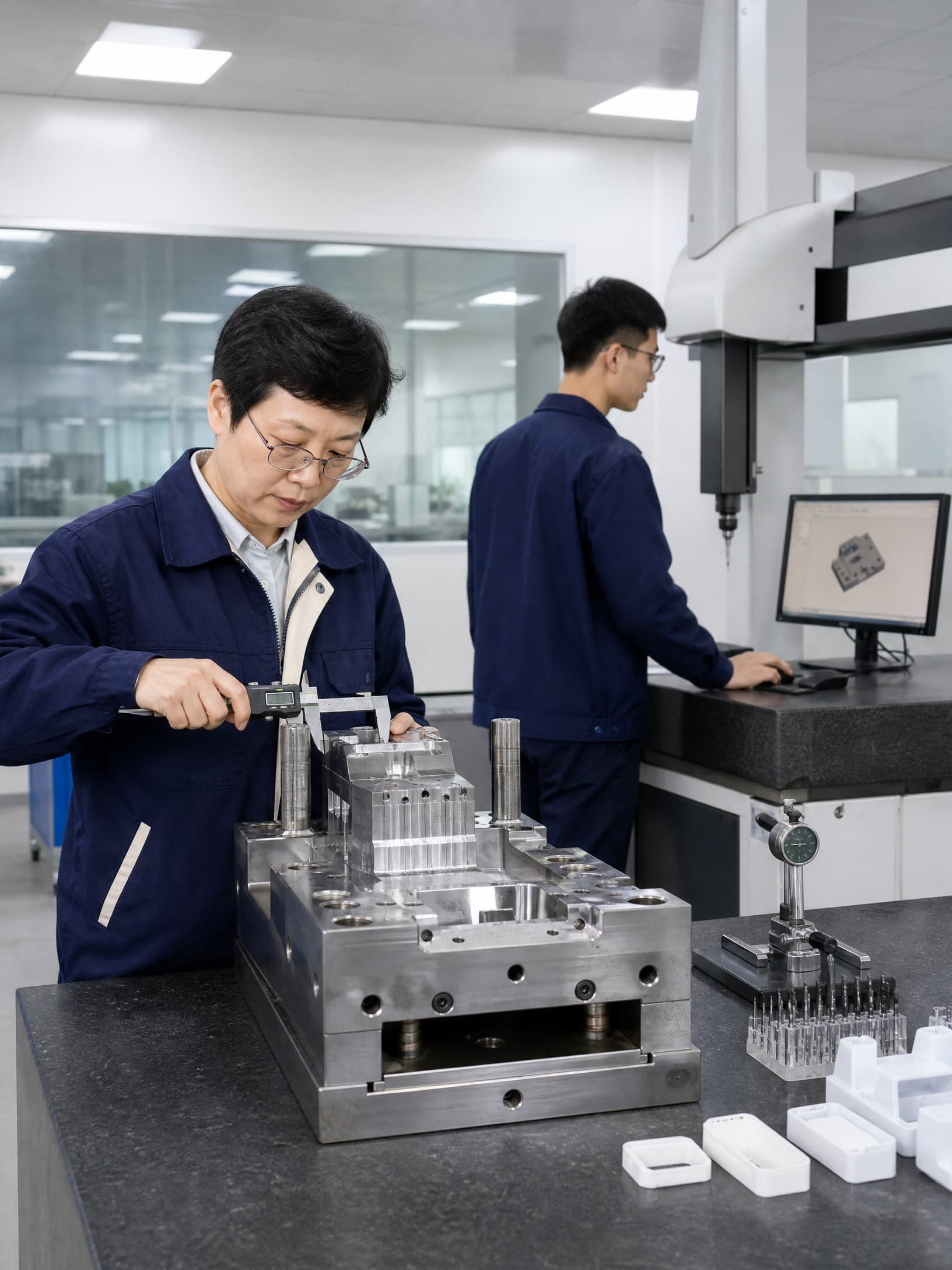
Specify the inspection evidence needed at each gate. A first-article or initial sample package might include marked drawing results, measurement method, visual approval, material documentation, cavity identity and open-deviation status. Routine production may use an agreed sampling plan, in-process checks, functional fit checks and retained records. Ask who owns gauges, fixtures, master samples and data retention, and how out-of-specification parts are segregated and dispositioned.
Validation responsibility must remain visible. A supplier can provide process parameters, trial records, dimensional data, cleaning or packaging records and change notifications within its scope. The legal manufacturer or product owner decides whether those inputs satisfy design verification, process validation, cleaning validation, usability, biocompatibility, electrical safety or market-specific requirements. InjeForm’s [quality and inspection support](/quality) can be discussed alongside the customer’s written quality agreement.
05
5. Compare suppliers by questions, not by a medical label
Ask each candidate to return the same scope: tooling concept and ownership, resin assumptions, clean-handling boundary, cavity or machine plan, sample milestones, inspection documents, traceability fields, packaging, change control and export terms. Request the three assumptions that most affect price or release. This makes a low quote distinguishable from one that includes the evidence and controls the programme actually needs.
Useful supplier questions include: Which housing features are the highest DFM risks? Which faces can show gates or ejectors? What exact resin and approved-substitute route is proposed? How are lots, cavities and revisions recorded? What clean-handling steps are included, and where does customer-controlled assembly begin? Which trial and inspection records are supplied? How are nonconformities quarantined and reported? What triggers a change notification or validation-impact review?
Finally, put the answer into the purchase specification and quality agreement. Define acceptance criteria, sample approval, record retention, material and process changes, deviation approval, packaging, shipment identification, tool access and escalation. Sourcing medical equipment housing injection molding is not a claim that the supplier makes the finished device compliant; it is a controlled way to buy a molded component with evidence that the product team can evaluate.
Practical takeaway
Before you move
to the next review.
- Provide the controlled housing CAD and drawing, product boundary, CTQs, mating parts, cosmetic zones and programme phase.
- Define clean-handling expectations by contamination risk, handling point, packaging, storage and acceptance method—not by the word “clean” alone.
- Approve exact resin, colour, finish and cleaning exposure inputs, with a documented route for alternatives and changes.
- Agree validation-ready samples, inspection methods, traceability fields, nonconformance controls and record ownership before tooling release.
- Compare suppliers on DFM assumptions, tooling scope, evidence, change control, packaging and the written quality agreement—not only unit price.
FAQ
Common questions
Does a medical equipment housing require a cleanroom molding supplier?
Not automatically. The needed environment depends on intended use, contamination risk, downstream assembly and the product owner’s acceptance plan. Define the required handling and evidence before deciding whether controlled-area production is necessary.
What material should be used for a medical equipment housing?
There is no universal medical-housing resin. Select the exact grade from impact, stiffness, cleaning exposure, appearance, dimensional, electrical or flame requirements and the product qualification plan, then control approved alternatives.
What traceability should buyers request for molded housings?
At minimum, agree links among part and drawing revision, resin and colourant lot, work order or production lot, cavity or tool where relevant, inspection status, deviations and shipment identity. The quality agreement should define retention and access.
Can a molding supplier perform the housing validation?
The supplier can provide agreed process, dimensional, visual, material, packaging and trial evidence. The product owner or legal manufacturer determines the finished product’s verification, validation and regulatory responsibilities.
What should be in a medical housing injection molding RFQ?
Include controlled CAD and drawings, intended use and exposure, mating parts, CTQs, resin direction, finish, clean-handling boundary, volume, sample gates, inspection evidence, traceability, packaging, change control and commercial assumptions.
References
Source material
- [1] U.S. Food and Drug Administration, “Quality Management System Regulation (QMSR).”
- [2] U.S. Food and Drug Administration, “Process Validation: General Principles and Practices.”
- [3] U.S. Food and Drug Administration, “Medical Device Reporting (MDR): How to Report Medical Device Problems.”
- [4] International Organization for Standardization, “ISO 13485:2016 — Medical devices — Quality management systems — Requirements for regulatory purposes.”
This guide is general information for early procurement and engineering discussion. It does not replace product-specific DFM, qualification, validation, regulatory assessment or legal advice.