
Buyers should plan an injection mold’s end of life when they approve the tool, not when production stops. Put ownership, custody, maintenance records, spare-component risk, storage conditions, repair authority, qualification after change, transfer rights and disposal into the tooling and supply agreements. Review demand, quality trend, component availability and product design. Possible outcomes are preservation, injection mold repair, injection mold refurbishment, replacement production tooling, transfer or documented retirement. Do not treat a low cycle count alone as proof that a mold is fit to restart.
A mold can become obsolete before it is physically worn out. A discontinued product, unavailable hot-runner electronics, unsupported material, changed regulatory requirement, lost design data, or unavailable repair skill can make a restart riskier than the visible condition suggests.
01
H2: Start lifecycle planning at tool award
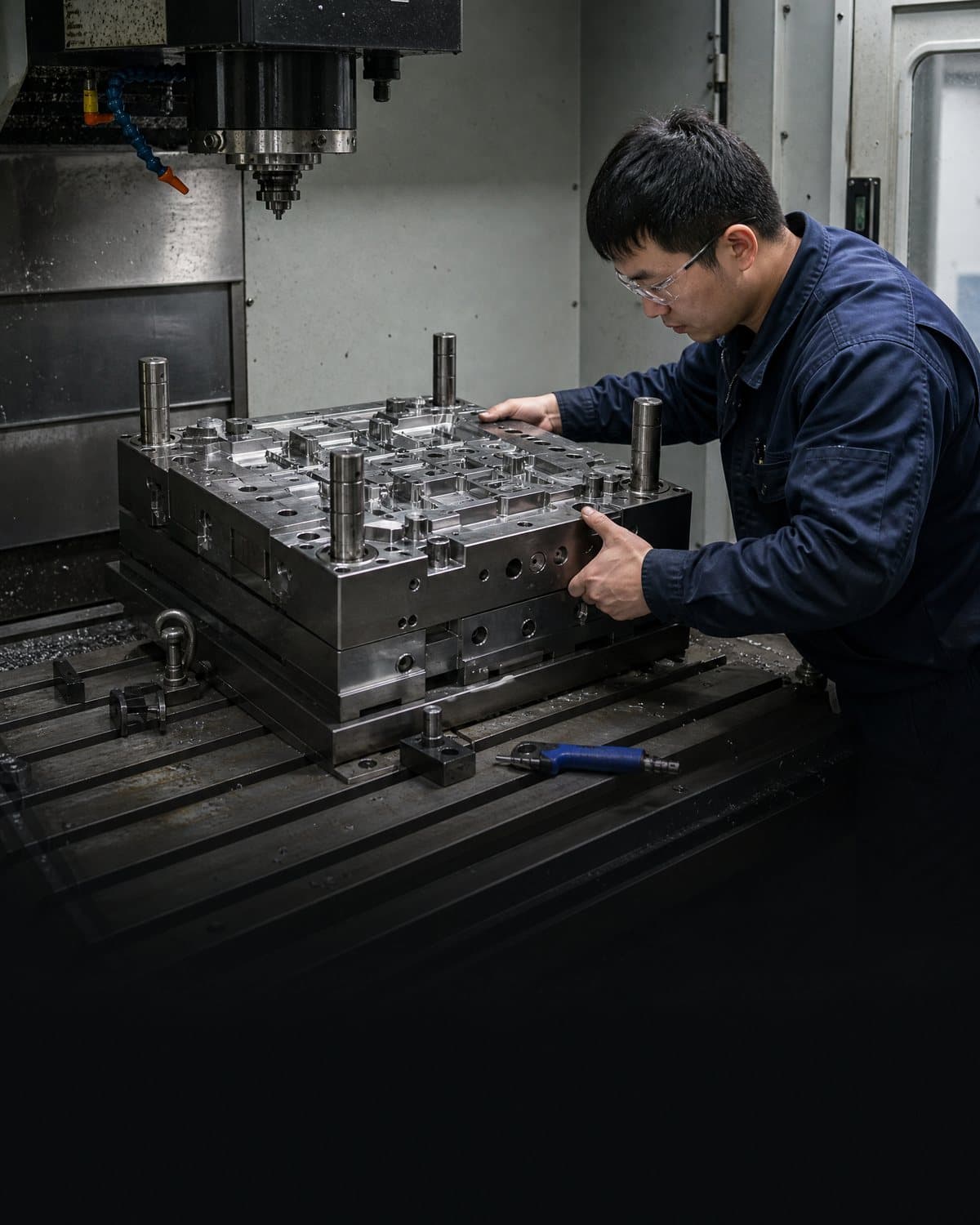
The purchase order should identify the legal owner, physical custodian, unique asset ID and approved part revision. State whether ownership includes the mold base, cavities, inserts, hot-runner system, gauges, samples, drawings, manufacturing files where available, maintenance history and spares. “Paid for” and “accessible” are not the same: the buyer needs agreed inspection, release and receipt rights.
Set lifecycle assumptions as planning inputs, not promises: forecast volume, service horizon, resin and additives, critical dimensions and appearance, machine interface, and likely engineering changes. Ask for an acceptance condition report with key-surface photos, cavity/core IDs, water-circuit results, trial evidence and a spares list. Tool life depends on its actual design, material, process and care; a shot-count claim alone is not enough.
Name who may authorize routine maintenance, emergency containment, permanent repair, welding, polishing, insert replacement or process changes. Define notification and pre-approval triggers. Product rules and the quality agreement should set any additional documentation or re-verification requirement.
02
H2: Use decision gates instead of waiting for tool failure
Review active and dormant molds on a defined cadence and before a restart after extended injection mold storage. Compare demand, quality and scrap trend, unplanned interventions, dimensional or cosmetic drift, downtime, and availability of resin, components and support. NIST recommends considering maintenance, backup options, modular replacement and end of life before interruption occurs [1].
Combine technical condition with business exposure. A tool may be repairable but unsuitable for a revised design, needed capacity or current evidence requirements. A stable service-parts program may instead support preservation and targeted repair. Record the decision, supporting evidence, approval and next review trigger.
| Lifecycle option | Appropriate when | Supplier evidence to request | Buyer risk to control |
|---|---|---|---|
| Continue and maintain | Parts remain conforming and demand is credible | Shot count, maintenance log, condition check, production and inspection trend | Hidden wear or dormant corrosion causing a poor restart |
| Injection mold repair | A localized defect or worn standard component has a defined remedy | Failure analysis, repair scope, replaced-part traceability, post-repair samples | A quick fix changing fit, venting, cooling or surface appearance |
| Injection mold refurbishment | Several surfaces, mechanisms or systems need restoration but the design remains valid | Detailed scope, before-and-after condition record, critical-feature verification, trial plan | Spending on a tool with obsolete components or insufficient remaining capability |
| Replace production tooling | Demand, design, capacity, supportability or quality risk exceeds a defensible repair path | New-tool specification, DFM review, validation plan and transition schedule | Supply interruption or unqualified parts during changeover |
| Transfer or retire | A new source or formal program exit is selected | Asset inventory, release record, packing report, data package or destruction record | Loss of buyer-owned assets, IP, spares or evidence needed for future service demand |
03
H3: Choose the right scope: repair, refurbishment or replacement
An injection mold repair returns a defined failed feature to an agreed condition, such as a spring, bushing, seal, ejector pin or insert. Injection mold refurbishment is broader: it may restore wear surfaces, slides, cooling, venting, coatings or several components. Replacement production tooling is a new controlled asset, even if it copies an earlier design.
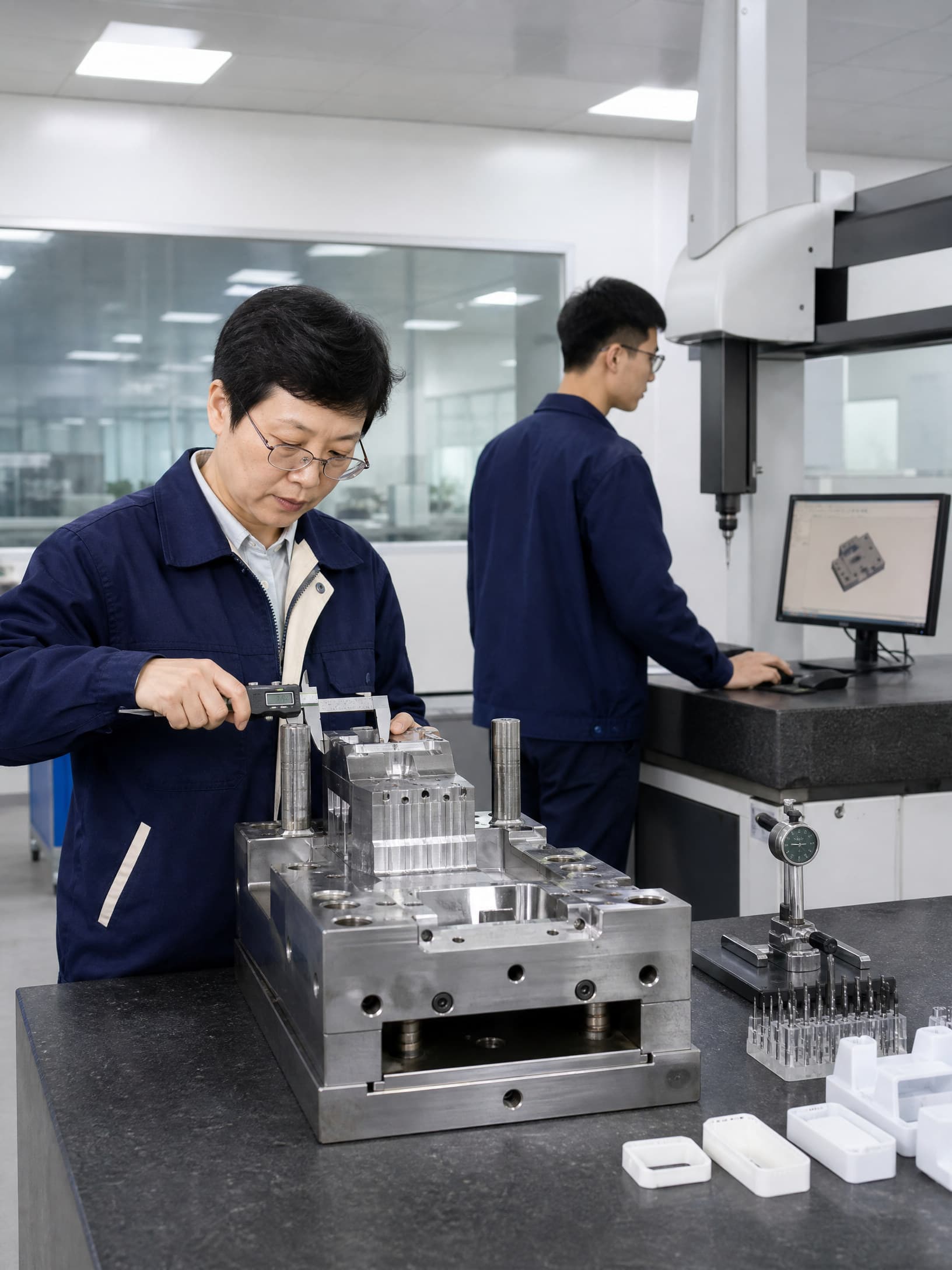
Request a diagnostic report separate from the recommended work: affected cavity or station, likely cause, changes to steel or finish, parts removed and installed, and scope limits. For welded, re-machined or polished molding surfaces, agree the required dimensional, cosmetic, flow or leak evidence before release. Do not approve a generic “overhaul” description.
Set a risk-based restart plan, such as setup confirmation, first-off inspection against the current drawing, cavity-to-cavity review where relevant, functional testing and comparison to approved appearance samples. Where U.S. medical-device requirements apply, documented process changes must be verified or validated as appropriate, and equipment maintenance documented [2].
04
H2: Treat storage as a controlled production state
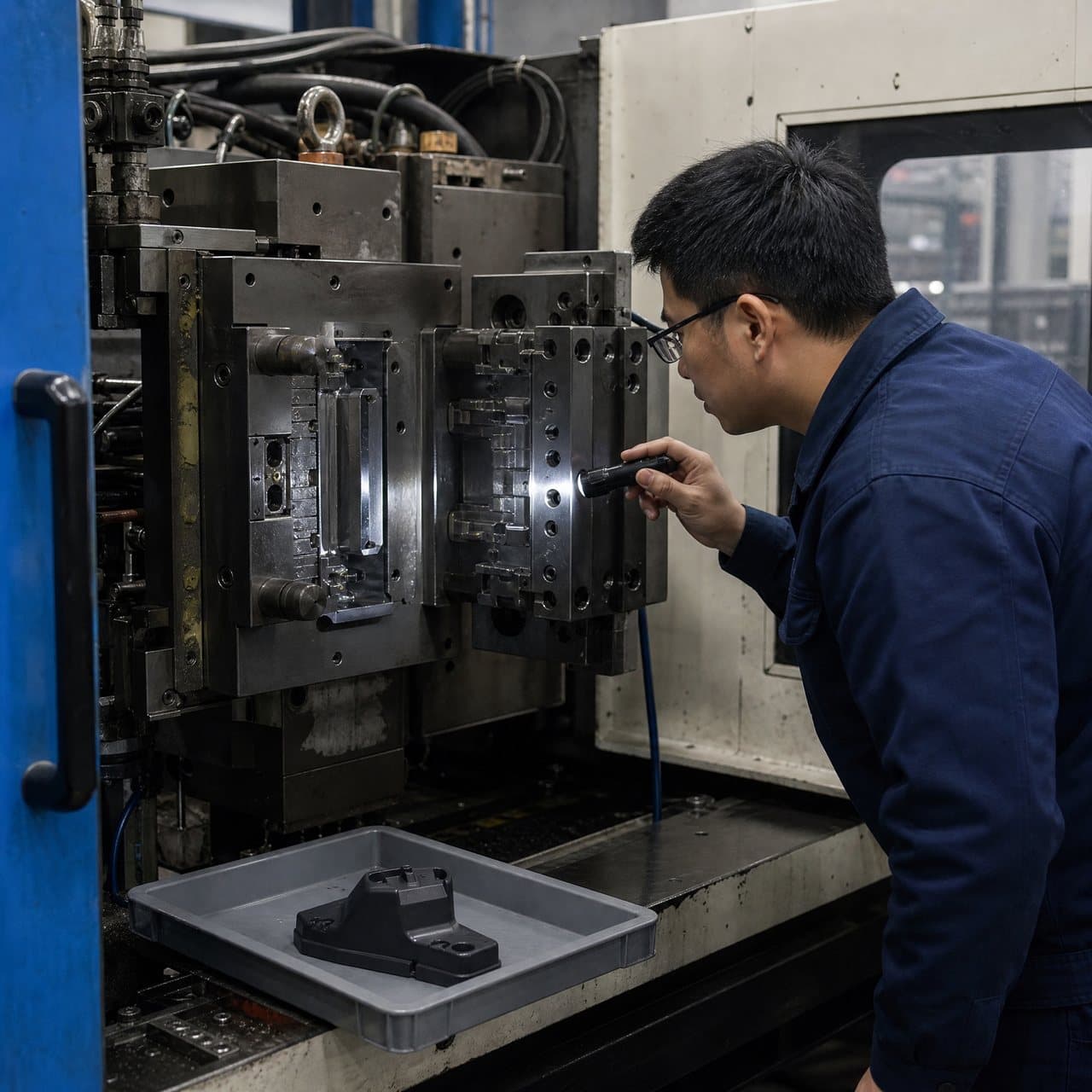
A stored mold remains an asset with condition risk. At run end, remove residue, inspect wear-prone features, drain and dry cooling circuits where appropriate, apply suitable corrosion protection, protect exposed surfaces, identify the asset and record its location. Prevent impact damage, contamination and mix-up of loose components. Industry guidance emphasizes drying before storage, corrosion protection and recorded inspection and maintenance [3].
Request the actual preservation method, storage controls, handling rules, inspection interval, inventory method and condition-change record. Specify protective packing and receipt inspection for tools travelling across climates or held for long service intervals. Review product-contact, cleanroom, food and medical requirements with the responsible quality and regulatory teams.
The agreement should address unpaid storage, production end, supplier acquisition or inability to support the program: release timing, packing and freight responsibility, buyer-appointed carrier rights, and a ban on unauthorized work.
05
H2: Manage obsolescence beyond the steel
Create an obsolescence register for every critical tool. Track hot-runner controls and heaters, sensors, hydraulic or pneumatic items, proprietary components, special cutters, texture references, gauges, approved resin grades, color systems, and current CAD and drawing revisions. For single-source or discontinued items, decide whether to hold approved spares, qualify an alternative, redesign a module, duplicate data or build a successor tool.
For cross-border programs, preserve the native CAD where contractually available, drawings, mold layout, bills of material, supplied steel and treatment records, approved samples and inspection data, process windows, maintenance history, spares, packing instructions and change status. Verify the receiving party can open the files and restrict access under agreed ownership and confidentiality terms.
Before declaring obsolescence, check service, warranty, aftermarket and regional demand in Europe, the United States and the Middle East. Product retirement, rather than mold condition, may trigger final disposition. Require written approval before scrapping, selling, cannibalizing or permanently altering buyer-owned tooling.
06
H2: Plan an orderly transfer, retirement or restart
For an injection mold transfer, photograph the mold, verify IDs and cavity markings, list inserts and spares, state the last approved revision and run date, capture known defects, preserve the maintenance log, and record packaging and chain of custody. At destination, inspect before energizing, confirm mechanical and water interfaces, and run a risk-based qualification. Transfer completes only when the receiver can make conforming parts to the current specification.
For retirement, return, preserve for a defined service period, dismantle for approved spares or destroy. Record the asset, approval, date, handling party, disposition and treatment of confidential data. Retain evidence for the contract, quality-system and legal retention period.
07
H2: Build these questions into your RFQ
Ask prospective suppliers to respond to lifecycle controls, not only tool price. Provide demand horizon, service obligations, destination countries, resin and change-control expectations. Request included maintenance, chargeable repair, refurbishment scope, spares, storage charges, release process and transfer support; compare evidence and exceptions line by line.
For a new or inherited tool, send the part drawing, 3D CAD, mold records, photos, known quality issues, expected volume, material specification, target machine information if known, and required restart evidence. Request a tooling lifecycle RFQ that identifies condition risks and a controlled path for storage, repair, refurbishment, transfer or replacement.
Practical takeaway
Before you move
to the next review.
- Identify the legal owner, custodian, asset ID and approved part revision for every mold.
- Keep a baseline condition report, trial evidence, maintenance history and spare inventory.
- Define approval limits for maintenance, injection mold repair, refurbishment and permanent changes.
- Set preservation, inventory, inspection and restart requirements for injection mold storage.
- Maintain an obsolescence register for components, resin, data, gauges and specialist support.
- Require risk-based inspection and sample approval after material repair, transfer or long storage.
- Write release, freight, data handover, confidentiality and authorized retirement terms at award.
FAQ
Common questions
Who owns an injection mold when a buyer funds it?
Payment may not settle ownership or release rights. The agreement should identify the owner, asset scope, marking, custody, access, transfer conditions, liens or retention rights, and consequences if the supplier relationship ends. Use appropriate legal counsel for the governing jurisdiction.
When should a mold be refurbished instead of repaired?
Refurbish when several systems or surfaces need restoration and the design, demand and supportability justify it. Start with a condition assessment and defined scope. If components are obsolete, demand has changed or the design needs major revision, replacement production tooling may be more controlled.
Can a mold be restarted after years in storage?
Possibly, but storage time alone is not a release criterion. Inspect preservation status, corrosion, moving features, cooling circuits, records, components and current part requirements, then agree setup, trial and inspection evidence.
What documentation should accompany an injection mold transfer?
Use an asset inventory, condition photos, identifiers, loose-part and spare inventory, maintenance history, available current drawings and CAD, last approved sample data, known issues, packing record and chain of custody.
Is a high shot count proof that a tool is obsolete?
No. Shot count does not describe corrosion, process history, resin abrasiveness, maintenance quality, component availability, design status or present capability. Assess both technical condition and business need before repair, refurbishment or replacement.
References
Source material
- [1] National Institute of Standards and Technology (NIST), Manufacturers: Pre-Purchase Guide for Equipment
- [2] Electronic Code of Federal Regulations, 21 CFR 820.70 Production and Process Controls
- [3] Slide Products, Preventive Maintenance Guide for Injection Molding
This guide is general information for early procurement and engineering discussion. It does not replace product-specific DFM, qualification, validation, regulatory assessment or legal advice.