
Buyers should choose injection mold steel by first identifying the tool’s dominant risks—wear, corrosion, cracking, polishability, dimensional stability and maintenance—and then matching those risks to a documented steel grade and condition. P20, NAK80, H13 and hardened steel are not interchangeable labels: the suitable choice depends on the resin, filler, geometry, surface requirement, expected production duty and repair plan. Uddeholm describes strength, toughness, wear resistance, cleanliness, corrosion resistance and thermal conductivity as relevant mold-material properties, while ASSAB links selection to resin, additives, process, tolerances and production length.[1] [2]
For Europe, US and Middle East OEM and procurement teams, the practical decision is not “Which steel is strongest?” It is “Which steel and heat-treatment route provide a credible balance of wear, corrosion control, polish, tool life and repairability for this released part?” Treat supplier tool-life statements as programme-specific estimates until their assumptions and evidence are clear.
Quote request model: “Please quote P20, NAK80, H13 or another justified option against our resin, filler, finish, volume, maintenance and acceptance requirements. State the steel designation, condition, hardness basis, heat-treatment route, corrosion controls, polishability assumptions, expected wear areas and evidence supplied at handover.”
01
1. Start with service duty, not a familiar grade name
Before selecting steel, document the resin family and grade, glass or mineral reinforcement, processing environment, annual demand, programme life, cavity count, critical dimensions, visible surfaces and maintenance access. A filled engineering resin may create more abrasive wear than an unfilled commodity resin; a resin or additive that produces corrosive by-products may make corrosion resistance more important than maximum hardness. ASSAB identifies corrosive plastic by-products, cooling media, humidity and prolonged storage as relevant corrosion exposures.[2]
Do not assume one steel must serve every component. A polished cavity insert, a slide shutoff, a replaceable core and a large mold base can have different duties. Ask the toolmaker to map the proposed material to each insert, core, cavity, holder and wear component. The decision should also state which surfaces may be repaired, polished or replaced without changing the approved part geometry.
| Buyer risk | Property to prioritise | Question to put in the quote |
|---|---|---|
| Abrasive resin, glass or mineral filler | Wear resistance and compressive strength balanced with toughness | Which areas wear first, and why is the proposed steel and treatment suitable for them? |
| Corrosive by-products, water or humid storage | Corrosion resistance plus preservation and cooling control | What corrosion mechanism is expected, and how will the tool be dried, stored and maintained? |
| High polish, clear or appearance-critical surfaces | Cleanliness, polishability and stable heat treatment | What finish standard, approval sample and polishing evidence will govern acceptance? |
| Slides, thin sections, sharp features or stress raisers | Toughness, crack resistance and dimensional stability | How are radii, heat treatment, distortion and high-stress features being controlled? |
| Long service period or uncertain future volume | Balanced wear, repairability, replaceable inserts and maintenance | What is the tool-life basis, what is replaceable, and what triggers inspection or refurbishment? |
02
2. Compare P20, NAK80, H13 and hardened steel by trade-off
P20 is commonly discussed as a pre-hardened mold steel for general-purpose tooling and larger or moderately demanding components. NAK80 is also commonly supplied in a pre-hardened condition and is often considered where polishability, EDM behaviour and dimensional stability are important. H13 is a hot-work tool-steel family frequently considered for higher thermal duty, toughness and wear balance, but the exact grade, condition and treatment must be stated. “Hardened steel” is not one grade; it describes a heat-treated condition or route and must be tied to the nominated material and hardness range.[1] [3]
Use these labels as screening categories, not guarantees. The supplier should identify the exact designation or accepted equivalent, delivery condition, hardness basis, heat-treatment sequence and component location. 3D Systems notes that pre-hardened steels can suit lower-volume or larger tools while hardened options may support higher-wear duties; economics, geometry and production quantity still influence the choice.[3] A harder option can increase machining, distortion, polishing or repair complexity, so hardness alone should not decide the award.
| Option or condition | Where it may fit | What the buyer must verify |
|---|---|---|
| P20 pre-hardened | General-purpose cavities, bases or larger tools where moderate duty and machinability matter | Exact grade, hardness range, wear exposure, polish target, corrosion plan and expected maintenance |
| NAK80 pre-hardened | Applications where polishability, EDM-related work and dimensional stability are important | Authentic material identity, surface requirement, heat history, supplier traceability and compatibility with the resin |
| H13 or comparable hot-work steel | Higher thermal cycling or a balance of toughness and wear where the geometry justifies it | Nominated grade, heat treatment, hardness mapping, distortion control, machining and repair route |
| Through-hardened steel | High wear, high compressive load or extended duty when evidence supports the added complexity | Base grade, target hardness, toughness, cracking risk, polishability, coating and permitted rework |
| Corrosion-resistant steel | Corrosive material, cooling or storage exposure where corrosion control is a priority | Actual corrosion mechanism, steel condition, cooling-water controls, preservation and maintenance ownership |
03
3. Treat hardness, corrosion and polish as a connected system
Hardness can help resist wear and deformation, but an extreme hardness target may not be appropriate for a complex cavity with thin shutoffs, sharp corners or difficult repair access. Toughness, cleanliness, heat-treatment stability and support geometry matter at the same time. Uddeholm and ASSAB both present mold-steel selection as a balance of properties rather than a single ranking.[1] [2]
Corrosion control extends beyond choosing a corrosion-resistant grade. Review cooling-water quality, channel testing, drying, rust prevention, storage orientation and maintenance responsibility. A corrosion-resistant insert cannot compensate for neglected water circuits or long-term exposure during storage. Similarly, a polished surface depends on steel cleanliness, machining, EDM practice, heat treatment and polishing skill; a grade name alone does not guarantee a mirror or optical finish.[1] [4]
If nitriding, plating or PVD is proposed, ask what defined failure mode it addresses, when it is applied, what surface preparation is required and what rework remains permitted. A treatment may help friction or wear in a specific area, but it does not replace suitable base steel, correct geometry or a controlled repair plan.
04
4. Link steel choice to tool life and maintenance evidence
Tool life should be quoted as a conditional engineering estimate, not an unconditional promise. It depends on resin and filler, geometry, injection and mold temperatures, pressure, cycle, lubrication or preservation, maintenance, acceptable wear limits and the standard used to define an acceptable part. Ask whether the estimate means shots before a first inspection, before a repair, or before the tool no longer meets the released requirements.
Require a maintenance plan that identifies wear zones, inspection points, spare inserts, cooling checks, cleaning limits, lubrication or preservation, storage controls and the decision rule for polishing, repair or replacement. For a multi-site or export programme, define which records travel with the tool and who may approve a steel, coating, insert, gate or process change. The selected steel should support the recovery route as well as the first production run.
A useful quotation separates one-time steel and heat-treatment cost from machining, polishing, coating, spares, maintenance and expected repair exposure. Request alternatives where the design is still changing: a pre-hardened route may preserve modification flexibility, while a hardened insert may better protect a stable high-wear interface. Compare the whole programme, not only the initial tool price.
05
5. Make the material decision auditable before steel release
Before authorising steel, attach the material decision to the released CAD, resin direction, surface map, volume scenario and acceptance plan. Request the exact steel designation or accepted equivalent, mill or supplier traceability where available, delivery condition, hardness target or range, heat-treatment record and component mapping. Clarify whether a certificate covers the actual insert, the mold base or only a test coupon.
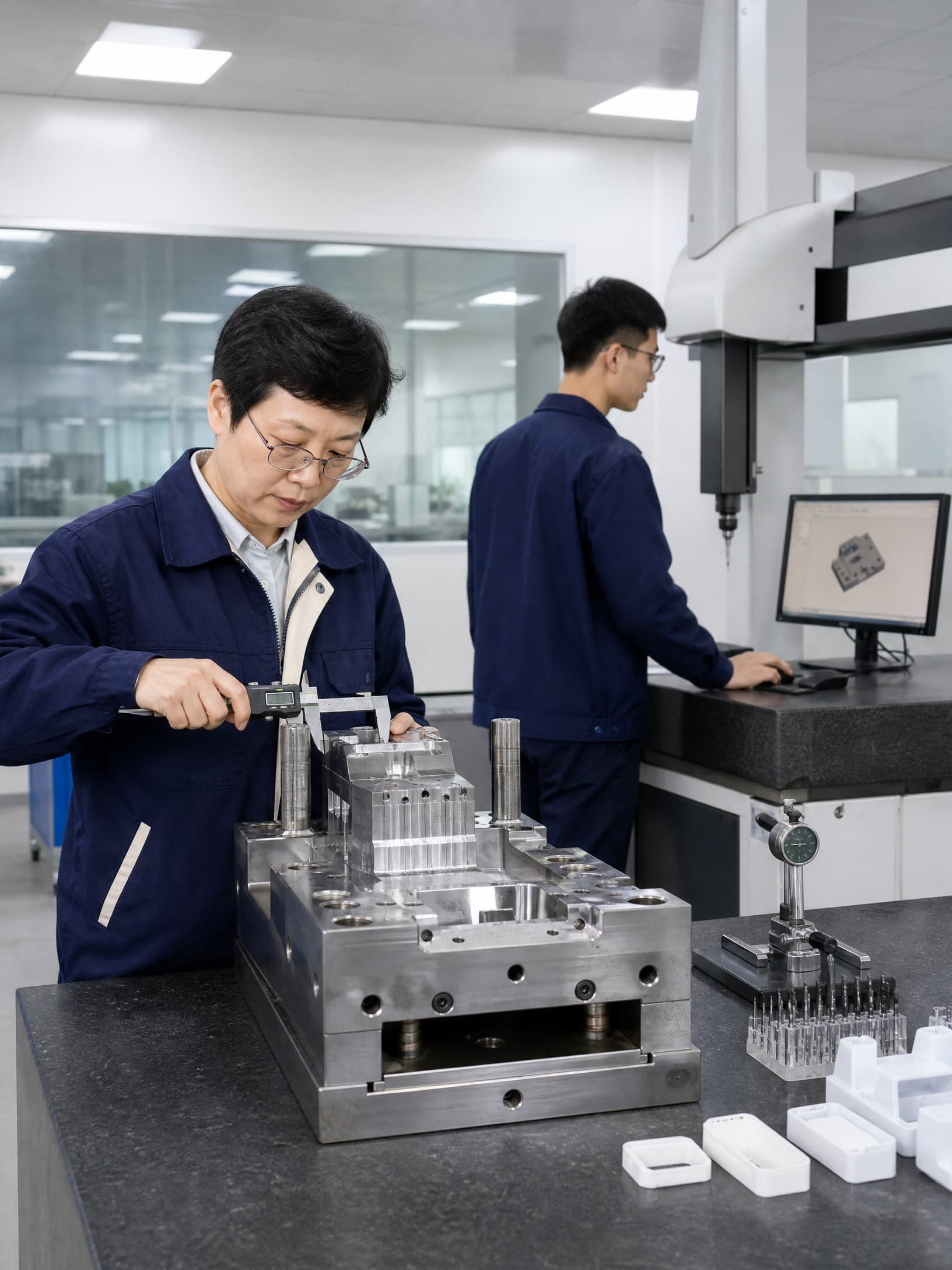
For higher-risk tools, the acceptance plan may include hardness checks or mapping, dimensional inspection after heat treatment, polished-surface review, cooling-circuit pressure or flow checks, corrosion-preservation instructions and a representative trial. These are buyer-controlled evidence requests, not universal regulatory requirements. They should be proportionate to the part, market, customer specification and consequences of failure.
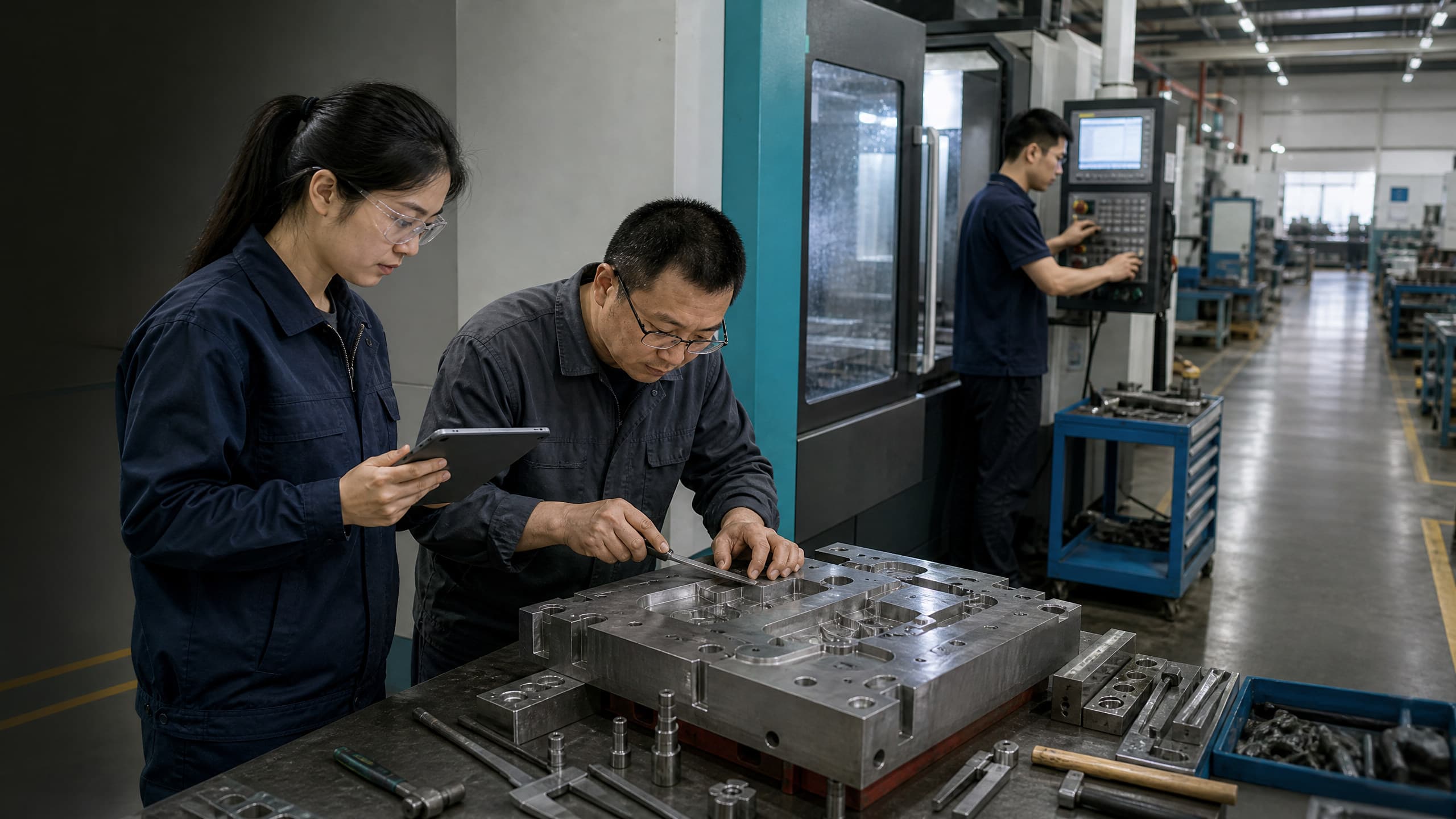
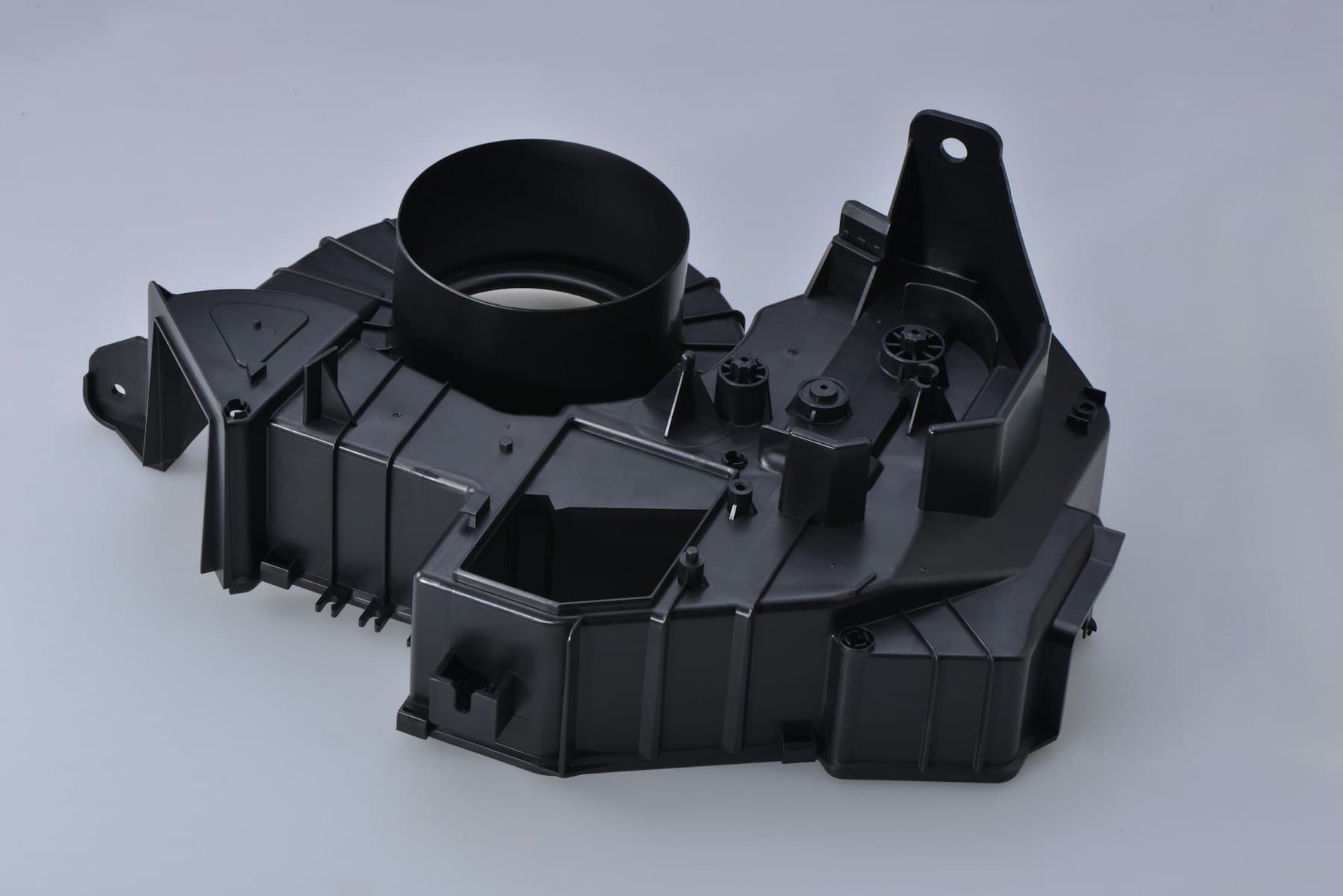
Illustrative-visual disclaimer: the visuals in this guide are illustrative manufacturing images for engineering discussion; they do not depict a specific P20, NAK80, H13 or hardened-steel tool, customer part, facility result or guaranteed tool life. Send the model, drawing, resin, volume and surface requirements through InjeForm’s quote route and ask the supplier to return a written material-and-evidence comparison.
Practical takeaway
Before you move
to the next review.
- Record resin grade, filler or reinforcement, processing exposure, annual demand, programme life, surface requirements and maintenance access.
- Ask the toolmaker to compare P20, NAK80, H13 and any hardened or corrosion-resistant alternative by component and failure mode.
- Confirm exact steel designation, delivery condition, hardness target or range, heat-treatment route, traceability and permitted surface treatments.
- Define polish, corrosion, cooling, storage, inspection and repair evidence before approving the detailed mold design.
- Treat tool-life statements as conditional estimates and record the assumptions, wear limits, maintenance owner and change-control route.
FAQ
Common questions
Is P20 always cheaper or better than NAK80 for an injection mold?
No. P20 and NAK80 are different material choices with different supplier specifications, conditions and application trade-offs. Compare the exact grade, hardness, polish requirement, resin exposure, machining route, maintenance plan and evidence—not the names alone.
When should a buyer consider H13 or another hardened steel?
Consider it when thermal cycling, wear, compressive loading or production duty justifies the added heat-treatment, machining and repair considerations. The toolmaker should explain the geometry-specific benefit and provide a nominated grade, condition and acceptance basis.
Does hardened steel guarantee longer mold life?
No. Hardened steel may improve resistance to a defined wear or load mechanism, but tool life also depends on resin, filler, geometry, process, cooling, maintenance and the wear limit used to define end of life. Ask for assumptions and inspection triggers.
Can corrosion-resistant steel eliminate mold corrosion?
No. It may reduce susceptibility in a suitable application, but corrosion can still be influenced by resin by-products, cooling water, humidity, storage and maintenance. Confirm the exposure mechanism and preservation procedure with the supplier.
What should be included in a steel-selection quote?
Request the exact steel designation, component mapping, delivery condition, hardness basis, heat-treatment route, traceability, polish and corrosion assumptions, maintenance plan, tool-life basis, spare or replaceable components and the evidence included at handover.
References
Source material
- [1] Uddeholm, “Tool Steel for Injection Molding.”
- [2] ASSAB, “Plastic Moulding: Tooling Application.”
- [3] 3D Systems Quickparts, “Basics of Injection Molding Design.”
- [4] Uddeholm, “Plastic Moulding: Steel for Moulds.”
This guide is general information for early procurement and engineering discussion. It does not replace product-specific DFM, qualification, validation, regulatory assessment or legal advice.