
Injection mold assembly is the point at which machined plates, inserts, cooling circuits, ejection components and any motion systems become one operating asset. It is also a useful buyer gate: correcting a missing insert, a misidentified connection or an uncertain slide sequence before a press trial is usually less disruptive than discovering it during a production-representative run. The right question is not whether every detail can be inspected remotely. It is whether the supplier can show a controlled configuration, sensible checks for the tool’s risks and a clear boundary between bench evidence and evidence that only an injection mold trial can provide.
For buyers in Europe, the US and the Middle East, agree the evidence package and decision authority before shipment, travel or a remote review. The package should be scaled to part criticality, cavity count, tool complexity and the intended molding source. It should not be treated as a substitute for product-specific safety assessment, machine compatibility review or final part approval.
Bench testing can establish readiness of an assembled tool and its mechanisms. It cannot by itself prove molded-part dimensions, appearance, cooling performance, cycle capability or long-run reliability. Record those as separate trial questions.
01
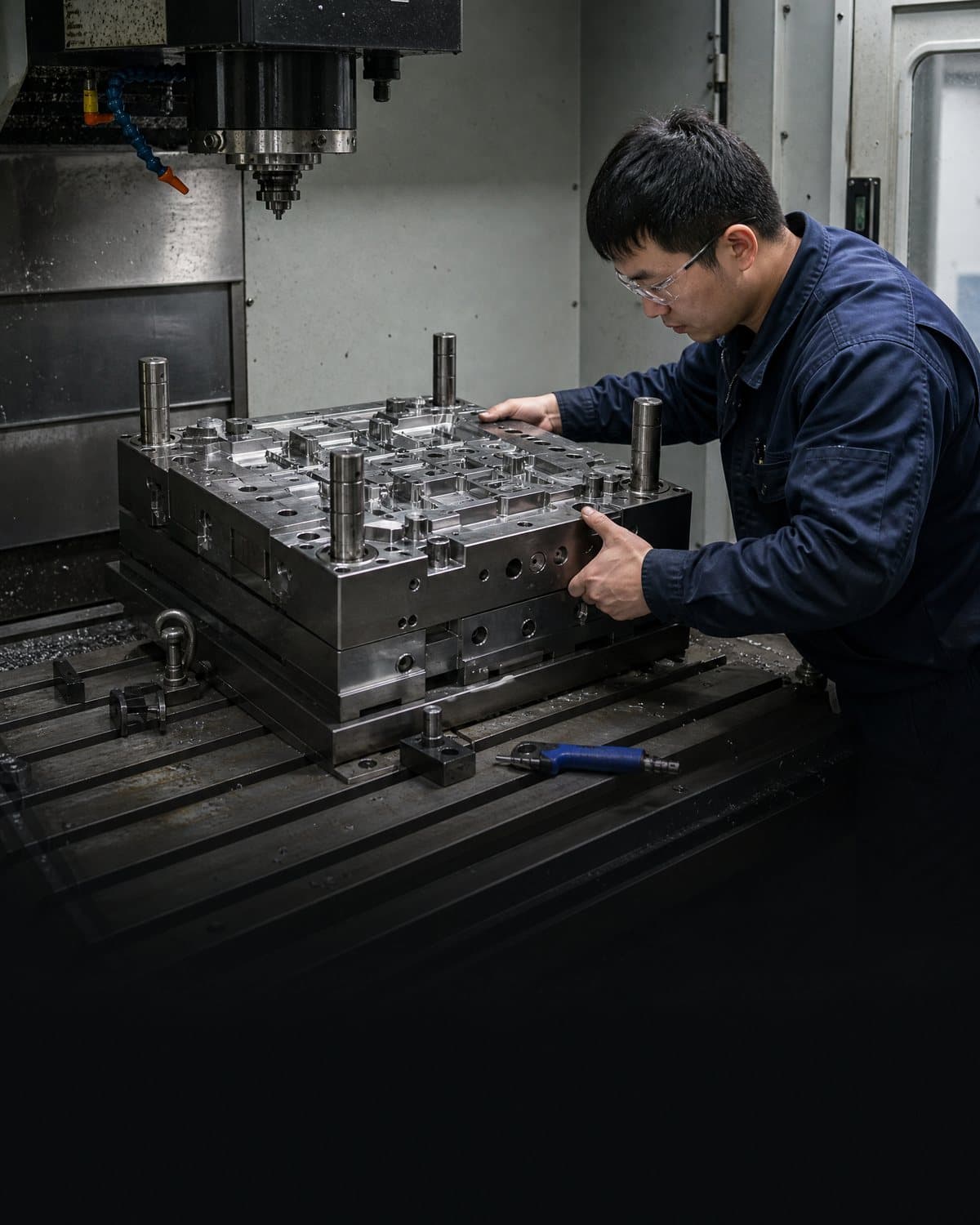
1. Start with a controlled configuration, not a showroom review
Ask the supplier to identify the exact tool being reviewed: asset ID, part and tool revision, cavity count, insert and hot-runner configuration where applicable, and any loose or interchangeable components. Compare this record with the released drawing, approved tool concept and current change list. A clean exterior is not acceptance evidence if the mold contains an unapproved insert, a provisional shutoff repair or a different date code configuration. For a family tool or multi-cavity tool, the record should make cavity or station identity traceable.
Request a short pre-review declaration of what is complete, what is intentionally pending and what has changed since design release. This lets the buyer decide whether the session is a readiness check, an engineering review or a formal hold point. It also prevents a temporary workaround from being mistaken for the production configuration. If the buyer’s production molder will differ from the trial molder, confirm that the documented configuration and interfaces will travel with the physical injection mold tooling.
| Evidence to request | Buyer decision it supports | Limit or follow-up |
|---|---|---|
| Tool ID, controlled revision list and configuration photographs | Whether the reviewed asset matches the approved scope | Photographs do not verify internal dimensions; ask the supplier to confirm unresolved changes. |
| Component and loose-item inventory, including spare or interchangeable items | Whether the tool can be assembled, trialed and handed over as intended | Confirm quantities, identifiers and packing responsibility before dispatch. |
| Open-action and deviation log with owner and due date | Whether a conditional trial is acceptable and who may release it | Do not convert an open action into approval without a written disposition. |
02
2. Check motion and interfaces against the agreed tool concept
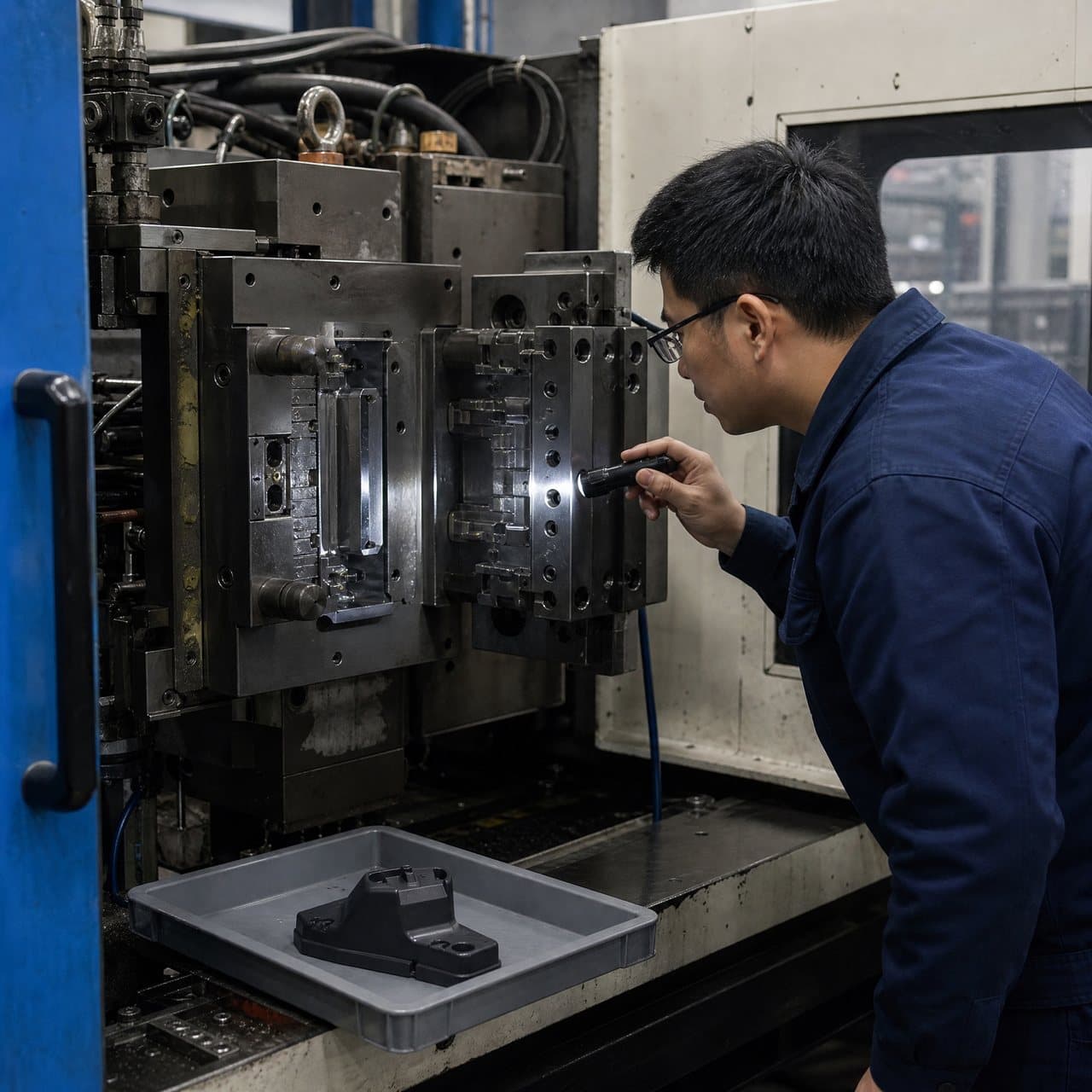
During bench testing, ask the supplier to demonstrate movement deliberately and at a safe, controlled pace: mold opening and closing by hand or approved fixture as appropriate; ejector forward and return; slides, lifters, unscrewing or other special actions; and return-pin or interlock engagement. The buyer is looking for consistency with the agreed sequence, adequate clearance, positive end positions and no obvious interference—not for a promise of production speed. For complex mechanisms, request marked stills or a brief video tied to the tool revision and the mechanism being shown.
Then review the interfaces that can derail a trial even when the tool itself is sound. Confirm water, hydraulic, pneumatic, electrical and hot-runner connection identification; lifting and clamping provisions; locating-ring and nozzle assumptions; access for maintenance; and any robot, core-pull or sensor dependency. The required press, nozzle, clamping, auxiliary and handling details remain supplier- and machine-specific. Where automation is proposed, confirm the responsibility for the machine/robot interface and safety validation; EUROMAP 67 illustrates why mould-area and emergency-stop signals are controlled interfaces rather than informal wiring details [3].
03
3. Make inspection evidence proportionate to the failure risk
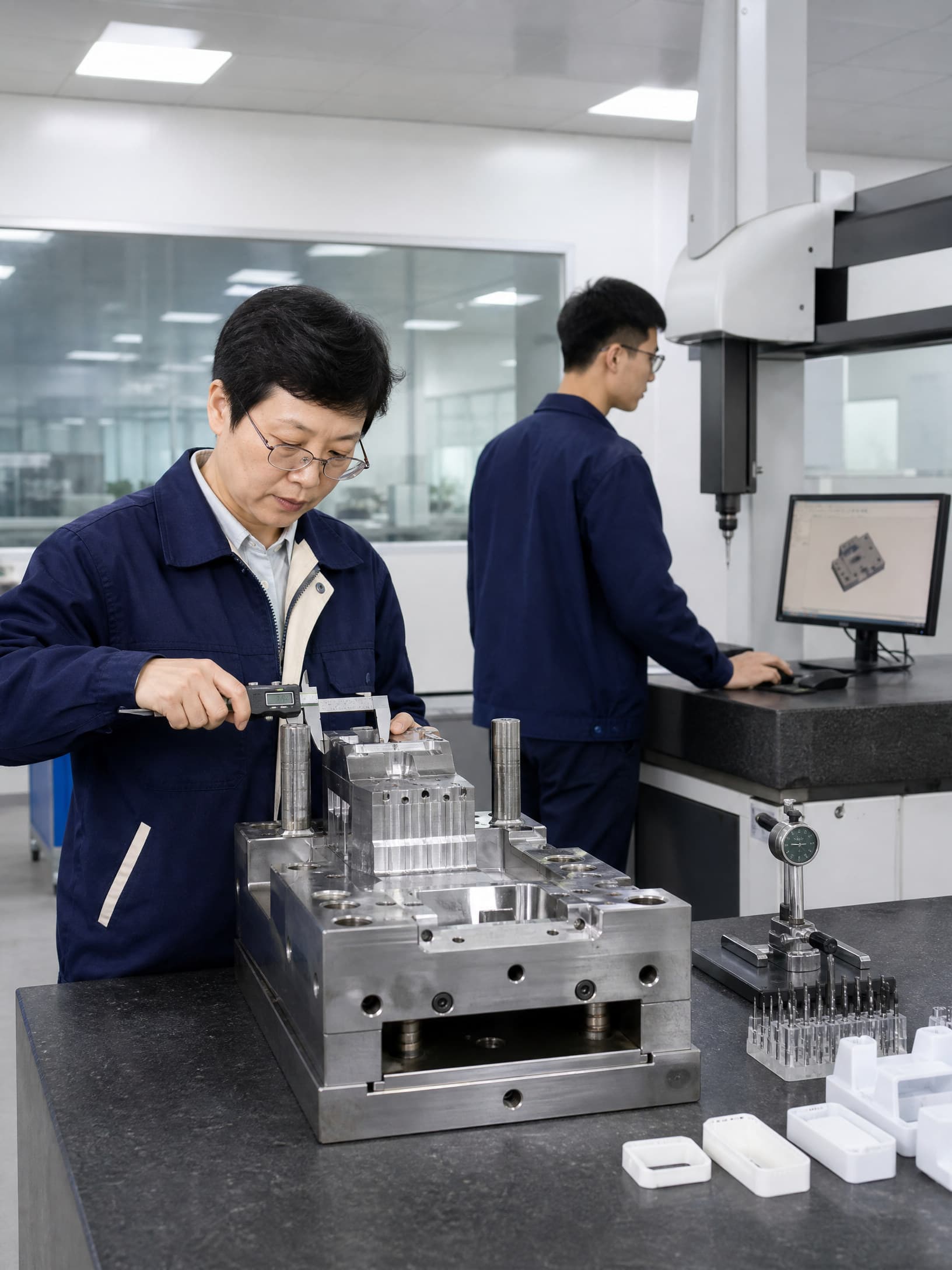
Injection mold inspection before trial should focus on features whose condition could materially affect safety, part function, release timing or the ability to diagnose a trial result. Typical candidates are core and cavity inserts, shutoffs, critical vent areas, gates, ejection tips, moving-feature bearing surfaces, cooling-circuit plugs and seals, and parting surfaces. Ask which dimensions or fit checks were measured, by which method, against which revision, and which findings are still awaiting confirmation. A supplier should distinguish measured results from visual observations and from design intent.
Avoid demanding a generic inspection report that produces pages without a decision. Instead, identify CTQs, cosmetic-facing surfaces, leak-sensitive circuits, high-wear components and features that would be difficult to correct after texturing or heat treatment. ISO 20457 provides a framework for considering tolerances and acceptance conditions for molded parts [1], but it does not remove the need to agree product-specific datums, methods and acceptance limits. For regulated, safety-critical or highly loaded applications, the buyer should confirm any additional validation, traceability and independent-inspection requirements with the responsible engineering and quality functions.
04
4. Separate bench acceptance from a disciplined mold-trial release
A satisfactory bench review should lead to a defined injection mold trial plan, not an implied production release. Agree the material grade and condition, color or additive direction, trial location, machine assumptions, cavity sampling plan, measurement plan, cosmetic viewing conditions, functional checks and the people authorized to disposition samples. If the specified resin or production press is unavailable, record the substitute and the resulting limitation. A trial using a convenient resin may show basic fill or mechanism behavior, but it may not answer the buyer’s dimensional, appearance or end-use question.
Ask for a trial record that links settings or meaningful process ranges, tool and part revisions, sample identity, cavity context, observations, measurements, deviations and corrective actions. The evidence should answer the original question and reveal uncertainty, rather than summarize the run as simply pass or fail. The FDA’s process-validation guidance, although written for pharmaceutical manufacturing, usefully frames validation as objective evidence that a process can consistently deliver quality; it should not be read as a universal compliance prescription for ordinary plastic parts [2]. Close the buyer gate with an explicit status: ready for trial, ready with listed limitations, rework required, or awaiting named evidence.
Practical takeaway
Before you move
to the next review.
- Match the physical tool ID, part and tool revision, cavity or insert configuration, and loose-item inventory to the controlled record before the review begins.
- Request a declared list of incomplete items, temporary conditions, deviations and changes, each with an owner, disposition and next decision point.
- Witness or review recorded checks of ejection, slides, lifters, interlocks and special mechanisms at a controlled pace; ask the supplier to confirm any untested sequence.
- Verify the labelled machine and utility interfaces, lifting and clamping assumptions, service access and any hot-runner, hydraulic, pneumatic, sensor or automation dependency.
- Approve a separate trial plan for material, machine, sampling, measurements, visual criteria, open risks and release authority; do not treat bench evidence as proof of molded-part capability.
FAQ
Common questions
Can a buyer accept an injection mold after bench testing alone?
Usually no. Bench testing can support an assembly-readiness decision, but a buyer should separately define the injection mold trial evidence needed for the intended resin, press, part requirements and production scope. The contract should state whether a bench result permits trial, conditional shipment or final tool acceptance.
What should a remote bench-test review include?
Use a live or recorded review tied to the tool ID and revision, with clear views of the configuration, key moving sequences, connection labels, loose components and open-action log. Remote viewing is most useful when supported by controlled records; it is not a replacement for every measurement or product-specific safety review.
Should cooling circuits be pressure-tested before the mold trial?
Where leakage risk, circuit complexity or customer requirements make it relevant, ask the supplier to confirm the agreed test method, circuit identification, test condition, duration and result. The suitable method and acceptance limit depend on the tool design and program requirements, so they should be agreed rather than assumed.
References
Source material
- [1] International Organization for Standardization, ISO 20457:2018, Plastics moulded parts — Tolerances and acceptance conditions.
- [2] U.S. Food and Drug Administration, Process Validation: General Principles and Practices (guidance for industry).
- [3] EUROMAP, Recommendation 67: Interface between injection moulding machine and handling device / robot.
This guide is general information for early procurement and engineering discussion. It does not replace product-specific DFM, qualification, validation, regulatory assessment or legal advice.