
An injection molding process validation plan turns product requirements into an evidence plan before routine manufacture begins. It is not a mold-trial summary, material data sheet or supplier quality manual. Its job is to define the part and process state to be assessed, the characteristics that matter, the measurement and functional checks, the records to be supplied, and the decision path if conditions change. This matters in international sourcing, where drawings travel across languages, units and customer quality systems.
Scope depends on the part, its use, market, customer requirements and failure risk. A cosmetic consumer part may need a visual standard and fit evidence; an automotive or medical programme may have customer- or sector-specific obligations the product owner must provide. This buyer-side framework does not determine regulatory compliance or replace a product specification, contract, risk assessment or customer-required format. Buyers in Europe, North America and the Middle East should confirm destination-market obligations and apply any more-specific customer requirements.
Ask for evidence tied to the approved revision, material and process state. A collection of measurements without that traceability is information, not a dependable release decision.
01
Start with scope, ownership and the release question
The first page of the plan should identify the product unambiguously: part number, controlled CAD and drawing revision, tool or cavity configuration, intended resin grade and colour direction, inserts or secondary operations, and the planned manufacturing location if this is relevant to the contract. It should also name the purpose of the exercise. Is the buyer deciding whether a revised tool can proceed to a limited build, whether a new process is ready for routine manufacture, or whether a changed resin or mould repair needs focused re-verification? These are different questions and should not share an automatic acceptance conclusion.
Define roles before samples are run. The buyer or product owner owns requirements and deviation acceptance; the molder documents build conditions, results and actions; another party may own a defined test. State who prepares the protocol, may approve a departure and releases the next step. Use a controlled document language, identify units and measurement conventions, and avoid ambiguous dates. Where Arabic, English or European-language documents are involved, specify the controlled version and interpretation hierarchy.
It is reasonable to use a lifecycle mindset: define the process, demonstrate the planned state, then review performance in routine manufacture. FDA guidance describes process design, process qualification and continued process verification for drug manufacturing; its structure is useful as a risk-based way to organize evidence, but it is not a universal plastics-molding template or a substitute for the requirements applicable to a buyer’s product.[1] Do not promise a fixed number of runs, samples or ‘validated batches’ without linking that choice to the part and customer requirement.
02
Translate requirements into a CTQ-to-evidence map
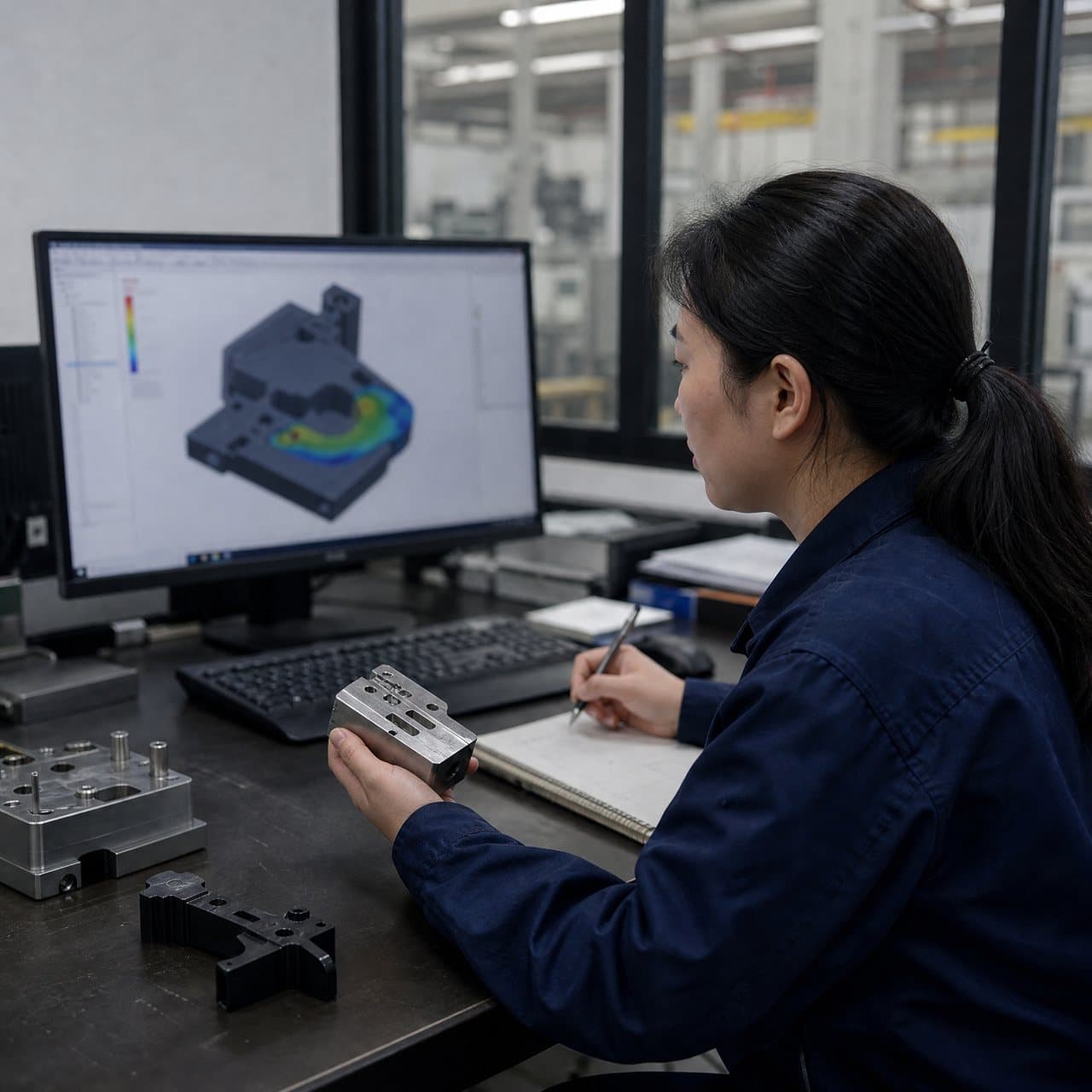
The plan should contain a concise, revision-controlled list of what will be judged. For each injection molding CTQ, state why it matters, the drawing datum or functional reference, nominal and acceptance criterion, measurement or test method, sample identity, recording format and decision owner. CTQs are not simply the tightest dimensions. They are the characteristics whose variation could affect fit, seal, retention, safety, stated appearance or another agreed product requirement. A process setting such as melt temperature may be important, but it is not automatically a product CTQ; distinguish a process input from a part-output requirement.
Build the map across four evidence types: material identity and conditioning; dimensional and geometric verification; functional or assembly verification; and appearance. For a closure, for example, a dimensional result may confirm a local feature while an assembly check with the representative mating component addresses the actual closing function. For a visible housing, define zones, lighting, viewing distance, permitted witness marks and an approved comparison sample or written criterion where relevant. A vague instruction to inspect for ‘good appearance’ is not an acceptance method.
The injection molding inspection method should identify the instrument, fixture, datum setup, conditioning state when relevant, and whether results are recorded by cavity, sample or lot. Confirm that it locates the specified feature rather than merely generating a number. NIST notes that system characterization and data analysis provide a frame of reference for evaluating manufacturing performance; for buyers, agree what a result represents before comparing it with a specification.[2] If a customer requires a measurement-system study, gauge review or statistical analysis, state the method and acceptance logic rather than assuming a generic report is sufficient.
03
Specify trial evidence without confusing it with long-run proof
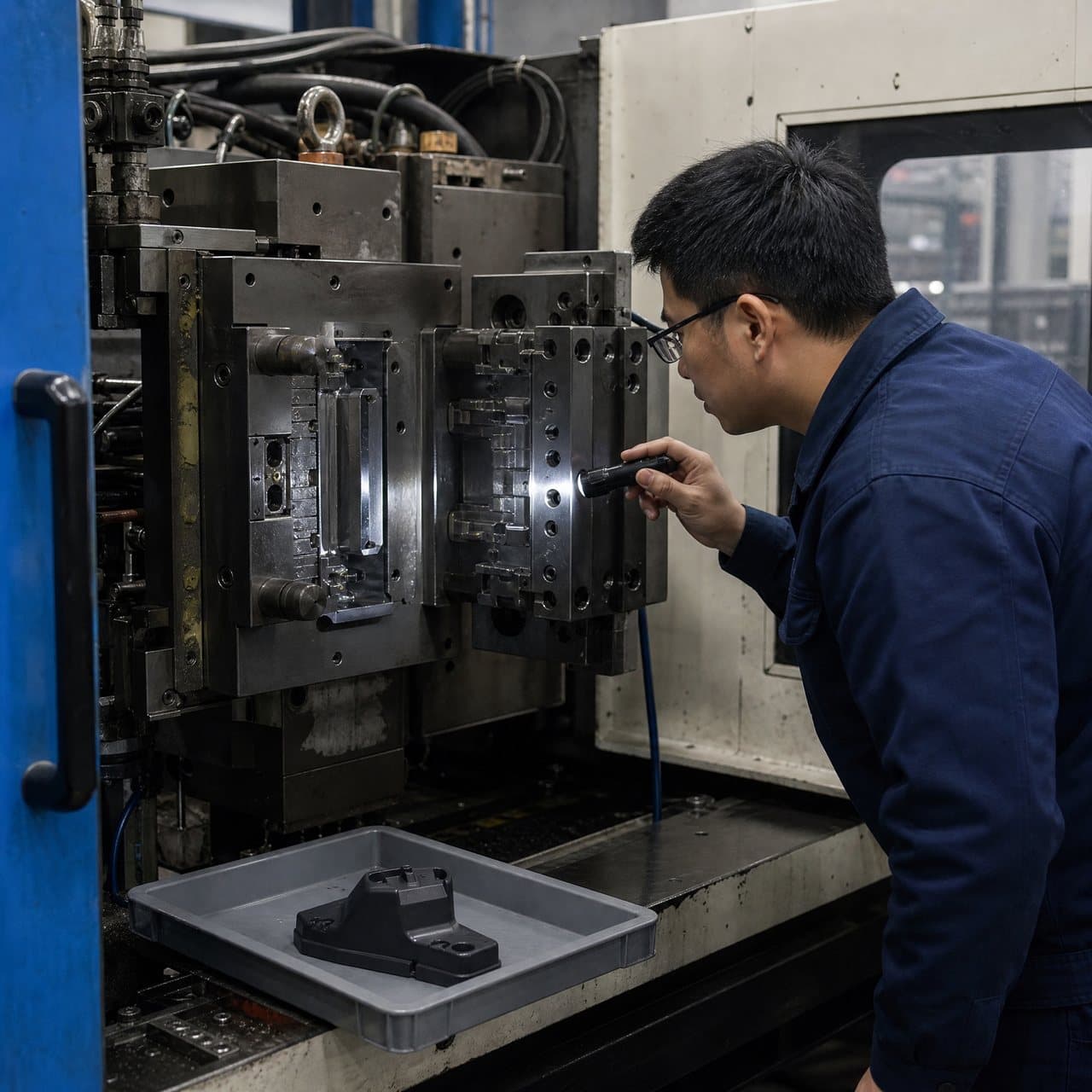
Document the planned run as a controlled event: mold and cavity state; relevant machine and auxiliary-equipment identifiers; resin grade and traceable material reference; drying or conditioning direction; colourant or regrind status if used; declared settings or operating window; date; and interruptions or adjustments. State what is fixed, what may be adjusted during development, and what adjustment triggers repeat measurement or buyer review. This prevents a good sample from being detached from the conditions under which it was made.
Not every feature needs the same evidence, and more numbers are not automatically better. Use the plan to distinguish an engineering trial intended to learn, a qualification run intended to support a defined release, and routine monitoring intended to detect drift after release. The following comparison is a practical planning tool, not a mandated sequence or a universal sampling rule.
| Evidence layer | Primary buyer question | Plan should define | It should not be assumed to prove |
|---|---|---|---|
| Engineering trial | What needs to be learned or corrected? | Trial objective, provisional settings, priority CTQs, observations, rework route and next decision. | That the process is ready for ongoing production. |
| Qualification evidence | Can the defined process state make parts that meet the agreed requirements? | Approved revision, material basis, run conditions, sample traceability, inspection and functional evidence, deviations and approvers. | Performance after unreviewed changes or across every possible use condition. |
| Routine monitoring | Does the released process remain in the agreed state? | Characteristics monitored, frequency or trigger, record format, escalation limits, retention and change-review route. | That an out-of-scope product claim or regulatory approval has been established. |
04
Connect process controls, reports and change control
The release section should state controls that protect the evidence without becoming an untested machine recipe. Identify inputs that could affect agreed outputs, such as approved material identity, handling direction, tool configuration, process-window limits, cavity identification and reaction to deviations. Link each control to the inspection or functional evidence it supports. If a CTQ moves, the team can then investigate connected material, tool, process and measurement records.
Define the injection molding quality report before the run. At minimum, agree the part and revision, sample or cavity identification, material basis, method, actual result, acceptance status, date, reviewer and treatment of nonconformances. Attach photographs, raw measurement files or functional test records when they are necessary to interpret the result. A report should state what was tested and what was not tested. A blank field, an unmeasured dimension or a supplier statement that a part is ‘within spec’ should not silently become evidence of conformance.
Change control is often left too general. List changes requiring notification and impact review: tool steel work, cavity replacement, gate or ejection revision, resin grade or colour-system change, relevant material-source change, significant process-window revision, inspection-method change, and relocation or new equipment where relevant. The review should decide which records and CTQs need updating or repeat evidence, and who approves the conclusion. ISO 9001 describes a quality-management framework that includes controlled operation, performance evaluation and improvement; it can inform this discipline, but buyers should independently verify any claimed certificate, its scope and its site rather than infer capability from the standard.[3]
05
Make the final decision useful across customer systems
The final record should give a decision, not only a data pack: released for the stated next step, released with a named concession, held pending action, or rejected. Identify the revision, material and evidence reviewed; open actions; deviations and their limits; and the authorized decision maker. Use PPAP, APQP, a first-article format, supplier quality agreement, medical-device file or other customer template only when it is expressly required. These systems are not interchangeable. IATF maintains automotive quality resources and customer-specific-requirement channels; automotive buyers should obtain their customer’s current requirements rather than rely on a generic plan.[4]
For production injection molding, add continued review proportionate to risk. Set triggers such as a recurring nonconformance, material change, tool repair, extended interruption, abnormal trend, complaint investigation or agreed periodic review. State the escalation recipient, record retention and whether controlled re-validation is needed. This lets buyer and supplier distinguish a routine adjustment from a change that may invalidate earlier evidence, without claiming that any document guarantees field performance.

Practical takeaway
Before you move
to the next review.
- Issue a controlled validation plan that names the part and drawing revision, tool or cavity state, intended material, purpose of the run, roles, units and acceptance authority.
- Create a CTQ-to-evidence map for critical dimensions, interfaces, visual zones and functions, including datums, methods, sample traceability and disposition rules.
- Agree the documented trial conditions and the difference between engineering learning, qualification evidence and routine monitoring before samples are evaluated.
- Define the required injection molding quality control records and inspection-report format, including what is measured, what is not measured, raw-result availability and nonconformance treatment.
- Obtain a written release or hold decision with deviations, actions, change-notification triggers and the buyer verification needed for any customer, sector or market requirement.
FAQ
Common questions
Is a successful mold trial enough to validate an injection molding process?
Usually not by itself. A trial can provide useful learning or support a defined release decision, but its value depends on the approved part revision, material, tool state, run conditions, sample traceability and checks actually completed. The plan should state what the trial is intended to demonstrate and what remains outside its scope.
Should a buyer require capability indices in every validation plan?
No. Statistical capability evidence can be useful when the characteristic, measurement method, production conditions and customer requirement support it. Requiring an index without a defined data-collection and interpretation plan can create misleading comparisons. Ask what characteristic is being analysed, how measurements are validated, what run conditions apply and what decision the result will support.
How should international buyers handle certificates and regulatory requirements?
State the destination markets, customer-controlled standards and documentation format in the request, then verify relevance independently. Confirm any supplier certificate with the issuer or accredited certification source, including the certified site and scope. A molding validation plan can organize manufacturing evidence, but it does not by itself establish regulatory approval, product compliance or certification.
References
Source material
- [1] U.S. Food and Drug Administration, Process Validation: General Principles and Practices.
- [2] National Institute of Standards and Technology, Operations-driven Performance Measurement for Smart Manufacturing Systems.
- [3] International Organization for Standardization, ISO 9001:2026 Quality management systems — Requirements.
- [4] International Automotive Task Force, IATF 16949 and customer-specific requirements resources.
This guide is general information for early procurement and engineering discussion. It does not replace product-specific DFM, qualification, validation, regulatory assessment or legal advice.