
For an overseas tooling purchase, cooling and venting deserve the same scrutiny as cavity count, steel scope and acceptance samples. They affect how a tool removes heat, evacuates displaced air and behaves at trial, yet an RFQ may only say that cooling is included. A useful injection mold design review turns those assumptions into drawings, questions and agreed evidence.
Start with the part, not a preferred technology. Share controlled CAD and drawings, resin direction, demand, cosmetic zones, critical dimensions, gate restrictions and assembly concerns. Ask the supplier to show how these inputs inform the circuits and vents. Buyers need not prescribe channel dimensions; they need to define what must be protected, what remains open and how the concept will be checked.
Approve cooling and venting as a risk-managed production decision: compare heat and air paths, understand service and change limits, and agree the trial evidence before performance is claimed.
01
What should a buyer ask to see before approving the tool concept?
Request a package that links the part to the tool: cavity and core inserts, coolant routes and connections, separately controlled zones, gate region, likely end-of-fill areas, vent locations, and surfaces where gate, parting-line or ejector evidence is unacceptable. Section views are especially useful because they reveal the access logic around deep cores, ribs, bosses and thick sections.
The injection mold cooling design should explain uniformity rather than merely show waterlines. Thick masses, long cores, blind pockets and local inserts may reject heat differently. A supplier may use drilled circuits, baffles, bubblers, conductive inserts or another suitable approach. Ask whether the method reaches the difficult region, has a sensible supply and return path, and can be inspected, cleaned or repaired. Cooling is one input among resin behavior, gate and runner design, geometry, temperature control and process settings.
For injection mold venting, request a marked view of expected last-to-fill locations, flow splits, deep pockets and sealed interfaces. Ask where air is expected to collect, how the vent is accessed for cleaning, and what flash or maintenance trade-off the supplier anticipates. Generic vent-depth values should not become a specification without the selected resin, location and toolmaker’s rationale.
| Review item | Buyer question | Evidence to request |
|---|---|---|
| Cooling map | Which surfaces or cores are hardest to cool, and how are they reached? | Sectioned layout with circuit identification and inlet/outlet intent. |
| Thermal risk | Which features could cool unevenly or govern ejection? | Marked part view and a reasoned analysis or engineering note where appropriate. |
| Venting map | Where are end-of-fill, flow-meeting and trapped-air risks expected? | Cavity or flow-path view showing vents and service access. |
| Service route | How will circuits and vents be checked, cleaned or repaired? | Maintenance-access explanation and relevant limits. |
| Trial proof | What observations support the release decision? | Agreed visual, dimensional and cycle-study plan. |

02
When is conventional cooling enough, and when should conformal cooling be compared?
Conventional cooling is often a credible baseline. Straight drilled channels and established core-cooling features can be practical and maintainable where geometry permits reasonably even heat removal. Ask how the proposal covers the part, including any baffles, bubblers or conductive inserts. A simpler concept that can be serviced and meets the agreed evidence threshold may offer stronger value than complexity selected without a part-specific case.
A conformal cooling mold uses channels that follow cavity or core geometry more closely than straight drilling allows. It may merit comparison around curved surfaces, deep cores, dense features or regions conventional circuits cannot approach consistently. Technical studies report potential gains in cooling time and temperature uniformity for evaluated layouts, but those results are not a promise for another part. Channel path, cavity distance, coolant conditions, insert material and the resin all matter.
Treat the option as a comparison request, not a default requirement. Ask for the conventional baseline and an alternative only where the supplier identifies a limiting region. Compare tooling and insert scope, build effort, maintenance or replacement route, accessible interfaces and verification method. This frames injection mold cycle time optimization as a business case: weigh incremental tooling scope against demand, quality risk and the approved production window. A model should be identified as a prediction; trial data should be the production evidence.
| Decision lens | Conventional cooling | Conformal cooling |
|---|---|---|
| Typical fit | Drilled circuits or established core features can reach relevant areas. | A complex or inaccessible region may benefit from a surface-following path. |
| Upfront review | Confirm coverage, circuit separation and hot-spot strategy. | Confirm channel manufacturability, insert boundaries, post-processing and inspection route. |
| Lifecycle question | How are plugs, baffles, bubblers and circuits serviced? | How is the insert inspected, repaired or replaced if needed? |
| Evidence threshold | Show accepted parts under a documented trial condition. | Compare the claimed improvement with the baseline under stated conditions. |
03
How do cooling and venting affect defects without oversimplifying the cause?
Cooling and venting are important to injection mold defect prevention, but neither is a single-cause diagnosis. Uneven heat removal can contribute to differential shrinkage, distortion, sinks or dimensional movement. Insufficient or poorly located venting can contribute to trapped-air effects such as incomplete filling, burn marks or poor weld-line appearance. The same observation can also relate to material condition, gate and runner balance, packing, temperatures or injection speed. Record the interaction before assigning cause.
Rank risks on the part drawing. A visible panel may prioritize gloss, flow marks and sink risk; a sealing face may prioritize form and repeatability; a structural interface may prioritize dimensions at an agreed stabilization condition. Ask how cooling, gate placement, venting and ejection work together at each zone. A vent near end-of-fill can help, but it cannot substitute for a sound parting condition or solve a geometry-driven shrinkage issue.
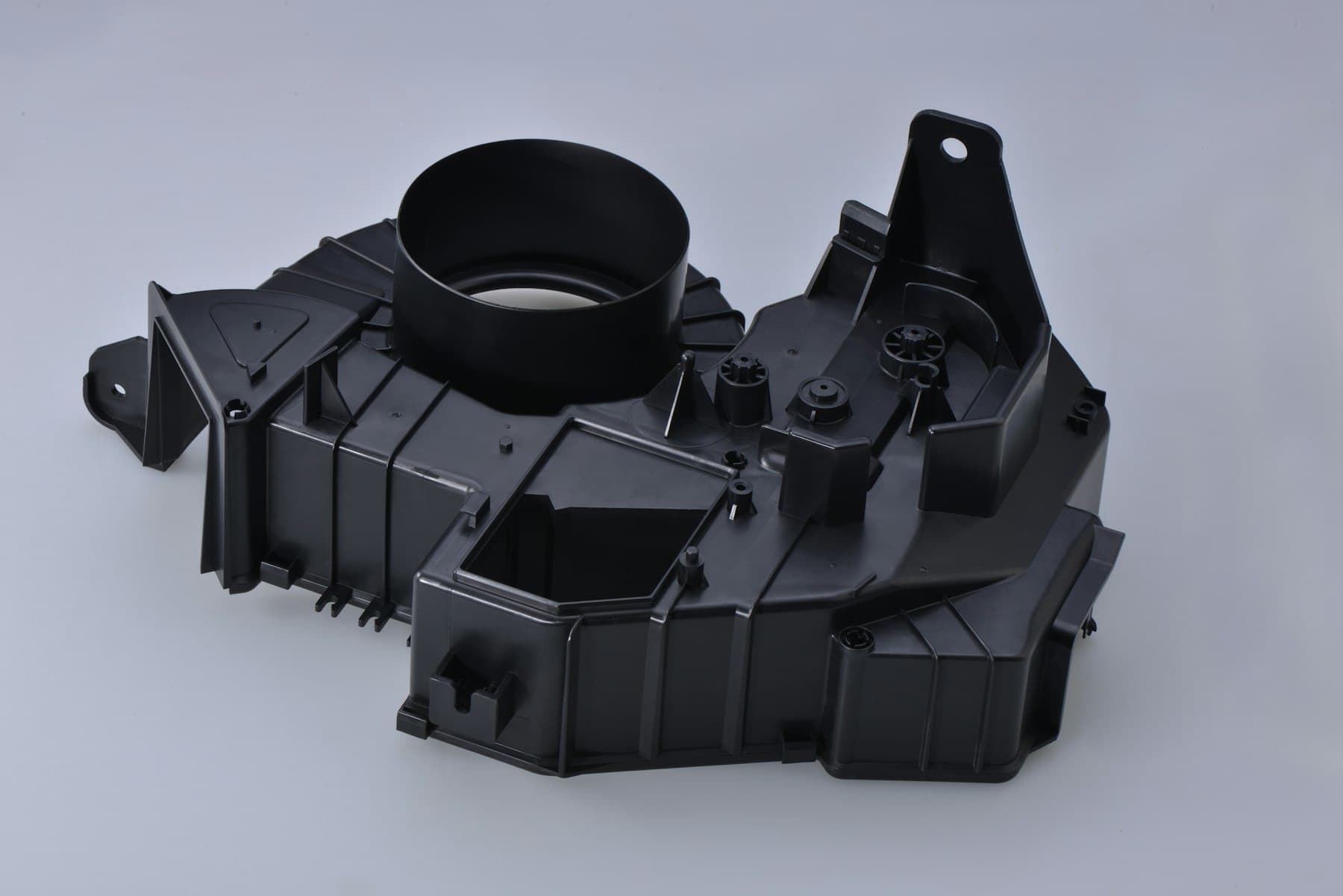
At trial, record part and tool revision, resin designation, cavity, relevant material preparation status, process settings, available coolant readings, cycle phases and sample condition. Inspect agreed visual zones and critical dimensions using the defined datum and method. When a change is made, identify whether it is to steel, venting, cooling, gate, process or material. That record is more useful to a remote buyer than a statement that the tool ran well.
04
Which supplier-selection questions reveal a stronger cooling and venting review?
A capable supplier explains decision logic: relevant part features, constraints, alternatives, assumptions and evidence plan. Ask who owns the cooling and venting decisions, which inputs are needed before release and how questions are closed. For European, North American and Middle East programmes, agree drawing language, units, revision convention, meeting cadence and authority for changes. This reduces the risk that a general email is mistaken for approval of an unmarked tool change.
Request comparable information from every shortlisted supplier. Price alone cannot explain why one concept uses a standard circuit and another uses an engineered insert. Normalize proposals around tool concept, controlled zones, venting and access approach, analysis scope, trial evidence, change-control route and exclusions. If cooling or flow is modeled, ask what it will and will not establish, which inputs it used, and how it will be reconciled with trial observations.
Set part-specific acceptance criteria: visual zones, critical dimensions, measurement state, sample quantity, records and revision review. A generic cycle target is usually not useful until part, resin, machine, utility and quality criteria are defined. Retain the approved mark-up, issue log, trial record, accepted-sample definition and change history as the programme’s review record.
| Supplier question | Why it matters | Good response characteristic |
|---|---|---|
| What feature governs the cooling approach? | Tests whether the concept starts from part risk. | Points to a mapped region and heat-removal method. |
| Where will air leave the cavity and how is it maintained? | Links fill behavior to service planning. | Shows locations, access and cleaning or flash considerations. |
| What is modeled, and what will be verified at trial? | Separates prediction from production proof. | Distinguishes assumptions, trends and measured evidence. |
| What changes are difficult after build? | Reveals design-freeze and lifecycle risk. | Explains insert, circuit, vent and geometry constraints. |
05
What practical next step should buyers take before tool release?
Hold a focused review when the concept has usable sections but before details are irrevocably committed. Give product engineering, tool design, molding and quality the same controlled CAD revision and a short decision list: difficult-to-cool features, visible and critical zones, gate restrictions, candidate vents, any conventional-versus-conformal comparison, service access and required trial evidence.
Close with decisions, not general approval. Each issue needs an owner, input, action, review point and clear release status. If conformal cooling remains under consideration, agree the baseline and criteria for choosing it. If venting depends on the final gate position, keep that dependency visible. This cautious process does not promise an outcome; it gives buyers a repeatable way to compare evidence and preserve a defensible tooling decision.
Practical takeaway
Before you move
to the next review.
- Provide controlled CAD, drawing, resin direction, demand, critical dimensions and cosmetic zones before review.
- Request sectioned cooling and venting mark-ups showing difficult regions, end-of-fill areas, service access and assumptions.
- Compare a conformal option with a stated conventional baseline, lifecycle trade-off and verification plan.
- Agree trial records: tool and material revision, cavity, conditions, sample state, visual criteria and measurement method.
- Close each issue with an owner, decision point, change-control route and explicit tool-release status.
FAQ
Common questions
Should a buyer specify conformal cooling in the RFQ?
Usually, state the geometry, demand, quality risk and commercial priority, then invite an evidence-based comparison. Ask whether conventional cooling addresses the risk and what a conformal option changes in tooling scope, serviceability, expected performance and trial verification.
What proof should support a claimed cycle-time improvement?
Ask for stated baseline and proposed conditions. Simulation can guide design, but trial evidence should record tool and material revision, process and utility conditions, part acceptance result and how the cycle was measured. Comparisons are meaningful only when conditions and acceptance criteria match.
Can venting be finalized before the gate and flow path are fully agreed?
A preliminary strategy can be reviewed early, but final locations depend on expected fill, end-of-fill zones, parting arrangement and tool details. Keep gate, flow and vent decisions linked in the issue log, then confirm at design review and evaluate at trial.
References
Source material
- [1] Eastman, Processing and Mold Design Guidelines
- [2] Wang and Lee, Design and Optimization of Conformal Cooling Channels for Increasing Cooling Efficiency in Injection Molding, Applied Sciences
- [3] Autodesk Moldflow Insight, Baffles in cooling circuits
- [4] Fictiv, The Importance of Cooling Lines in Injection Molding
This guide is general information for early procurement and engineering discussion. It does not replace product-specific DFM, qualification, validation, regulatory assessment or legal advice.