
Product launches with uncertain demand
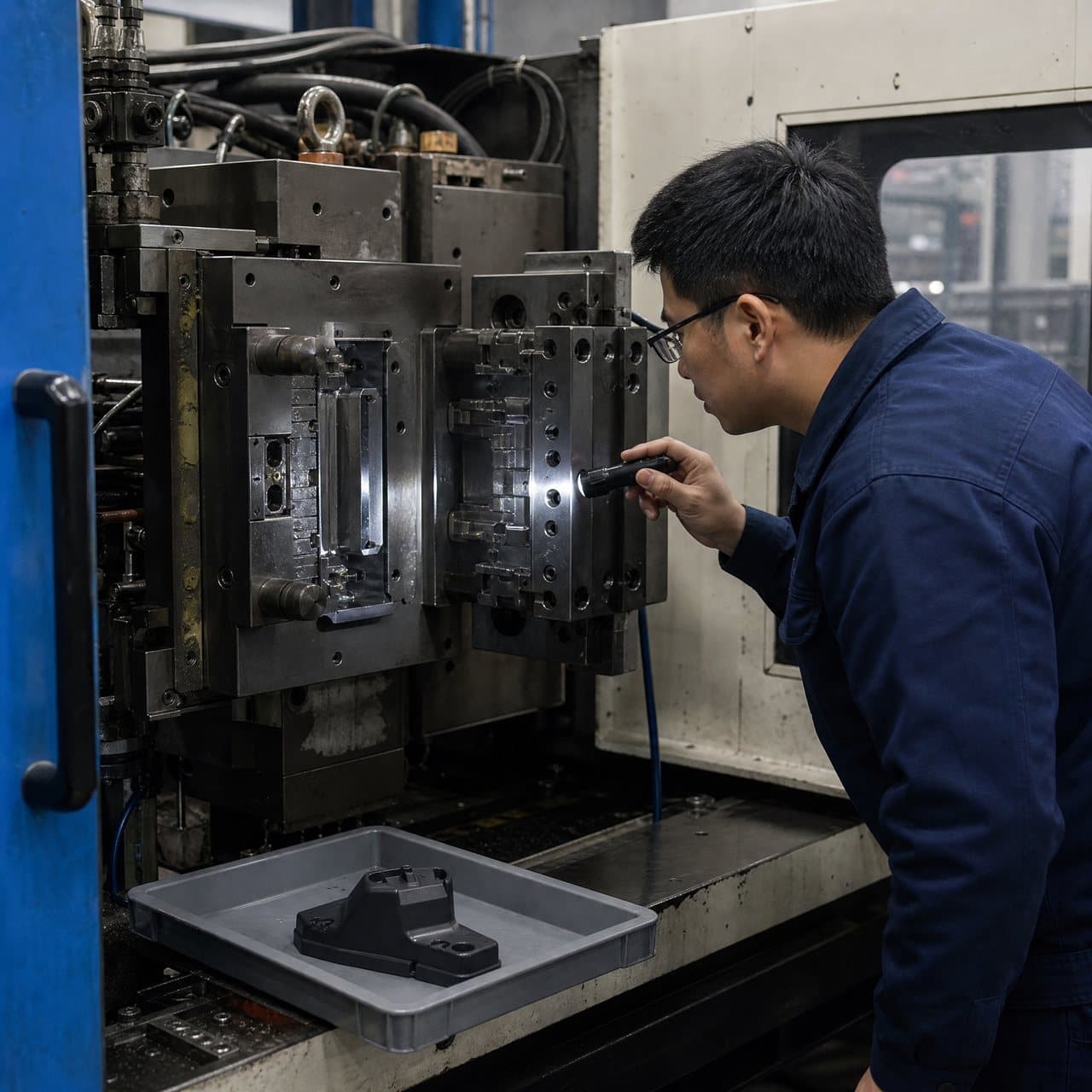
Tooling route selection
Prototype mold vs
bridge tooling.
Choose between prototype tooling, bridge tooling and production molds based on design maturity, volume, tool life, revision risk and launch timing.
InjeForm
For OEM and product teams across Europe, North America & the Middle East
A practical sourcing route
Make the next
decision clearer.
Prototype and bridge tooling are different sourcing decisions. The right choice depends on what must be learned, how many parts are needed, whether the design will change and how the tool may transition into production.
Buyer-led scopeEngineering evidenceControlled handover
Project fit
Where this route
helps most.
Start with the questions that affect tooling, quality, timing and total program risk.
Programs needing production-intent samples before final tooling
Teams balancing speed, revision flexibility and tool investment
What buyers can align
Evidence that supports
the next gate.
Scope the work around decisions and records—not broad promises.
Prototype, bridge and production route comparison
Defined with the part, tool, material, volume and acceptance requirements in scope.
Tool-life and revision assumption review
Defined with the part, tool, material, volume and acceptance requirements in scope.
Sample quantity and validation plan
Defined with the part, tool, material, volume and acceptance requirements in scope.
Transition or transfer criteria
Defined with the part, tool, material, volume and acceptance requirements in scope.
Decision framework
Compare the
trade-offs.
| Route | Best fit | Buyer should define |
|---|---|---|
| Prototype tool | Early design and functional learning | Required samples and expected design changes |
| Bridge tool | Interim supply before production tool | Run quantity, ownership and transition timing |
| Production tool | Stable design and repeat demand | Tool life, cavitation and capability evidence |
How the conversation moves
From brief to
controlled next step.
Use the first conversation to identify what is known, what is open and what evidence should come next.
- 01
State design maturity, first order, forecast and launch date.
- 02
Compare tool material, life, revision and transfer assumptions.
- 03
Select the route that answers the next product decision.
- 04
Define when and how the program moves to production tooling.
Buyer questions
Clear answers before
you commit.
What is the difference between prototype and bridge tooling?+
Prototype tooling is usually optimized for early learning and design iteration. Bridge tooling is intended to provide interim or limited production while a longer-life production route is prepared.
Can a bridge tool become the production tool?+
Sometimes, but this depends on tool material, expected life, geometry, maintenance, cavity strategy and the production evidence required. Confirm the limit before relying on it.
How should bridge-tool ownership be documented?+
Define the owner, revision rights, tool location, maintenance responsibility, expected life, transfer conditions and what happens when the production tool is approved.
Start a technical conversation
Bring us your
next part.
Share the drawing, resin, target volume, market and timing. We will return with focused questions and a practical next step.