
New molds approaching sample approval
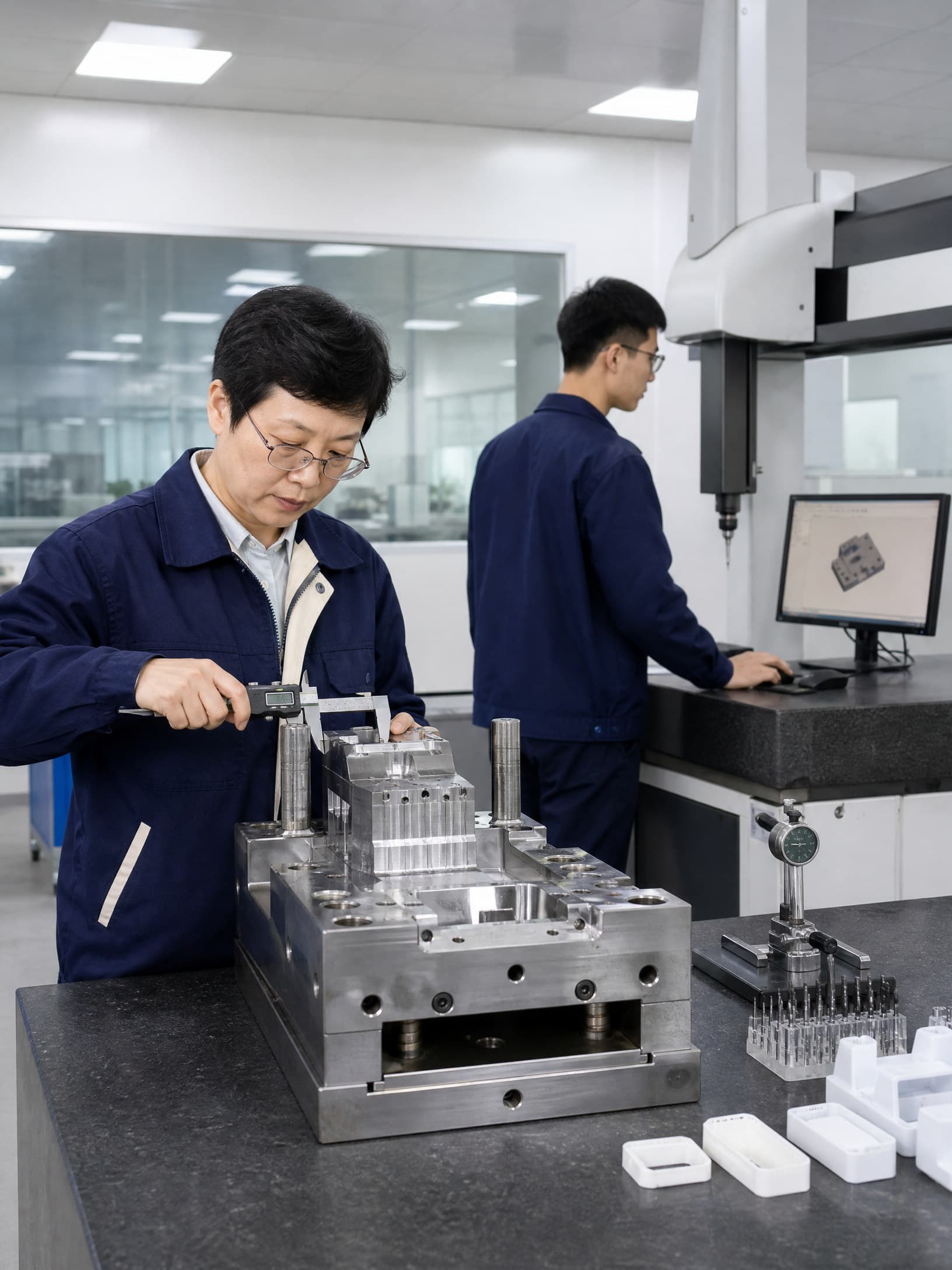
Evidence before production release
Mold trial, T0/T1 and
first-article approval.
Coordinate mold trials, sample evidence, first-article inspection and approval decisions around a controlled part and tooling definition.
InjeForm
For OEM and product teams across Europe, North America & the Middle East
A practical sourcing route
Make the next
decision clearer.
A trial is valuable when it answers a defined question. InjeForm helps buyers connect T0/T1 sampling, cavity identity, material and process context, dimensional inspection, appearance review, functional checks and open-action control before production release.
Buyer-led scopeEngineering evidenceControlled handover
Project fit
Where this route
helps most.
Start with the questions that affect tooling, quality, timing and total program risk.
Tool changes, supplier transfers or material changes
Programs requiring FAI, PPAP-style evidence or customer sign-off
What buyers can align
Evidence that supports
the next gate.
Scope the work around decisions and records—not broad promises.
Trial scope and sample identification plan
Defined with the part, tool, material, volume and acceptance requirements in scope.
T0/T1 report with tool, machine and material context
Defined with the part, tool, material, volume and acceptance requirements in scope.
Dimensional, cosmetic and functional evidence as agreed
Defined with the part, tool, material, volume and acceptance requirements in scope.
Deviation, concession and re-trial action record
Defined with the part, tool, material, volume and acceptance requirements in scope.
Decision framework
Compare the
trade-offs.
| Gate | What it can answer | What still may need proof |
|---|---|---|
| T0 | Basic tool function, filling and obvious defects | Stable process, all CTQs and production readiness |
| T1 | Corrections, cavity consistency and closer sample approval | Long-run capability or customer-specific validation |
| FAI / approval | Defined sample against released requirements | Future production without routine controls |
How the conversation moves
From brief to
controlled next step.
Use the first conversation to identify what is known, what is open and what evidence should come next.
- 01
Define part, tool, material, cavity, sample and acceptance revisions.
- 02
Run the trial with recorded machine and process context.
- 03
Review dimensions, appearance, assembly and functional evidence.
- 04
Release, conditionally release or reject with controlled next actions.
Buyer questions
Clear answers before
you commit.
What is the difference between T0 and T1?+
T0 is commonly the first mold trial used to identify basic tool and molding issues. T1 is a subsequent trial after corrections or refinement. Naming conventions vary, so the project should define the gate purpose and evidence.
Does a passed FAI approve mass production?+
Not automatically. FAI supports a defined first-article decision. Production still needs the agreed process control, sampling, material traceability and change-notification plan.
How should multi-cavity samples be handled?+
Identify cavity and sample condition where cavity-to-cavity variation matters. Do not pool samples in a way that hides a cavity-specific issue.
Start a technical conversation
Bring us your
next part.
Share the drawing, resin, target volume, market and timing. We will return with focused questions and a practical next step.