
Polypropylene injection molding is a good fit for an OEM part when it benefits from a low-density thermoplastic with useful resistance to moisture and relevant chemical exposure, and when its functional interfaces can accommodate PP’s moulding behaviour. PP can be processed by injection moulding, and Braskem identifies low moisture absorption and chemical resistance among general PP characteristics.[1] In plastic injection molding, that makes PP a candidate—not a conclusion. The answer still depends on grade, wall layout, loads, temperature, appearance and evidence for the individual part.
PP is a weaker starting point when the brief depends on an unproven property, unusually stable fit, a demanding surface expectation or a regulated end use unverified for the proposed grade. The question is whether a named PP formulation and moulding concept can protect the actual requirement. This guide frames that buyer decision before a quote or engineering review, so that injection molded parts are judged against their service case rather than a generic resin label.
Factual callout: ASTM D955 measures shrinkage under specified conditions, but states that standard-specimen data cannot predict absolute values for an actual part with varying geometry and process conditions.[3]
01
1. Start with the part’s job, not PP’s reputation
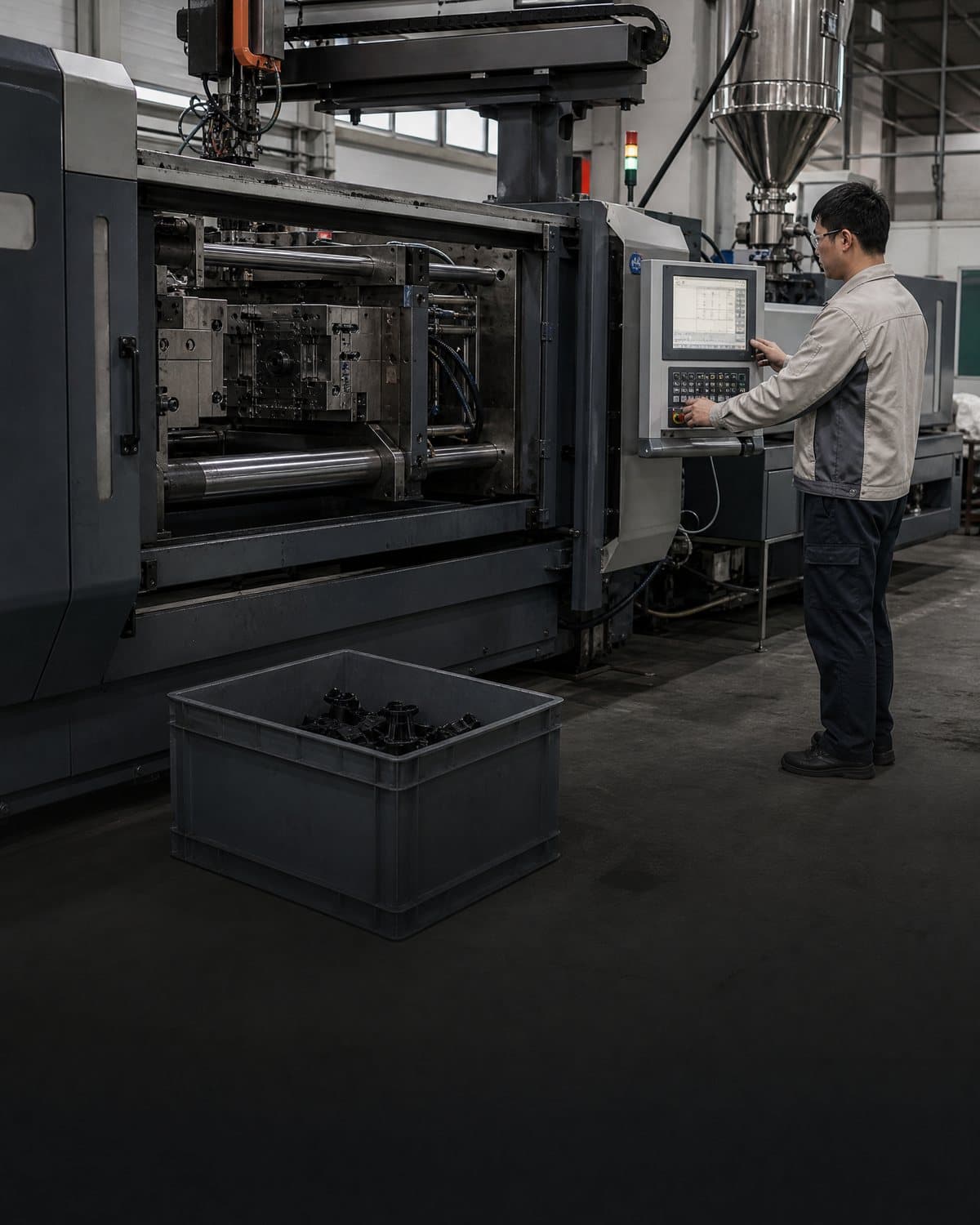
A productive PP review starts with what the component must preserve in service. Record the load and duration, temperatures, expected liquid or cleaner contact, weather exposure if relevant, visible faces, assembly method, mating materials and acceptable interface movement. Braskem describes PP as a versatile thermoplastic with chemical resistance, low moisture absorption and compatibility with injection moulding.[1] These screening facts do not determine whether a latch, cover or enclosure will perform in its own environment.
Turn the product brief into pass/fail questions. Does the part need to spring repeatedly, hold a threaded fastener, remain flat, maintain a seal or protect a cosmetic surface? Are loads continuous or occasional? Is there a named mating condition? If the required property, test method or acceptance value has not been assigned to the proposed grade, PP has not yet been selected. This keeps the decision part-specific and prevents a broad material description from becoming an implied performance promise.
02
2. Freeze the PP formulation before comparing quotations
“PP” does not identify one purchasing condition. For a meaningful quote, request the polymer producer, exact grade, colour or additive direction, data-sheet revision, recycled-content direction if any, and a substitution rule. A filled, coloured or modified PP can be a deliberately different direction from an unfilled natural grade. Treat each option as a different candidate until its property data, processing guidance and part evidence are reviewed.
This is the practical core of injection molding material selection. Set the few properties and documents that matter to the component—for example, an agreed data sheet, colour reference, environmental exposure question, mechanical or thermal check, and any need for traceability. Do not ask a moulder to infer a generic equivalent from “PP.” A substitution can change flow, surface appearance, mould movement or the available documentation. The buyer should decide which changes need document review, new samples or a renewed functional check before release.
03
3. Design around PP shrinkage before locking the tool concept
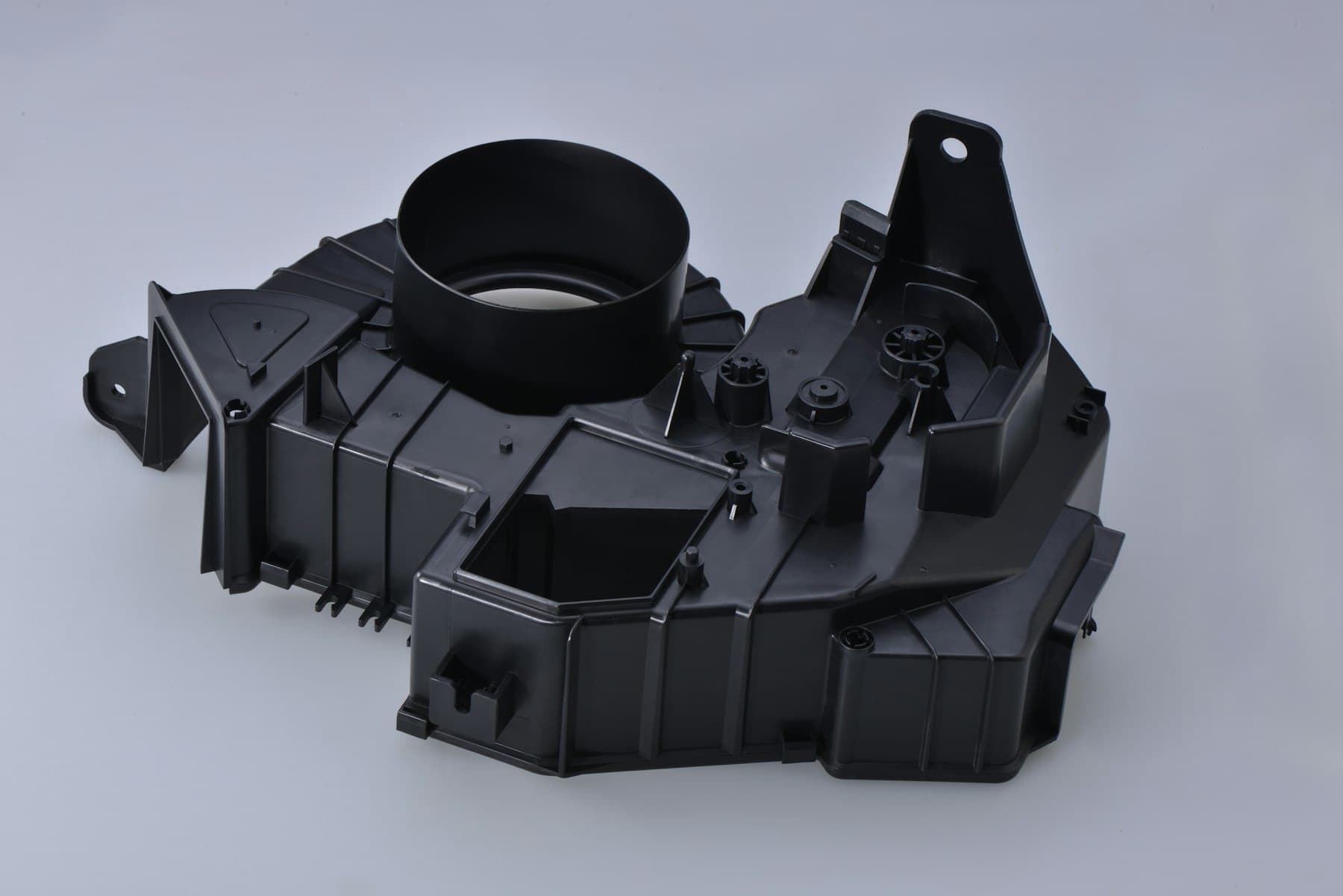
PP is semi-crystalline, and LyondellBasell explains that its mould shrinkage is affected by thermal history as well as melt temperature, cooling rate, part thickness and gate dimensions.[2] It also cautions that laboratory data from simple geometries should be used for comparison rather than applied directly to an actual tool.[2] Plastic shrinkage injection molding is therefore a geometry-and-process review, not a single table allowance. Mark critical fits, long flow paths, local thick sections, broad cosmetic faces and areas where a change of form would obstruct assembly.
Ask how the intended gate concept and cooling approach relate to the part’s sensitive features. Uniform walls and balanced flow can reduce uncertainty, yet complex geometry can still cool and fill unevenly. ISO 294-4 specifies shrinkage measurement for test specimens both parallel and normal to melt flow, which is a useful reminder that direction matters.[4] For a critical interface, agree the measurement condition, relevant time after moulding, fixture if required, and the tool-adjustment route. A resin data sheet supports early planning; a part measurement and, where relevant, assembly check support the decision.
04
4. Make the quote answer the PP risks that affect the part
A useful RFQ does more than request a material name and annual quantity. It gives the supplier a controlled CAD or drawing revision, wall information, critical interfaces, visible faces, gate-sensitive zones, service exposures and the proposed PP material direction. The comparison separates situations in which PP may be a candidate from questions to resolve before acceptance. It is a review aid, not a universal grade recommendation.
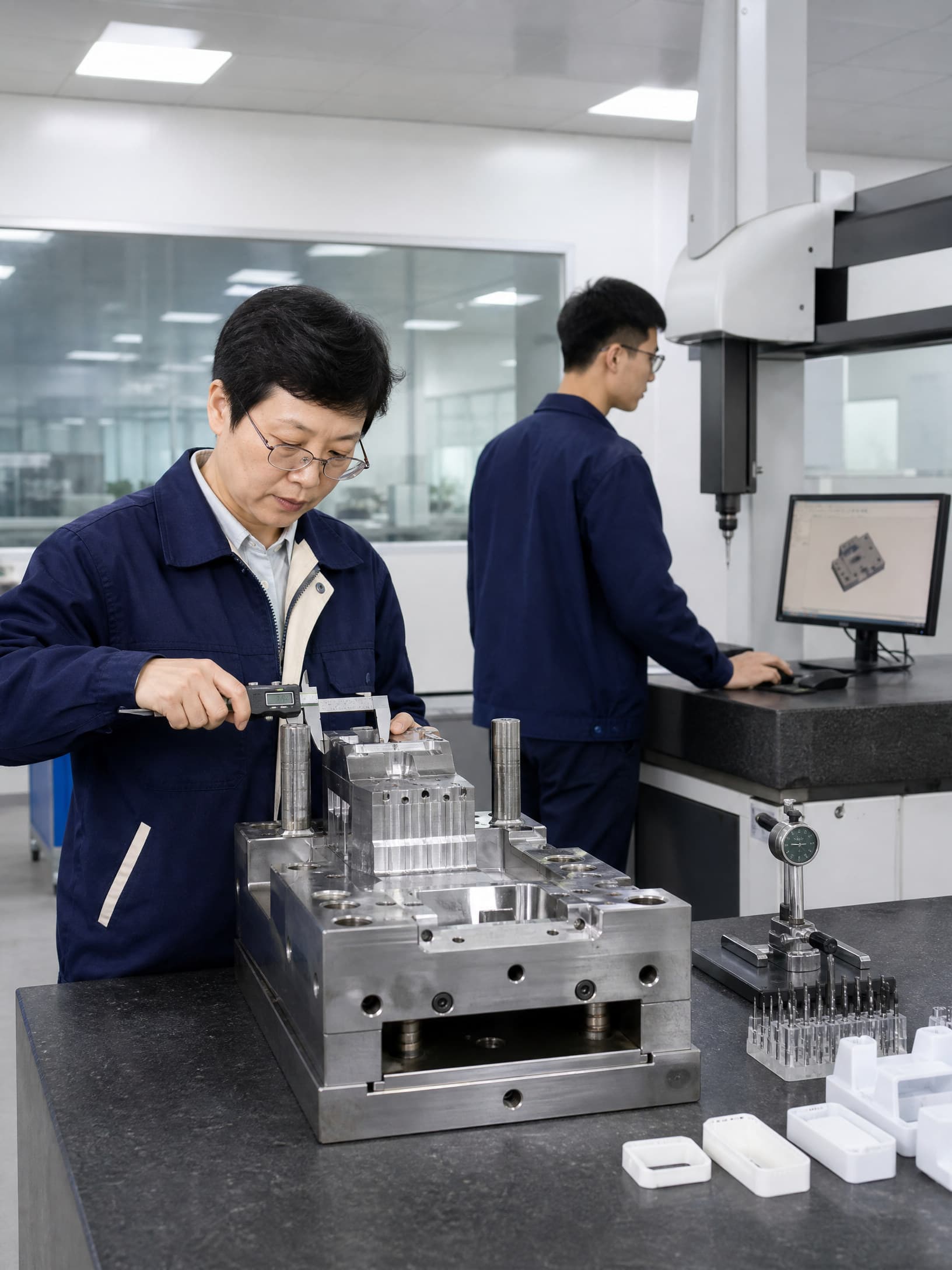
The required injection molding quality control should follow the risk, not a generic paperwork list. ASTM D3641 notes that plastic test specimens moulded under different conditions can have significantly different properties and directs users to the applicable material specification, ISO designation or supplier guidance for moulding conditions.[5] For an OEM part, ask for an inspection and sample plan that names the features, conditions and decision owners that matter. A material certificate or data sheet may be necessary, but it does not by itself confirm the geometry, appearance or assembly outcome of the molded component.
| Part situation | Why PP may be considered | Decision to close before release |
|---|---|---|
| Lightweight cover or enclosure with moisture or relevant chemical exposure | PP’s general low moisture absorption and chemical resistance can make it a credible candidate.[1] | Name the grade, service exposure, visible-face expectation and critical mounting features. |
| Flexible feature, hinge-like action or retention detail | The decision may depend on repeated movement and local geometry rather than the family name. | Define the movement, load, test method and acceptance criterion for this feature. |
| Large, flat, thin or uneven-wall part with assembly interfaces | Injection moulding can be appropriate, but PP movement must be planned with the part and tool concept. | Review gate and cooling direction, measurement state and representative assembly evidence. |
| Food-contact, medical, electrical or other regulated end use | A PP family description is not product-specific compliance evidence. | Have the product owner verify the applicable market, grade, additive package, documentation and validation route. |
05
5. Keep regulatory and validation decisions with the product-specific review
General planning guidance is not a regulatory decision. A material supplier’s statement, a generic polymer property or a test on a standard specimen does not establish that a finished product meets a market-specific requirement. Where the part has food-contact, medical, electrical, flame, chemical, recycling-content or other compliance-sensitive requirements, the product owner should identify the target market and obligation, then confirm that the exact grade, colourant or additive package and finished-part validation approach are appropriate. Suppliers can provide material and process information; the OEM retains the product decision.
For a quote or engineering review, nominate the PP grade, mark functional and cosmetic risks, state service and compliance questions, and agree the deciding samples or measurements. Send the drawing, material direction and review questions to info@injeform.com. That is more reliable than approving polypropylene injection molding from a generic property list.
Practical takeaway
Before you move
to the next review.
- Describe the part-specific service case: loads, duration, temperatures, fluids or cleaners, light exposure, visible faces and mating components.
- Freeze the proposed PP producer, exact grade, colour or additive direction, data-sheet revision and substitution rule.
- Mark critical fits, local wall changes, broad faces, flow paths, gate-sensitive zones and features that move or retain load.
- Define the part measurement state, functional or assembly check, visual reference and decision owner for initial samples.
- List any market-specific regulatory or validation question and assign the product owner’s evidence and approval route.
FAQ
Common questions
Is PP suitable for every lightweight injection-molded component?
No. Low mass and processability make PP a reasonable candidate, but the decision is part-specific. Review the grade, loading, temperature, exposure, geometry, fit, appearance and acceptance evidence. A demanding interface or regulated end use may require additional validation.
Can a PP shrinkage figure from a data sheet be used as the final tool allowance?
It is an early planning input, not a final prediction. ASTM D955 states that mould and process variables affect shrinkage and that data from standard specimens cannot predict absolute values for actual parts with different geometry and conditions.[3] Confirm critical PP interfaces with a defined moulded-part measurement and, where it represents use more directly, an assembly check.
What should a buyer ask for when a PP grade change is proposed?
Ask what is changing in the producer, grade, colourant, additive package or recycled-content direction; which requirements could be affected; and what evidence is proposed. Compare the documents, then decide whether fresh appearance samples, targeted dimensions, functional checks or product-specific validation are needed. A shared “PP” family label is not automatic equivalence.
References
Source material
- [1] Braskem, “Polypropylene (PP).”
- [2] LyondellBasell, “Mold Shrinkage” technical tip.
- [3] ASTM International, “ASTM D955-21: Standard Test Method of Measuring Shrinkage from Mold Dimensions of Thermoplastics.”
- [4] International Organization for Standardization, “ISO 294-4:2018 Plastics — Injection moulding of test specimens of thermoplastic materials — Part 4: Determination of moulding shrinkage.”
- [5] ASTM International, “ASTM D3641-21: Standard Practice for Injection Molding Test Specimens of Thermoplastic Molding and Extrusion Materials.”
This guide is general information for early procurement and engineering discussion. It does not replace product-specific DFM, qualification, validation, regulatory assessment or legal advice.