
Buyers should validate five linked decisions before committing to a PEEK molding route: the exact grade and supply condition, the part’s functional environment, the geometry and thermal concept for the tool, the measurement and sample-acceptance plan, and the change controls after approval. PEEK is not a blanket answer for custom molded plastic parts; it is a semi-crystalline material whose material, processing and part-design choices need to work together. The right release decision is therefore part-specific, not a promise based on the resin family name.
Start the quote or engineering review with a controlled information pack rather than a generic request for a high-performance plastic. It should connect injection molding material selection to the drawing, critical interfaces, loads, environment, intended service life and any customer or regulatory constraints. It should also state what injection molding process validation is expected to demonstrate for this particular part. That gives engineering, procurement and the molder a common basis for identifying open assumptions before they become tooling changes.
PEEK is semi-crystalline; mould temperature influences crystalline development, so the target part condition belongs in the validation plan.[1]
01
Freeze the grade decision around the actual service case
Ask for a named resin manufacturer, grade, colour and any filler, reinforcement, lubricant or additive direction—not simply “PEEK.” The proposed grade must be assessed against the part’s load path, temperature exposure, chemical contact, electrical role, friction or wear duty, appearance and assembly method. Grade families can be unfilled, fibre-reinforced or tuned for particular performance priorities; those choices can change flow, orientation effects, surface finish and dimensional behaviour. A producer’s data sheet is useful screening evidence, but it does not by itself establish that a finished geometry will meet its duty.[3]
Make the supply and substitution rules explicit. Record whether virgin material, an approved colour, lot traceability, drying records or a named alternative matter to the programme. If a supplier proposes a different grade, treat it as a technical change and define which drawing features, samples or tests must be reconsidered. This avoids an apparently minor procurement substitution changing the assumptions behind the part. The same discipline applies to regrind: it should not be presumed acceptable or unacceptable without a part-specific material and quality decision.
02
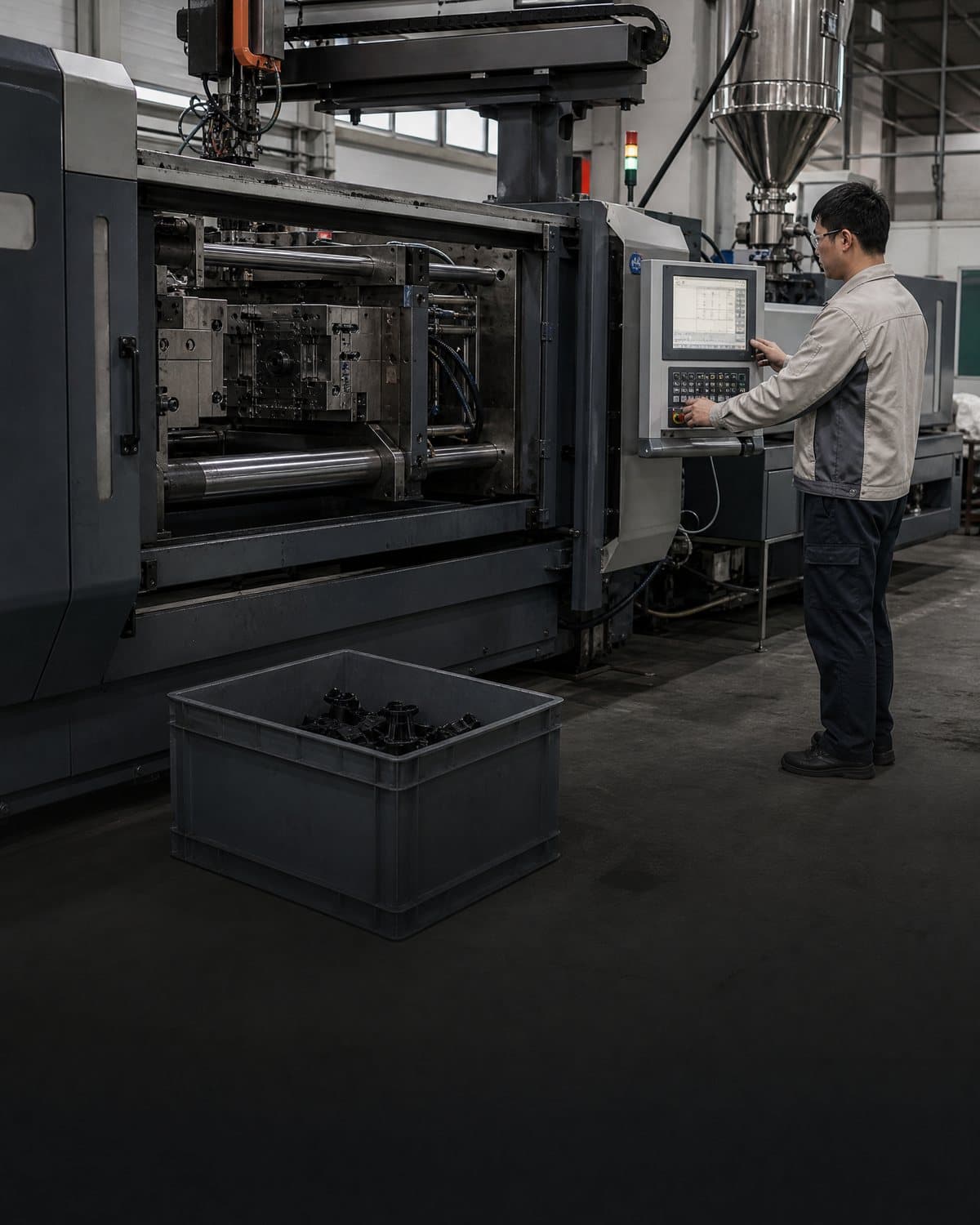
Validate injection mold tooling against thermal and flow reality
Tool review for PEEK should focus on the interface between material behaviour and the named part, rather than on a generic steel-versus-aluminium discussion. Review gate location and size, flow length, wall transitions, ribs, bosses, weld-line-sensitive regions, venting, ejection, inserts and cosmetic faces. Victrex notes that PEEK has higher shrinkage than amorphous thermoplastics and that gate size depends on part volume, cavity count and geometry; it also identifies mould temperature control as important to obtaining a semi-crystalline component.[1] These are prompts for design review, not universal tool specifications.
Request a clear thermal concept: how tool surface temperature will be monitored or checked, how uniformity risks in deep cores or large areas will be considered, and which process settings are planned to be controlled. The relevant question is not whether a machine is described as capable of molding PEEK. It is whether the proposed machine, barrel, screw, hot-runner approach where applicable, tool heating and cooling arrangement suit the selected grade and shot. Material-maker guidance says standard reciprocating-screw machines can process unfilled and filled PEEK grades, while design, barrel capacity, screw, mould design and gating remain material-and-part variables.[4]
03
Turn critical requirements into an acceptance decision
Separate reference data from acceptance requirements before samples are judged. Identify every critical-to-function dimension, datum scheme, fit, flatness or position requirement, together with the gauge or measurement method, conditioning state, sample size or sampling logic, owner and pass/fail criterion. ISO 20457:2026 covers geometrical and dimensional tolerances and acceptance conditions for plastic moulded parts, and explains why plastic behaviour, shrinkage, processing, geometry, warpage and cooling make a metal-style assumption unsafe.[2] It is a useful framework to discuss feasibility; it does not replace the product’s own functional requirements.
The compact record below makes a quote review more decisive. It does not assign universal tolerances, temperatures or test thresholds. Instead, it shows which open choice needs evidence and who should agree the release condition. The chosen checks should be proportionate to the part’s risk: a non-visible spacer and a sealing feature with a tight interface should not automatically receive the same plan.
| Decision to validate | Evidence to request or define | Release question |
|---|---|---|
| Exact PEEK grade | Current data sheet, grade/colour identification and proposed alternatives | Does the selected grade address the documented service case? |
| Geometry and gate route | Marked drawing, preliminary gate concept and identified high-risk sections | Can flow, packing, ejection and visible surfaces be reviewed together? |
| Dimensional acceptance | Critical-feature list, datums, conditioning and measurement method | Which values are contractual acceptance criteria rather than reference dimensions? |
| Material preparation and cleanliness | Proposed drying, handling, segregation and purge approach | What records or controls are appropriate for this part and grade? |
| Sample and change control | Sample stage, review owner, test plan and change-notification route | What must be re-reviewed if grade, tool, setting or design changes? |
04
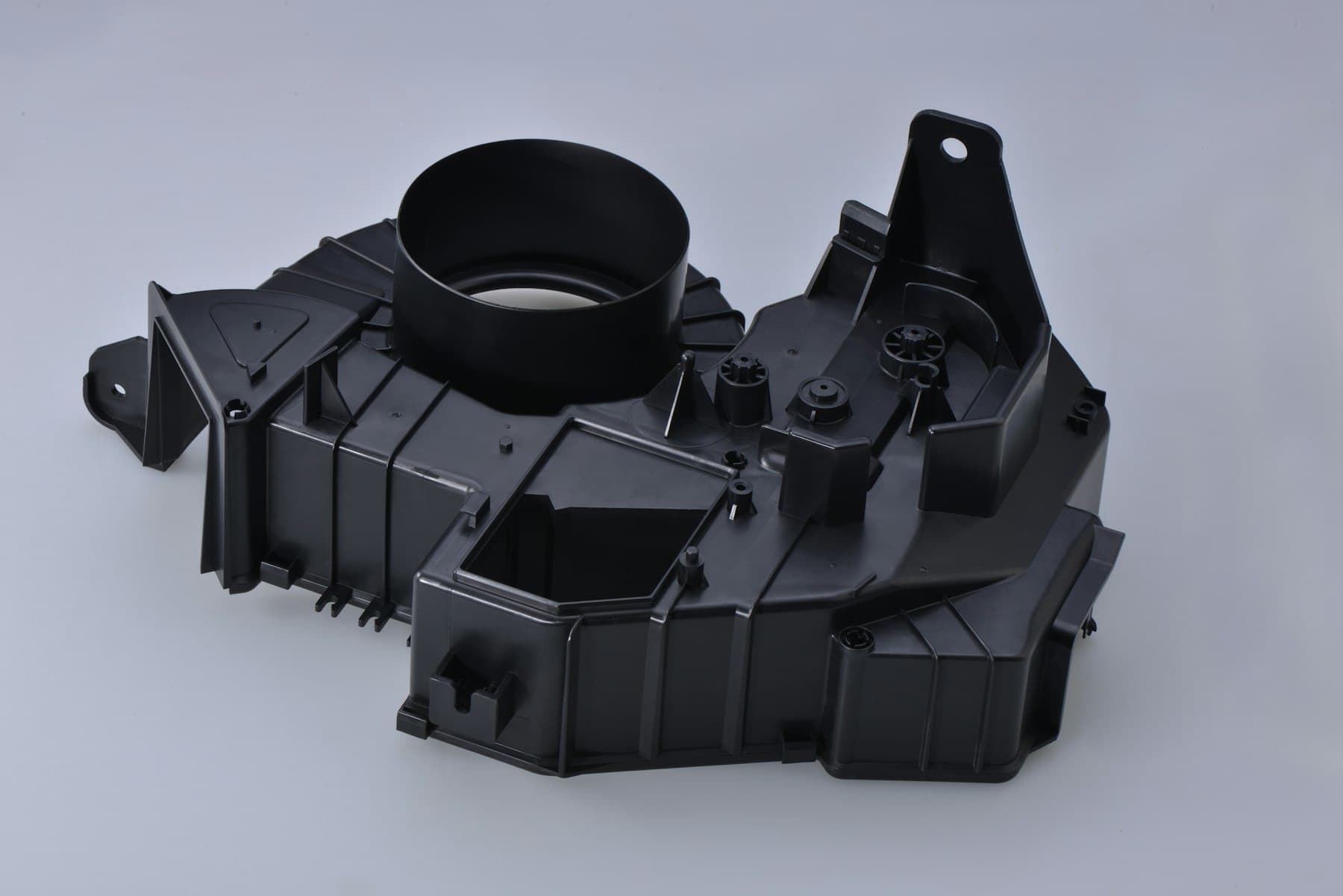
Plan evidence for the part, not a generic PEEK claim
A sound evidence plan has layers. First, confirm incoming material identity and the controlled grade. Next, document the chosen processing window and the checks used to show the process is operating as intended. Then inspect the features, appearance and assembly behaviours that matter to the finished part. Victrex’s processing guidance cautions that absorbed moisture and contamination can matter during PEEK molding, and it links good mould-temperature control to the desired semi-crystalline state.[1] The buyer should turn those broad processing concerns into an appropriate, documented plan with the material supplier and molder for the selected application.
Do not confuse a material data-sheet value, a coupon result or a sample measurement with product qualification. The applicable evidence may involve functional assembly, environmental exposure, leakage, electrical, wear, chemical or appearance evaluation, but only where the product requirements call for it. If the component is intended for a regulated, safety-related, medical, food-contact or similarly controlled use, the product owner must identify the relevant jurisdiction, end-product rules, documentation and validation route. A resin name, a general industry use or a supplier statement is not a substitute for that product-specific decision.
05
Release only a controlled quote and review package
A buyer-ready package contains the controlled 3D model and drawing; exact or proposed grade; material alternatives policy; annual and batch-volume assumptions; critical dimensions and datums; show-surface and gate restrictions; insert or assembly details; environment and life assumptions; requested sample stage; acceptance plan; and change-control expectations. It should identify unknowns openly. That is more useful than asking a supplier to infer performance from a single part image or a generic statement that the part is “high temperature.”
For a quote or engineering review, resolve the grade, geometry, measurement and evidence owners before authorising tooling spend. Ask reviewers to return assumptions, exceptions and risks against the same package, then record what changes require re-approval. This creates a practical basis for a buyer preparing a PEEK project: send the controlled package to info@injeform.com or use it internally to obtain comparable technical responses before release.

Practical takeaway
Before you move
to the next review.
- Name the resin manufacturer, exact PEEK grade, colour and any filler, additive, regrind or substitution rule.
- Mark critical interfaces, nominal and local wall sections, inserts, show surfaces, gate restrictions and known load or environmental conditions.
- Ask for the proposed tool, machine and thermal-control concept as it relates to the selected grade and part geometry.
- Define critical dimensions, datums, conditioning, measurement method, sample review owner and acceptance criteria before samples are judged.
- Record the part-specific evidence plan and the re-approval path for material, geometry, tooling or process changes.
FAQ
Common questions
Can a buyer specify only “natural PEEK” on the drawing?
That is usually not enough for a controlled procurement decision. Identify the proposed resin manufacturer and grade, then state any colour, reinforcement, additive, supply and alternative-material constraints. The required level of control depends on the part and its risk.
Does a PEEK data sheet prove the molded part will meet its application?
No. A data sheet provides information about a named material under stated test conditions. The finished part also depends on grade, geometry, processing history, orientation, interfaces and the application’s own acceptance requirements. Define the evidence needed for the particular part.
What should change after the first PEEK sample?
Review the sample against the agreed critical dimensions, appearance, assembly and any defined functional checks. Then document whether the grade, drawing, tool concept, process assumptions or acceptance plan needs revision. Do not treat an unreviewed setting or material change as equivalent to the reviewed condition.
References
Source material
- [1] Victrex, “Five factors to consider when moulding PEEK.”
- [2] ISO, “ISO 20457:2026 Plastics moulded parts — Tolerances and acceptance conditions.”
- [3] Ensinger, “PEEK injection molding.”
- [4] Victrex, “Process material.”
This guide is general information for early procurement and engineering discussion. It does not replace product-specific DFM, qualification, validation, regulatory assessment or legal advice.