
When a production tool moves from one supplier to another, the buyer needs more than a release email and a packing list. The transfer can change custody, maintenance responsibility, access to confidential tooling data and, in some cases, the practical ability to make conforming parts. A well-documented injection mold transfer creates a traceable handover: it distinguishes contractual ownership from physical possession, records the exact state of the tool, and sets a measurable requalification path at the receiving site.
This is particularly important when a global mold supplier, a European or US molder, and an offshore mold making partner sit in different jurisdictions. The agreement and local law should be reviewed by the buyer’s legal advisers; this guide focuses on the procurement and engineering evidence that makes those conversations and the supplier handover more controllable.
Treat the handover as a controlled change, not a courier dispatch. The buyer should not assume that possession proves injection mold ownership, that a native CAD file carries transferable usage rights, or that a successful past run proves the receiving supplier can run the mold without confirmation.
01
1. Establish authority, scope and the transfer baseline
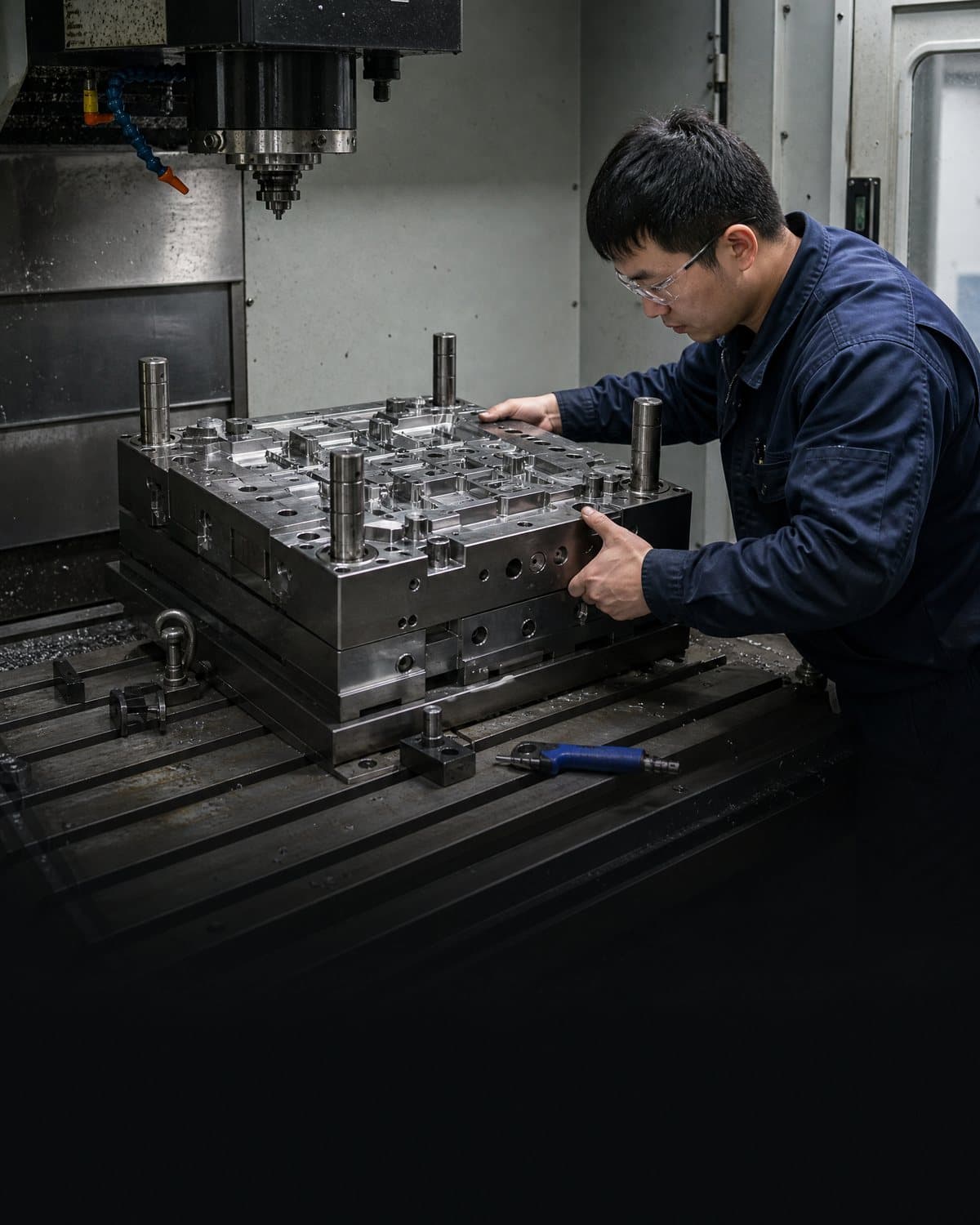
Start with a buyer-approved transfer instruction that names the tool unambiguously: internal asset number, supplier tool number, cavity count, mold base and insert identifiers, part number and revision, and the production location it is leaving. Attach the purchase order, tooling agreement and any amendment that defines title, use rights, liens, payment status, storage charges, release conditions and disposition at end of life. A tool may be paid for, stored at a supplier and still be subject to contract terms or local rules that require a formal release. Legal ownership, intellectual-property rights and physical custody are related but not interchangeable; obtain legal confirmation where the contract or jurisdiction makes the position unclear. Document precisely what is in scope. A production mold may depend on hot-runner controllers, valve-gate cables, hydraulic power units, robot grippers, checking fixtures, master samples, spare inserts or proprietary software. Decide whether each item transfers, remains on loan, is replaced, or is excluded. This prevents a receiving molder from discovering after arrival that a controller, mold clamp plate or critical spare is missing. The outgoing supplier should countersign the asset list and confirm whether any third-party equipment, licenses or retained data limit the transfer.
| Record | Buyer should define | Evidence to retain |
|---|---|---|
| Authority to release | Who may instruct shipment; conditions precedent; destination | Signed release and contract reference |
| Tool identity | Tool, cavity, insert and part-revision identifiers | Dated photos and serialized asset register |
| Scope | Mold, auxiliaries, fixtures, spares, samples and files | Jointly signed transfer inventory |
| Rights and restrictions | Confidentiality, CAD access, third-party components and use limits | Supplier confirmation; legal review where needed |
02
2. Capture the tool’s condition and its production history before release
The outgoing supplier should prepare a condition report while the mold is accessible and, where feasible, immediately after its last production run. It should identify steel grades if known, coating or texture status, cavity and core condition, wear at shutoffs and slides, ejector condition, cooling-circuit condition, hot-runner make and model, leaks, corrosion, damaged threads and any temporary repair. Include dated photographs of the mold open and closed, identification plates, cavities, parting surfaces, slides, ejection and the packed accessories. Photographs are supporting evidence, not a substitute for inspection measurements. Request the last approved process window and a concise production history: resin grade and approved source where relevant, colorant or masterbatch, machine model and clamp-tonnage range, critical setpoints, cycle time, approved sample date, defect history, maintenance intervals, repairs, engineering changes and the cumulative shot count if available. Data from a different press is not automatically portable; the receiving supplier must confirm what it can reproduce on its own equipment. If the tool was not recently run, state that fact rather than presenting historical samples as current proof of function. Use an agreed status classification—such as production-ready, production-ready subject to listed actions, or repair/engineering review required. The classification should state its basis and limitations. For high-cavity, safety-relevant or regulated parts, buyers may want an independent toolmaker or quality representative to witness the inspection before packaging.
03
3. Transfer the technical package without losing revision control
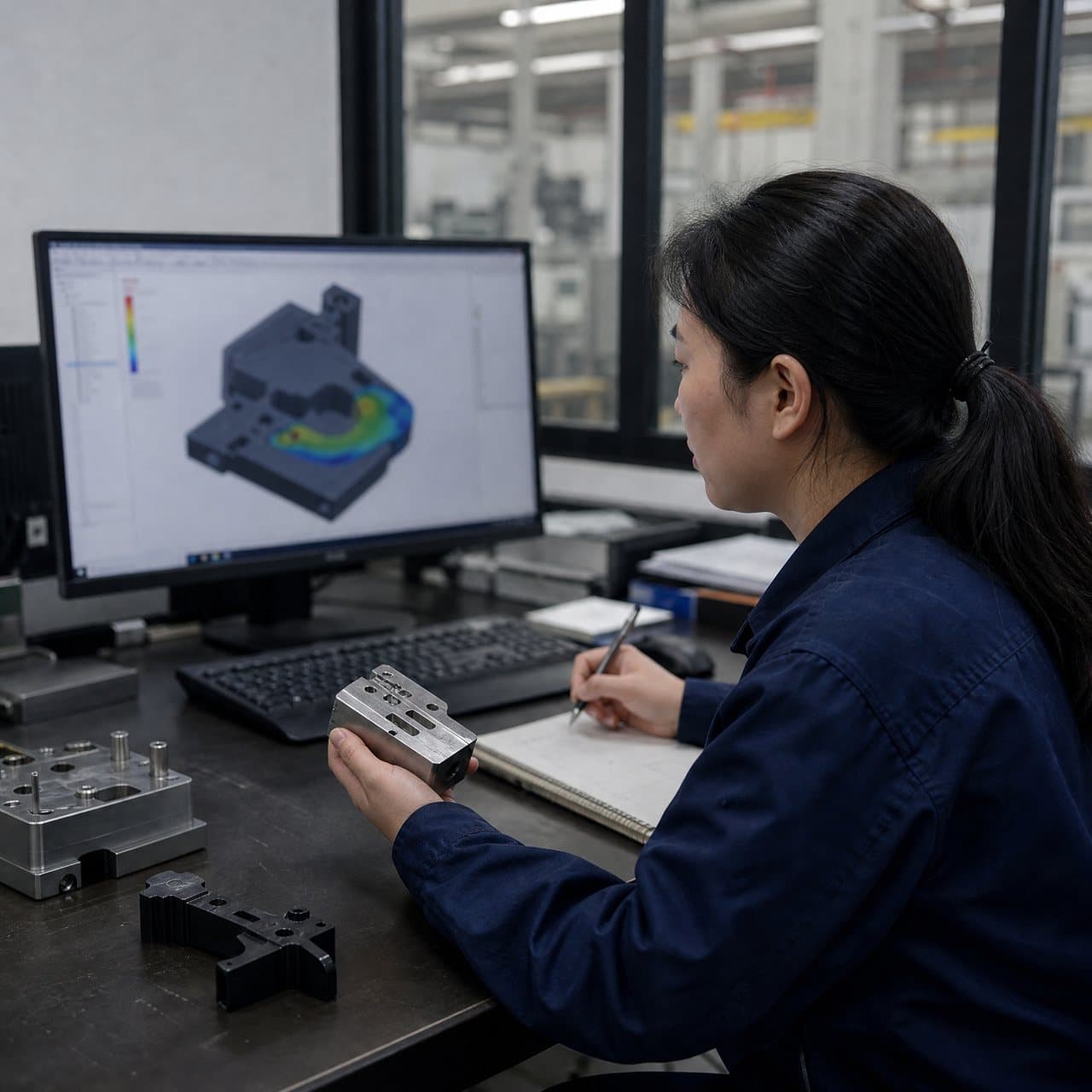
A receiving supplier needs a controlled technical package, but the buyer should provide only the files and rights it is entitled to share. At minimum, assemble the released part drawing and 3D model, critical dimensions and datum scheme, material specification, approved appearance standard, mold layout and assembly drawing if available, cooling and hydraulic/pneumatic schematics, hot-runner documentation, maintenance instructions, spare-parts list, trial reports, inspection reports and all approved engineering-change records. Label every item with revision, date, owner and release status. Uncontrolled copies and unmarked PDFs are a frequent source of incorrect repairs. Where native CAD, mold-design files or hot-runner parameter backups are unavailable, record that gap explicitly and decide whether reverse engineering, controlled measurement or supplier-generated drawings are acceptable. Do not infer that ownership of a physical tool automatically grants a right to source files, software keys, design know-how or a third party’s drawings. Obtain written confirmation from the outgoing supplier and relevant rights holder when file transfer, reuse or modification rights are material to continuity. The receiving supplier should acknowledge receipt of the package, identify unreadable or missing files, and issue a capability review. That review should cover mold dimensions and platen fit, locating ring and nozzle interface, clamp and ejector stroke, water and electrical connections, controller compatibility, lifting points, resin handling, automation interfaces and any likely repair before trial. A global mold supplier should not promise interchangeability without this machine-specific confirmation.
| Package element | Why it matters at transfer | Receiving supplier confirmation |
|---|---|---|
| Released part and tool revisions | Connects production to the correct product definition | Revisions received and conflicts logged |
| Trial and inspection evidence | Sets a factual starting point for requalification | Test method and CTQs understood |
| Utility and controller information | Determines whether the mold can safely be connected and run | Interfaces and compatibility reviewed |
| Maintenance and spare history | Supports realistic repair, risk and timing decisions | Missing or obsolete items identified |
04
4. Control packing, custody, receipt and requalification
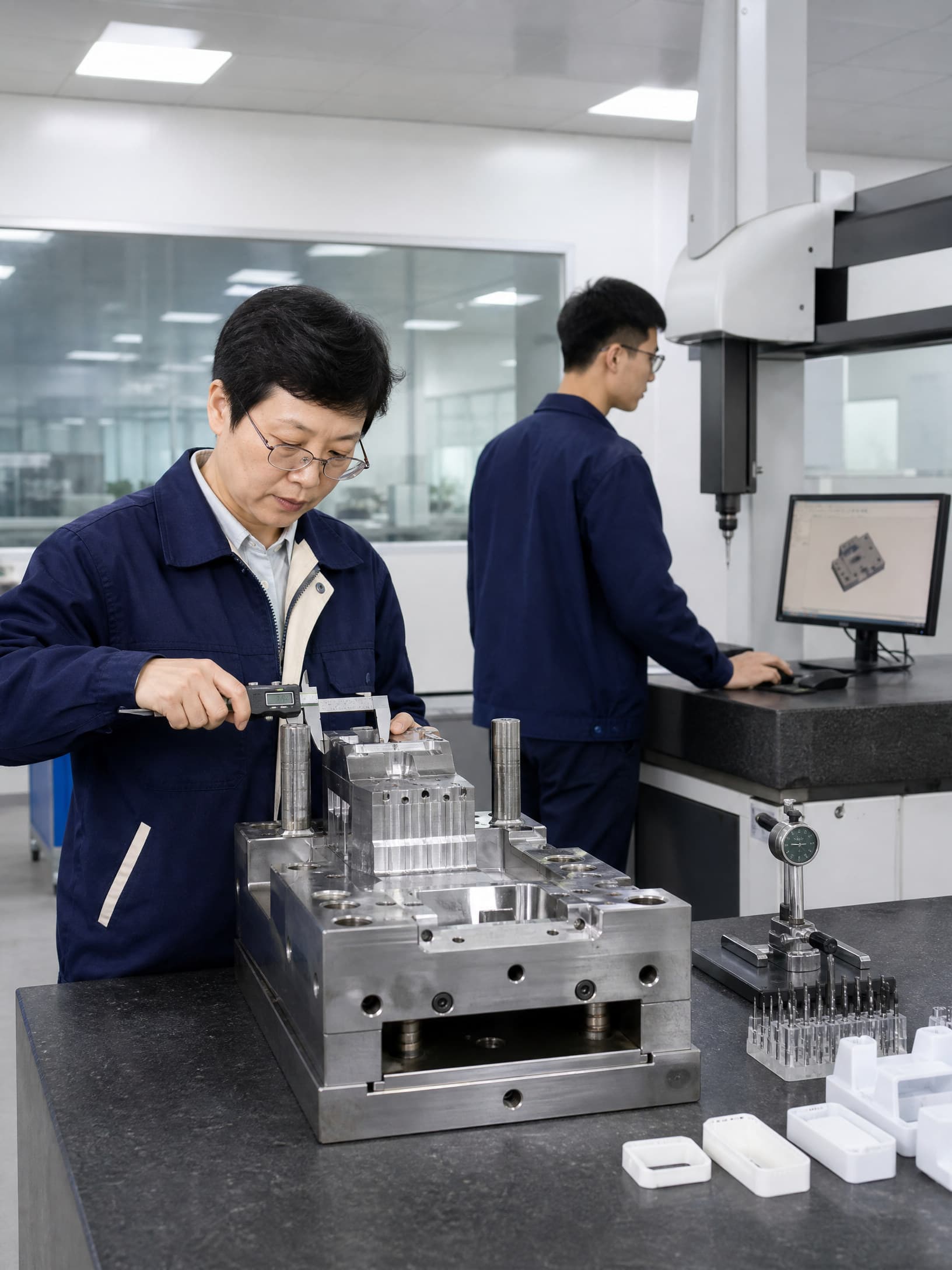
Before dispatch, agree packaging and preservation instructions appropriate to the route and expected dwell time. The outgoing supplier should clean the mold, apply a suitable rust preventive compatible with later cleaning, protect polished and parting surfaces, cap cooling ports, secure moving components, drain water where appropriate, and record the packed condition. The crate or rack should display tool ID, gross weight, center of gravity where known, lifting instructions, orientation, destination and handling restrictions. Export paperwork, insurance responsibility, Incoterms and customs classification should be confirmed with the appointed logistics and customs specialists; they are not assumptions to leave to the tool shop. Create a chain-of-custody record with handover date and time, carrier reference, seal number if used, package count, packing list, photographs and signatures at each practical handoff. At receiving, quarantine the tool until the new supplier checks the asset identity, package condition, accessories, visible damage and documentation against the signed inventory. Report exceptions with photographs before cleaning, repair or trial work obscures the condition. This record is especially valuable for injection mold storage moves, where humidity exposure and idle time can create issues that are not visible in a shipping document. Acceptance should be staged. First accept receipt and completeness; then accept safe installation after the receiving supplier’s inspection; finally accept production capability against pre-agreed criteria. The trial plan should name the resin, machine, approved process limits, sample quantity, CTQ measurement method, cosmetic criteria, cycle-time target if applicable and disposition authority. Compare results with the last approved baseline, but investigate meaningful differences rather than presuming fault. Any repair, design change or process deviation should have a written approval path and an updated as-run record.
Practical takeaway
Before you move
to the next review.
- Issue a signed release that separates ownership, custody, shipping authority and the exact assets being transferred.
- Obtain a joint inventory with tool identifiers, accessory and spare status, dated condition photographs and declared exceptions.
- Freeze and index the released technical package; seek written rights confirmation before sharing native files or third-party documentation.
- Require the receiving supplier to confirm machine, utility, controller and safety compatibility before scheduling a production trial.
- Retain chain-of-custody, receiving inspection and trial evidence, then close the transfer only against agreed acceptance criteria.
FAQ
Common questions
Does paying for a mold prove that the buyer can remove it immediately?
Not necessarily. Payment evidence can be important, but the right to release, transfer or access associated data depends on the tooling agreement, any unpaid charges, third-party rights and applicable law. Ask the contracting parties and qualified legal advisers to confirm the position before instructing shipment.
Should the receiving supplier guarantee the original cycle time and part quality before the first trial?
A responsible supplier can review the available evidence and identify risks, but should confirm capability only after inspecting the tool and running an agreed trial on its equipment. Machine characteristics, utilities, material lots and maintenance condition can affect the result.
What is the minimum evidence for a mold that has been in long-term storage?
At minimum, retain the storage history if known, condition photographs, corrosion and moving-component inspection, cooling-circuit checks, inventory of spares and a controlled trial plan. The supplier should confirm whether cleaning, preventive maintenance or repair is needed before a production run.
References
Source material
- [1] ISO, ISO 9001:2015 Quality management systems — Requirements.
- [2] NIST, Cybersecurity Framework 2.0 (governance and information-risk context for controlled technical data).
- [3] U.S. Customs and Border Protection, Importer Security Filing and customs trade guidance.
This guide is general information for early procurement and engineering discussion. It does not replace product-specific DFM, qualification, validation, regulatory assessment or legal advice.