
An injection mold transfer package is the controlled record set that travels with the physical tool when production moves to another molder, country, or site. It should let the receiving team identify exactly what it has received, understand the approved part and material, assess the tool’s condition, and plan qualification without guessing. The mold is only one part of the transfer; the operating knowledge, revision history, quality evidence, and commercial authority around it also matter. Industry transfer guidance similarly separates mold condition, material, process, quality, part, secondary-operation, production-history, and qualification information. [1]
For buyers in Europe, North America, and the Middle East, the best package is specific to the tool and the product rather than a generic folder. It should name the accountable owner, show the document revision and source, distinguish verified facts from historical settings, and identify missing evidence early. That approach supports a controlled technical handover, but it does not guarantee that the same settings, output, dimensions, or appearance will be reproduced on a different machine, resin lot, or operating environment.
Treat the transfer package as a baseline for receiving inspection and requalification, not as proof that the transferred mold will run unchanged. Agree in writing which records are controlled, which are reference-only, and what acceptance evidence is required after installation.
01
1. Start with identity, ownership, and the physical-tool record
Create one transfer index that links the purchase order or asset number, mold name, part number, cavity count, tool serial number, revision, current location, and responsible contacts. Include an ownership statement or the applicable contract reference, plus any limits on release of drawings, software, hot-runner information, or proprietary components. An injection mold ownership record should make the handover authority clear; it is not a substitute for resolving contractual rights with the parties involved.
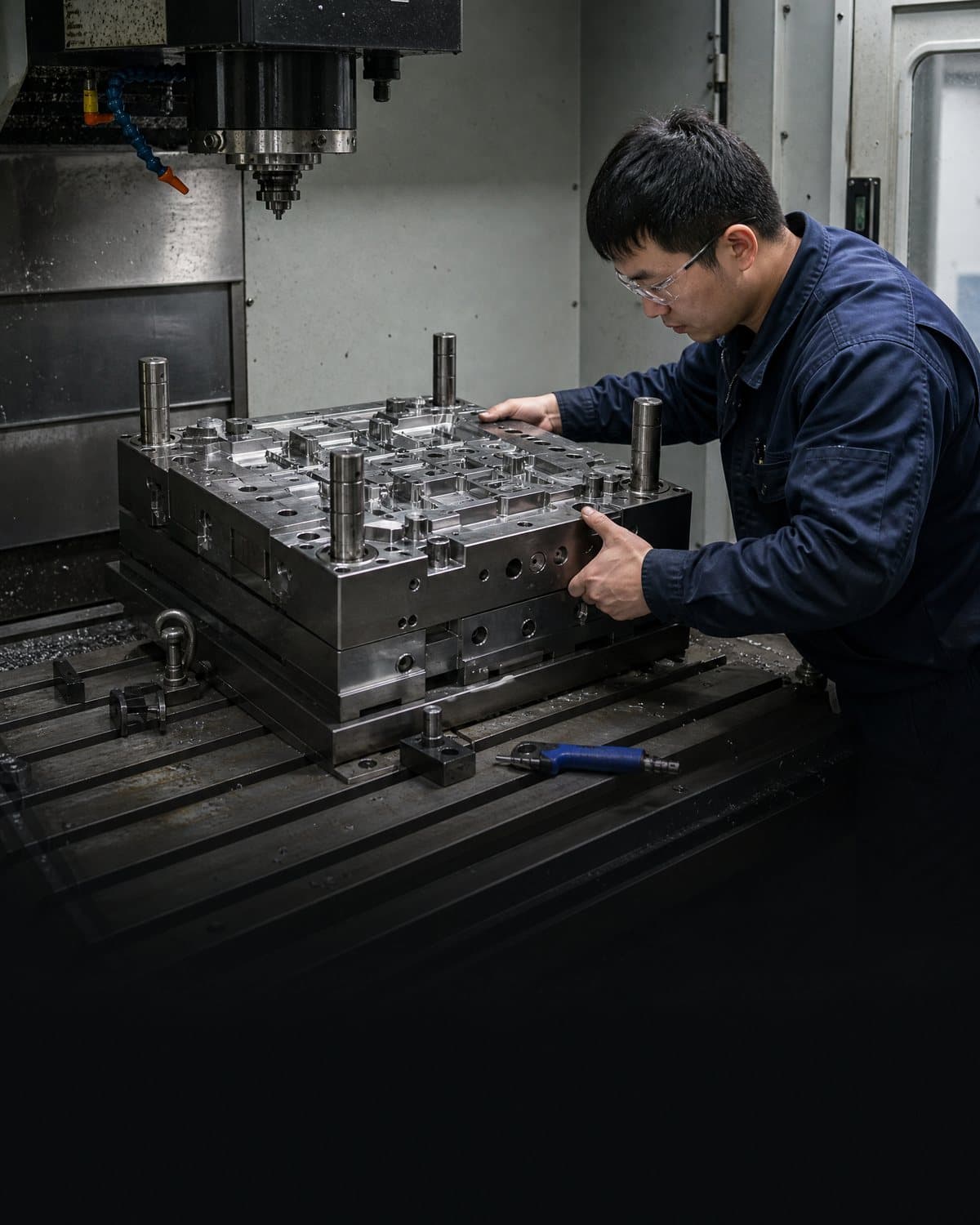
Attach a receiving-ready tool dossier: overall dimensions and stated weight, platen and locating-ring information, water, air, hydraulic, electrical, and hot-runner interfaces, lifting-point details, photos of both mold halves, cores, cavities, identification plates, and shipped accessories. Record loose inserts, spare parts, sensors, controllers, cables, and any special handling or storage instructions. Photograph and date the tool condition before packing and again at receipt so observed transport damage is separated from pre-existing wear.
Handling data must be usable by the receiving site. OSHA’s rigging rule requires pre-use inspection, legible safe-working-load identification, and removal of defective rigging from service; special lifting accessories have additional marking and proof-test provisions. [3] Provide the stated tool weight and lift-point information, but require the receiving team to select and inspect its own approved lifting equipment under its local procedures.
02
2. Provide a controlled engineering definition, not only native CAD
The package should contain the released part model and the current injection mold technical drawing set, including revision level, material specification, color or appearance definition where applicable, datum scheme, critical features, approved deviations, and change notices. Add native CAD only where authorized, but include a neutral exchange format and a readable drawing or PDF so the receiver can review the design if a native system is unavailable. Include mold assembly drawings, component and insert drawings, gate and runner information, cooling layout, electrical or hydraulic schematics, and supplier manuals for purchased systems when they are available.
A neutral file is useful only when its content has been checked. NIST explains that STEP files can represent parts, assemblies, dimensions, tolerances, and product and manufacturing information for exchange among CAD, CAM, CAE, and inspection systems. It also distinguishes computer-interpretable semantic PMI from merely graphical annotations. [2] State the native format, export format, revision, units, export date, and any known import limitations. Ask the receiving engineer to acknowledge that geometry, assembly relationships, and critical PMI have been opened and reviewed before tool changes or new machining begin.
Keep an engineering-change ledger with the request, reason, approval status, date, affected cavities or components, and evidence of implementation. This is particularly important for steel-safe changes, weld repair, blocked cavities, altered textures, or substituted purchased components. A historical drawing does not prove that the mold on the truck matches it; reconcile the drawings against the incoming inspection.
03
3. Transfer the process and maintenance history with its context
For each approved part number and resin, provide the resin maker and grade, approved colorant or additive, drying or conditioning instructions when controlled, regrind policy, and any material restrictions. Then provide the last known successful process window or setup record: machine type and screw details if relevant, melt and mold temperatures, fill and pack approach, cooling time, cushion, cycle time, back pressure, and any recorded alarms. Identify whether each value is a historical reference, a validated range, or a site-specific setting. New equipment, climate, resin lots, auxiliaries, and measurement methods may require development work rather than simple parameter copying.
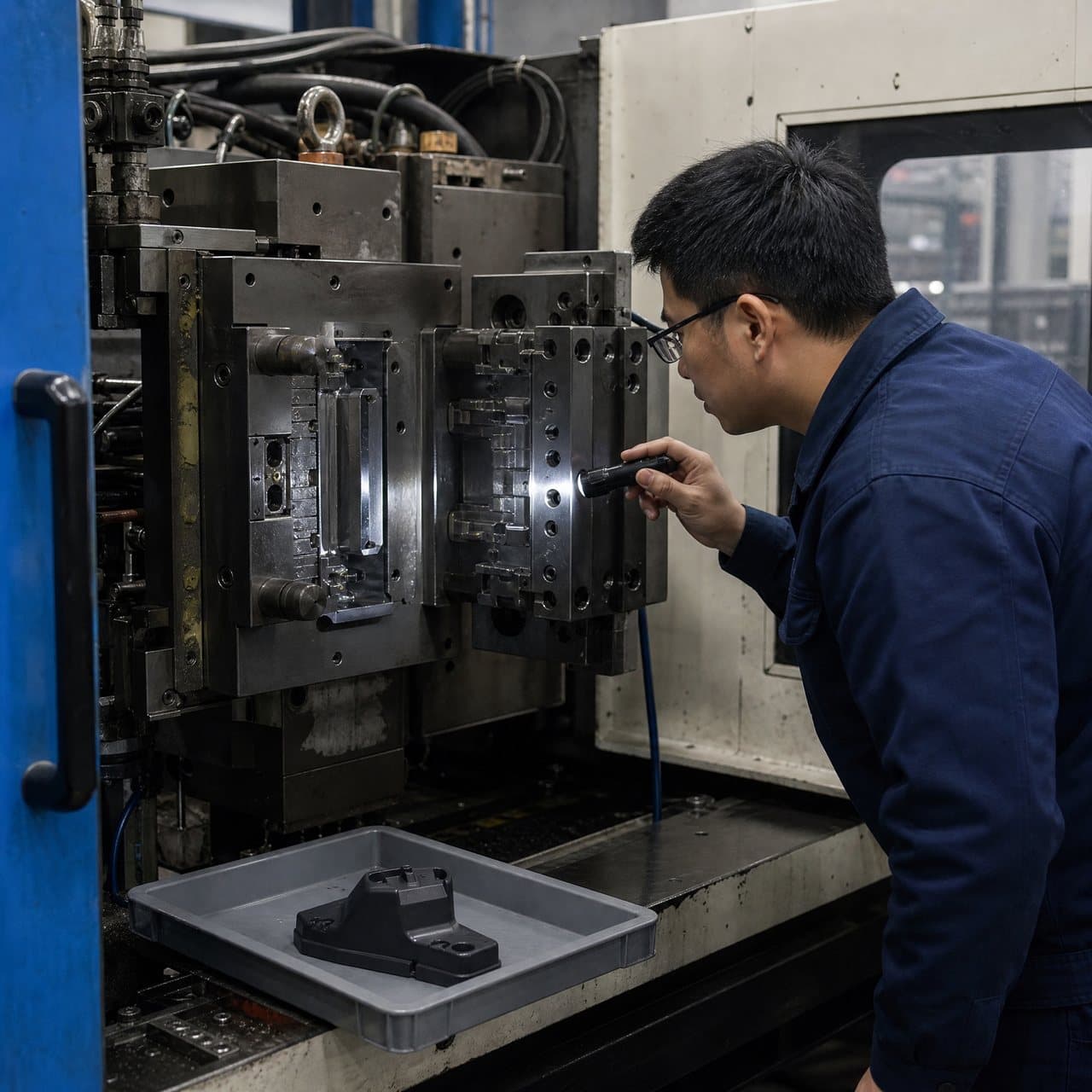
The injection mold maintenance file should show preventive-maintenance dates, shot-count basis if available, cleaning, lubrication, coolant work, repairs, replacement components, coating or texture work, and unresolved concerns. Include defect history, recurring corrective actions, downtime causes, approved temporary containment, and the last production date. A clear list of known issues is more useful than a claim that the tool is ready for every future application. It gives the receiver a basis for a costed condition assessment and a repair decision before scheduling an injection mold trial.
Add manuals, configuration backups, controller settings, thermocouple and heater maps, and wiring identifiers for hot runners or other powered systems. The receiving plant must create or confirm machine-specific safe setup and energy-control procedures. OSHA requires documented hazardous-energy procedures to specify shutdown, isolation, blocking, lock or tag application and removal, and verification steps, except under a narrow exception. [4]
04
4. Define the quality baseline and the requalification decision
The quality portion should include the current approved drawing, control plan, inspection instructions, CTQ or special-characteristic list, sampling rationale where applicable, gauge or fixture details, measurement reports, approved first-article or PPAP-style submissions when contractually relevant, cosmetic limit samples or photographs, functional-test methods, packaging specification, labels, traceability expectations, and records of authorized deviations. Include the measurement method, datum alignment, equipment status, units, date, sample identity, and drawing revision with every report. A dimensional result without that context is weak transfer evidence.
Plan receiving inspection in two stages. First, conduct an incoming injection mold inspection of the asset: identity, completeness, corrosion, damage, interfaces, movement of slides and ejectors where safe, utilities, and condition of cavities, cores, vents, gates, and cooling connections. Second, agree the part qualification plan before the tool is installed. It should name the resin, receiving machine, planned sample size where appropriate, inspections and tests, acceptance criteria, customer review point, disposition path, and the persons authorized to release production. [1]
Do not make old samples the sole acceptance standard. Use retained samples only with their date, revision, resin, process context, and agreed comparison conditions. Close the transfer with a signed gap list: documents received, documents not available, repairs completed, validation evidence reviewed, open risks, and the next owner of each action. This gives procurement and engineering an auditable decision record without implying a universal tolerance, tool-life, cost, or delivery promise.

Practical takeaway
Before you move
to the next review.
- Confirm the mold asset ID, tool serial number, revision, transfer authority, current location, and accountable contacts against the shipment and ownership record.
- Receive photos, stated weight and interfaces, accessory and spare-parts inventory, condition report, packing record, and handling information before dispatch.
- Reconcile released part and mold drawings, neutral CAD exchange files, revision history, change ledger, purchased-component manuals, and known data gaps.
- Collect material approvals, process-history records, maintenance and repair history, defect lessons, and powered-system configuration data with their dates and source.
- Approve a receiving-inspection and part-qualification plan that identifies acceptance criteria, measurement method, responsibilities, open actions, and release authority.
FAQ
Common questions
Is a mold transfer package only a set of CAD files?
No. CAD is one element. The package should also identify the physical asset, its condition and accessories, material and process history, maintenance and repair record, quality baseline, shipping and safe-handling information, and the plan for receiving inspection and qualification.
Should the receiving molder use the previous supplier’s process settings unchanged?
Usually, treat prior settings as a documented starting reference, not an automatic recipe. Machine design, auxiliaries, resin lot behavior, environment, and the mold’s condition can differ. The receiving engineer should establish and document a suitable process during qualification against the agreed part requirements.
What evidence shows that the tool arrived in the expected condition?
Use a pre-shipment condition report and dated photographs, a packing and accessory list, shipping records, and a receiving inspection with dated photographs and findings. Compare the actual tool identity and observable condition with the engineering record, then document any gaps or transit damage before production work begins.
Does a transfer package eliminate the need for new samples or approval?
No. The needed level of sampling and approval depends on the product, customer agreement, regulatory context, material, tool condition, and production change. A transfer package makes the decision evidence-based; it does not replace the agreed qualification process.
References
Source material
- [1] Texas Injection Molding, Planning an Injection Mold Tooling Transfer
- [2] National Institute of Standards and Technology, STEP File Analyzer and Viewer
- [3] Occupational Safety and Health Administration, 29 CFR 1926.251 Rigging Equipment for Material Handling
- [4] Occupational Safety and Health Administration, 29 CFR 1910.147 Control of Hazardous Energy
This guide is general information for early procurement and engineering discussion. It does not replace product-specific DFM, qualification, validation, regulatory assessment or legal advice.