
Industrial pump housings can combine a fluid cavity, cover or flange interface, shaft or bearing features, fastener bosses, mounting datums and passages that must remain stable in service. A supplier quote based only on CAD volume and annual quantity can miss the real purchase decision: which chemicals and temperatures the part sees, how the seal is compressed, how the resin changes with moisture or reinforcement, and how the production team will prove the critical interfaces.
Use this guide to prepare a pump-housing RFQ for InjeForm. The [industrial equipment application](/products/industrial-equipment) page is a useful starting point for pump and fluid-handling parts; the [request-a-quote](/request-a-quote) route should receive the controlled drawing, service profile, mating data and proposed acceptance evidence.
Treat the housing, seal, mating cover, fasteners, fluid and molding process as one system. A resin data sheet or a visually acceptable first shot does not by itself prove pressure retention, chemical compatibility or long-term dimensional stability.
01
1. Define the pump duty before comparing molded-part quotes
Start the RFQ with the actual pump function and failure consequence. Identify whether the housing contains process fluid, cooling liquid, lubricant, slurry, detergent, fuel or another medium; state concentration, temperature range, pressure or vacuum condition, exposure duration, cycling, cleaning method and expected service life. Include abnormal conditions that the product owner expects the design to tolerate, but distinguish a design requirement from a supplier's assumed safety factor.
Describe the complete assembly: housing halves, cover, gasket or O-ring, shaft seal, threaded or clamped joint, metal inserts, impeller clearance, ports, mounting feet and any sensor or drain features. A sealing land that looks simple in CAD may depend on cover flatness, bolt pattern, compression, surface finish, flash control and the condition of the mating part. Ask the supplier to flag missing interface data rather than silently pricing a generic housing.
Chemical resistance is grade- and condition-specific. ASTM D543 provides practices for evaluating plastics exposed to chemical reagents, but a coupon result is not automatically a qualification for a finished pump at its wall thickness, stress state, temperature and exposure cycle [1]. The pump owner, resin supplier and qualified test resource should agree the fluid list and acceptance method before material approval.
| RFQ input | What to state | Why the molder needs it |
|---|---|---|
| Fluid duty | Medium, concentration, temperature, pressure, cycling and cleaning exposure | Screens candidate grades and identifies the relevant chemical and stress tests. |
| Sealing system | Seal type, groove or land drawing, compression intent, cover and fastener data | Connects molding tolerances and surface control to leakage risk. |
| Functional geometry | Ports, passages, impeller clearance, inserts, datums and mounting interfaces | Supports gate, cooling, ejection and inspection planning. |
| Production scope | Annual volume, cavity preference, launch timing, packaging and change-control needs | Makes tool, machine and evidence assumptions comparable across quotes. |
02
2. Select the resin around chemistry, stress and dimensional behavior
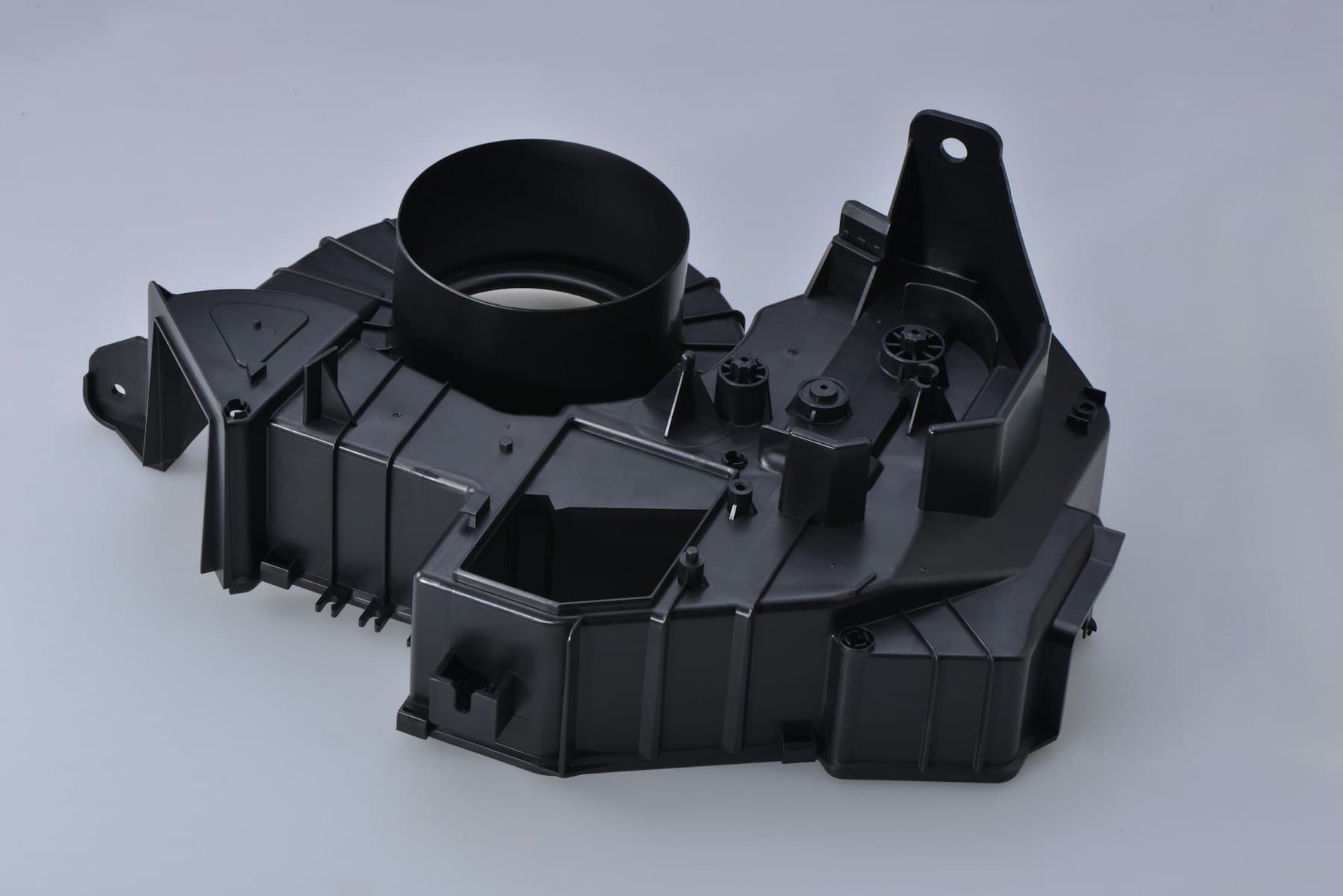
Do not award a pump housing by polymer family alone. PP may be evaluated for some chemically exposed, lower-load fluid-contacting designs; reinforced nylon, PBT, PPS, PVDF or other engineering thermoplastics may enter the review when stiffness, temperature, electrical or chemical demands change. Those are candidate directions, not approvals. The exact grade, reinforcement, stabilizer, color, moisture condition, wall section and molding history can change shrinkage, creep, weld-line strength and chemical response.
Ask for the current resin manufacturer data sheet, processing guidance, lot traceability plan and approved-substitution rule. For glass-filled materials, consider that fiber orientation can make stiffness, shrinkage and thermal expansion directional. For moisture-sensitive materials, define drying and sealed-transfer controls using the exact grade supplier's instructions. For a seal land or bearing datum, request the supplier's proposed conditioning and measurement state; an “as molded” result may not represent the specified service or inspection condition.
Chemical exposure and mechanical stress should be reviewed together. A housing can crack or leak because the fluid attacks a stressed corner, weld line, insert interface or thread root even when an unstressed material specimen appears acceptable. Request a material-and-geometry rationale, and require the product owner to approve the final grade and validation plan. InjeForm's [DFM and mold-design review](/injection-mold-design-dfm) can help expose these trade-offs before steel is released.
03
3. Design sealing interfaces for repeatable molding and assembly
Separate the pressure boundary from nonfunctional housing surfaces. Mark the sealing land, groove, O-ring seat, gasket face, shaft-seal bore, threaded port and cover datum as critical-to-quality features on the drawing. State the intended seal material, compression or interference basis, lubricant or assembly aid, mating material, tightening sequence and whether the joint must be serviceable. The supplier should return a sectioned DFM view showing parting line, gate, vents, ejectors, slides and likely knit-line locations relative to each sealing feature.
Avoid treating a nominal tolerance as a leak specification. Flatness, parallelism, concentricity, warpage, sink, flash, burrs and surface marks can interact at the assembly. The acceptance plan should identify the datums, measurement condition, fixture or gauge, sample identity and leak or pressure test method. ISO 20457 addresses tolerances and acceptance conditions for plastics moulded parts, but the product drawing and application-specific requirements still control the pump's critical interfaces [2].
Ask whether the proposed gate and cooling strategy could place a weld line, residual stress or differential shrinkage across the seal land or around a port. A design change that improves filling can move the gate vestige, alter fiber orientation or affect a mating datum. Require a controlled comparison when the tool or process is changed, and do not release a housing because it passes a short bench test if the test does not represent the specified pressure, fluid, temperature and dwell.
| Interface | Evidence to request | Supplier question |
|---|---|---|
| O-ring groove or gasket land | Section drawing, datum scheme, flatness/warp result and assembly test | How will the tool and process protect the sealing face from parting-line flash and distortion? |
| Shaft-seal or bearing bore | Concentricity method, bore measurement and mating-part study | What controls maintain alignment after cooling and conditioning? |
| Threaded port | Thread gauge or functional fit evidence, flash limits and insert plan | Will the thread be molded, machined or insert-supported, and how is damage screened? |
| Cover and fastener joint | Stack-up, torque basis, gasket compression and leak-test record | Which dimensions are CTQs for assembly rather than merely nominal CAD features? |
04
4. Make dimensional stability a process-and-measurement deliverable
Pump housings often combine thick bosses, thin walls, long flanges, ribs, ports and open cavities. Differential cooling and shrinkage can produce twist or local movement that is not obvious on a single sample. Ask for a geometry review covering wall transitions, rib-to-wall ratios, radii, draft, ejection, cooling circuits and the direction of flow. The [process](/process) and [quality](/quality) discussions should connect those design choices to the agreed CTQs, not promise a universal tolerance or flatness value.
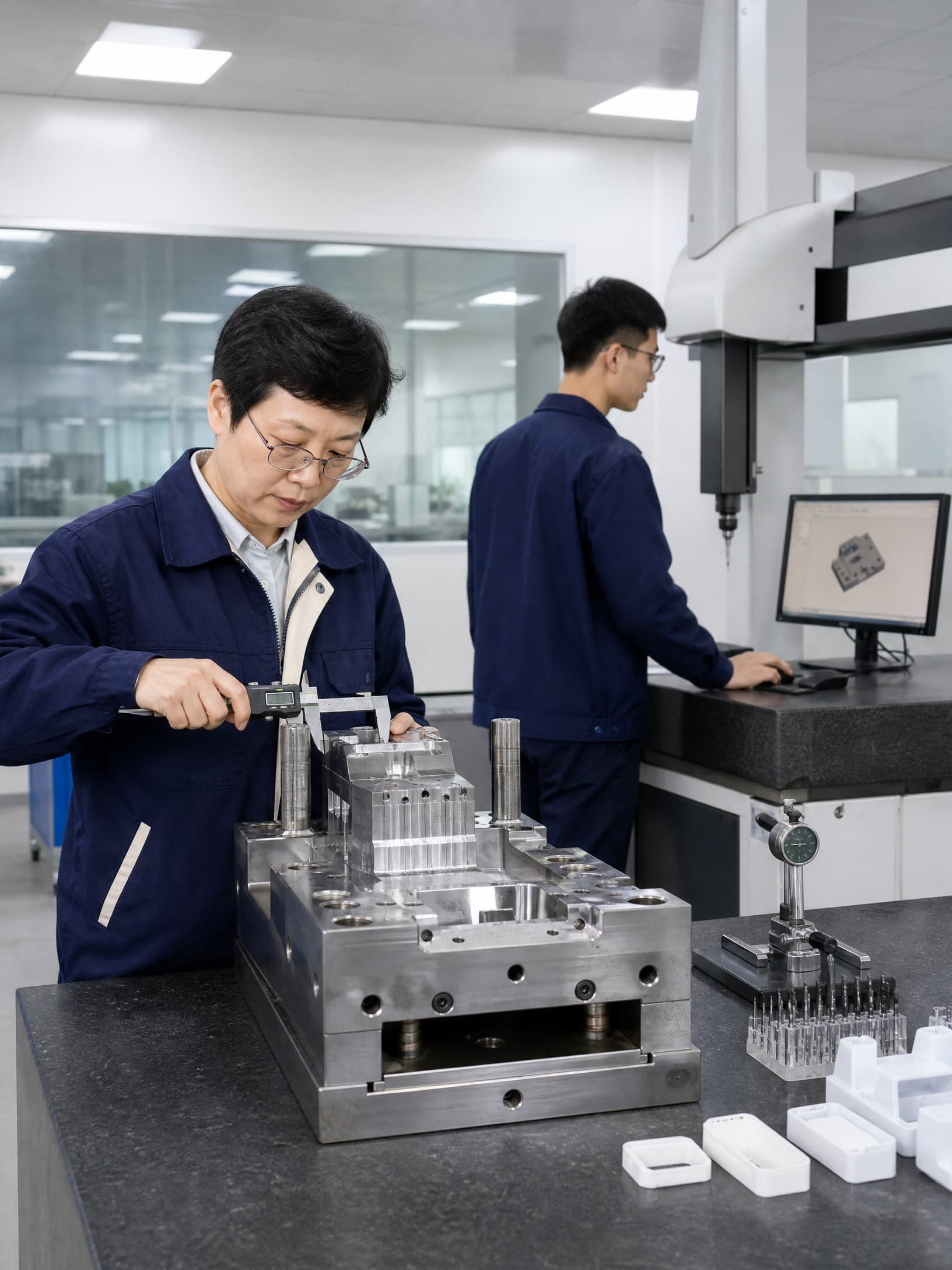
Define how dimensional evidence will be generated. The report should identify part revision, resin grade and lot, cavity, machine or process condition where relevant, conditioning time, measurement equipment, fixture, datum alignment, nominal, tolerance and actual result. For multi-cavity tools, separate cavity effects instead of reporting an unlabeled average. If the housing changes after assembly, state whether inspection occurs before or after seal, insert, cover or fastener installation.
Capability studies can be useful when the process is stable and the measurement system is suitable, but a capability index is not a substitute for material qualification, pressure testing or proof that the measurement method resolves the feature. Request trend evidence on the sealing land, bore, flange and mounting datums at the agreed production condition. If a CTQ is out of specification, require containment and root-cause review before a tool polish or process adjustment is accepted.
05
5. Tie the quote to inspection, testing and release evidence
A comparable quote should list more than tool price and piece price. Ask each supplier to state the proposed resin and alternatives, tool concept and cavity count, machine assumptions, gate and runner approach, expected secondary operations, inspection scope, leak or pressure-test responsibility, packaging, records, change notification and sample approval gates. Clarify whether the price includes DFM, mold-flow work, T0/T1 samples, dimensional layout, fixture or gauge development, assembly trials and corrective iterations.
Agree a staged release: design and material review, mold-design approval, trial samples, dimensional and visual review, assembly and sealing tests, process release, and production-lot verification. The exact sequence depends on product risk. ISO 9001 describes quality-management requirements but does not prescribe one universal inspection plan for every pump housing [3]. Where process validation is needed, the product owner should define the protocol, acceptance criteria and approval authority; FDA guidance describes validation in terms of objective evidence against predetermined specifications, but its applicability depends on the regulated product and role [4].
Finish the RFQ with direct supplier questions: Which dimensions are treated as CTQs? How are chemical exposures mapped to the proposed grade? Where are the gate, weld lines and parting lines relative to sealing faces? What is the measurement condition? How are cavities identified? What happens after a resin, tool insert, process window or subcontracted test changes? Send the answers, controlled files and expected annual demand through [request a quote](/request-a-quote) so the commercial response can be reviewed against the actual pump application.
Practical takeaway
Before you move
to the next review.
- Provide the fluid, concentration, temperature, pressure, cycling, cleaning and service-life profile before asking for a resin recommendation.
- Identify every pressure boundary, sealing land, groove, bore, port, cover datum, fastener interface and mating component on controlled drawings.
- Compare exact resin grades using chemical, stress, temperature, moisture, reinforcement and dimensional-stability evidence rather than polymer-family names.
- Require cavity-specific dimensional records with datums, conditioning, measurement method, CTQs, assembly evidence and a defined leak or pressure-test basis.
- Tie tool release, sample approval, material or process changes, production inspection, traceability and corrective action to named approval gates.
FAQ
Common questions
What should an industrial pump housing injection molding RFQ include?
Include the 3D model and controlled drawings, fluid and temperature profile, pressure or vacuum duty, seal and mating-part data, CTQs, resin constraints, annual volume, cavity expectations, inspection evidence, leak-test basis, packaging and change-control requirements.
Which plastic is best for a chemical-exposed pump housing?
There is no universal best plastic. Compare exact grades against the fluid, concentration, temperature, stress, wall geometry, reinforcement, service life and validation method. PP, reinforced engineering thermoplastics and specialty resins may be candidates for different duties; the product owner must approve the final route.
How do I specify a molded pump housing sealing interface?
Mark the sealing land, groove, bore, flange or thread as CTQs and provide seal material, compression or interference intent, mating-part data, datums, surface and flash limits, assembly method and leak or pressure-test conditions. Ask the molder to show gate, parting line, vent and ejection effects.
How can a buyer verify dimensional stability in a pump housing?
Define the measurement condition, datums, fixture, instrument, conditioning, cavity identity and production resin/process state. Review repeated results for flange, bore, seal and mounting CTQs, and pair dimensional evidence with assembly and application-relevant pressure or leak testing.
Does a first molded sample prove a pump housing is ready for production?
No. A first sample can support design and process learning, but release should follow the agreed drawing review, material identity, dimensional evidence, assembly checks and application-relevant testing. The required validation and approval scope depends on the pump's risk, market and customer requirements.
References
Source material
- [1] ASTM International, “ASTM D543 — Standard Practices for Evaluating the Resistance of Plastics to Chemical Reagents.”
- [2] International Organization for Standardization, “ISO 20457:2018 — Plastics moulded parts — Tolerances and acceptance conditions.”
- [3] International Organization for Standardization, “ISO 9001 — Quality management systems.”
- [4] U.S. Food and Drug Administration, “Process Validation: General Principles and Practices.”
This guide is general information for early procurement and engineering discussion. It does not replace product-specific DFM, qualification, validation, regulatory assessment or legal advice.