
Furniture plastic hardware is rarely judged as an isolated molded part. A clip may locate a back panel, a foot may carry a cabinet corner, and a bracket may transfer load between a shelf, frame or upholstered component. Each part must fit its mating substrate, survive the intended force and remain practical to assemble or remove—often across repeated production builds or service cycles. A quote based only on the hardware CAD and annual quantity can conceal substrate variation, fastener torque, creep, impact, visible flash, cavity-to-cavity differences and packaging damage.
Buyers should specify the assembled furniture interface before comparing molding quotes. Provide the panel, tube, insert, screw, fastener or upholstery details; identify static and handling loads; describe the assembly and removal sequence; and define the evidence required for approval. InjeForm’s [consumer and appliance application page](/products/consumer-appliance) is a useful starting point for practical clips and assembly features. Send the controlled package through [request a quote](/request-a-quote) when the supplier must review hardware geometry, material, tooling and production evidence together.
Buying rule: approve furniture hardware against its real load path and assembly cycle—not just a nominal dimension, a resin family or a successful hand-fit on one sample.
01
1. Define the furniture assembly before requesting a quote
Identify the hardware’s job in the finished product: panel clip, cable or shelf retainer, adjustable foot, glide, corner bracket, rail support, hinge cover, connector block or another function. Show every mating item in the RFQ, including board thickness and coating, metal tube or extrusion, screw or dowel, insert, washer, cap, floor contact and adjacent cosmetic surfaces. Include the assembly direction, access limitations, tool approach and whether the part is installed by an operator, customer or automated station.
Describe the loads as conditions, not as a single unqualified number. Separate the normal supported load from accidental impact, levering, transport shock, racking, pull-out, torsion and misuse that the product team chooses to evaluate. State the load direction, application point, support condition, duration, repetitions, temperature and safety or design factor defined by the furniture owner. For a foot, specify whether the load is centered or eccentric and whether the floor is level, uneven, carpeted or hard; for a bracket, identify the fastener pattern and the board or frame that actually carries the reaction.
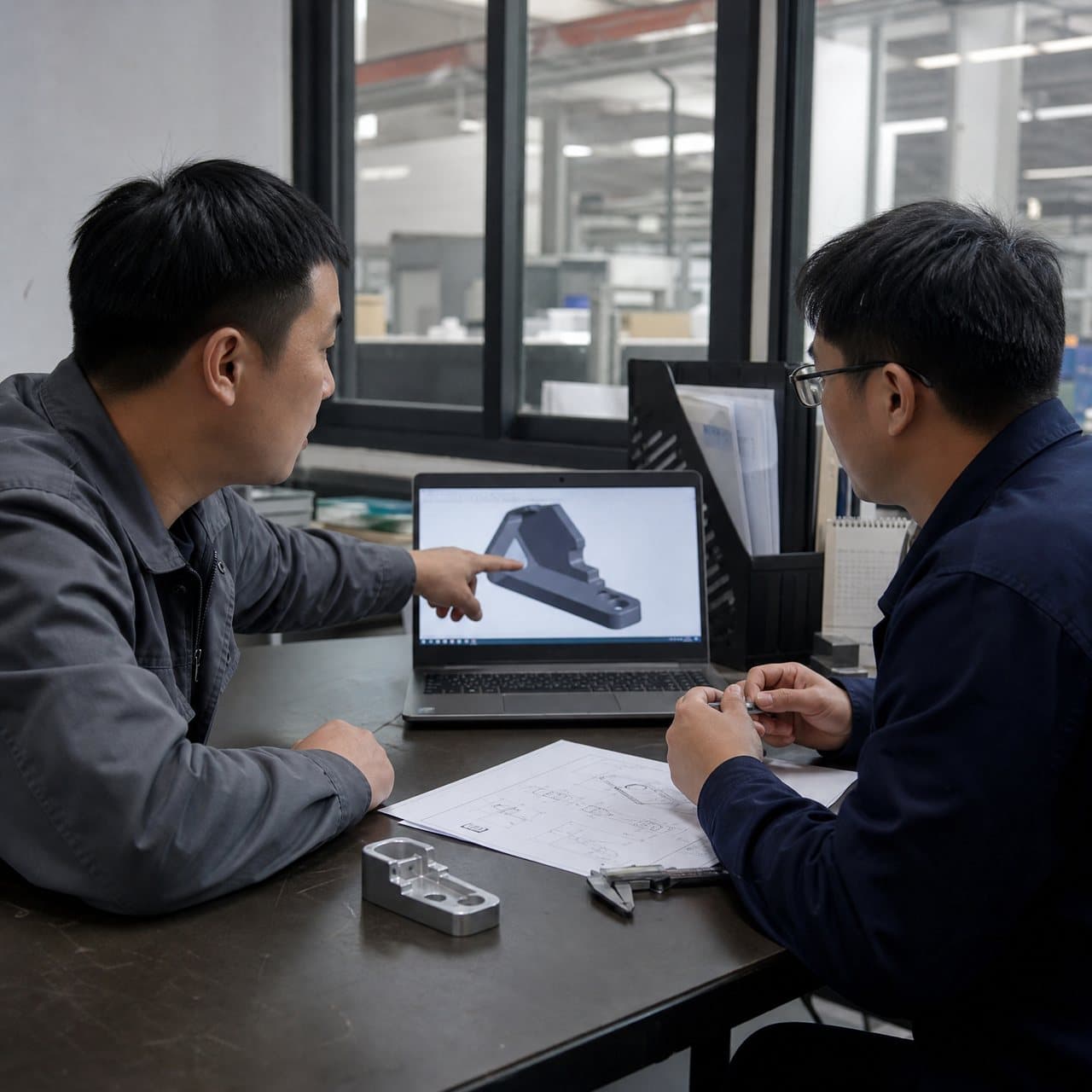
Give the supplier a controlled drawing and assembly stack, then mark primary datums, locating faces, clip hooks, screw bosses, holes, bearing pads, adjustment threads, anti-rotation features and visible boundaries. Distinguish a fit-critical dimension from a cosmetic preference. If the furniture is flat-packed, state the packaging orientation and the number of assembly or disassembly events expected at the customer site. InjeForm’s [DFM and mold-design](/injection-mold-design-dfm) review can then connect those requirements to draft, parting lines, gates, ejection and tool actions.
| RFQ input | What to provide | Risk addressed |
|---|---|---|
| Mating construction | Panel or tube CAD, actual thickness range, coating, insert, fastener and adjacent parts | A molded feature fits nominal CAD but fails on the supplied board, tube or hardware |
| Load case | Direction, application point, supported condition, impact or pull scenario, duration and repetitions | A bracket or foot is approved for the wrong load path or service condition |
| Assembly route | Operator sequence, tool access, insertion direction, removal method and rework limits | Clips break, screws strip, feet cannot be adjusted or parts are installed backwards |
| Appearance boundary | Visible faces, flash limits, gate and ejector restrictions, colour and texture references | A functional part is rejected after tooling because witness marks are customer-facing |
| Release evidence | CTQs, fit gauges, load tests, repeat-cycle checks, sample quantity and records | Buyer and supplier use different definitions of an approved hardware part |
02
2. Design clips and brackets around fit, retention and release
A furniture clip should be specified as a controlled engagement, not simply as a snap. Define the entry chamfer, hook or barb, seating stop, retention direction, allowable misalignment, insertion force and removal force. State whether the clip is intended for one-time factory assembly, customer assembly, reversible service or repeated flat-pack cycles. If a panel can be installed at an angle, include that approach in the review; a clip that works only with a perfectly square insertion path may create line-side damage or hidden variation.
Review the full tolerance stack between the molded feature and the substrate. Board thickness can vary with laminate, paint, veneer or edge treatment; metal tubes can vary in wall and coating; and a screw, dowel or insert can shift the load path. Ask for a sectioned fit review using worst-case or agreed statistical assumptions. A dimensional report on the clip alone cannot prove that the panel seats, the bracket remains flush or the foot stays aligned after fastening.
For brackets and feet, make the reaction surfaces explicit. A thin bearing pad, boss or rib may carry concentrated force even when the outer housing looks robust. Check fillets, rib roots, screw-boss support, counterbores, anti-rotation keys, adjustment travel and the transition from the plastic to the fastener or insert. Review gate, weld-line and ejector locations near these features because a visual mark may also become a crack starter, interference point or customer touch defect.
03
3. Select material for load, creep, impact and assembly temperature
A preliminary screen may include PP for suitable flexible clips, ABS for rigid general-purpose hardware, PA for tougher or more wear-oriented features, and reinforced grades where stiffness is important. These are starting directions rather than approvals. The exact grade, reinforcement, colourant, additives, moisture condition, shrinkage data and processing window must be matched to the hardware’s load, environment and appearance. InjeForm’s application data identifies PP, ABS, PC/ABS and related directions for functional consumer parts, while the furniture product owner and resin supplier must approve the final grade.
For a foot or bracket that carries load over time, assess creep and stress relaxation as well as short-term strength. For a clip, assess repeated deflection, notch sensitivity, weld-line strength and insertion temperature. For a floor-contact part, include abrasion, impact, cleaning agents, moisture and the possibility of a hard point or uneven surface. Glass-filled resin can improve stiffness but may change anisotropic shrinkage, surface appearance, tool wear and snap behavior. Do not treat a higher modulus or a generic ‘engineering plastic’ label as proof of better furniture performance.
Name the exact resin producer and grade in the purchase specification, together with colour, additive and approved-substitution rules. Request the current technical data sheet and identify which properties are screening data versus part-level evidence. If a recycled-content requirement or regrind policy applies, state it before tooling; a change in formulation or conditioning can alter clip force, bracket fit, foot height and load performance. Any flammability, chemical, durability or furniture-standard claim should follow the applicable product requirement and defined test method, not a broad material-family statement.
| Hardware use | Material discussion to open | Evidence before approval |
|---|---|---|
| Flexible panel clip | Deflection, fatigue, notch sensitivity, weld lines, temperature and insertion force | Exact grade, repeated assembly check, retention result and failure-mode review |
| Loaded shelf or frame bracket | Creep, stiffness, fastener-boss stress, impact and directional shrinkage | Load-path review, representative load test, dimensional results and material identity |
| Adjustable foot or glide | Compression, eccentric load, floor contact, wear, moisture and thread or insert fit | Height and interface checks plus agreed static, impact or durability evidence |
| Visible cap or trim hardware | Impact, colour, gloss, texture, weld-line visibility and cleaning exposure | Approved master sample, visual boundary, colour reference and exact resin record |
04
4. Make repeat assembly and load testing measurable
‘Easy to assemble’ is not a sufficient acceptance criterion. Define the assembly fixture or support, operator approach, insertion speed, tool or hand method, part conditioning, mating-part revision and sample quantity. Record insertion force, seating confirmation, retention or pull-out force, removal force and any damage to the clip, panel, fastener or finish. If a tactile click is desired, treat it as a supplemental user cue rather than a substitute for measurable engagement.
Separate a short-term overload check from the durability question. A bracket can pass a one-minute load and still creep during months of supported weight; a foot can survive compression but loosen after repeated adjustment; a clip can retain a panel once but crack after multiple installations. The furniture owner should define representative loads, cycles, dwell time, temperature, humidity, impact and pass/fail criteria. The supplier can propose fixtures and process controls, but should not invent a product safety factor or customer acceptance limit.
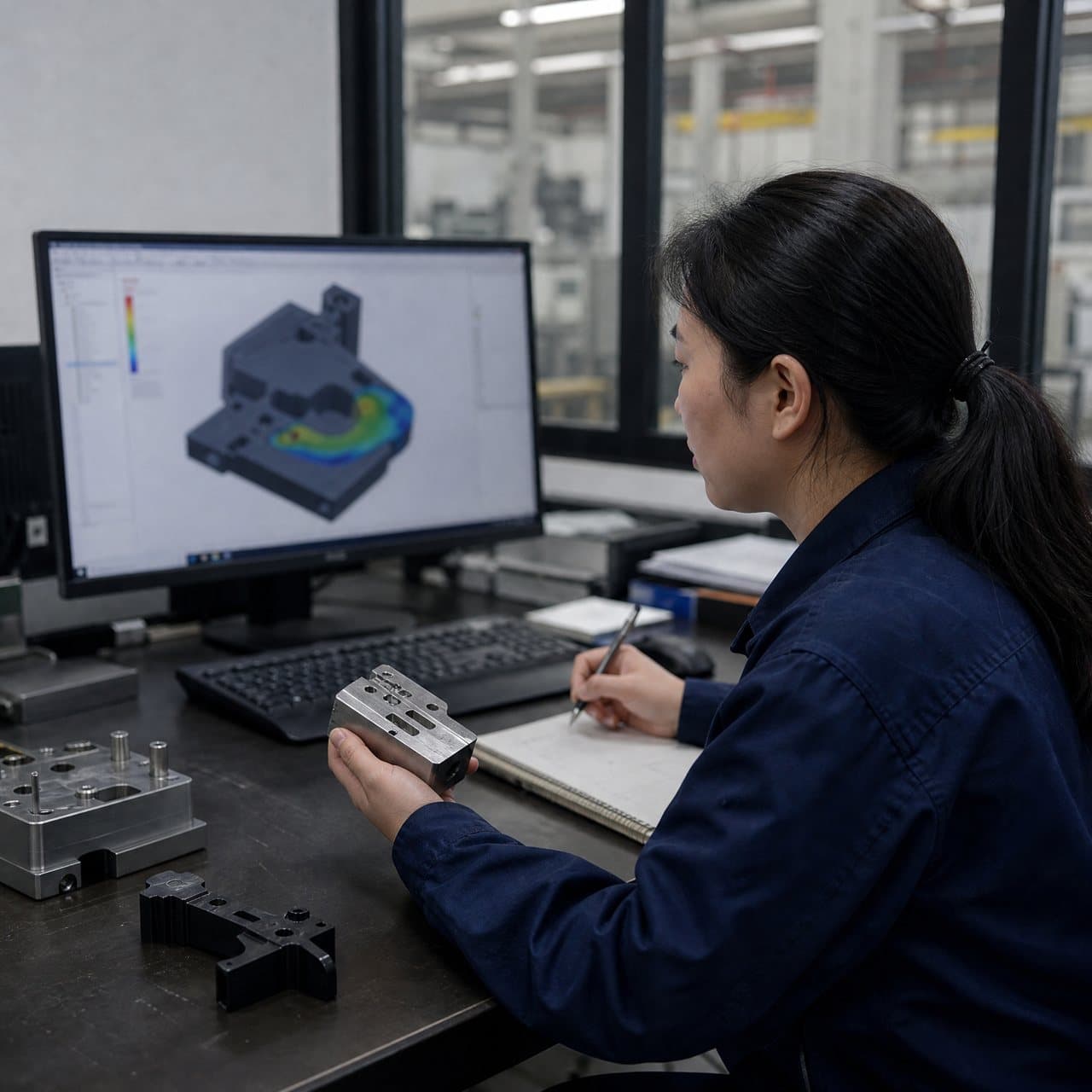
For production evidence, identify the cavity, resin lot, tool revision, molding run, conditioning state and mating hardware used for each test. Compare multiple cavities and, where the hardware is assembled in sets, review the set-level fit rather than approving one visually typical part. InjeForm’s [quality](/quality) discussion can help map CTQs to dimensional, functional and load records. A first-article report is useful only when its setup and configuration are traceable.
05
5. Ask the molding supplier questions that expose production risk
Ask for a marked DFM showing the load path, wall transitions, ribs, bosses, draft, parting line, gates, weld lines, ejection and any slides or lifters. Request the proposed cavity count, machine fit, cycle assumptions, tool steel or maintenance basis, resin handling, inspection method and secondary operations. The quote should separate tooling, samples, gauges or fixtures, load testing, assembly, packaging and recurring parts so a low unit price does not hide exclusions.
Probe how the supplier will control the details that furniture assembly exposes: cavity-to-cavity clip force, foot height, bracket hole position, insert presence, flash on panel-contact faces, mixed hardware revisions and nonconforming parts. Ask how resin lots and drying are recorded where applicable, how tool wear is monitored, how a broken insert or cavity repair is approved, and how a material, gate, colour, fastener or drawing change is communicated. For export supply, clarify packaging, lot segregation, ownership of the mold and gauges, Incoterms and handover records.
Set written release gates: requirement and mating-part freeze; DFM and material disposition; tool-design approval; T0 or T1 sample review; fit and repeat-assembly checks; load or durability evidence; pilot or run-at-rate review; and production release. For furniture sold into a regulated or customer-controlled market, the product owner remains responsible for applicable safety, furniture-standard and market requirements. InjeForm’s [request-a-quote](/request-a-quote) route should receive the current drawings, load cases, assembly method and evidence plan rather than an unscoped request for a plastic part.

Practical takeaway
Before you move
to the next review.
- Provide the actual panel, tube, insert, fastener, floor-contact and adjacent-part interfaces with controlled revisions and tolerance ranges.
- Define static, impact, pull, torsion, eccentric, temperature and repeated-assembly conditions for each clip, foot or bracket load path.
- Name the exact resin grade, producer, colour or additive route, reinforcement, moisture controls, regrind policy and approved substitutions.
- Require fit, insertion, retention, removal, load, durability and cavity-traceable inspection evidence using the real mating hardware.
- Agree DFM, tool, sample, test, packaging, change-control, ownership and production-release gates before steel is cut.
FAQ
Common questions
What should a furniture plastic hardware injection molding RFQ include?
Include controlled CAD and drawings for the clip, foot or bracket and every mating panel, tube, insert and fastener. Add load directions, assembly sequence, repeat-cycle expectation, material direction, volume, appearance limits, CTQs, testing, packaging and delivery assumptions.
How should buyers specify the load for a molded furniture bracket or foot?
State the load direction, application point, support condition, duration, repetitions, temperature, impact or misuse case and product-owner acceptance rule. Distinguish normal service load from proof or durability testing; a supplier should not infer a universal safety factor.
Which material is best for furniture clips and brackets?
There is no universal best material. PP, ABS, PA or reinforced grades may be starting directions depending on flexibility, stiffness, impact, creep, wear, temperature and appearance. Approve the exact grade against the real geometry, load path, environment and test plan.
How do I validate repeat assembly of a molded furniture clip?
Define the fixture, operator approach, insertion and removal method, mating-part revision, conditioning, cycle count and pass/fail limits. Record force, seating, retention and damage, and compare representative cavities or production sets rather than one hand-fitted sample.
What supplier evidence should precede production release?
Request an approved DFM, exact material identity, tool and cavity records, dimensional and fit results, repeat-assembly data, load or durability results where required, visual approval, open-risk closure and a written change-control route.
References
Source material
- [1] International Organization for Standardization, ISO 20457:2026 — Plastics moulded parts: Tolerances and acceptance conditions.
- [2] International Organization for Standardization, ISO 9001:2015 — Quality management systems.
- [3] ASTM International, ASTM D638 — Standard Test Method for Tensile Properties of Plastics.
- [4] BIFMA, Furniture Standards and Publications.
- [5] UL Solutions, Plastics and polymer materials testing services.
This guide is general information for early procurement and engineering discussion. It does not replace product-specific DFM, qualification, validation, regulatory assessment or legal advice.