
Buyers should compare injection molding quotes by first normalizing the technical and commercial scope, then reviewing tooling cost, recurring part price, quality evidence and delivery assumptions separately. A lower total can reflect fewer cavities, a narrower inspection scope, an excluded secondary operation or a different material and cycle basis rather than a more efficient supplier. The aim is an apples-to-apples decision that makes each assumption visible before award.
For Europe, US and Middle East OEM and procurement teams, the quote should be read alongside the released CAD and drawing, material direction, forecast, destination and approval plan. A quote is a commercial model built on inputs; it is not proof that the proposed design, process or acceptance plan has already been validated.
Ask every supplier to identify the three assumptions that most affect its price. If those assumptions differ, the quotes are not yet comparable. A quote-oriented CTA model is: “Send the latest CAD and drawing, resin direction, forecast, critical features, target timing and destination; we will return a scoped tooling-and-part-price discussion with open assumptions identified.”
01
1. Make the quotes describe the same job
Start by creating a comparison sheet that records the part revision, tool concept, cavity count, resin grade, colour, surface finish, gate and runner assumptions, inspection scope, sample quantity, secondary operations, packaging, Incoterm, currency and validity period. A 3D file by itself may not communicate which faces are cosmetic, which interfaces are critical or whether a family mold is acceptable. Design guidance treats material, wall sections, draft, parting line, gates and ejection as connected manufacturing decisions rather than isolated quote fields.[1]
Normalize units and commercial boundaries before ranking the totals. Confirm whether the tool price includes design review, mold-flow work if proposed, steel, standard components, hot runner, texture or polish, first trials, corrections, sample freight and handover documents. Confirm whether the part price includes runner treatment, trimming, inspection, assembly, packing, storage, freight or duties. A supplier that has priced a wider scope may appear more expensive while carrying fewer later additions.

02
2. Separate tooling cost from recurring part price
Review tooling as a non-recurring engineering and manufacturing asset. Tool complexity can rise with undercuts, slides, lifters, deep ribs, tight shutoffs, difficult ejection, high cosmetic requirements, special steel, hot-runner architecture, cooling demands and the number of cavities. Protolabs identifies geometry, undercuts, finishes, multi-cavity choices and part size as factors that can change tooling and piece-part economics.[2] Formlabs likewise describes mold design and construction as a major fixed cost whose effect is distributed across production volume.[3]
For recurring part price, ask for the basis rather than only the number. Request estimated part weight, material grade and price basis, cycle-time assumption, machine or press range, cavity utilization, labour or automation content, expected scrap treatment, inspection frequency and included secondary work. Part price is sensitive to volume because setup and fixed handling work are spread differently across a short run and a repeat production schedule. Do not turn a supplier's indicative cycle into a guaranteed production rate until the process and part have been reviewed.
| Quote line | Questions to align | Comparison warning |
|---|---|---|
| Tooling | What cavity count, steel or insert concept, runner system, finish, trial scope, corrections and handover are included? | A low tool price may exclude slides, texture, trials, modifications or ownership deliverables. |
| Part price | What resin, shot or part weight, cycle, cavities running, scrap basis, labour, inspection and packing are included? | A low unit price may rely on a different resin, optimistic cycle or excluded operations. |
| Quality and samples | Which dimensions, visual criteria, reports, samples and approval gates are covered? | A price without evidence scope may not support the buyer's release decision. |
| Logistics | Which currency, Incoterm, destination, packaging, freight and duty assumptions apply? | An ex-works number is not directly comparable with a delivered or duty-inclusive number. |
| Change and service | Who pays for approved design changes, tool storage, maintenance, repairs and later modifications? | Unpriced ownership and change assumptions can become material after award. |
03
3. Trace the main cost drivers back to design decisions
A useful quote review links each major price movement to a visible design or process choice. Thick or uneven walls can increase material use and cooling time; Fictiv notes that wall thickness affects strength, appearance, material use and cycle considerations.[1] Undercuts may require side actions or hand-loaded inserts. Tight tolerances may require more controlled tooling, measurement and process work, but a buyer should first confirm which dimensions are genuinely critical to function. Surface texture and polish can add mold-finishing work, while an avoidable logo, deep marking or cosmetic requirement can enlarge the scope without improving product performance.[2]
Volume changes the economic balance but does not justify choosing a cavity count in isolation. More cavities can reduce the part-price contribution of machine time per part, while increasing tooling investment, balance and qualification questions. Ask suppliers to quote the recommended cavity option and one credible alternative, with the expected volume range, ramp profile, programme life and changeover assumptions stated. For low or uncertain demand, a simpler tool may be financially safer even if its nominal unit price is higher.
04
4. Compare risk, evidence and delivery—not just arithmetic
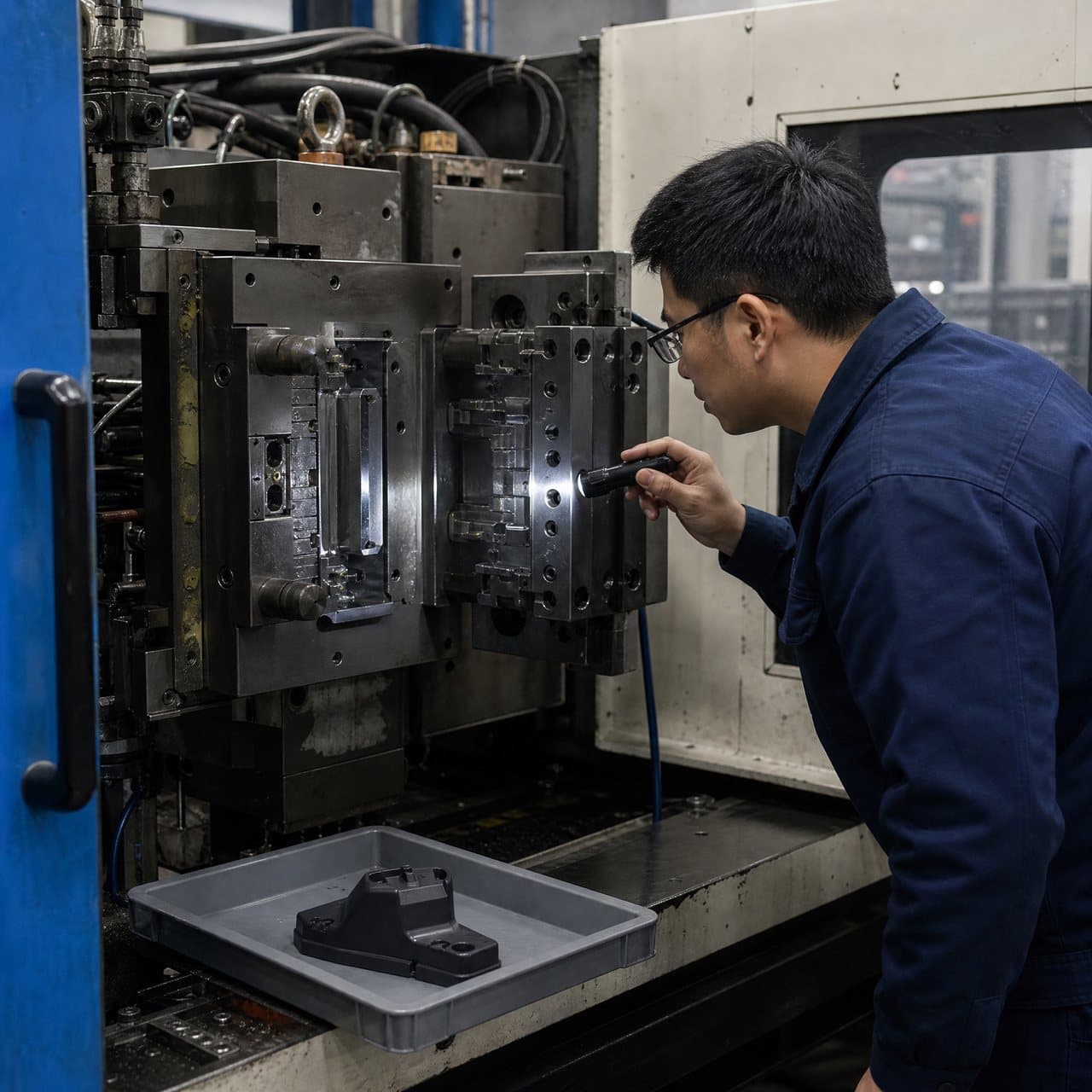
After scope normalization, review the evidence behind each quote. Look for a clear DFM route, named open assumptions, proposed gate and parting-line logic, tool trial plan, sample and inspection scope, cavity representation, material traceability and a method for handling deviations. If a supplier offers a tolerance or acceptance basis, check that it is compatible with the product drawing and contract. ISO 20457 describes possible manufacturing tolerances and acceptance conditions for plastic molded parts, while also making clear that product-specific requirements remain relevant.[4]
Delivery should be compared from the same starting event. One supplier may count from purchase order, another from frozen CAD, approved tool design, material receipt or deposit. Separate tool design, steel procurement, machining, assembly, first trial, corrections, sample inspection and production release. For cross-border programs, also record export packing, freight handover, customs responsibility and communication expectations. These are procurement risks, not reasons to invent a single universal lead-time promise.
05
5. Turn the comparison into a documented award decision
Use a weighted decision record only after technical scope is aligned. Price can be an important factor, but the weighting should reflect the part's risk, the cost of a delayed launch, the value of tooling flexibility, the required evidence and the buyer's ability to manage a second source. Record the normalized total, recurring price basis, open assumptions, exclusions, proposed corrective actions and the person who approved each deviation from the RFQ.
A practical next step is to return a clarification schedule to each shortlisted supplier. Ask them to confirm the same part revision, cavity option, resin, sample gate, inspection package, Incoterm and change route. Request a revised quote with tooling and part price still separated. If the supplier cannot explain a large price difference without revealing its scope or technical basis, pause the award rather than treating opacity as competitiveness.

Practical takeaway
Before you move
to the next review.
- Freeze the CAD, drawing, material direction, forecast and critical-to-quality features used for every quote.
- Separate tooling, part price, samples, inspection, secondary operations, packaging, freight and duties into visible lines.
- Normalize cavity count, runner system, finish, cycle basis, material grade, scrap treatment and volume assumptions.
- Ask each supplier to state exclusions, the three largest price assumptions, the trial plan and the starting point for lead time.
- Record the award rationale, open actions, approved deviations, ownership terms and the quote revision that was accepted.
FAQ
Common questions
Should tooling and part price be compared separately?
Yes. Separating the non-recurring tool from recurring production cost makes cavity count, tool complexity, material, cycle and downstream operations easier to compare. The buyer can then model total cost over the expected volume rather than selecting on one headline number.
Why can two suppliers quote different tooling prices for the same CAD file?
They may be pricing different cavity counts, steels, runner systems, finishes, side actions, trial scopes, correction allowances or handover documents. They may also have interpreted the material, cosmetic zones or tolerance requirements differently. Ask for the tool concept and exclusions before judging the gap.
What should be included in an injection molding part-price comparison?
Compare the same resin grade and colour basis, part or shot weight, cycle assumption, cavities running, machine range, labour or automation, scrap treatment, inspection, secondary operations, packing and delivery basis. If any item is estimated, label it as an assumption rather than a confirmed inclusion.
Is the lowest unit price usually the best choice for high volume?
Not necessarily. A low unit price may require a larger upfront tool, a higher cavity count, a narrower quality scope or a volume commitment that the program cannot support. Compare the total economic and operational fit across realistic demand scenarios.
What should a buyer request before awarding an injection molding project?
Request a revised, scope-aligned quote; tool concept and cavity count; material and cycle basis; sample and inspection plan; delivery milestones; exclusions; ownership and change terms; and a written list of open assumptions. The final purchase documents should control the agreed scope.
References
Source material
- [1] Fictiv, “Injection Molding Design Guide: Best Practices for Molded Plastic Parts.”
- [2] Protolabs, “Understanding Injection Mold Cost for Parts and Tooling.”
- [3] Formlabs, “How to Estimate Injection Molding Cost?”
- [4] ISO, “ISO 20457:2026 Plastics moulded parts — Tolerances and acceptance conditions.”
This guide is general information for early procurement and engineering discussion. It does not replace product-specific DFM, qualification, validation, regulatory assessment or legal advice.