
Cavity count can lower injection molding price per part by producing more good parts in each cycle, but it also raises tool complexity and can require more injection molding press capacity. A single cavity mold is often easier to change and validate; a multi cavity mold makes identical parts; and a family mold makes different related parts in one shot. The right choice depends on demand stability, part geometry, output mix, quality requirements and the press that can run the complete mold reliably.
Do not treat cavity count as a standalone cost lever. Compare total tooling, verified good-part output, material and runner use, validation scope, and the supplier’s available press window for the planned production mix.
01
Cavity Count Changes Both Tooling Cost and Running Cost
A cavity is the shaped space that forms a part. A single cavity mold produces one part per cycle. A multi cavity mold has repeated cavities for the same part, so it can produce several identical parts per cycle. A family mold contains cavities for different related parts, usually for an assembly or kit. These are different production strategies, not simply different names for a larger tool.
The commercial decision has two layers. Upfront tooling scope generally grows with repeated cavities because the mold needs more machining, runner and gate design, cooling, ejection, alignment, and inspection effort. Running cost can move in the other direction when a stable process produces more acceptable parts per cycle. Protolabs notes that more cavities do not automatically make a program cost-effective; the crossover depends on tool price, part cost and quantity [1]. A quote should therefore show assumptions rather than presenting a cavity count as an automatic saving.
| Tooling route | What leaves each cycle | Cost and capacity effect | When a buyer should investigate it |
|---|---|---|---|
| Single cavity mold | One instance of one part | Lower tooling complexity can simplify changes and diagnosis; output per cycle is limited to one part. | Early design maturity, uncertain demand, complex geometry, or part-specific validation. |
| Multi cavity mold | Several identical parts | Tooling and validation become more complex; press time and handling can be shared across more good parts if all cavities run consistently. | Stable demand for one part and a credible capacity case. |
| Family mold | Different related parts | One mold base can reduce duplicated tooling scope, but the cycle and output mix are coupled to the slowest or most difficult component. | Related components with compatible resin, demand ratio, geometry and quality needs. |
02
Multi-Cavity Mold: Capacity Is Only Valuable When Cavities Match
A multi cavity mold is built to mold multiples of the same part in one shot. Its potential advantage is not merely a larger parts count; it is the opportunity to distribute machine time, operator attention and some handling over more conforming parts. That opportunity exists only when the selected press, tool and process can produce a balanced result at the required rate.
Each repeated cavity needs comparable filling, packing, cooling and ejection conditions. An imbalanced runner or inconsistent gate behavior can produce a short shot in one cavity and overpacking, flash or dimensional shift in another. Cooling often sets the practical cycle because all cavities must cool sufficiently before ejection. Industry guidance emphasizes balanced runner design, consistent gates and uniform cooling as central to multi-cavity consistency [3]. Request cavity identification on samples and inspection results by cavity, not one blended set of measurements.
03
Family Mold: Buy the Output Mix, Not Just a Shared Mold Base
A family mold produces different parts in one cycle. It can be useful when related components are consumed in a predictable ratio and can use the same resin and compatible process conditions. It may also help keep color and material-lot exposure aligned for an assembly. However, the parts do not become independent simply because they have separate cavities: they share a shot, a cycle and a production schedule.
The most difficult component can govern the cycle. Different thicknesses, volumes or shapes make balanced filling and cooling harder; Fictiv explains that the cycle must be optimized around the slowest-cooling part and that uneven fill can cause defects [2]. A buyer should also test the demand ratio. If service demand requires many of one component and few of another, a family mold can create excess inventory or a shortage even when the total molded-part count looks efficient.
04
Injection Molding Press Capacity Is More Than Clamp Tonnage
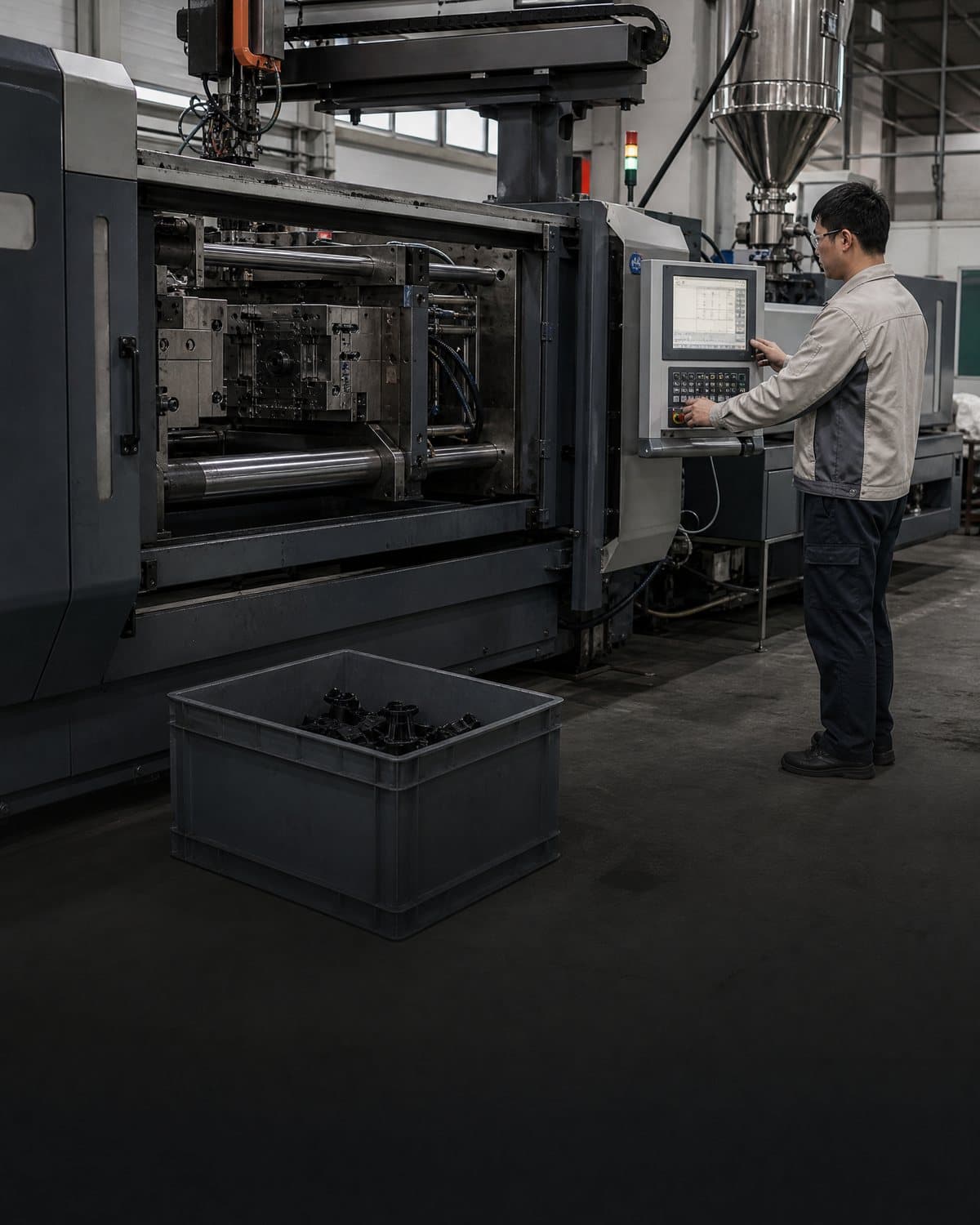
Adding cavities increases total projected area and total shot demand, but it does not select a machine by itself. The supplier should review the mold envelope, platen and tie-bar fit, mold height and daylight, clamp force needed to resist opening during filling and packing, and the injection unit’s usable shot and injection-rate range. The runner system is part of the shot, so cold-runner mass and start-up purge cannot be ignored.
Capacity also includes plasticizing recovery, cooling performance, mold-temperature control, ejection, part removal, and available press time. A press may have enough nominal tonnage but still be a poor production match if the mold cannot fit, the injection unit is unsuitable, the recovery time extends the cycle, or automation cannot remove the parts reliably. State the resin grade, color approach, part and runner weights, projected area, expected tool layout and part-removal method in the injection molding RFQ so the supplier can evaluate a real press window.
05
Supplier Evidence That Makes the Comparison Usable
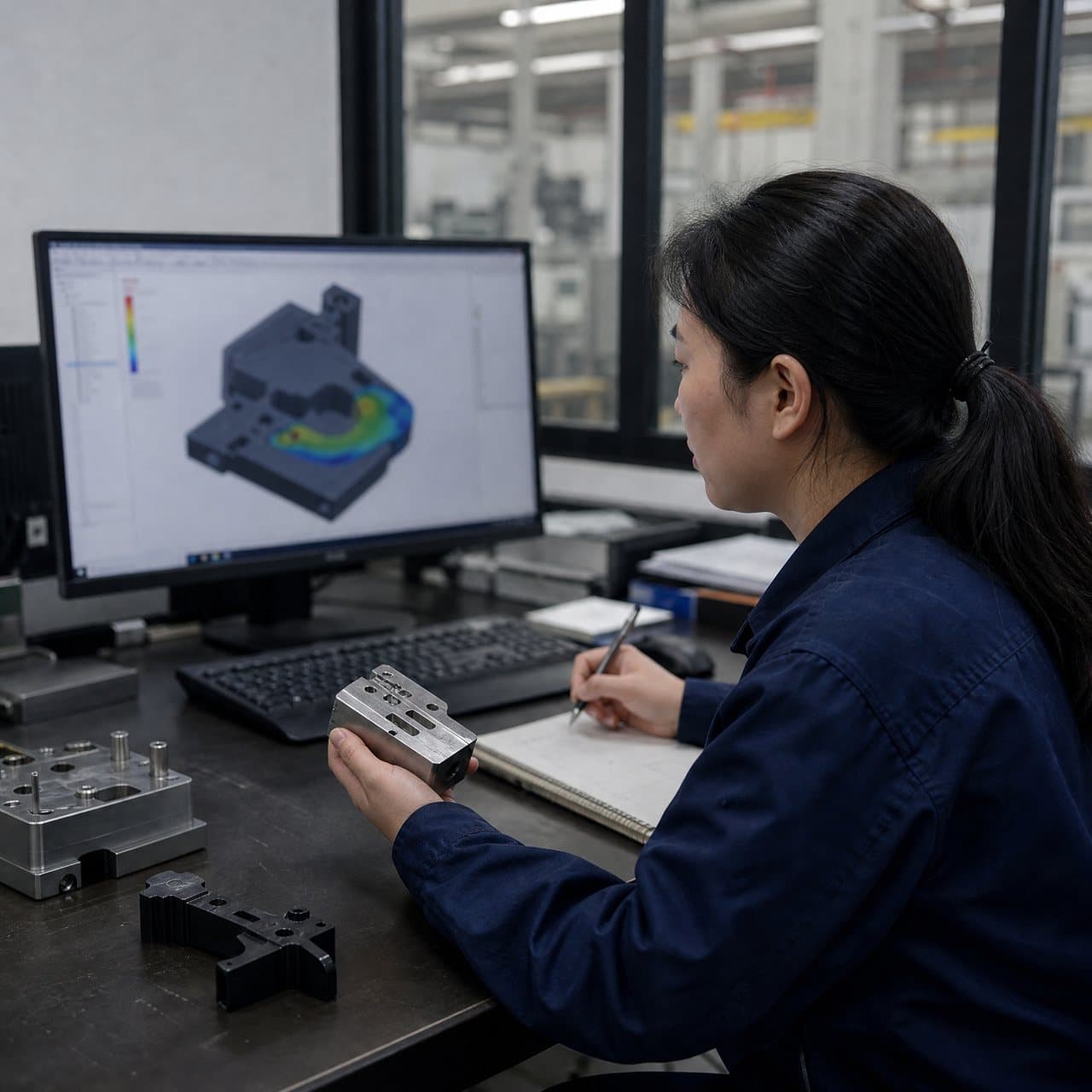
Ask for a preliminary cavity-layout rationale that connects the requested output to part geometry and press constraints. For multi cavity and family options, it should address runner and gate balance, cooling zones, venting, ejection, planned cavity numbering, and the approach to samples and dimensional checks. Mold-flow analysis can inform this discussion, but it is an engineering input, not a substitute for trial evidence.
During sampling, preserve cavity identity through measurement and visual review. Ask what the supplier will do if a cavity trends differently, how cavity-specific inserts or repairs would be handled, and whether production output will be reported by cavity when relevant. For cross-border programs, agree the tool configuration, approval criteria, spare-parts expectations, maintenance records and ownership terms before production. Those records matter when a tool is moved, changed or requalified.
06
Procurement Checklist Before You Select a Cavity Strategy
Use the same demand, technical and quality inputs for every supplier. This keeps a single cavity mold, multi cavity mold and family mold comparison tied to your actual program instead of to unmatched commercial assumptions.
07
RFQ CTA: Request a Comparable Cavity and Capacity Review
Send the 3D CAD, drawing, resin specification, appearance requirements, annual and monthly demand profile, target production mix, packing concept, forecast changes and quality documentation needs. InjeForm can use those inputs to scope a single cavity mold, multi cavity mold or family mold review and identify the press-capacity questions that should be resolved before tooling approval. Request an RFQ that separates tooling assumptions from recurring part-price assumptions so your team can compare offers on the same basis.

Practical takeaway
Before you move
to the next review.
- Provide annual demand, monthly profile, launch ramp and service-part demand by component rather than only a total quantity.
- Confirm whether all family-molded components use the same specified resin, color and compatible process conditions.
- Ask for the planned cavity count, runner approach, cavity layout and rationale for the selected route.
- Request the proposed injection molding press capacity window, including mold fit, clamp, shot, recovery, cooling and removal considerations.
- Require cavity IDs on trial parts and cavity-specific dimensional and visual evidence when multiple cavities are used.
- Compare tooling, trial and validation scope separately from the recurring injection molding price per part.
- Define how tool changes, cavity repairs, preventive maintenance and ownership records will be controlled.
FAQ
Common questions
Does a multi cavity mold always lower injection molding price per part?
No. It can share press time and handling across more identical parts, but it also increases tooling, development and validation scope. The outcome depends on demand, tool design, cycle performance, yield, runner system, quality requirements and the supplier’s available press capacity. Compare total program assumptions rather than relying on cavity count alone.
When is a family mold a poor fit?
A family mold may be a poor fit when components have very different wall thicknesses, volumes, cooling needs, tolerances, cosmetic requirements or demand ratios. The parts share a cycle, so one difficult part can limit the process. Separate tools may be easier to schedule and control when component demand does not move together.
What should a supplier confirm about injection molding press capacity?
The supplier should assess physical mold fit, clamp force, usable shot and injection performance, plasticizing recovery, mold-temperature control, ejection, removal automation and planned machine availability. It is better to review these against the actual tool layout, resin and runner design than to select a press from cavity count or tonnage alone.
How should buyers approve a multi cavity mold?
Approve against part-specific requirements and include cavity traceability in the trial plan. Review samples, dimensional evidence and visual criteria by cavity where relevant, then confirm the process and reporting plan for production. The appropriate validation depth depends on the application, customer requirements and risk.
References
Source material
- [1] Protolabs: Key Considerations Before Choosing Multi-Cavity Injection Molding
- [2] Fictiv: Family Tooling in Injection Molding for Multi-part Production
- [3] Nicolet Plastics: A Guide to Multi-Cavity Molds for Mass Production
This guide is general information for early procurement and engineering discussion. It does not replace product-specific DFM, qualification, validation, regulatory assessment or legal advice.