
Selecting a maker for a multi-material or insert-loaded component means testing whether the proposed route can form, locate, protect and inspect the released part’s interfaces, and whether trial evidence can support a product-side decision. Two suppliers may both call the work overmolding while proposing different substrate handling, material boundaries, tool splits, inspection and responsibilities.
For buyers in Europe, North America and the Middle East, the aim is comparable scope before commitment. Keep market-specific customer, product and regulatory requirements in the buyer-controlled brief. Ask a prospective maker to review them against the route, but do not infer product approval from a process name, image or general material statement.
Select the proposed route and the evidence needed to release it, not a broad claim that a supplier can make multi-material parts.
01
What is the buyer actually selecting?
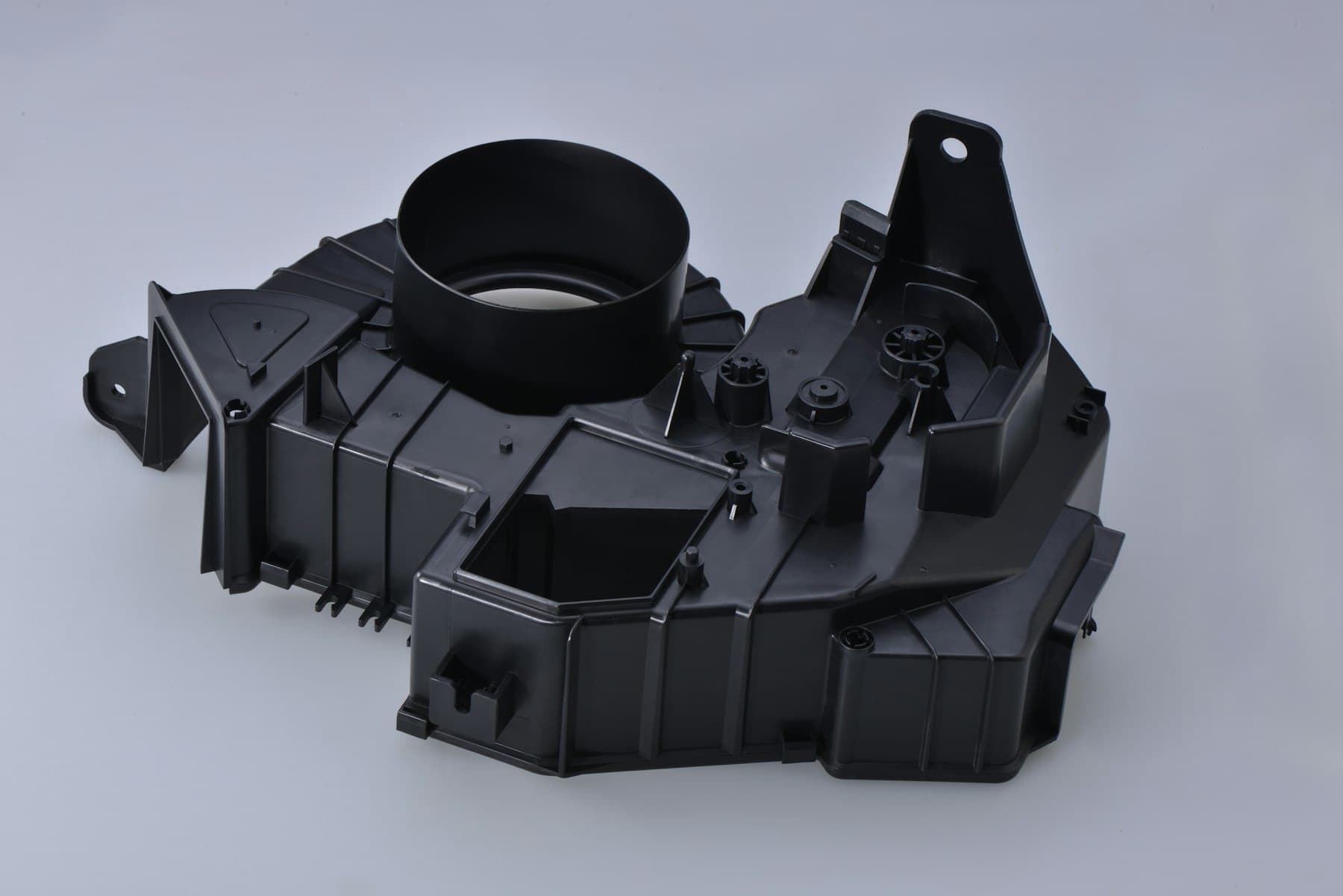
Separate the part requirement from the manufacturing label. A two shot mold maker should show how the first material is located for the second shot, where the material boundary sits and which surfaces need protection. A two shot mold may suit a sequential integrated operation, but it does not define the interface function, cosmetic boundary or acceptance condition.
An overmolding mold maker may propose a transferred substrate, a separately molded first component or another hand-off. For an overmolding tool, request the sequence, orientation and protection of the substrate, plus the support, gate, vent, release and inspection concept for the finished boundary.
An insert molding mold maker should explain how a pre-formed component is supplied, oriented, confirmed, held and protected. An insert molding tool should also show ejection and handling without loading a critical insert or plastic feature. The route remains a proposal until the product owner reviews it against the part, materials, demand and acceptance plan.
02
How should procurement compare the proposed manufacturing routes?
Give each candidate a controlled part package and require a visible route proposal. Compare only responses based on the same CAD revision, materials, demand range, customer-supplied items, cosmetic restrictions and quality scope. Keep any alternative route separately labelled.
This matrix does not choose a process or prove compatibility. The product owner must define the required bond, retention, sealing, electrical, cosmetic or assembly performance and the appropriate end-use validation.
| Proposed route | Decision to make | Supplier evidence to request | Buyer check before selection |
|---|---|---|---|
| Integrated two-shot sequence | Can the first shot be positioned and supported for the second? | Marked sequence, material boundary, gates, ejection and assumptions. | Are functional and cosmetic surfaces protected, with grades or an approval path identified? |
| Transferred or separately molded overmold route | How is the substrate moved, located and protected? | Handoff map, location, orientation and handling assumptions. | Are hand-offs, storage conditions and responsibilities in scope? |
| Insert molding | Can the insert be retained without compromising function? | Insert review, loading, confirmation, support and ejection concept. | Are source, condition, orientation datum, variation and ownership defined? |
| Mechanical retention at an interface | Which feature resists the service load? | Capture or interlock section and relevant load case. | Has the buyer identified peel, pull, torsion, movement, sealing or handling risk? |
| Material-to-material interface | What needs verification for the nominated grades? | Named grades, assumptions and sample proposal. | Is a datasheet being treated as background, not finished-part proof? |
03
What should the DFM review reveal before a tool is released?
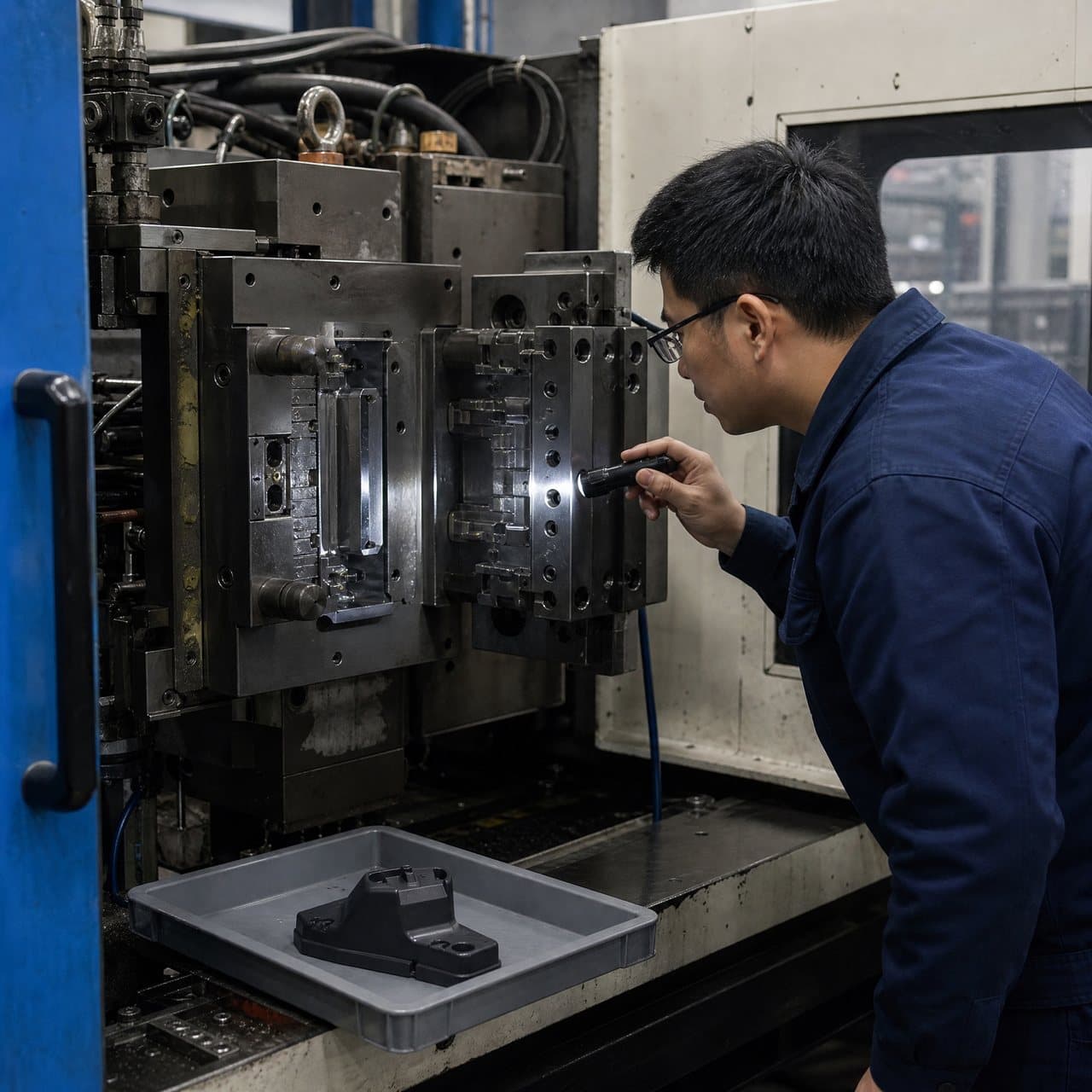
A useful multi-material DFM is a decision document. It should link each issue to a marked part location and the proposed trade-off. Request the opening direction, parting lines, material boundary, gates, vents, ejection, slides or insert support. Mark surfaces that cannot carry gate vestige, parting witness or ejector evidence, and provide mating parts, assembly sequence and functional datums.
Keep materials and dimensions connected to the geometry. Shrinkage and part behaviour are not fully predicted by a resin family name or standard specimen. For a locating, sealing or alignment interface, agree the inspection reference and whether the part is measured free, assembled or in a fixture. A report should identify revision, feature, locating method, sample identity and condition; it is not proof of end-product performance.
| DFM review item | Why it changes the tooling decision | Practical buyer question |
|---|---|---|
| Material boundary and coverage | Affects appearance, filling, release and access. | Which edges are exposed, cosmetic or measurable? |
| Substrate locating and support | Controls position and protection. | What locates it and prevents incorrect orientation? |
| Gate, vent and flow concept | Can affect appearance and interface filling. | Where are gates and vents proposed? |
| Parting line, shut-off and ejection | Can create witnesses or stress points. | Can the supplier mark lines and ejection zones? |
| Inspection and assembly access | Controls acceptance of critical relationships. | Which features need a fixture, gauge, CMM or assembly check? |

04
Which supplier evidence is stronger than a capability claim?
Ask candidates for the same evidence and score clarity, not confidence. A credible proposal identifies the reviewed CAD and drawing revision, material and insert assumptions, alternatives, sequence, principal risks and missing information. A marked review showing how this part will be located, fed, vented, released and inspected is stronger than a generic claim.
Request a proportionate trial plan: sample purpose, characteristics or visual conditions, method or fixture, result recipient and exception authority. For interface retention, define the failure mode and sample condition before choosing a test. A peel test may not represent torque, compression, repeated flexing or assembly load.
Require commercial scope for engineering, tooling, trials, samples, insert handling, inspection, secondary work, packaging, ownership, storage, maintenance, modifications and logistics. Retain each supplier’s original currency and delivery assumptions when normalising a comparison.
05
How should the buyer make the selection and launch decision?
Use a selection record shared by engineering, quality, purchasing and the programme owner. For each candidate, capture the part revision, route, material and insert assumptions, requested design changes, inspection concept, trial evidence, commercial boundary and unresolved risks. An open point need not block selection if it has an owner, decision date and clear effect on tool release.
Before authorising steel, freeze what is decided and preserve alternatives as alternatives. The buyer approves the controlled product definition and product-impacting changes; the maker documents its proposal and notifies agreed changes. Tie trial results to the relevant revision so a later gate move, material substitution, insert-source change, cavity change or packaging revision does not silently inherit an earlier approval. Release defined scope, not implied decisions.
| Decision gate | Record needed | Owner of the product-side decision |
|---|---|---|
| Supplier selection | Comparable route proposal, known exclusions, risk list and commercial scope. | Cross-functional buyer team. |
| Tool release | Approved part revision, material direction, insert definition, marked DFM decisions and open-point log. | Product owner with assigned engineering and quality approvers. |
| Trial review | Sample identity, reviewed characteristics, visual or assembly observations, method and disposition. | Named acceptance authority. |
| Routine supply release | Agreed acceptance evidence, packaging and logistics baseline, change-notification path. | Purchasing and quality according to the buyer's controlled process. |
Practical takeaway
Before you move
to the next review.
- Issue one controlled RFQ package with the same CAD revision, drawings, material direction, demand range, insert information and cosmetic restrictions to every candidate.
- Ask each candidate to mark the proposed sequence, substrate or insert location, gates, vents, parting lines, ejection zones, material boundary and unresolved risks.
- Separate demonstrated evidence from assumptions: name the required sample, inspection, functional check or validation decision for each critical interface.
- Normalise quotations for engineering, tooling, trial, insert loading, quality, secondary work, packaging, ownership, maintenance, delivery and exclusions before comparing totals.
- Record selection, tool-release and sample-approval decisions against the controlled revision, with named owners for every open item and change trigger.
FAQ
Common questions
Is a two-shot route automatically better than transfer overmolding?
No. The appropriate route depends on the actual part, material pair, interface function, substrate handling, demand pattern, cosmetic constraints, tooling concept and acceptance evidence. An integrated sequence may reduce a particular hand-off, while a separate substrate route may be more suitable for another design. Ask suppliers to explain the proposed sequence and its consequences, then keep alternatives separate in the sourcing comparison.
What should a buyer ask to see before selecting a multi-material mold maker?
Ask for a part-specific, marked proposal rather than a generic capability statement. It should identify the reviewed revision, sequence, material and insert assumptions, location and support features, gates, vents, material boundary, parting and ejection concept, inspection approach, trial evidence, exclusions and open risks. The buyer should also know who may approve a design, material or acceptance change.
Can a material datasheet prove adhesion or insert retention in the finished part?
No. Datasheets and material-provider guidance can inform selection, but they do not by themselves prove the behaviour of a specific geometry, interface, process route or end-use condition. Define the required retention or service condition, then agree the representative sample, method, acceptance rule and decision owner appropriate to that product.
References
Source material
- [1] Protolabs, Overmolding and Insert Molding Design Guide —
- [2] ASTM International, ASTM D955-21, Standard Test Method of Measuring Shrinkage from Mold Dimensions of Thermoplastics —
- [3] National Institute of Standards and Technology, Metrological Traceability —
- [4] International Organization for Standardization, ISO 20457, Plastics moulded parts, tolerances and acceptance conditions —
This guide is general information for early procurement and engineering discussion. It does not replace product-specific DFM, qualification, validation, regulatory assessment or legal advice.