
Choosing an injection mold maker for an export program is best treated as an evidence-and-handover decision, not a directory search. The buyer, tool builder, molder, resin source, test provider and importer may all be in different regions. Geography does not determine competence, but it does increase the need for a named owner, controlled record and practical verification. Start with the product definition, the intended markets and the division of responsibility, then test whether each candidate can respond to that specific program.
This guide assumes the buyer is procuring a new tool or transferring a defined design into an export supply chain. It does not assume a particular resin, product sector, shipment route, certification, tolerance, tool life or regulatory pathway. Product-specific rules can be stricter than general product-safety rules, especially for regulated applications. The buyer should confirm applicable legal, customs, labelling, traceability and conformity obligations with qualified advisers and the responsible economic operator in each destination market. For consumer products placed on the EU market, the General Product Safety Regulation requires a risk analysis and technical documentation; it also interacts with more specific sector rules.[1][2]
The strongest export quote is not the shortest promise. It is the one whose technical scope, evidence, change authority and delivery boundary can be compared line by line with the other bids.
01
Choose the operating model before you score the suppliers
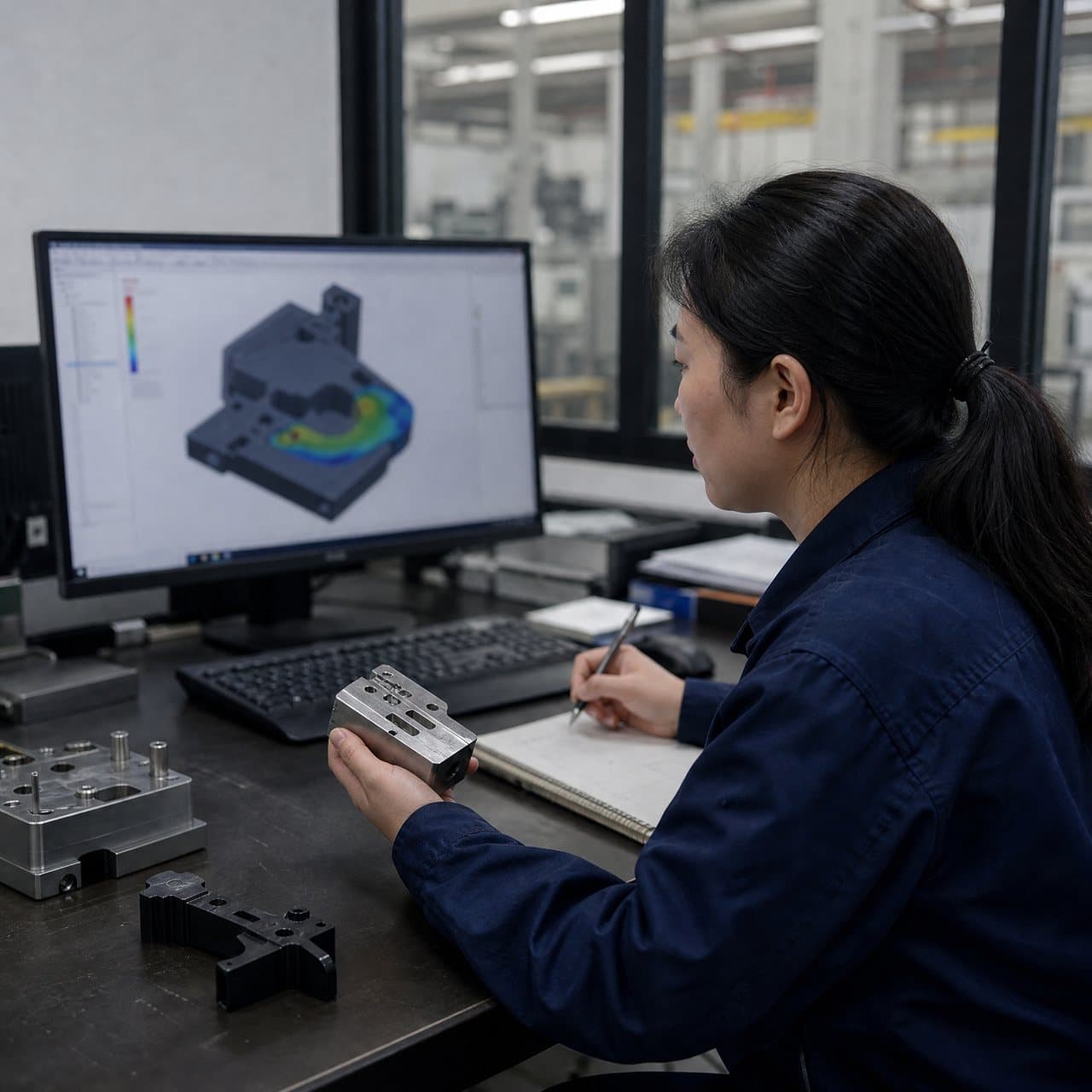
An export program often fails at the interfaces between businesses, not at the moment a cavity is machined. First map who designs the part, approves DFM changes, builds the tool, runs trials, supplies the resin, measures samples, authorizes shipment, imports the goods and answers a market-surveillance question. One company may cover several roles, or a mold tool shop may build the tool while another molder runs production. Neither structure is automatically better. The risk is leaving the handoff between them undefined.
Ask every candidate to identify the named technical owner for the tool concept, the named commercial owner for scope changes and the person who can release a sample package. An injection mold manufacturer may manage those activities directly or coordinate specialists; either arrangement needs a visible responsibility matrix. State whether the program needs early samples, production launch, future transfer, or all three. This prevents a limited build-and-ship quote being mistaken for ongoing production support.
| Operating question | What the buyer should define | Evidence to request before award |
|---|---|---|
| Product authority | Who controls CAD, drawings, critical interfaces, visible surfaces and approved material direction. | Revision register and an example of a marked technical review. |
| Tool and production roles | Whether the tool builder, molder and inspection provider are the same party or coordinated suppliers. | Named role map, subcontracted scope and escalation route. |
| Export boundary | Who prepares packing data, commercial documents, origin information where applicable, and shipment instructions. | Written delivery and document-responsibility matrix; confirm the chosen Incoterm separately. |
| Market readiness | Which destination countries, customer requirements and product categories are in scope. | Compliance-question log showing assumptions, owner and verification status. |
02
Compare the proposed technical route, not the supplier’s label
Terms such as mold manufacturing service or full-service supplier do not define what will be delivered. Normalize bids against one technical brief. It should name the controlled CAD and drawing revisions, functional dimensions, material and colour direction, cosmetic zones, mating parts, expected demand profile, secondary operations, sample purpose and open decisions. Then require a candidate to distinguish included work from assumptions, exclusions and optional work. A lower total can simply reflect a smaller scope.
For the proposed custom injection mold, ask for a review that connects the part to the tool architecture: parting direction, gate and vent intent, ejection, cooling concept, moving features, cavity strategy, purchased components and maintainability assumptions. Do not demand a generic tolerance or output promise. Plastic-part behaviour depends on the material, geometry, processing and the agreed acceptance conditions. ISO 20457 addresses manufacturing tolerances and acceptance conditions for moulded plastic parts, while making clear that product-standard requirements are not replaced by the document.[3] Use this as context for a part-specific acceptance plan, not as a substitute for one.
| Bid comparison area | A comparable response states | Warning sign to clarify |
|---|---|---|
| Tool concept | The assumptions behind cavities, runner system, moving elements, cooling and ejection. | A tool class or material label with no concept drawing or assumption list. |
| Material | Exact proposed resin direction, allowed alternatives and who approves a change. | A family name used where grade, filler, colour or approval route matters. |
| Sampling | What samples demonstrate, which revision is used, what is measured and who signs release. | The word approved without a defined sample condition, method or authority. |
| Commercial boundary | Included engineering, trials, inspection, packing, documents, freight basis and exclusions. | A total price that cannot be traced to technical and delivery scope. |
03
Audit the evidence path rather than relying on a certificate claim
A buyer can ask how documents are created, reviewed, revised and retrieved, without assuming that a certificate proves suitability for a specific part. ISO describes the ISO 9000 family as quality-management standards built around, among other principles, a process-oriented approach and continual improvement.[4] That is useful context for asking about control of drawings, nonconformance handling and corrective actions. It does not prove that a candidate can make this geometry, resin or appearance requirement. Verify any claimed certification directly with the issuing body and check its scope, location and current status.
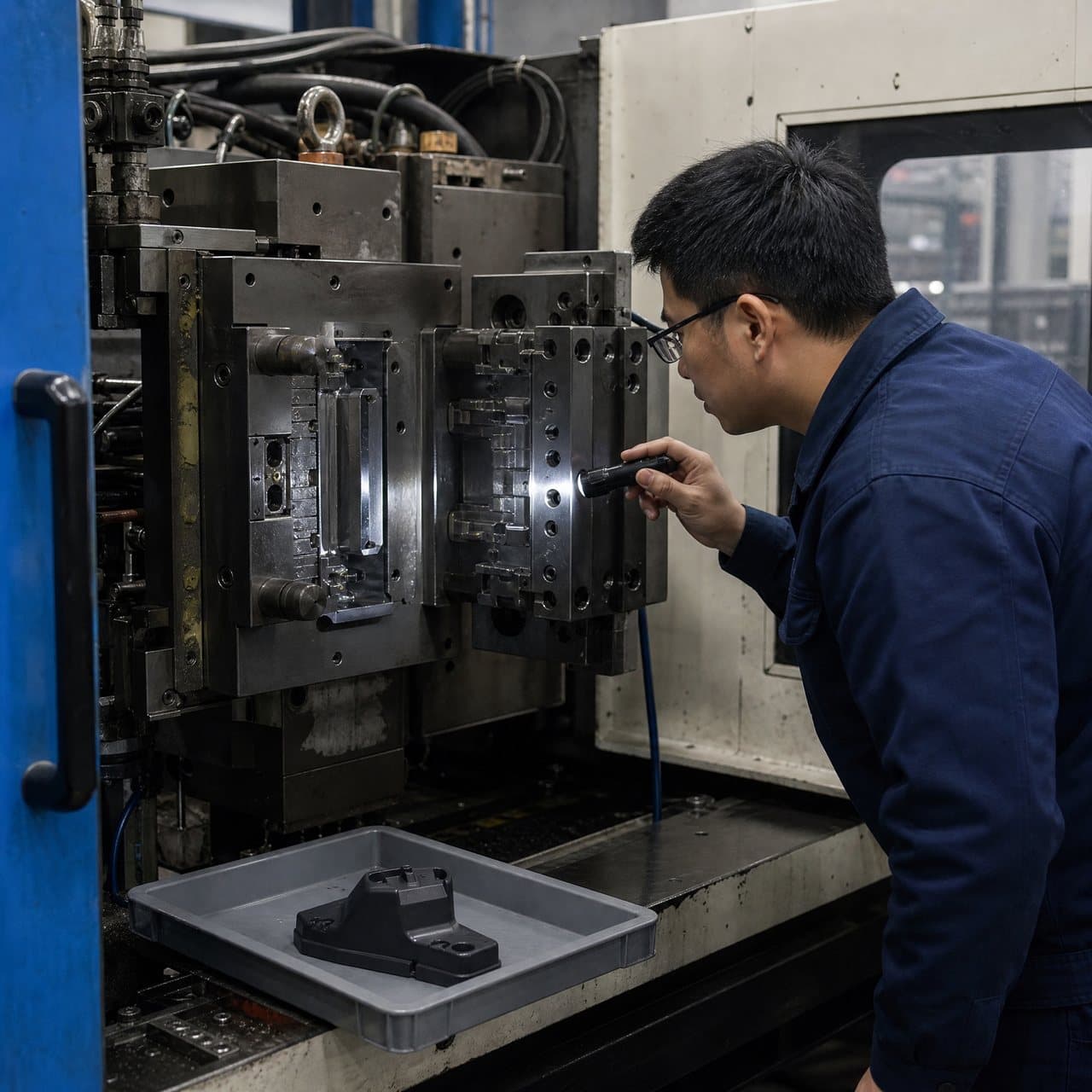
Scale the audit to the risk. A remote review can examine an anonymised DFM report, change record, inspection example, calibration evidence, material-identification flow and sample-pack index. For a higher-risk program, an on-site or independent audit may be appropriate, but it should test the proposed route rather than reward a polished presentation. Ask the candidate to walk one controlled example from incoming information to a released record. If external machining, surface treatment, hot-runner support, testing or molding is used, ask who verifies the received work and who owns the response if the external provider changes it.
04
Release in gates: design, trial, shipment and market file
A useful export program has more than a final acceptance event. Gate one confirms the released input set and the questions still open. Gate two records the DFM decision and tool concept. Gate three evaluates the trial against agreed material, sample condition, measurements, appearance and functions. Gate four confirms packing, identification, shipping documents and the records that must travel digitally with the program. Each gate should say who may approve, what evidence is required, what happens to a deviation and whether a later change reopens a prior gate.
Keep manufacturing evidence separate from product compliance conclusions. The tool builder can provide material identification, process or sample records and traceability inputs that the product owner needs. It should not be asked to declare a finished product compliant merely because it molded a part. In the EU, GPSR technical documentation must support product safety and may include risk analysis and relevant test evidence; the responsible operator must be able to provide it when required.[1][2] In North America and Middle East markets, requirements can differ by product and destination. Confirm the importing party, applicable product rules, language or marking needs, record-retention responsibilities and the competent authority or adviser before release.
| Release gate | Decision | Minimum program record |
|---|---|---|
| Input freeze | Are the current design inputs sufficient to begin engineering? | Revision list, open-issue log, market list and responsibility matrix. |
| Tool release | Is the tool concept accepted, including known compromises? | Marked DFM, tool concept, approved deviations and change authority. |
| Sample release | Do samples meet the agreed evaluation purpose? | Sample identification, material record, measurement results, visual assessment and disposition. |
| Shipment readiness | Can goods and records cross the agreed delivery boundary? | Packing and label requirements, document index, shipment instruction and record-access owner. |
05
Contract for continuity when distance, language and change pressure increase
Injection mold tooling should be governed by a change process that works across time zones and organizations. Define what counts as a change: a CAD update, resin or colour substitution, cavity repair, process move, gauge revision, external-provider change or packaging change. For each, identify who proposes it, who evaluates the effects on function and market file, who grants written approval, and what record must be updated. A verbal instruction or an email without a revision reference is weak control where versions and languages vary.
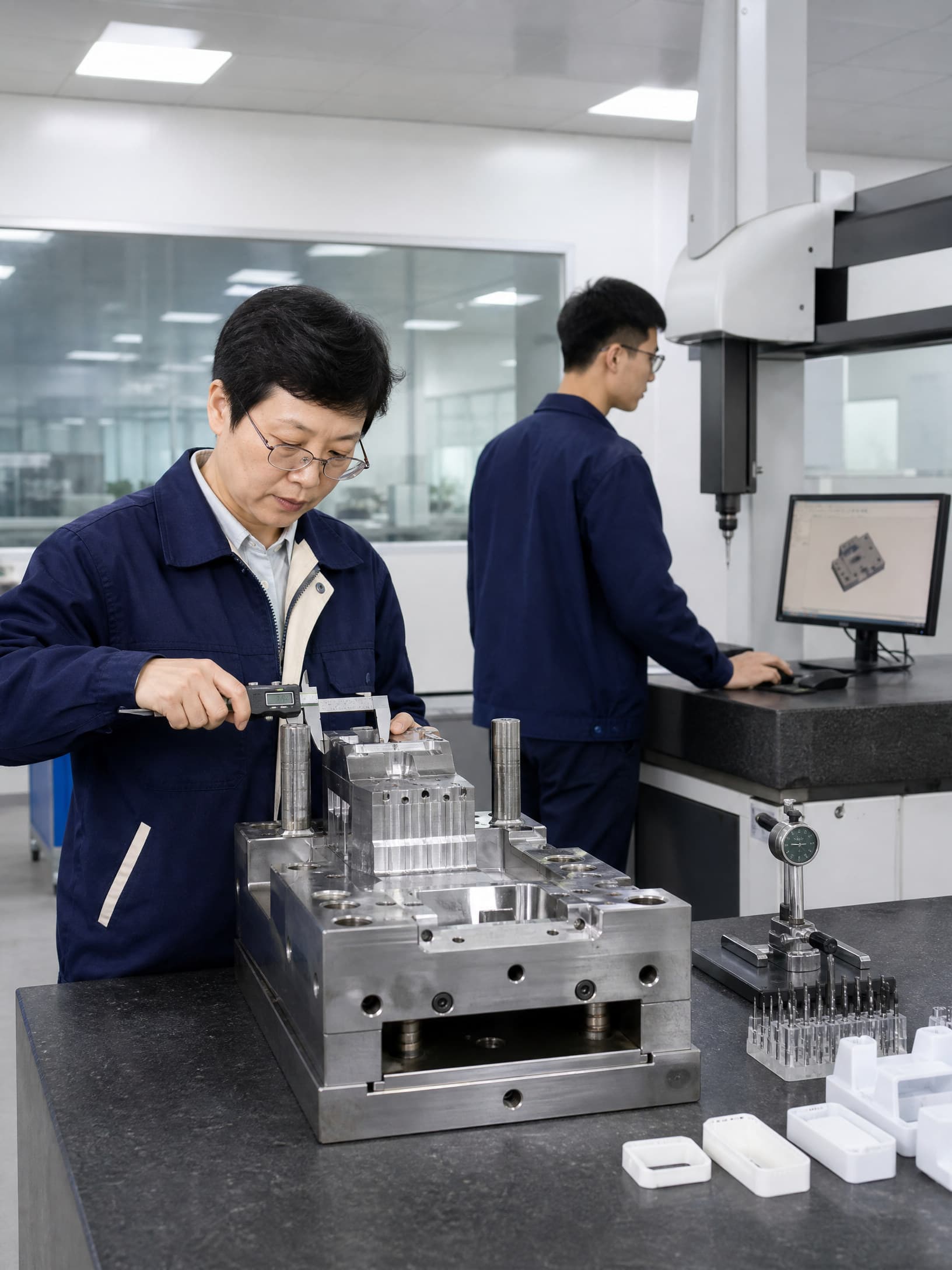
Also agree how information can be understood when it is needed. Use unambiguous revision identifiers, controlled native and neutral file formats, a document language or translation approach, time-zone escalation contacts and photo or video conventions for reviews. Define delivery terms and insurance responsibility in the purchase agreement, not through assumption. Protect confidential files through contractual controls and access rules, then test retrieval: can the designated buyer contact obtain the latest approved drawing, DFM decision, tool record and sample disposition without relying on one individual? That continuity test is a practical differentiator for an export program.
Practical takeaway
Before you move
to the next review.
- Issue one controlled technical brief and require each bidder to list assumptions, exclusions, external providers and open decisions against it.
- Create a responsibility matrix that names the product owner, tool builder, molder, inspection provider, exporter, importer and market-compliance owner.
- Request one anonymised evidence trail, such as a marked DFM, revision record, inspection report and corrective-action closeout, then verify relevant claims independently.
- Set written approval gates for input freeze, tool concept, sample release and shipment readiness; include a deviation and change-control route.
- Before award, test document retrieval and define the digital handover package, delivery term, packing responsibilities and escalation contacts.
FAQ
Common questions
Should we choose the supplier that builds the tool and molds the parts in the same location?
Not automatically. A combined arrangement can reduce interfaces, while a separate tool builder and molder can be workable when the responsibilities, files, acceptance gates and support route are controlled. Compare the proposed handoffs and evidence path for the actual program rather than treating either structure as inherently lower risk.
Is an ISO 9001 certificate enough to qualify a mold maker?
No. A current certificate can be one input about a quality-management system, subject to independent verification of its scope and site. It does not establish tool-specific design, resin, cosmetic, measurement, export-document or production capability. Ask for program-relevant evidence and evaluate it against the part and supply model.
Who is responsible for product compliance when molded parts are exported?
Responsibility depends on the product, market, commercial structure and applicable law. The party placing a finished product on a market may have obligations that a tool builder cannot assume. Assign a named compliance owner, identify the importer or responsible economic operator where relevant, and obtain qualified legal or regulatory advice for the destination market. The molder’s records can support the product file, but they are not by themselves a compliance conclusion.
References
Source material
- [1] European Union, Regulation (EU) 2023/988 on general product safety.
- [2] International Trade Administration, U.S. Department of Commerce, EU Consumer Goods General Product Safety Regulation (GPSR).
- [3] International Organization for Standardization, ISO 20457:2018 Plastics moulded parts — Tolerances and acceptance conditions (withdrawn; successor indicated by ISO).
- [4] International Organization for Standardization, ISO 9000 family — Quality management.
This guide is general information for early procurement and engineering discussion. It does not replace product-specific DFM, qualification, validation, regulatory assessment or legal advice.