
A pre-RFQ audit is not a hunt for the largest machine list or a substitute for engineering validation. It is a bounded investigation that helps a buyer decide whether a prospective supplier is a credible party to invite into a controlled quotation process. For an injection molding China programme, that means separating three questions that are often blurred together: who will contract with the buyer, who will actually make or coordinate the part, and what evidence can be checked before confidential CAD and commercial terms are released. The outcome should be a short, dated risk record, not an assumption that a supplier is approved for every future part.
Treat the audit as a decision gate, not a marketing presentation: record what was observed, what was supplied, what could not be verified, and the conditions that must be met before an RFQ is issued.
01
Define what the pre-RFQ audit must decide
Begin with the decision, because an audit that tries to review everything usually confirms little. The purpose before an RFQ is normally to establish whether the candidate can receive the intended scope responsibly and whether its stated production route deserves a technical quotation. It is not yet proof that a mold, process or finished part will meet the buyer’s requirements. Keep the questions proportional to the programme: a non-critical cover, a cosmetic consumer component and a component with safety, medical, food-contact or controlled-market implications need different depth of review. Applicable product requirements remain the responsibility of the product owner and relevant specialists.
Create a one-page audit brief jointly owned by procurement, engineering, quality and logistics. State the part family or technology in general terms, expected market destinations, confidentiality limits, risk triggers and the evidence that would permit an RFQ. Also state what will be evaluated later: DFM, mold design, material approval, samples, inspection method, validation and shipment release. This avoids asking a candidate to guarantee a result before it has seen controlled part information, while preventing the buyer from treating an introductory call as technical qualification.

02
Verify identity, site relationship and scope before sharing the RFQ package
A China injection molding manufacturer may use a trade name, a sales office, one or more operating sites and specialist partners. Ask for the contracting legal entity, registered address, payment beneficiary where appropriate, production-site address, primary contacts and the relationship among them. Independently verify the elements that matter to your company’s onboarding process, using permitted local records, the buyer’s compliance procedure or qualified advisers. Do not assume that a website, a video call, a business card or a certificate image resolves identity or authority.
Next, match the claimed scope to the proposed programme. For China plastic injection molding, request a concise capability statement that names the processes being proposed rather than a general catalogue. Ask which work would be executed in-house, which work would be managed externally, which site would receive controlled files, and who would approve a change. Ask for a current example of the document flow with commercially sensitive details removed: how a revision is received, issued to the responsible team, superseded and retained. The useful signal is not an elaborate template; it is whether the explanation identifies people, records and boundaries without improvisation.
| Pre-RFQ claim | Useful verification approach | What the evidence does not establish |
|---|---|---|
| The bidder is the accountable counterparty | Confirm the legal entity, authorized contact, quoted scope and intended contracting route through the buyer’s onboarding process. | That the entity owns every production asset or is financially suitable for every programme. |
| The proposed site can support the stated route | Use a planned remote or on-site walk-through linked to named processes, roles and records. | That a future tool, material or production lot will meet a particular specification. |
| A quality-system claim is meaningful | Check the issuer, current scope, site address and activity covered; ask how the stated system reaches the proposed work. | Part-specific approval, product conformity or regulatory acceptance. |
| External operations are controlled | Request the named operation, accountable owner, handoff record and proposed change-notification route. | That the external provider has been approved for the buyer’s product. |
03
Audit operating controls through a traceable walkthrough, not a capability tour
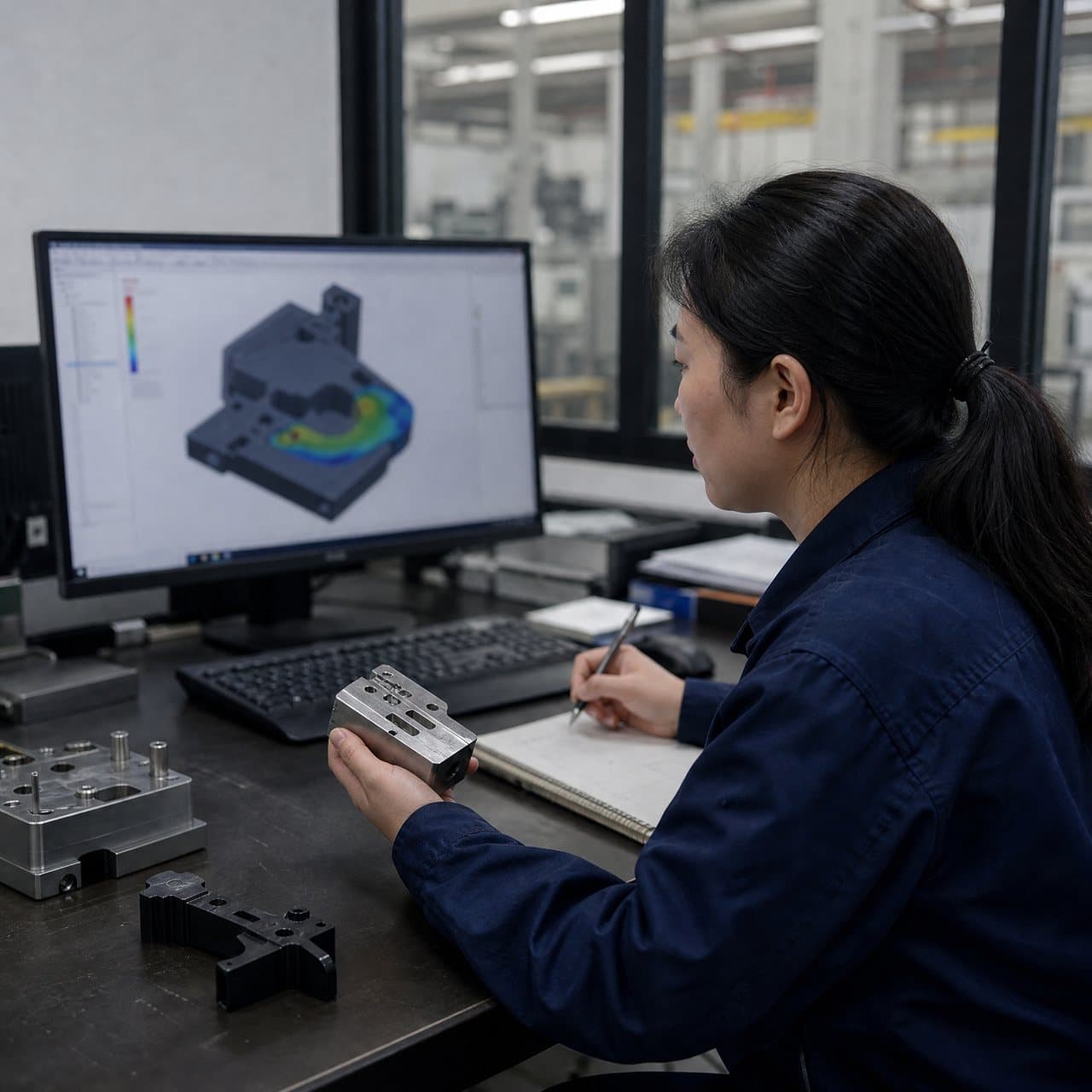
For offshore injection molding, a useful audit follows one illustrative job through the operating system rather than jumping from reception to a row of presses. Agree the route before the visit or live session: enquiry and revision receipt, DFM or technical review, purchasing or material receipt, tool planning, molding, inspection, nonconformance handling, packing and document release. At each handoff, ask who owns the decision, what record is created, how the correct revision is recognized and what happens when the planned route cannot be followed. The candidate need not disclose another customer’s proprietary data; redacted or simulated records can still show the control logic.
A quality-management certificate or a stated inspection capability can be useful context, but neither should close the audit. ISO 9001 describes requirements for a quality-management system; it is not a declaration that a particular molded component is suitable for a particular use. Verify any certificate directly with the issuing route where material to the decision, confirm its scope and expiry, and compare it with the site and activities proposed. Apply the same caution to calibration statements, machine lists, customer logos, capacity assertions and test reports. Evidence must be relevant to the part, date and decision at hand.
04
Choose the audit format to match risk and what can actually be observed
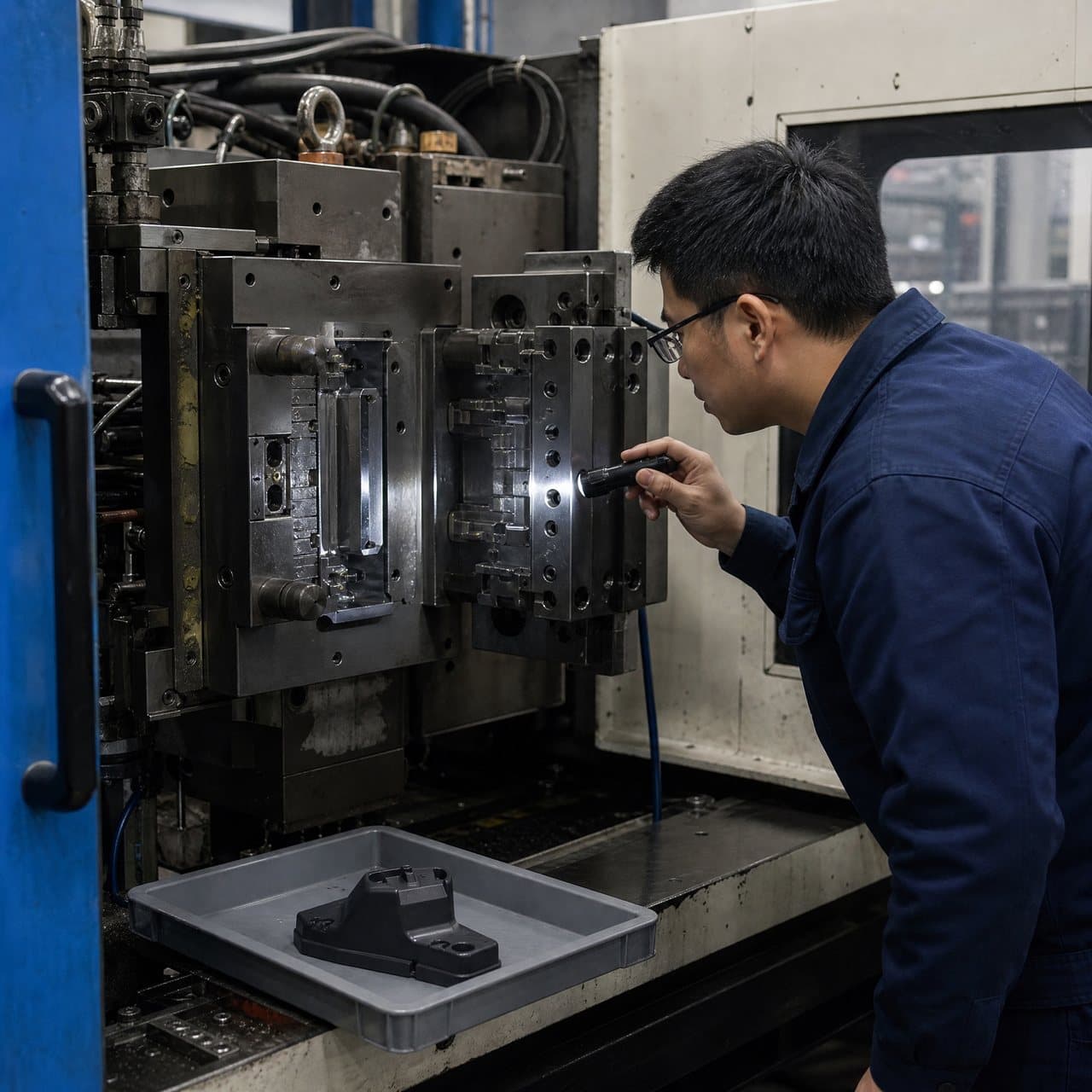
A remote audit may be an efficient first gate, especially when it is scripted around named questions, records and people. It can establish whether the candidate understands its route and can locate basic controls. An on-site audit can add direct observations of the agreed locations and allow follow-up around handoffs. An independent audit may add useful distance when the buyer lacks local resource or language coverage. None of these formats is a standing guarantee, and each is limited by the date, areas sampled and information made available. Select the method based on consequence, spend, technical novelty, IP exposure, supply criticality and the buyer’s ability to act on findings.
Supply-chain security and business-continuity questions belong in the same record, without turning a molding audit into a universal compliance survey. Confirm who can release export documents, how packed goods are identified, who would notify the buyer of a material or location change, and whether there is a named escalation contact. U.S. Customs and Border Protection’s CTPAT materials illustrate that supply-chain-security programmes use defined roles and documented profiles, but their eligibility and criteria are programme-specific. Buyers should not infer CTPAT participation, import eligibility or customs treatment from an unrelated supplier assertion.
| Audit format | Best used to investigate | Practical limitation to record |
|---|---|---|
| Document and interview review | Counterparty information, proposed route, document-control logic and unanswered questions. | Documents can be current yet not show how work is performed at the proposed site. |
| Guided remote walkthrough | Named areas, responsible people and selected records without immediate travel. | Camera framing, connectivity and access limitations can restrict observation. |
| Buyer or qualified third-party site audit | Observed conditions, handoffs and follow-up questions at the agreed site. | It is a time-bound sample; it does not validate all future production or subcontractors. |
| Part-specific technical review after RFQ | DFM, resin route, tooling concept, measurement and acceptance plan. | It cannot be replaced by a general supplier audit. |
05
Convert findings into a disciplined RFQ invitation and regional checks
Only invite candidates that have cleared the buyer’s defined pre-RFQ conditions, or invite them with explicit conditions. The RFQ cover sheet should name the verified or provisional counterparty, site route, confidential-information rules, required response format and unresolved audit findings. Ask the bidder to identify any proposed subcontracting, alternate site, material substitution or process change that differs from the route reviewed. This makes injection molding sourcing more controlled without implying that the buyer has already approved the supplier, its product or its future production method.
For a European buyer, the importer and product-market obligations may require technical documentation, traceability, marking or conformity steps that are specific to the finished product and destination. The European Commission’s Your Europe guidance makes clear that an EU importer has verification responsibilities for products placed on the EU market. North American buyers should separately confirm their own product, customs, origin, sanctions and security obligations; a technical supplier audit does not determine them. Buyers serving the Middle East should identify the destination country, product category, language, importer-of-record and any applicable conformity or documentation route before they ask a molder to promise compliance. Requirements and authorities vary, so legal, customs and product specialists should validate the current route.
A global injection molding supplier can coordinate multiple sites or present a broad service offer, but coordination should not obscure the actual party and location responsible for each operation. Preserve the audit record with the RFQ revision, list any closing actions and set the next evidence gate. Once engineering information is available, the next gate should be part-specific: a marked DFM response, proposed tooling and material assumptions, inspection logic, sample plan and change-control commitments. This sequence gives commercial discussions a defensible starting point without inventing performance, price, capacity or compliance claims.
Practical takeaway
Before you move
to the next review.
- Write a one-page pre-RFQ audit brief that states the intended decision, risk triggers, evidence needed and items reserved for later engineering review.
- Verify the proposed contracting entity, operating site or sites, process route and responsibility for outsourced work through the buyer’s approved onboarding process.
- Run a traceable walkthrough of revision control, material identification, technical review, inspection, nonconformance, packing and change notification using permitted redacted evidence.
- Classify every finding as confirmed, observed, open or not covered; do not convert an unverified claim into supplier approval.
- Issue the RFQ only with explicit route assumptions, audit conditions, destination-market questions and a requirement to disclose any change from the reviewed arrangement.
FAQ
Common questions
Is a remote audit sufficient before an RFQ?
It can be sufficient for an initial screening decision when the programme risk is limited and the review is structured around named evidence, roles and open points. It is not equivalent to observing every operation, and it should not be treated as proof of part capability. Escalate to an on-site or independent review when the decision risk, technical complexity, continuity exposure or buyer policy warrants it.
Should a buyer require an ISO certificate before inviting a supplier to quote?
A quality-management certificate may be relevant to a buyer’s supplier policy, but it is only one input. Verify the issuer, scope, site and current status if it matters. Then ask how the proposed work would be controlled. A certificate does not approve a material, tool, molded part, regulatory route or future shipment.
What should make a buyer pause before sending CAD?
Pause when the contracting entity, production route, responsible site, change-notification owner or confidentiality boundary remains unclear; when the candidate cannot explain how controlled revisions reach the proposed operation; or when essential evidence cannot be verified through the buyer’s process. Record the gap, seek clarification, use an appropriate independent check or choose not to proceed.
References
Source material
This guide is general information for early procurement and engineering discussion. It does not replace product-specific DFM, qualification, validation, regulatory assessment or legal advice.