
European, US and Middle East importers
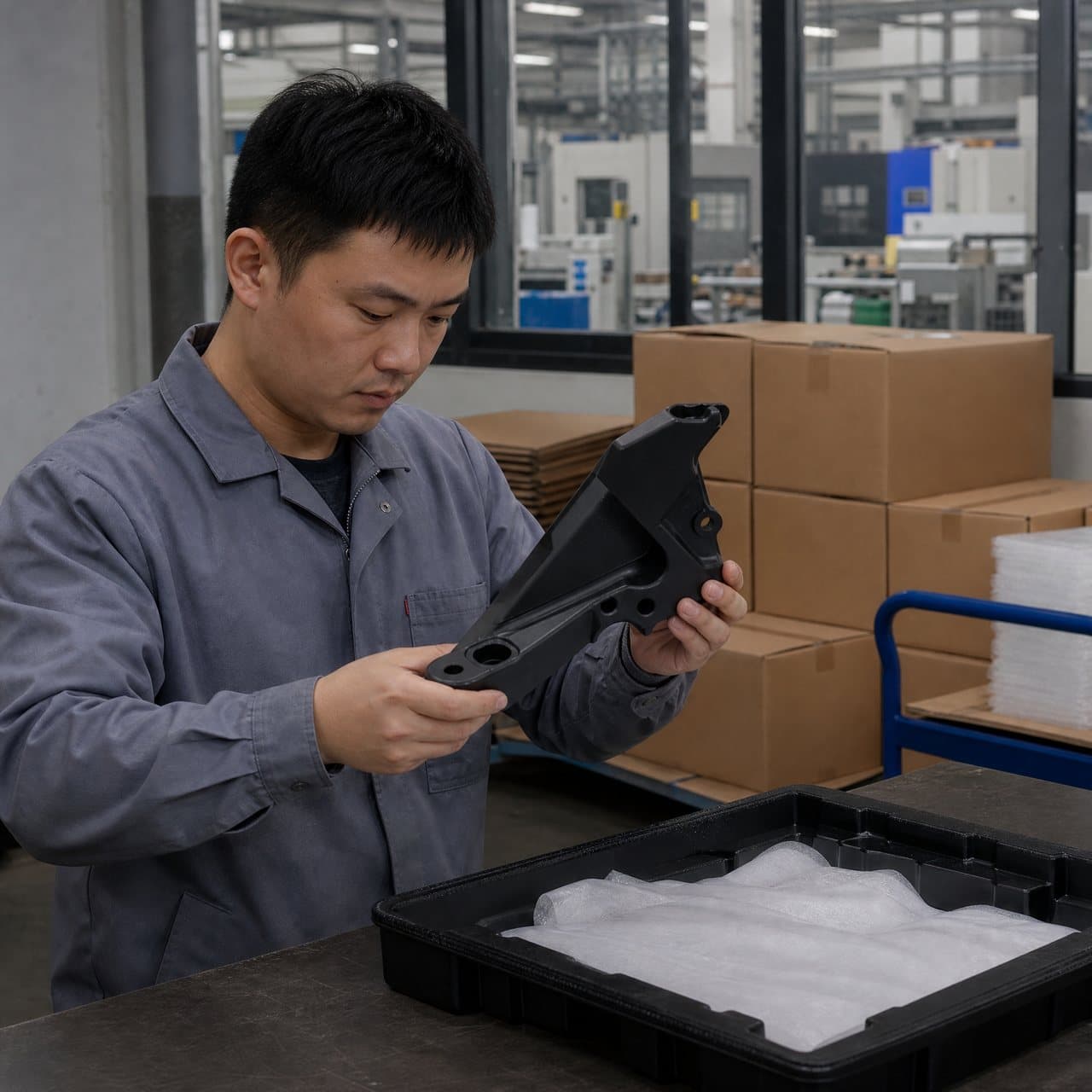
Cross-border shipment readiness
Injection molding export
documents & Incoterms.
Clarify Incoterms, packing lists, commercial invoices, HS classification, origin, exporter responsibilities and delivery handover for molded parts.
InjeForm
For OEM and product teams across Europe, North America & the Middle East
A practical sourcing route
Make the next
decision clearer.
International delivery becomes easier when production, packing, export documentation and import responsibilities are defined before the purchase order. This route helps buyers ask the practical questions that sit between a factory release and final delivery.
Buyer-led scopeEngineering evidenceControlled handover
Project fit
Where this route
helps most.
Start with the questions that affect tooling, quality, timing and total program risk.
Buyers comparing FOB, DAP, DDP and EXW offers
Projects shipping tooling or molded parts across borders
What buyers can align
Evidence that supports
the next gate.
Scope the work around decisions and records—not broad promises.
Incoterm and named-place clarification
Defined with the part, tool, material, volume and acceptance requirements in scope.
Commercial invoice and packing-list checklist
Defined with the part, tool, material, volume and acceptance requirements in scope.
HS classification and origin questions
Defined with the part, tool, material, volume and acceptance requirements in scope.
Packing, label and importer/exporter responsibility matrix
Defined with the part, tool, material, volume and acceptance requirements in scope.
Decision framework
Compare the
trade-offs.
| Topic | What to define | Why it matters |
|---|---|---|
| Incoterms | Term, named place and risk transfer | Clarifies freight, clearance and cost responsibility |
| Documents | Invoice, packing list, origin and shipment records | Supports receiving and customs workflows |
| Packing | Protection, labels, pallet and quantity per carton | Reduces damage and receiving errors |
How the conversation moves
From brief to
controlled next step.
Use the first conversation to identify what is known, what is open and what evidence should come next.
- 01
Share destination, shipment type, part value and timing.
- 02
Agree the named place, Incoterm and document responsibilities.
- 03
Approve the export packing and labeling standard.
- 04
Release shipment with the agreed records and tracking handover.
Buyer questions
Clear answers before
you commit.
Should injection molded parts be shipped under FOB or DDP?+
Neither is universally best. Compare the named place, import responsibility, freight control, customs requirements, duty exposure and buyer’s existing logistics capability.
Who determines the HS code?+
The classification should be confirmed for the specific product and destination with the responsible importer, customs adviser or competent authority. Do not rely on a generic code without checking.
What documents should accompany an export shipment?+
The exact set depends on the transaction and destination, but commonly includes a commercial invoice, packing list, transport document and any agreed origin, quality or regulatory records.
Start a technical conversation
Bring us your
next part.
Share the drawing, resin, target volume, market and timing. We will return with focused questions and a practical next step.