
New plastic parts before design freeze
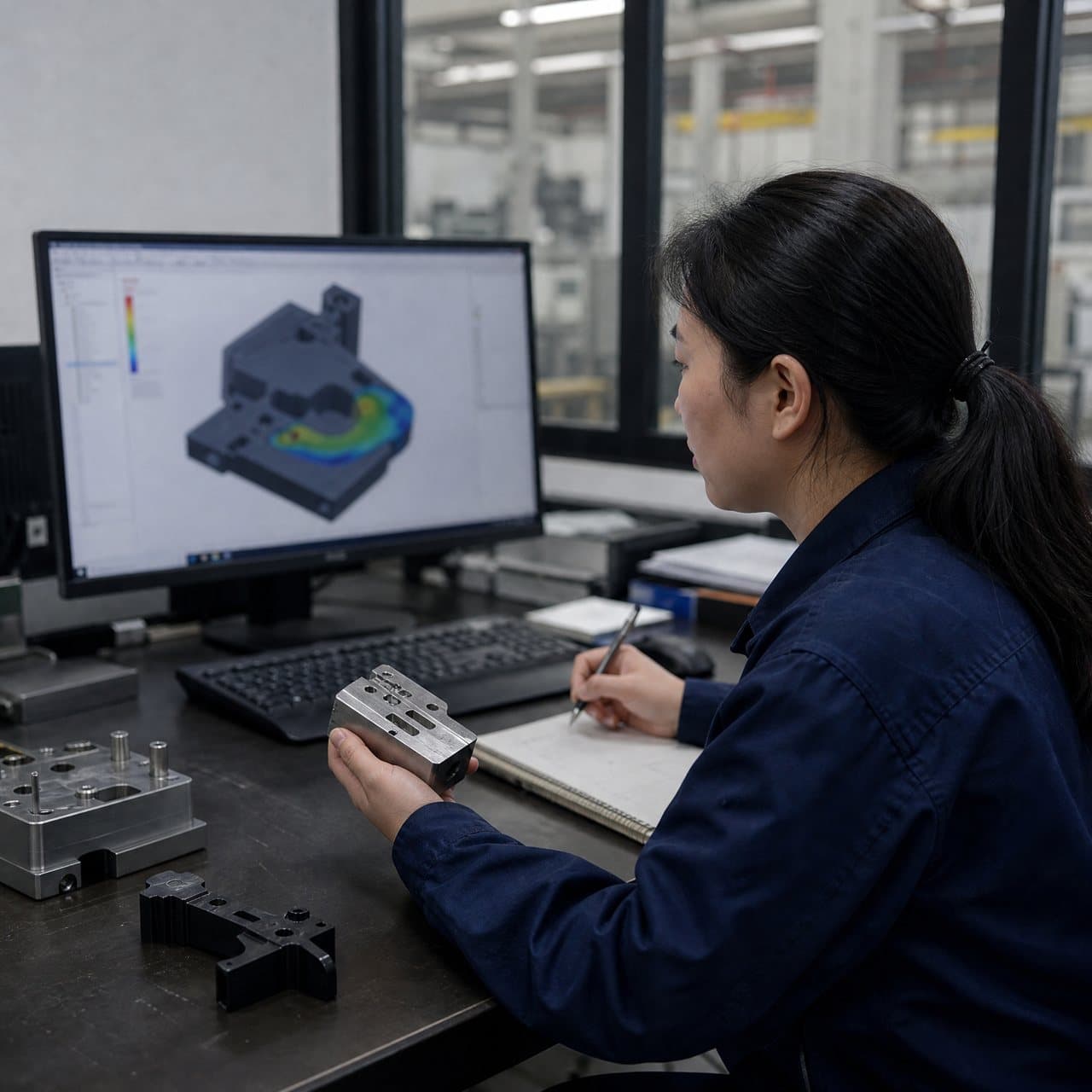
Engineering before tooling
Injection mold design &
DFM review.
Reduce tooling risk before steel is cut with practical DFM, moldability and injection mold design review for custom plastic parts.
InjeForm
For OEM and product teams across Europe, North America & the Middle East
A practical sourcing route
Make the next
decision clearer.
A useful DFM review turns a part definition into a set of decisions: how the part will fill, cool, release, measure, assemble and run repeatedly. InjeForm helps buyers and product engineers surface those decisions before tooling commitments make changes slower and more expensive.
Buyer-led scopeEngineering evidenceControlled handover
Project fit
Where this route
helps most.
Start with the questions that affect tooling, quality, timing and total program risk.
Existing parts with short shots, warpage, sink or ejection issues
Projects evaluating gates, runners, cooling, slides, lifters or family tooling
What buyers can align
Evidence that supports
the next gate.
Scope the work around decisions and records—not broad promises.
DFM observations linked to geometry and function
Defined with the part, tool, material, volume and acceptance requirements in scope.
Parting line, gate, runner, cooling and ejection discussion
Defined with the part, tool, material, volume and acceptance requirements in scope.
Material, shrinkage, tolerance and cosmetic risk notes
Defined with the part, tool, material, volume and acceptance requirements in scope.
Open-question list for design and tooling approval
Defined with the part, tool, material, volume and acceptance requirements in scope.
Decision framework
Compare the
trade-offs.
| Review area | Question to answer | Evidence or output |
|---|---|---|
| Part geometry | Can the feature fill and release? | Draft, wall, ribs, bosses, undercuts and shutoffs review |
| Flow and cooling | Can the process be stable? | Gate, runner, venting, cooling and shrinkage assumptions |
| Inspection | Can the requirement be measured? | Datums, CTQs, fixtures, visual standards and sample plan |
How the conversation moves
From brief to
controlled next step.
Use the first conversation to identify what is known, what is open and what evidence should come next.
- 01
Provide the current CAD, drawing, material and mating-part context.
- 02
Identify CTQs, appearance zones, assembly interfaces and risk features.
- 03
Review manufacturability options and record agreed changes or open points.
- 04
Release a controlled design basis for mold quotation and tooling.
Buyer questions
Clear answers before
you commit.
When should a DFM review happen?+
Ideally before the part design is frozen and before the mold quotation is treated as final. A later review can still identify risk, but design changes may affect tooling scope, timing and cost.
Does DFM guarantee a defect-free part?+
No. DFM reduces foreseeable design and tooling risk, but process settings, material lots, machine conditions and acceptance methods still need to be controlled and validated.
What files are useful for a DFM review?+
A 3D CAD model, 2D drawing, resin direction, expected volume, finish references, mating parts or interface dimensions, and any known functional or cosmetic risks are useful starting inputs.
Start a technical conversation
Bring us your
next part.
Share the drawing, resin, target volume, market and timing. We will return with focused questions and a practical next step.